
The ultimate South Island travel guide: Everything you need to know
This post includes some affiliate links and I earn a small commission if you book through them. This helps keep this site running and lets me keep writing ultra-detailed travel guides that are free for you to use to plan your next adventure. Read more in my privacy policy.
Planning a trip to New Zealand’s South Island (Te Waipounamu in te reo Māori) is a lesson in ruthless prioritisation. There are glaciers and glow worms, waterfall hikes and vineyard bike paths, dark sky stargazing and heart-stopping thrills, and naturally, you want to do it all.
Now this might be hard to hear but it’s the honest truth: you can’t see it all in a two-week trip, and trying to cram every highlight into a whirlwind loop is the quickest way to turn your dream South Island trip into a logistical nightmare.
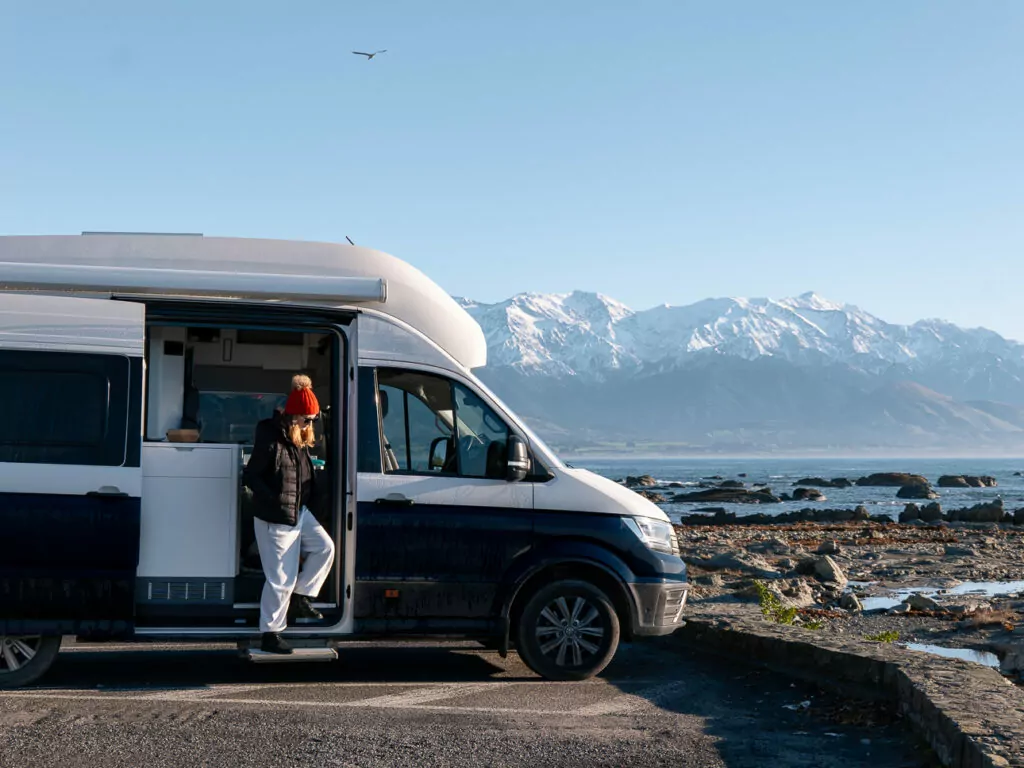
But if you’re feeling overwhelmed by must-sees and mixed messages about when to go, what to budget and how long to spend in each region, take a deeeeep breath 🧘🏼 because you’re in the right place.
As a Kiwi travel blogger who makes regular pilgrimages south, I’ve spent months exploring almost every corner of the island. I’ve visited every region, experienced all seasons and tested different budgets, crossing alpine passes, tracing the coastline and tackling gravel backroads in campervans, hire cars and tour buses, travelling solo, with friends and with whānau (family).

Basically, as we say in Aotearoa, I’ve done the mahi (work) so you can get the treats. Aaaand I’ve collated all my local knowledge into this ultra-detailed practical travel guide to help you plan your South Island trip.
Who this guide is for:
- First-timers who want a South Island 101 lesson
- Returning visitors looking to maximise time and money
- Realistic travellers who prefer honest pros and cons over hype
- Anyone sick of scrolling through viral social posts and outdated articles
What you’ll find in this South Island travel guide:
- When to visit, with benefits, trade-offs and practical tips for each season
- What you can comfortably cover in different timeframes
- A clear breakdown of transport options so you can pick what suits best
- How to balance value-focused stays with worthwhile splurges
- Real-world costs and easy ways to save $$$
- Actually helpful advice on packing, safety, culture and responsible travel
Consider this your ultimate cheat sheet for exploring the superior island (and I say that as a North Islander 🙃). There’s a lot to cover, so let’s dive in!

Quick summary: South Island travel guide
Don’t have time to read the whole guide? Here are the most important bits at a glance.
📅 When to visit: Depends on priorities! Summer has long days but big crowds and higher prices, autumn is my personal fave, winter is magic in the mountains with some great deals in non-snowy spots, spring is unsettled but lush.
🗺️ Key places at a glance: Marlborough (wine region + Sounds), Abel Tasman National Park, Nelson Lakes, Kaikōura, Hanmer Springs & Hurunui, Christchurch & Banks Peninsula, Mackenzie Country (Tekapo + Aoraki/Mt Cook), Waitaki Valley, the upper West Coast, Glacier Country, Queenstown & Wānaka, Fiordland, Dunedin & Otago Peninsula, the Catlins, Bluff & Stewart Island/Rakiura. Phew!
⏱️ How long to stay: One week = choose a quarter, two weeks = choose a half (top/bottom or east/west), three weeks = loop the island’s hotspots at a fast pace, 4+ weeks = more comprehensive fast-paced loop or in-depth regional focus.
✈️ Getting here: Fly into Christchurch for long-haul, or fly to Auckland and connect domestically. Queenstown & Dunedin also options for trans-Tasman. Ferry to Picton from Wellington if you’re exploring the North Island too.

🚐 Getting around: Self-drive is flexible, buses are budget-friendly, hop-on hop-off passes are the best of both worlds, organised tours & day trips for minimal stress.
🛌🏼 Where to stay: Holiday parks & motels provide the best value, hotels are mostly limited to big cities, holiday homes & apartments suit groups and families, and there are plenty of unique stays for a special treat like glamping spots, off-grid cabins and luxury lodges.
💰 Budgeting: Costs hugely vary by season & location. Summer is exponentially more expensive, big ticket activities add up quickly, but free walks and viewpoints balance the budget. Easy wins: Bookme for last minute activities, Gaspy for fuel price, First Table for dining out, MobiMatter eSIMs, and most importantly booking in advance!
⚠️ Important things to know: Drives usually take longer than Google Maps suggests, the UV is brutal year-round, weather can change in an instant.

Why visit the South Island?
Insane landscapes
The South Island’s got range.
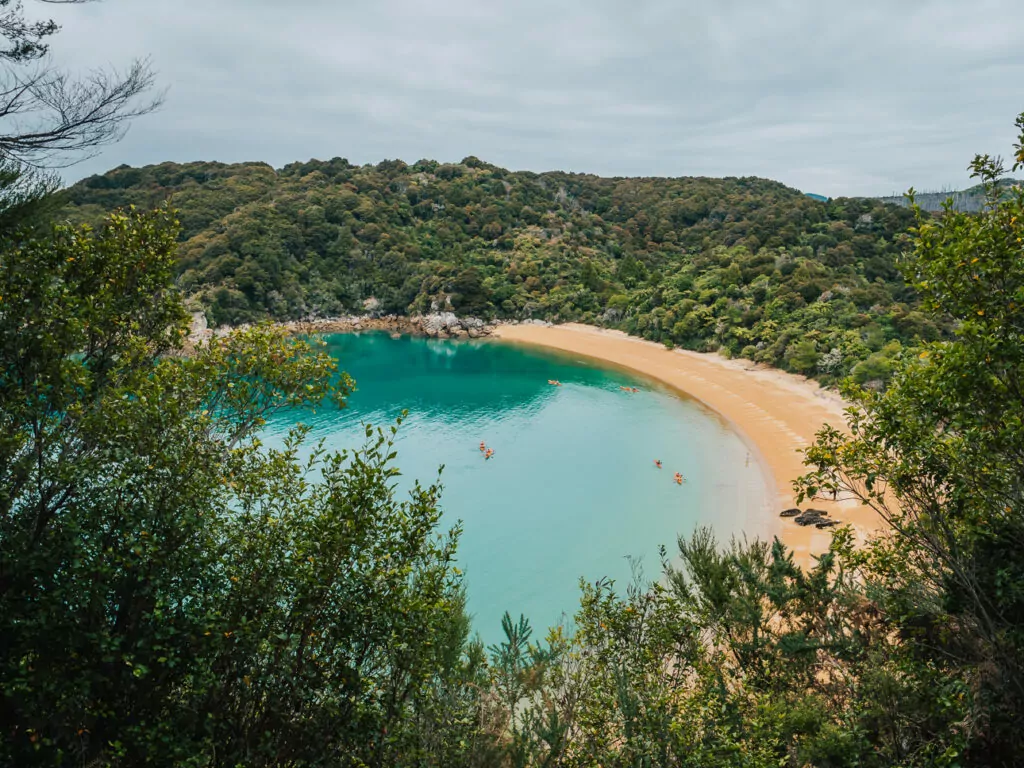
Walk along burnt orange beaches in Abel Tasman National Park, fly over ancient rainforest before hiking on an actual glacier on the West Coast, hit the snowy slopes of the Remarkables in Queenstown, marvel at the hundreds of waterfalls in remote fiords like Milford Sound or take an icy dip in one of the unbelievably blue lakes in the Mackenzie Basin.
The diversity of the scenery down here is nothing short of spectacular, all packed into one island!
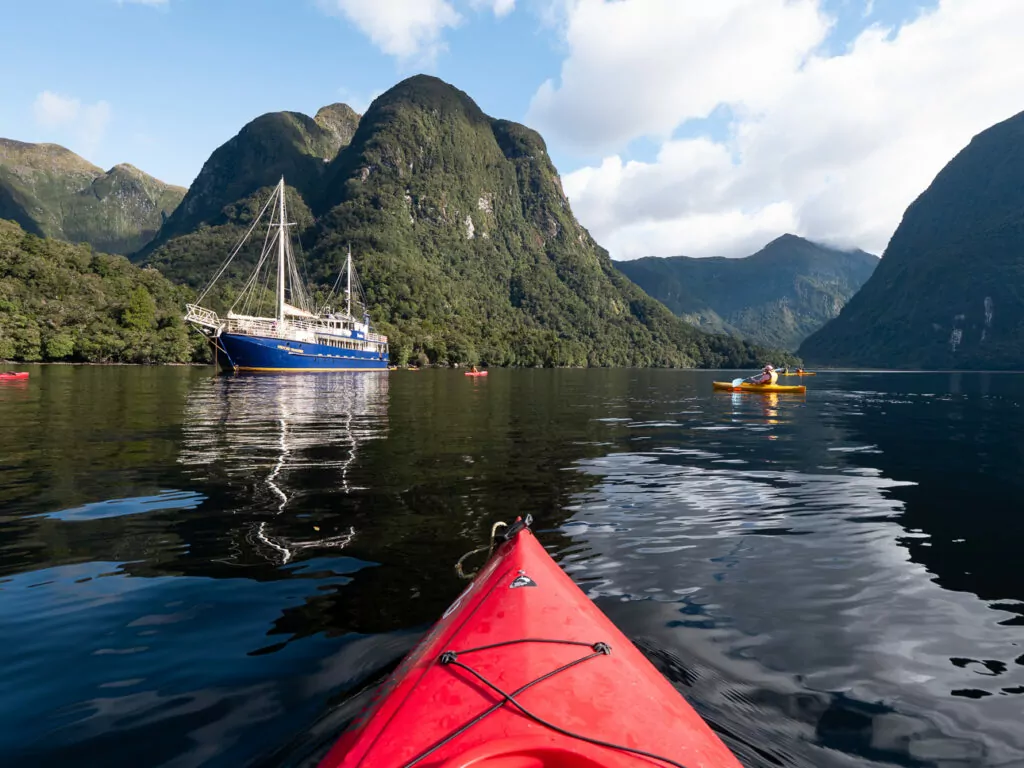
Adventures & activities for all types of travellers
From full adrenaline junkie to slower-paced sightseeing, and from splurge-worthy to cheap and cheerful, there are looooads of things to do in the South Island no matter where you sit on the adventure or budget spectrum.
Bungy jumping, jetboating and skydiving in Queenstown and beyond, often top tourists’ South Island bucket lists, but there are also spectacular walks for all fitness levels (from Great Walks to low-effort high-reward ones like Hokitika Gorge and the Blue Pools), scenic flights over Fiordland, the Southern Alps and the Marlborough Sounds, cruises on glacial lakes, kayaking through Jurassic Park-esque lagoons, wine tours in world-class wine regions, geothermal pools, ziplines, film location tours, luxury spas, quirky towns, and so much more.
The only problem is fitting it all in 🙃
Ethical wildlife encounters
The main animals you’ll notice while driving around the South Island are sheep, cows, and (dead) possums who timed their road-crossing badly, but our skies, our caves and our oceans are where the real magic happens.
You can swim with wild dolphins in Kaikōura, Picton or Akaroa, or watch penguins waddling home after a busy day at sea along the Otago and Southland coasts. You can see breaching whales from a boat or a plane in Kaikōura, listen to an orchestra of birdsong in native forests, spot an elusive kiwi in the wild on Stewart Island or in Okarito, and be mesmerised by the otherworldly glow worms that light up like the Milky Way in places like the West Coast, Nelson and Te Anau.

Rich cultural experiences
The scenery will fill your camera roll for sure, but it’s the stories of Te Waipounamu (the South Island) that’ll make your trip unforgettable.
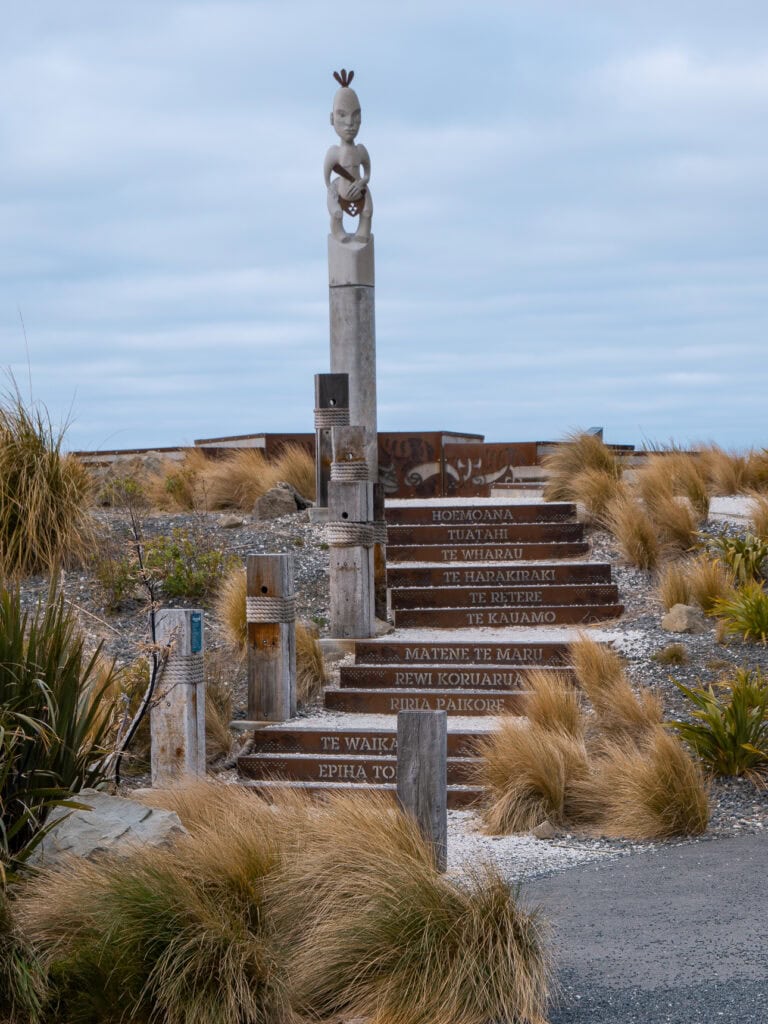
Learn how Māori thrived off this wild and unforgiving land at the Paparoa Experience in Punakaiki or with Māori Tours Kaikōura, carve your own pounamu (greenstone) taonga (treasure) in Hokitika, hear legends passed down through generations that explain how the stunning landscapes came to be, and step back in time to different eras of New Zealand history, from goldmining ghost towns like Arrowtown and Reefton to perfectly preserved Victorian precincts in Ōamaru.
Top tier food & drink
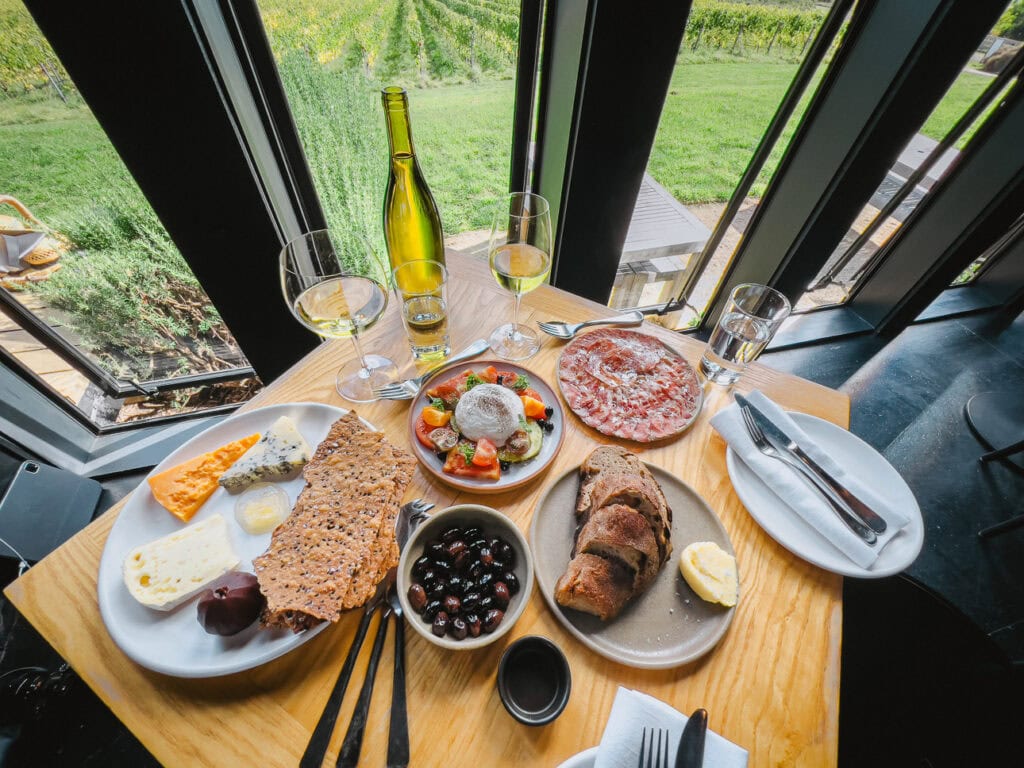
In the South Island you’re absolutely spoilt for choice in terms of eating and drinking, with everything from innovative fine dining and boutique vineyards to roadside fruit stalls and beachfront fish and chip shops.
Lots of the best spots are pretty unassuming though, so do your research in advance, save your top picks to your maps app, and check what’s on the way before you head off for the day so you don’t accidentally miss the greatest meal of your life.
And perhaps most importantly, always blow on the pie. Safer communities together.
When is the best time to visit the South Island?
The annoying but honest answer is that it totally depends on your priorities. Are you chasing maximum sunshine, lowest prices, or happy to compromise on both to find a balance? The good news is that the landscapes are spectacular year-round and every season has its benefits, so there’s no ‘wrong’ time to come.
There is one major rule for South Island travel though: expect the unexpected. Our weather is famously volatile, in all seasons. Even a same-day forecast might not be reliable, let alone trying to predict the weather conditions months before your trip!
Average annual temps might give you a ballpark idea of what to pack for, but always bring layers, build a weather buffer into your itinerary, and have a backup plan up your sleeve for when the weather gods don’t cooperate.
Best time to visit the South Island: My personal opinion
My favourite times of the year to visit the South Island are mid-February to late March for the summer experience without the school holiday chaos, April for stunning autumn colours, and August for winter goodness in the mountains and bargains away from the ski fields.
☀️ Summer (Dec-Feb)
Summer is peak season for a reason. Days are long (9.30pm sunset in Queenstown mid-summer!), energy is high, and it’s the perfect time for Great Walks, beach days and outdoor adventures… iiiiiif you don’t mind sharing with others and paying a premium.
Kiwi (and Aussie) school holidays run from mid-December to late Jan/early Feb, literally every tourist spot will be busy during these months. Your accommodation, bucket list activities, ferry crossings, rental cars/vans and even popular campgrounds need to be booked in advance, or you risk having to change your plans or being stung with last minute prices.
Is it beautiful? Absolutely. Is the warmer weather worth the crowds, the lack of flexibility and the blow to the budget? That’s for you to decide.
- Best for: Hiking (some DOC huts need to be booked in advance though, info here), beaches, camping and road trips where you want maximum daylight hours.
- The downsides: Pesky sandflies thrive in warm and humid conditions (especially on the West Coast and in Fiordland), high demand means high prices and less flexibility, and things are busy busy busy.
- Need to know: The sun here is deceptive, we have high UV levels and burn time is much lower than you’d expect based on the temperature. High SPF is essential, especially in summer.
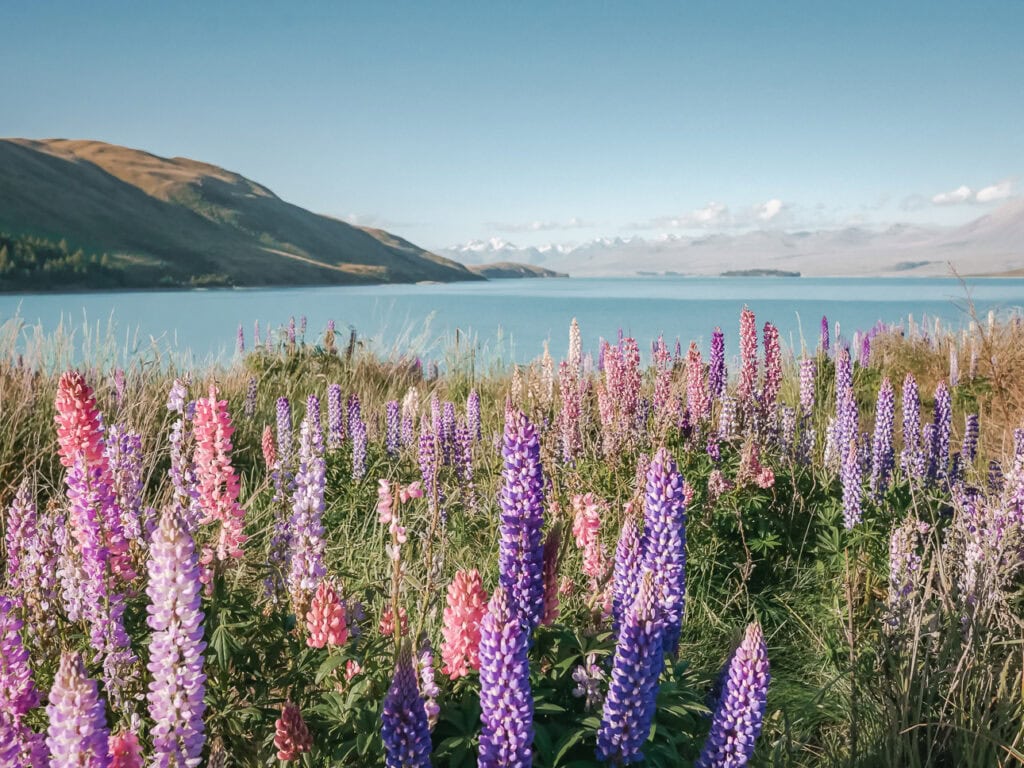
- Seasonal must-see: The iconic pink and purple lupins around Lake Tekapo and Lake Pūkaki bloom from late November until early January, normally peaking in mid-December, but actual dates depend on weather conditions.
🍂 Autumn (Mar-May)
Shoulder season for the win! Mild weather, lower prices and magical colours await if you’re visiting during this slice of the calendar.
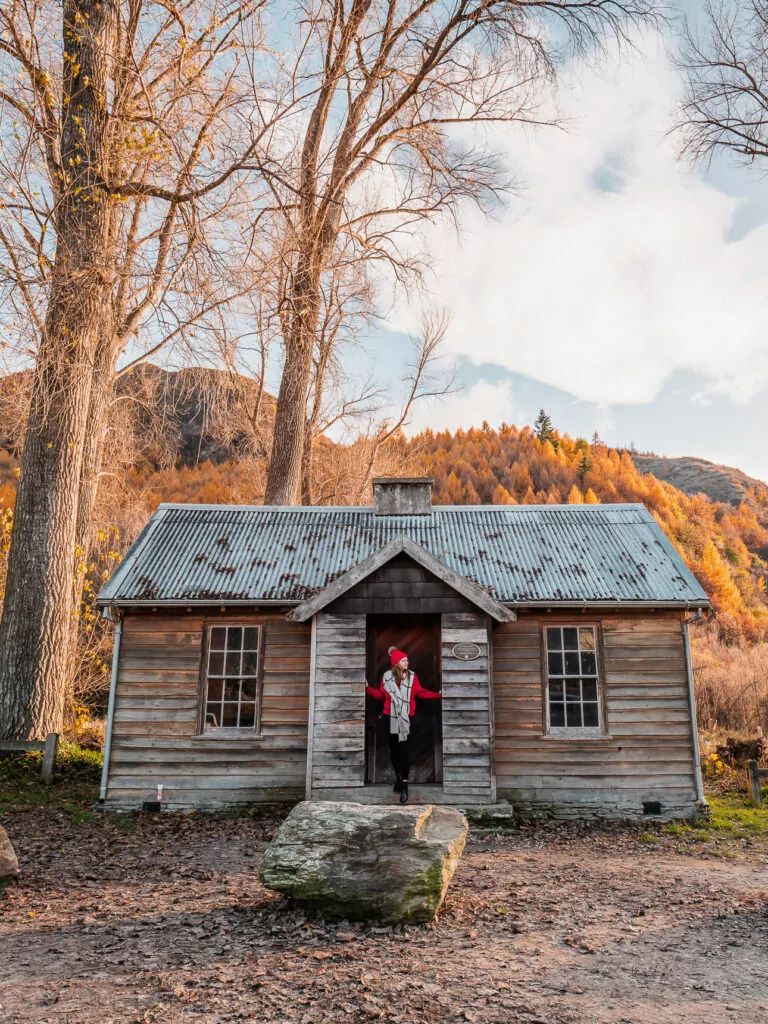
March often feels like a quieter summer during the day (but bring layers for the post-sunset temp drop), April is when foliage turns copper and gold, and May brings the first dustings of snow on the peaks.
- Best for: Autumn colours, winery days in Marlborough, Waipara Valley and Central Otago, hiking without the heat.
- The downsides: Earlier sunsets after daylight savings ends (early April), occasional cold snaps and rain, some operators shift to seasonal schedules.
- Need to know: Weather is typically more settled/predictable in autumn than other seasons, but as always pack layers and be prepared for sudden changes, especially in alpine areas.
- Seasonal must-see: Arrowtown’s autumn festival in mid to late April, a leaf-peeper’s dream!
❄️ Winter (Jun-Aug)
Destinations around the South Island kind of split into two camps in these months: the ‘winter playgrounds’ and the ‘low-season bargains’.
If you want to embrace winter, you’ll find snow activities, mountain views and hot pools in places like Queenstown, Wānaka, Tekapo and Hanmer Springs.
If you’re keen to escape the crowds and make the most of off-season deals, look to Nelson-Tasman, Marlborough, the upper West Coast and the Catlins.
- Best for: Ski fields, hot pools, stargazing, wildlife spotting, lower prices outside of ski areas, seeing iconic spots without the summer crowds.
- The downsides: Short daylight hours, potential road closures or delays on alpine passes, high prices and low availability in Queenstown in particular.
- Need to know: Winter driving can mean mandatory snow chains on high altitude routes, early-morning black ice on roads, and quickly changing weather in the mountains. Buffer time for drives and extra days around bucket list activities give you wiggle room in case your plans get impacted.
- Seasonal must-see: Humpback whales off Kaikōura (mainly Jun-Aug), insane Milky Way displays in the designated Dark Sky areas, and higher chances to see the Aurora Australis (Southern Lights) if you’re reeeally lucky.
💐 Spring (Sep-Nov)
Spring is a real mixed bag in the South Island, it’s the least predictable season (which is saying something!) so I really can’t tell you anything useful except to be prepared for all conditions.
Sorry and you’re welcome!
- Best for: Spring flowers, baby lambs, waterfalls from snowmelt, shoulder-season prices, short walks before the summer influx if conditions allow.
- The downsides: Highly variable weather that makes it hard to stick to strict itineraries, late-season snow dumps that close alpine roads.
- Need to know: Broken record I know, but bring layers and just accept that your plans might need to change on a whim due to weather.
- Seasonal must-see: Cherry blossoms in Christchurch and Queenstown (generally September to mid-October), West Coast and Fiordland waterfalls after rain.
South Island regions & districts explained
We don’t have states in New Zealand, we have regions and districts, but they’re split differently depending on whether you’re looking at council boundaries, political electorates or tourism boards. In other words, they’re completely unhelpful for trip planning 🙃
The South Island’s seven official regions are Nelson, Tasman, Marlborough, Canterbury, West Coast, Otago and Southland. Canterbury alone stretches from Kaikōura down to Ōmarama, encompassing Christchurch, Hanmer Springs, Waipara Valley, Tekapo and Aoraki/Mount Cook, which are all very different tourist spots. For comparison, the ‘Nelson’ region is less than 1% of Canterbury’s land area and is basically just the one city. Honestly, who planned this country 🤷🏼♀️
Instead, I’ve broken the island down into travel areas that make sense when you’re planning and when you’re here, based on natural hubs and what links well in a route. This should make mapping out your trip much easier!
First of all here’s a map with the major tourist spots around the island, pinned and colour-coded into regions/districts to give you some reference points for what lives where.
And now let’s dive in to the region/district/destination names you’ll hear about the most.
📝 A quick note: Please keep in mind that the typical drive times below (and what Google Maps tells you) are based on perfect driving conditions with no weather delays, no slow vehicles in front of you, no photo stops along the way. Add buffer times for each drive to avoid your plans getting ruined by things out of your control, and check NZTA’s Journey Planner to check road conditions before you set off on any long travel days or mountain roads.
Marlborough
Marlborough’s the first stop if you’re arriving by ferry from Wellington, covering the top right corner of the South Island.
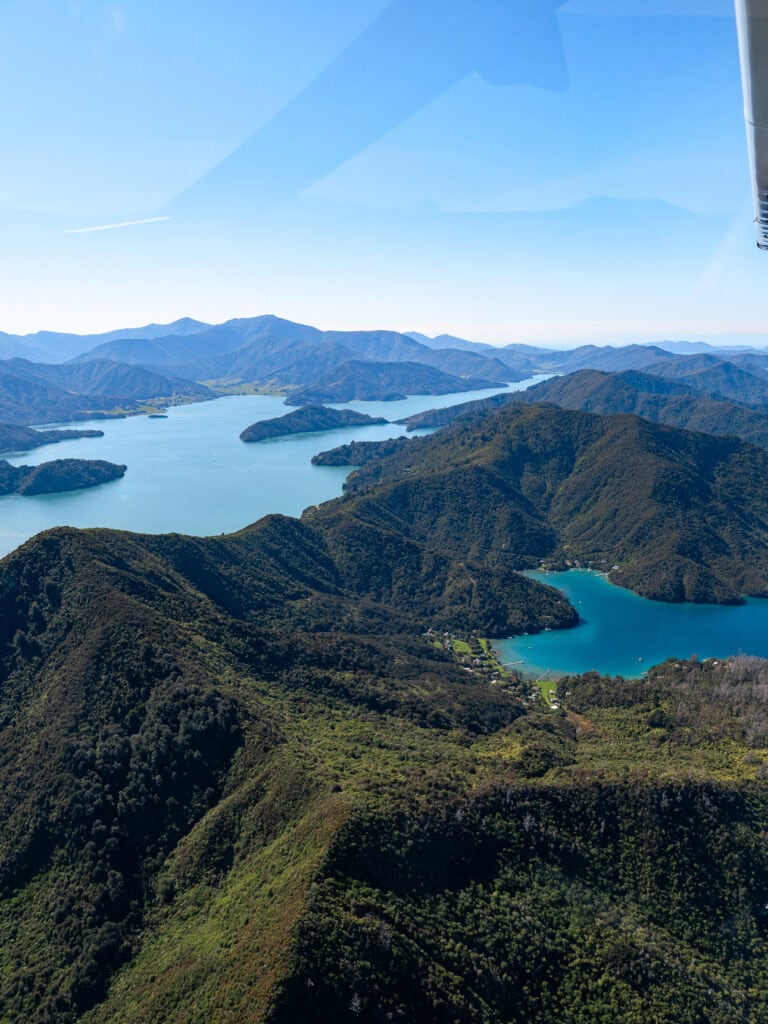
The region is split into two distinct parts: the Marlborough Sounds (a maze of sunken valleys and an outdoor adventure paradise) and the Marlborough wine region around Blenheim, which produces about 75% of New Zealand’s wine.
 Small Town Winery, Blenheim
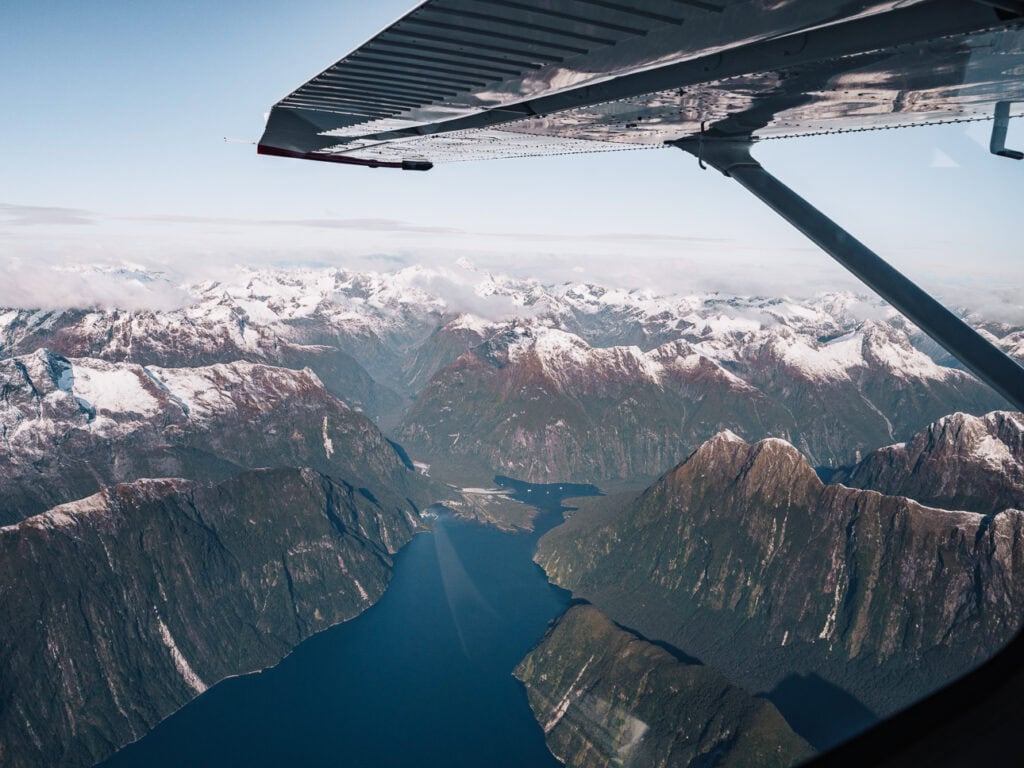
- Flying over the Marlborough Sounds with Pelorus Air

- Region: Marlborough
- Best for: Wine tasting, long lunches, ultra-scenic hike and bike trails, perfectly calm water, year-round sun.
- Key places: Picton (where the ferry terminal is), Blenheim (hub for wineries), the Queen Charlotte Track, Havelock (Greenshell mussel capital of the world, very niche)
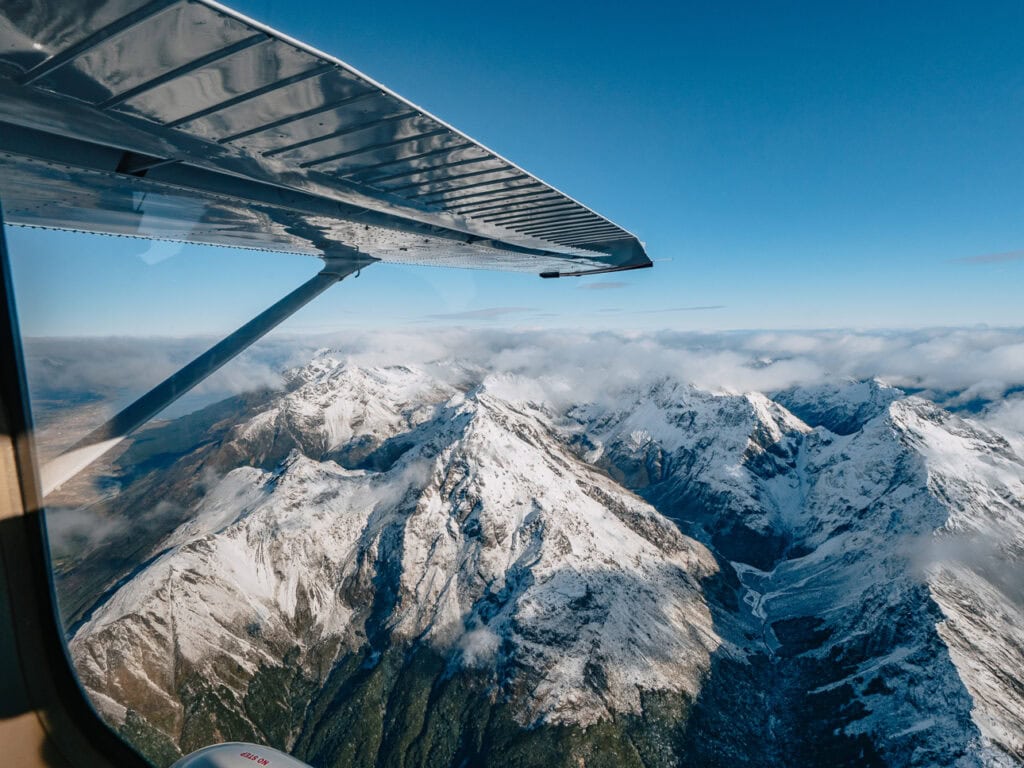
- My absolute #1 must-do: Omg why have I only let myself choose one, butttt I’d have to say a scenic flight with Pelorus Air! This place is WILD from above 🤯
➡️ Read my full guide: The best things to do in Blenheim & the Marlborough Sounds
Nelson & Tasman
West of Marlborough is the Nelson-Tasman region. It’s shaped a bit like a V, running from around Cable Bay in the northeast, all the way to Farewell Spit in the northwest, down past Nelson Lakes National Park in the south.
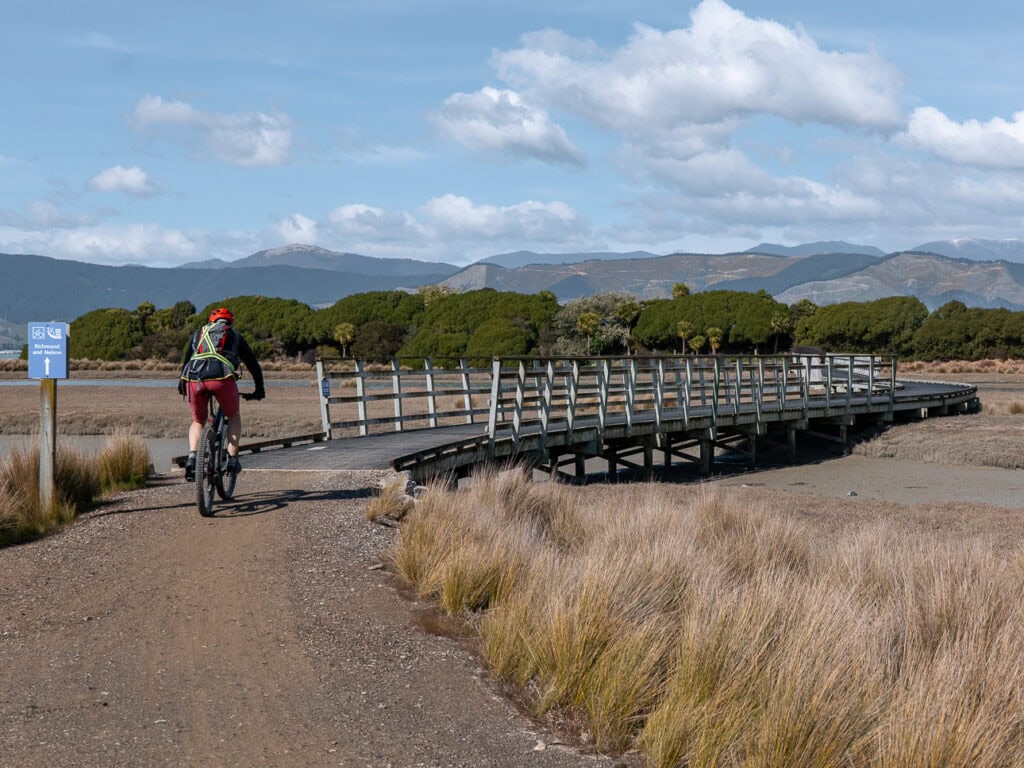
It’s best known for golden sand beaches, coastal walks and bike rides, super chill seaside towns and hippy villages, a brilliant food scene and lots of sunshine 🌞
- Region: Nelson-Tasman
- Best for: Beautiful beaches, Abel Tasman Coast Track, cycling and mountain biking, craft breweries, value for money, sunny weather most of the year.
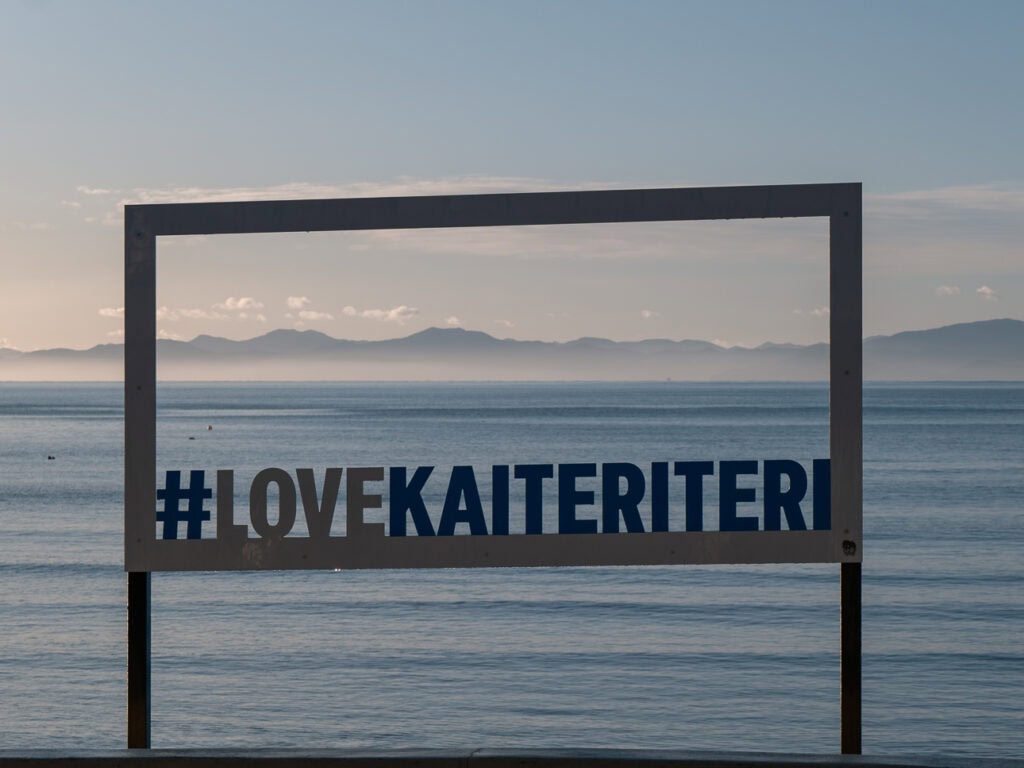
- Key places: Nelson City (main hub), Motueka (popular base & supply hub for Abel Tasman National Park), Kaiteriteri (tiny beach town right at the entrance of Abel Tasman NP), Golden Bay (remote and untouched), St Arnaud (gateway to Nelson Lakes NP)
- My absolute #1 must-do: You can’t leave without getting out on the water in the Abel Tasman NP, either with a cruise, cruise + hike combo, kayak tour, wildlife eco-tour or even a waka tour (in a traditional Māori canoe).
➡️ Read more: The best things to do in Abel Tasman
Kaikōura
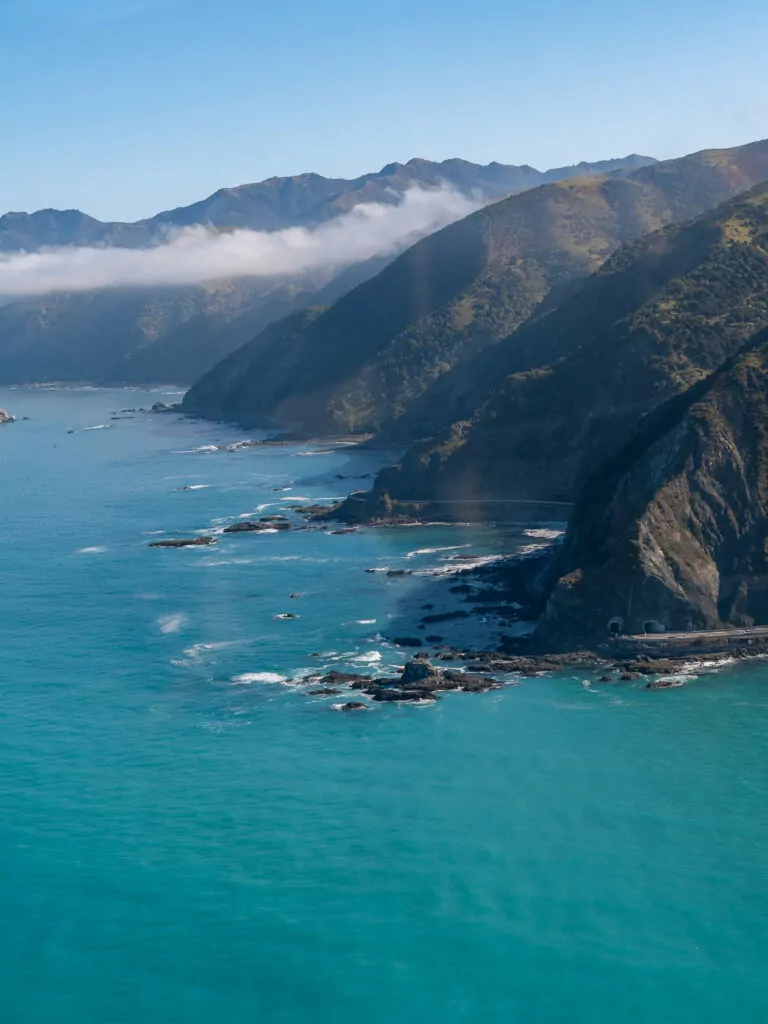
Heading down the east coast (SH1) from Blenheim is Kaikōura, a tiny town that punches well above its weight in terms of adventures, landscapes and wildlife experiences.
Many travellers do it as a day trip from Christchurch (2h 30m) or just spend a night here to go whale watching, but I would highly, highly, highly recommend spending at least two or three nights to experience the highlights.
- Kaikōura Lookout
- Stargazing in Kaikōura
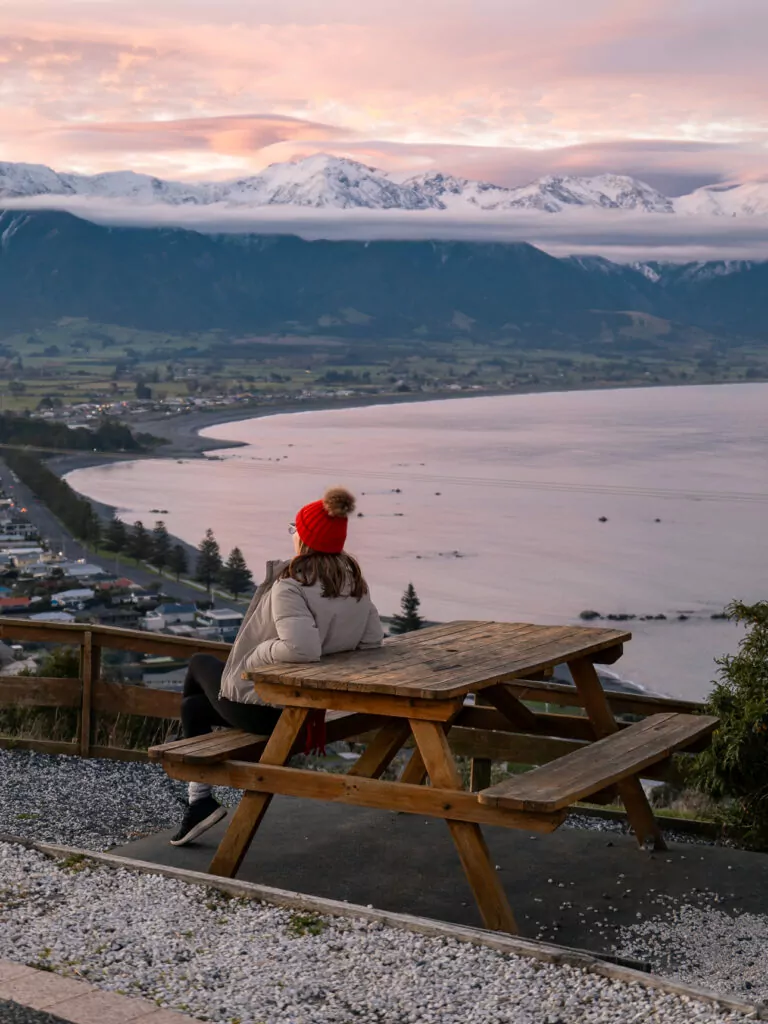
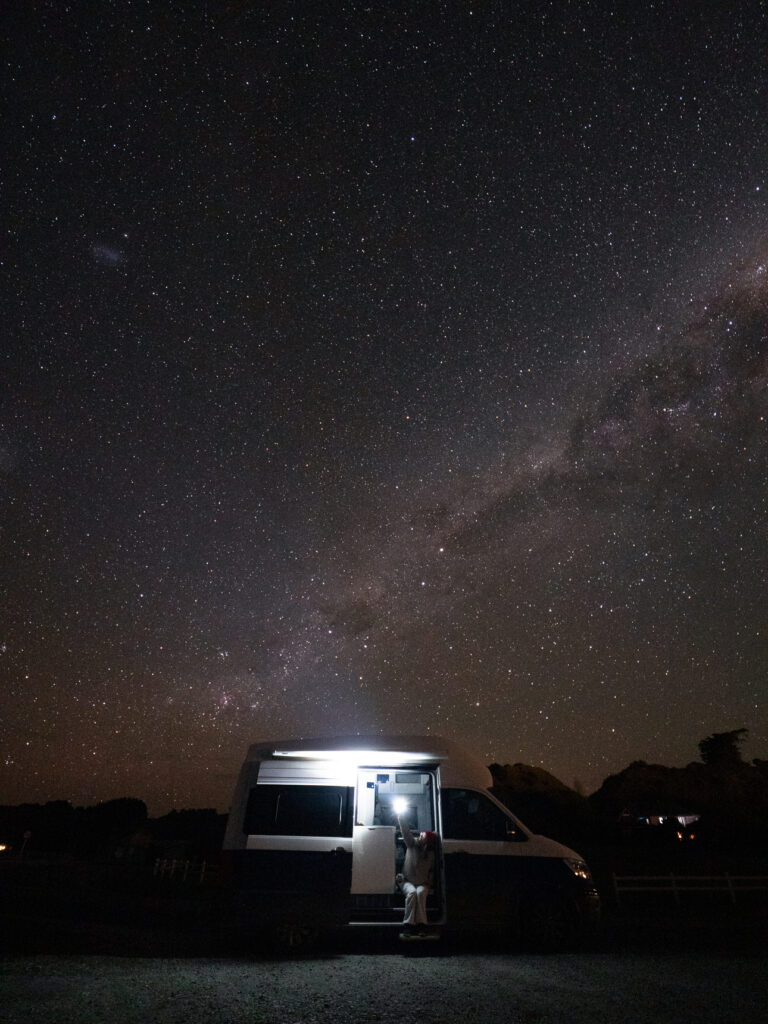
- Region: Canterbury
- Best for: Whale watching is what put it on the world stage! But also seal colonies, dolphins, albatrosses, crayfish, where-mountains-meet-the-sea scenery and stargazing (it’s a Dark Sky Sanctuary).
- My absolute #1 must-do: Lots of fun stuff to choose from but for me its no competition, swimming with wild dolphins (ethically) takes the crown. Absolute magic.
➡️ Read my full guide: The best things to do in Kaikōura
Hanmer Springs & Hurunui
Tucked between Kaikōura and Christchurch is one of the most underrated parts of Aotearoa, the Hurunui district.
The unspoiled Hurunui coast sits to the east of SH1, with wild beaches and dramatic limestone cliffs that fly under the radar of most international visitors. The south of the district is a thriving hub of vineyards, sometimes referred to as Waipara Valley or more broadly the North Canterbury wine region. Inland Hurunui is best known for Hanmer Springs, a locally-loved alpine resort village.
- Cathedral Cliffs
- St James Cycle Trail
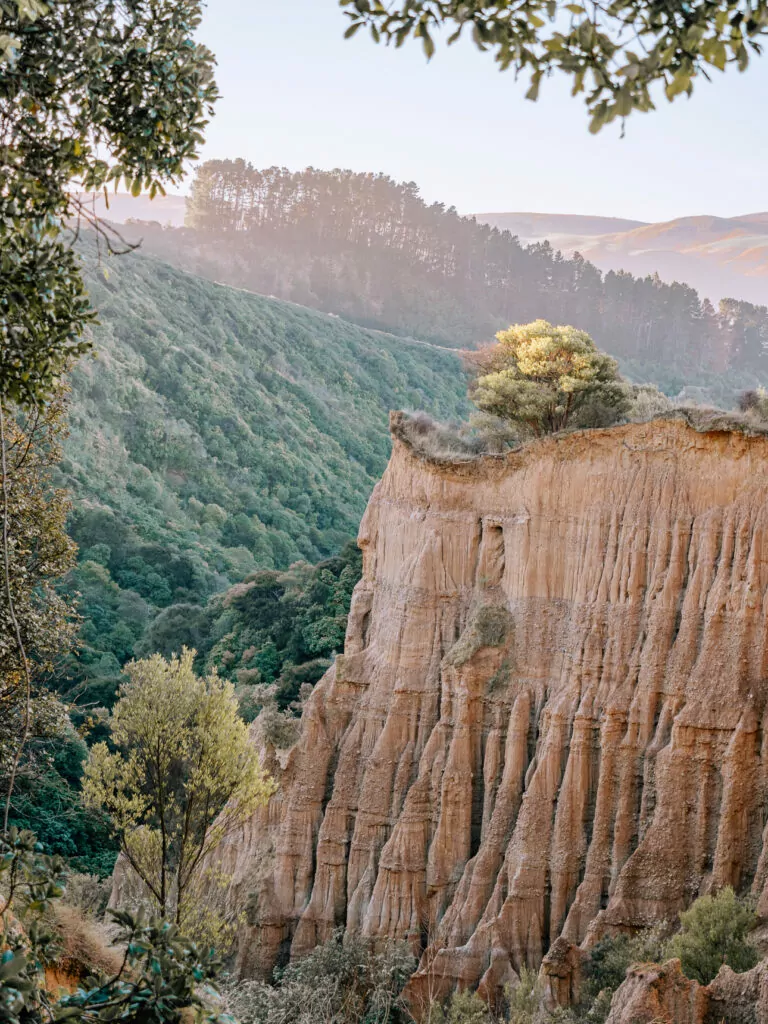

- Region: Canterbury
- Best for: Wine tasting, forest walks, geothermal pools, unique stays, raw and rugged landscapes, outdoor activities (including skiing) for cheaper than Queenstown.
- Key places: Hanmer Springs (alpine village with famous hot pools), Waipara Valley (wine hotspot), Gore Bay (worthwhile coastal detour).
- My absolute #1 must-do: Eat and drink your way around the Waipara wineries, it hurts my soul to know how many people drive this road and don’t even make a lunch stop! Black Estate is one of my all-time favourite restaurants in the country but there are plenty more to choose from.
➡️ Read more: Where to stop on a Christchurch to Hanmer Springs road trip
Christchurch & the Banks Peninsula
Christchurch is the South Island’s biggest city and the main international gateway for long-haul flights, but it offers much more than just convenience.
After an unimaginably horrific decade in the 2010s, Christchurch is finally starting to see tangible results of post-disaster investment, with a colourful city centre, world-class hospitality scene and easy access to the ocean, rivers, lakes and mountains within day trip distance.
 Britten Stables (no longer available to stay at unfortunately, but how stunning is this place!)
- Christchurch Adventure Park

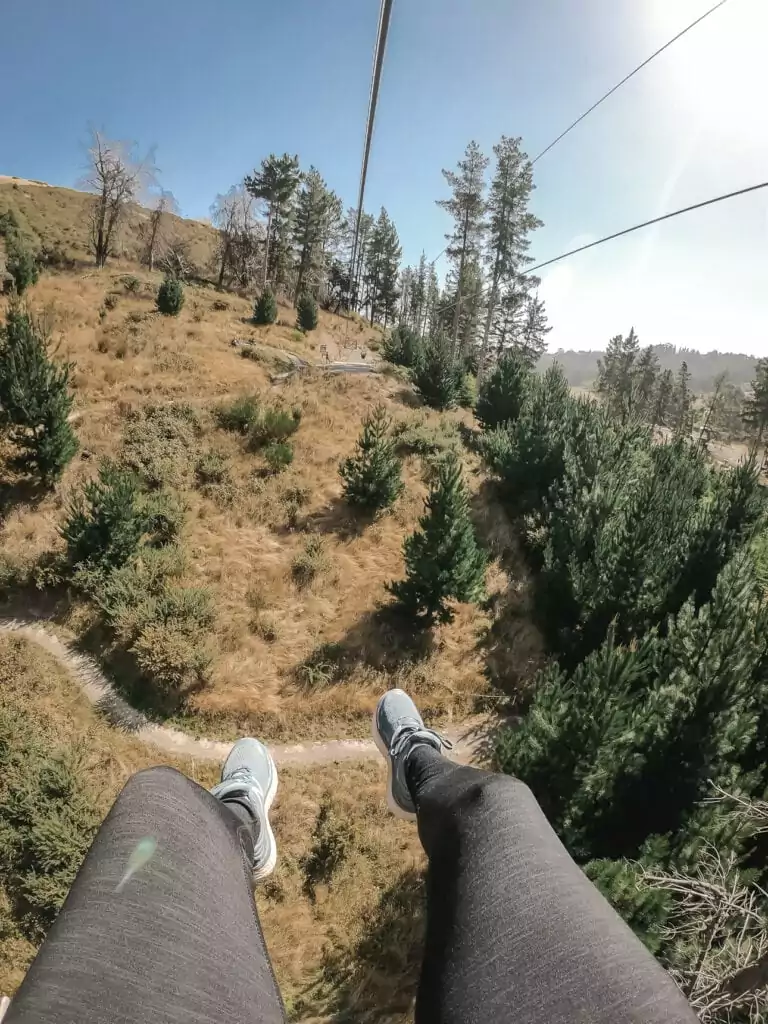
Just southeast of Christchurch is the Banks Peninsula, a volcanic promontory with quirky villages, scenic hiking trails and the chance to see the world’s smallest dolphins.
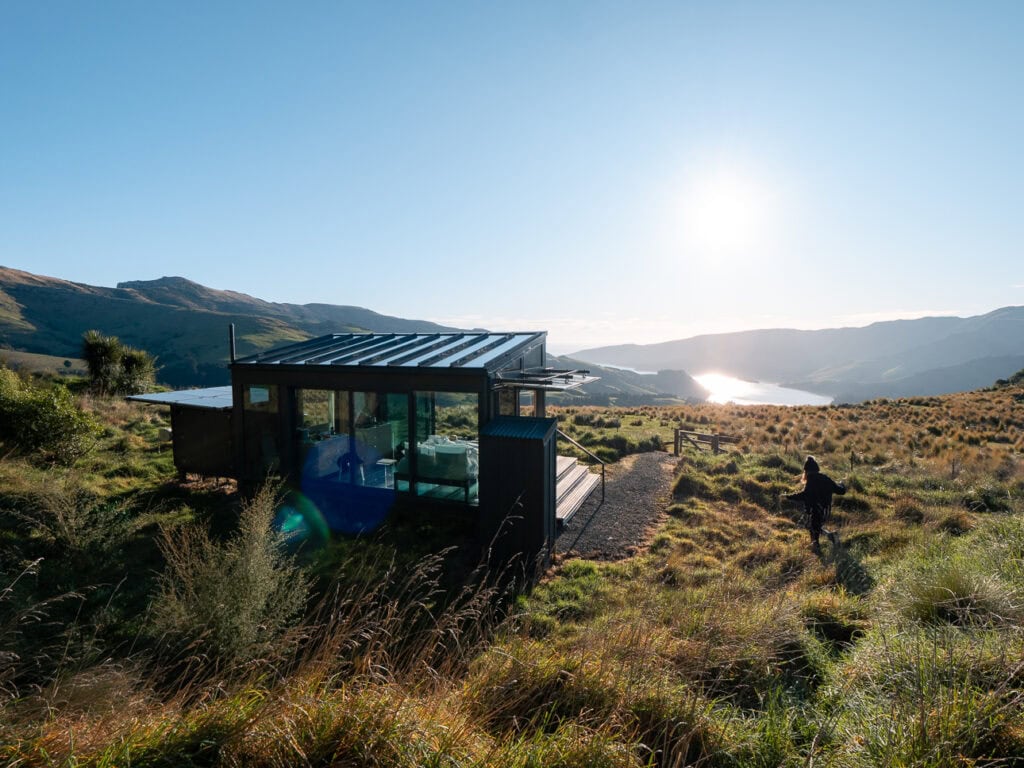
- Region: Canterbury
- Best for: A city break, post-arrival/pre-departure stays, experiencing the melting pot of modern Kiwi cuisine, scenic coastal drives.
- Key places: The CBD (much of it has been totally rebuilt since the earthquakes), Akaroa (French settlement on the Banks Peninsula), the Port Hills (hills south of the city, where you’ll find the Christchurch Gondola and Adventure Park).
- My absolute #1 must-do: Riverside Market is my faaavourite spot in Christchurch itself, but the scenic roads around the Banks Peninsula deserve a mention too.
Mackenzie Country (Tekapo & Aoraki/Mt Cook)
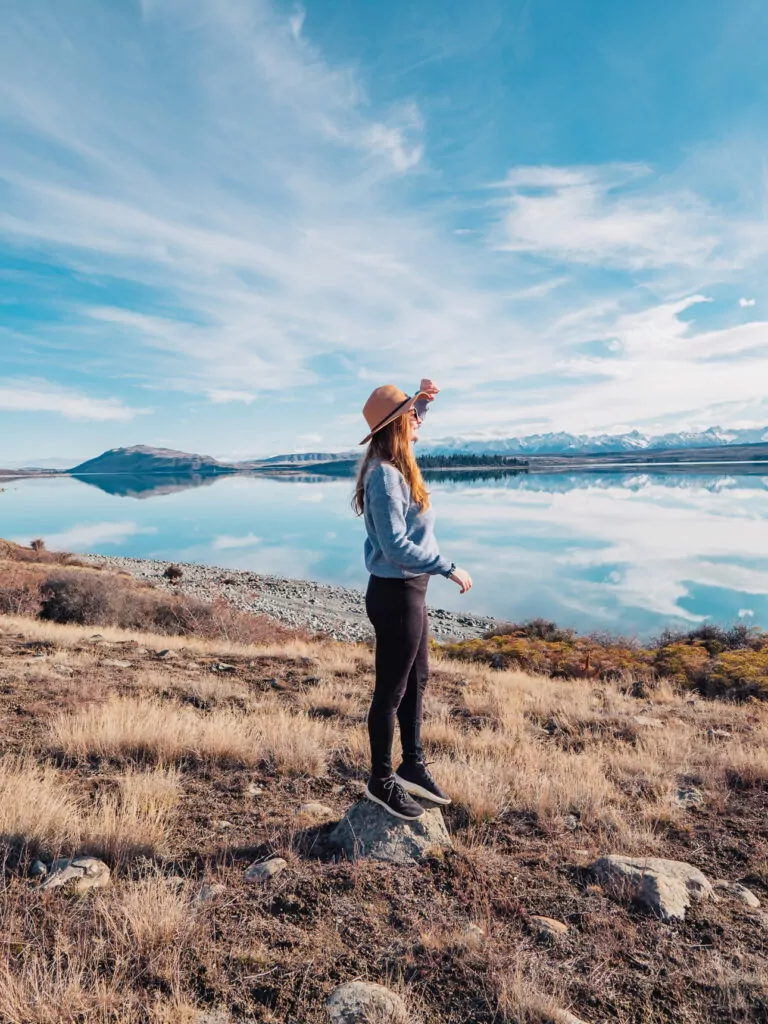
Located right in the middle of the island along the main tourist route between Christchurch and Queenstown, the Mackenzie Basin is where you’ll find some of Aotearoa’s most iconic landscapes.
SH8 winds around Gatorade-blue lakes, through tussock grasslands, over braided rivers and past viewpoints looking towards the mightiest mountains of the Southern Alps, and that’s just what you can see during the daytime! When the sun goes down you’ll get to experience the world-renowned Aoraki Mackenzie International Dark Sky Reserve, no words will ever do it justice so I’ll just leave you with two emojis: 🤯🤩
- Lake Tekapo
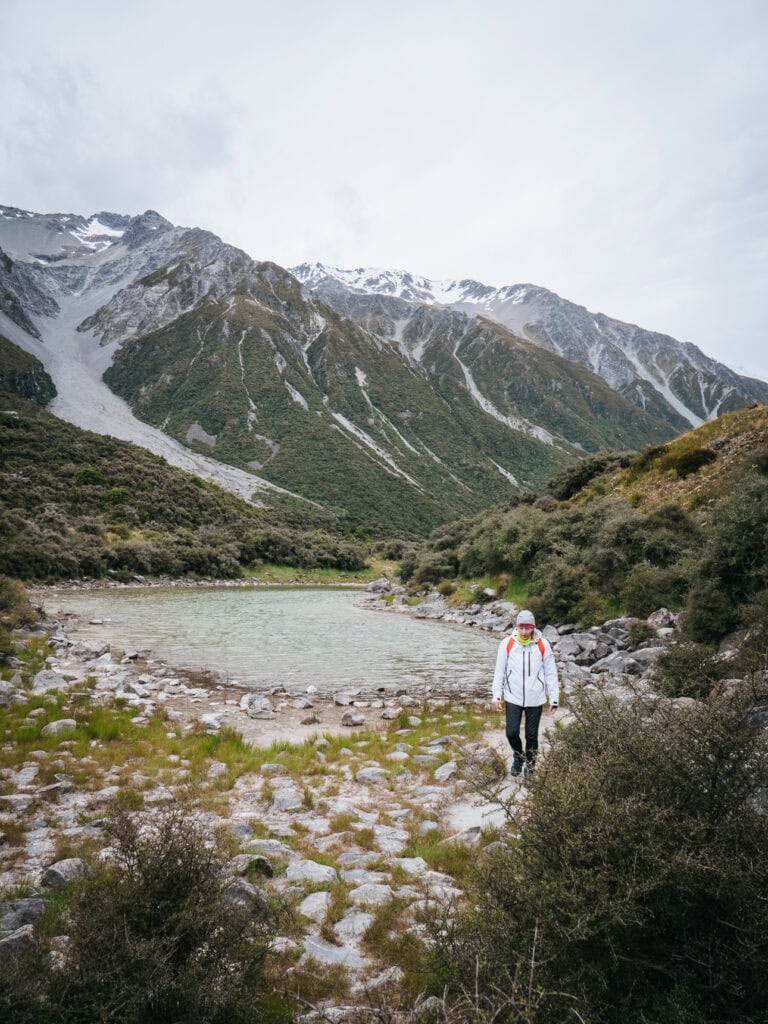
- Blue Lakes near Tasman Glacier Walk
- Region: Canterbury
- Best for: Stargazing, landscape photography, high country adventures, scenic flights, hiking for all levels.
- Key places: Lake Tekapo (main road hub, lots of tourist infrastructure), Lake Pūkaki (even bluer lake with Aoraki in the distance), Aoraki/Mt Cook Village (basecamp for Aoraki/Mt Cook National Park), Twizel (another base option, often slightly better value than Tekapo), Lindis Pass (the spectacular alpine pass that links Mackenzie with Central Otago to the south).
- My absolute #1 must-do: I’m breaking my own rules but I have a few: stargazing in Tekapo with Chameleon Stargazing, the Hooker Valley Track (currently closed for bridge repairs but you can still walk to the first viewpoint) and stopping at probably the most scenic carpark in New Zealand, this one on Lake Pūkaki.
➡️ Read more: The perfect itinerary for a Queenstown to Christchurch road trip
The Waitaki District
Most tourists drive from Tekapo straight to Queenstown or vice versa, missing all but the entrance to the Waitaki Valley, but those who have the time (and insider knowledge) to take the road less travelled will be rewarded with unique landscapes, brilliant value for money and some of the best glamping spots in the country.
- Nest Treehouse
- Ōmarama Clay Cliffs


- Region: Right on the border of Canterbury and Otago
- Best for: Unusual geology, blue penguins, backcountry cycling on the Alps 2 Ocean trail, off-grid stays.
- Key places: Ōmarama (on the main road between Queenstown and Tekapo, famous for hot pools and the Clay Cliffs), Waitaki Valley (the valley between Ōmarama and Ōamaru), Ōamaru (small Victorian town with a steampunk museum and penguin colony), Moeraki Boulders (uncannily spherical beachfront rocks just south of Ōamaru).
- My absolute #1 must-do: Embrace being off the grid at Valley Views Glamping or get cosy at Nest Treehouses on the other side of the valley.
The upper West Coast
Forgive me for the jarring jump to the other coast, but this list needs to hop across the Southern Alps before we get too far south.
When I say ‘the upper West Coast’ I’m referring to the coastal stretch from Kahurangi National Park in the northwest down to about Hokitika. You can reach it in a number of ways: drive from Nelson/Abel Tasman/Marlborough via Nelson Lakes and Murchison, drive from northern Canterbury (Kaikōura, Hurunui) via Lewis Pass, drive from Christchurch via Arthur’s Pass, or take the iconic TranzAlpine train from Christchurch to Greymouth. All super scenic!
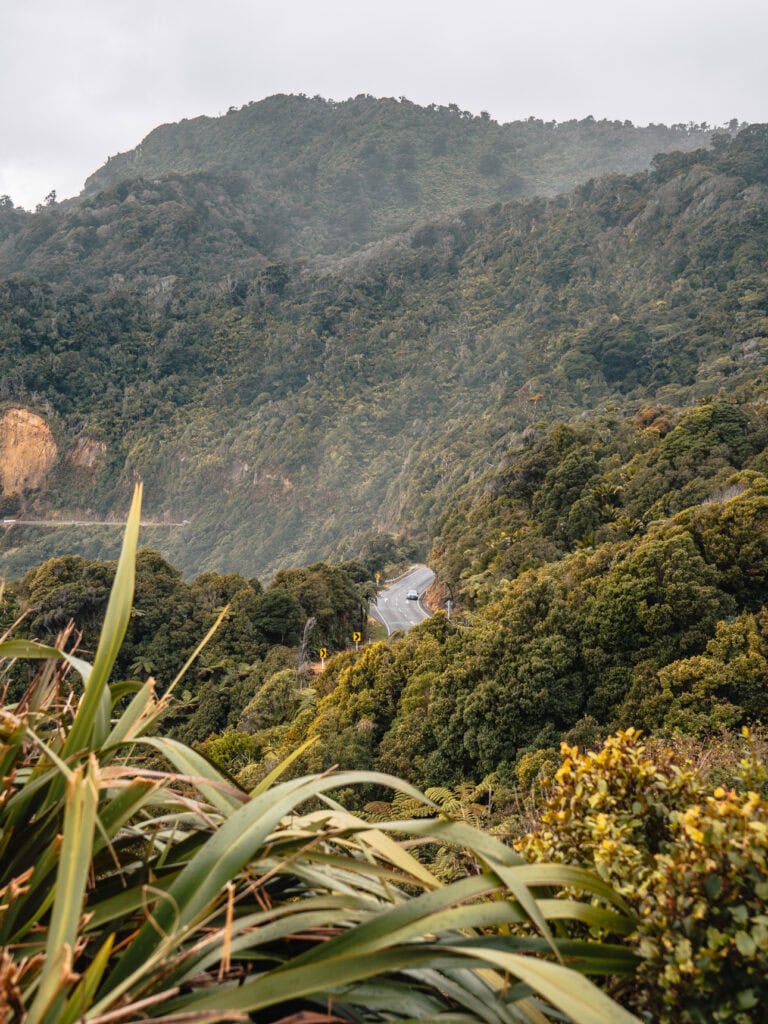
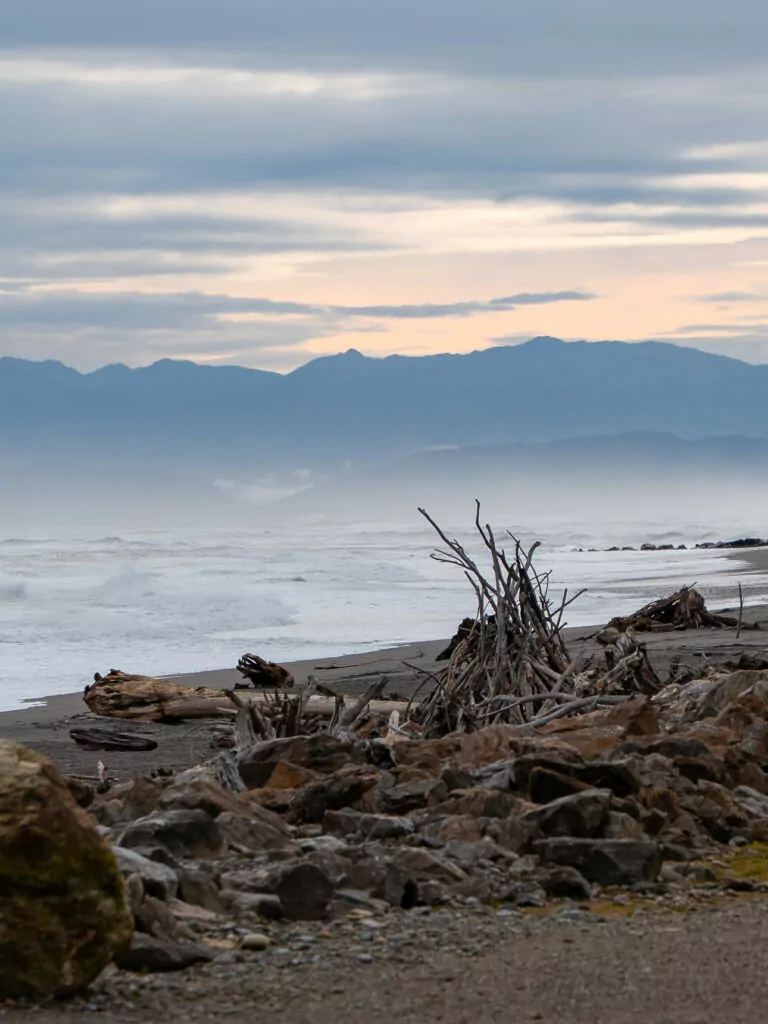
This part of the island feels distinctly local. It’s pretty much untouched by the mass tourism that hammers the main road along the east of the Alps, and it’s one of the best places in the South Island to experience authentic Kiwi hospitality, explore with tiny local operators and enjoy wild landscapes without having to share them with tour buses.
- Great Coast Road
- Hokitika Beach
- Region: West Coast
- Best for: Getting off the beaten track, short scenic walks, outdoor adventures through some of NZ’s most rugged terrain, stunning coastal drives, pounamu (greenstone).
- Key places: Westport (coastal town near Cape Foulwind and the seal colony), Punakaiki (Pancake Rocks & access to Paparoa National Park), Greymouth (commercial hub & TranzAlpine train station), Hokitika (beach town full of character, best-known for the famous Hokitika Gorge).
- My absolute #1 must-do: Pounamu carving with Bonz’n’Stonz in Hokitika, where you can hand-craft the most meaningful souvenir you’ll ever take home from a trip. An extremely grounding experience 💚
➡️ Read my full guide: The ultimate West Coast NZ road trip
Glacier Country (lower West Coast)
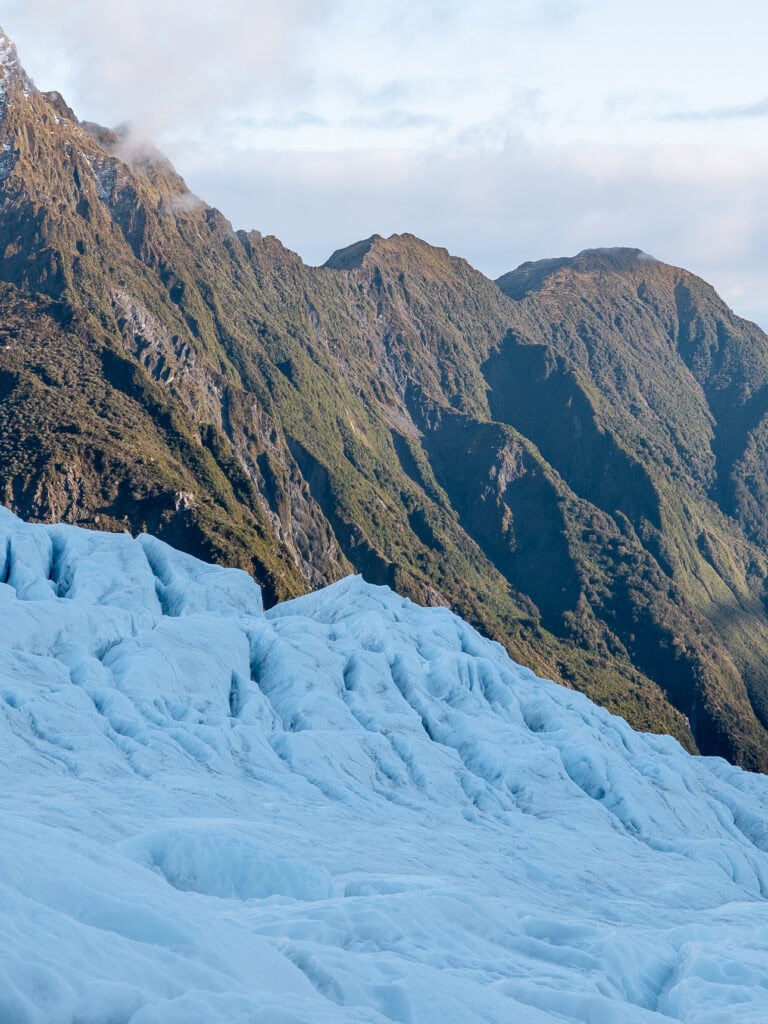
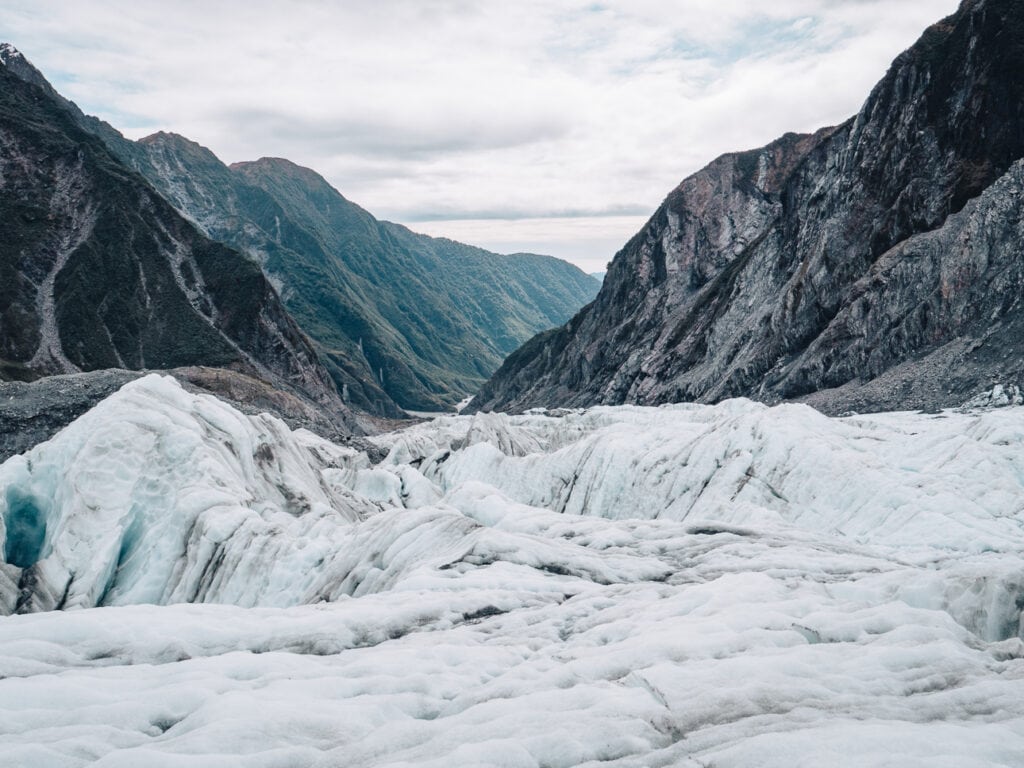
The West Coast landscape shifts dramatically as you head south from Hokitika towards the two Glacier Country towns, Franz Josef Glacier and Fox Glacier. This is one of the only places in the world where glaciers descend into temperate rainforest.
The wind-fuelled collision of sea air and icy mountains is what gives the wild West Coast its nickname and puts it near the top of the list for highest annual rainfall in the country, but don’t let that put you off! Without the rain, you wouldn’t get the lush, Jurassic Park-like vegetation that makes this region so spectacular.
- Franz Josef Glacier
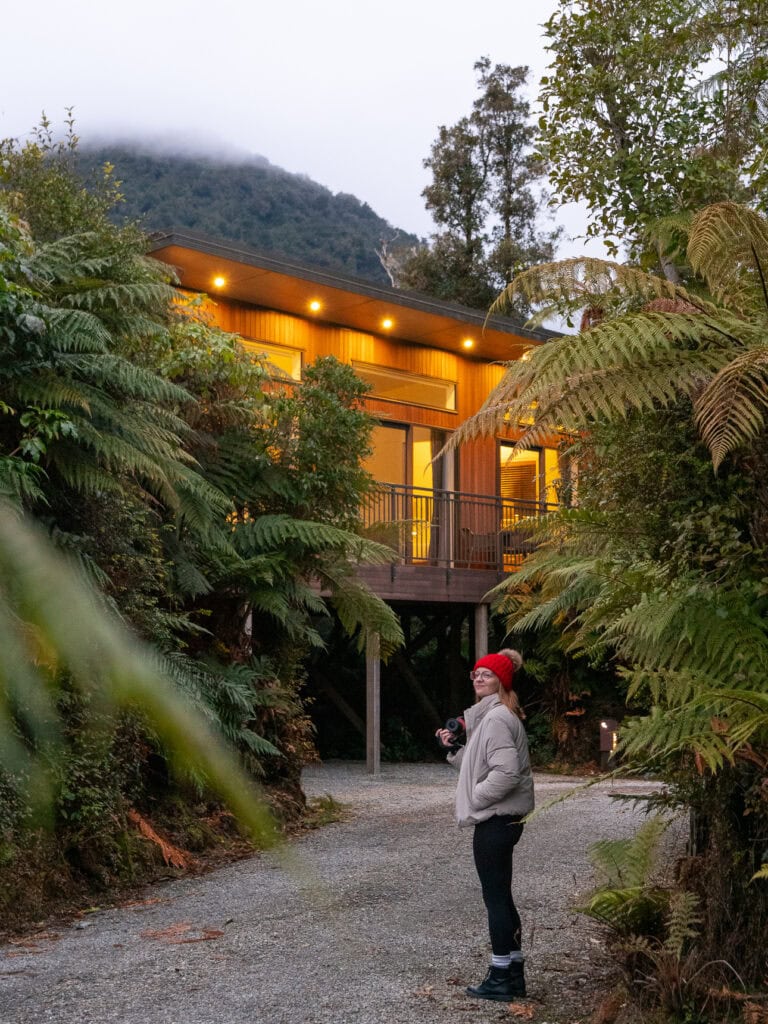
- Rainforest Retreat
- Region: West Coast
- Best for: Glacier adventures, landscape photography, scenic flights, reflection lakes, the only kiwi spotting tour in the South Island.
- Key places: Franz Josef Glacier (main glacier hub town), Fox Glacier (smaller hub 25-30 minutes south), Lake Matheson (famous mirror lake with Aoraki & Mt Tasman reflections), Haast Pass (scenic drive connecting Glacier Country with Wānaka).
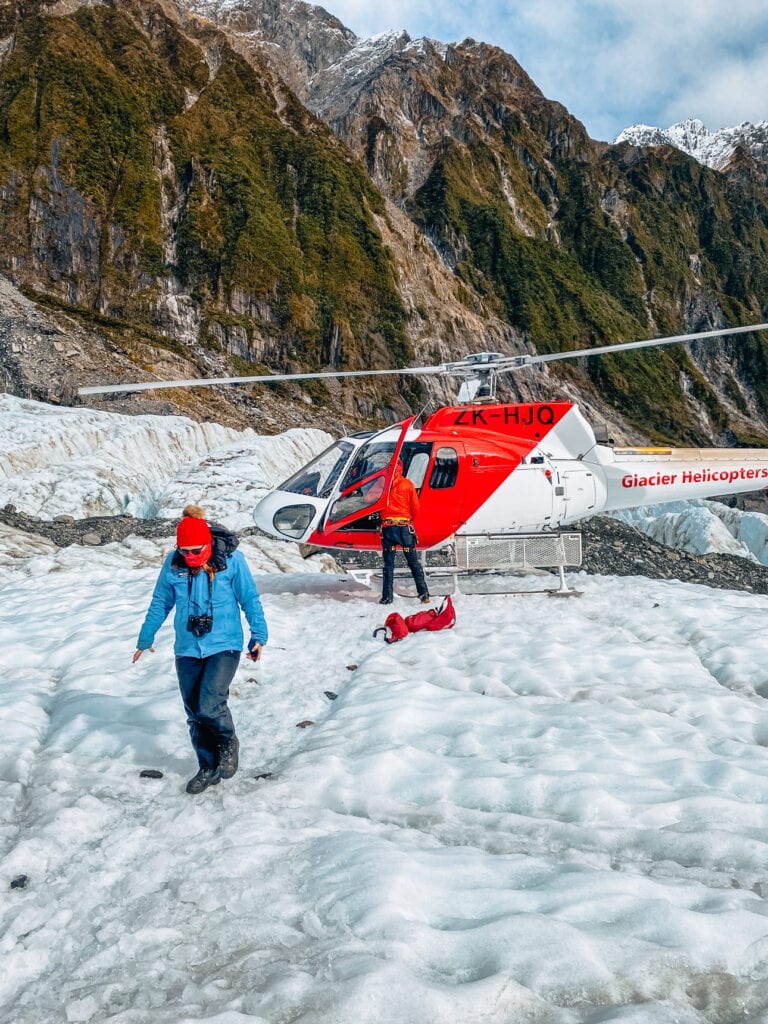
- My absolute #1 must-do: A heli-hike without a doubt, it’s a splurge for sure but it’s a once-in-a-lifetime experience.
➡️ Read my full guide: The ultimate West Coast NZ road trip
Queenstown & Wānaka
Time for the heavy hitters!
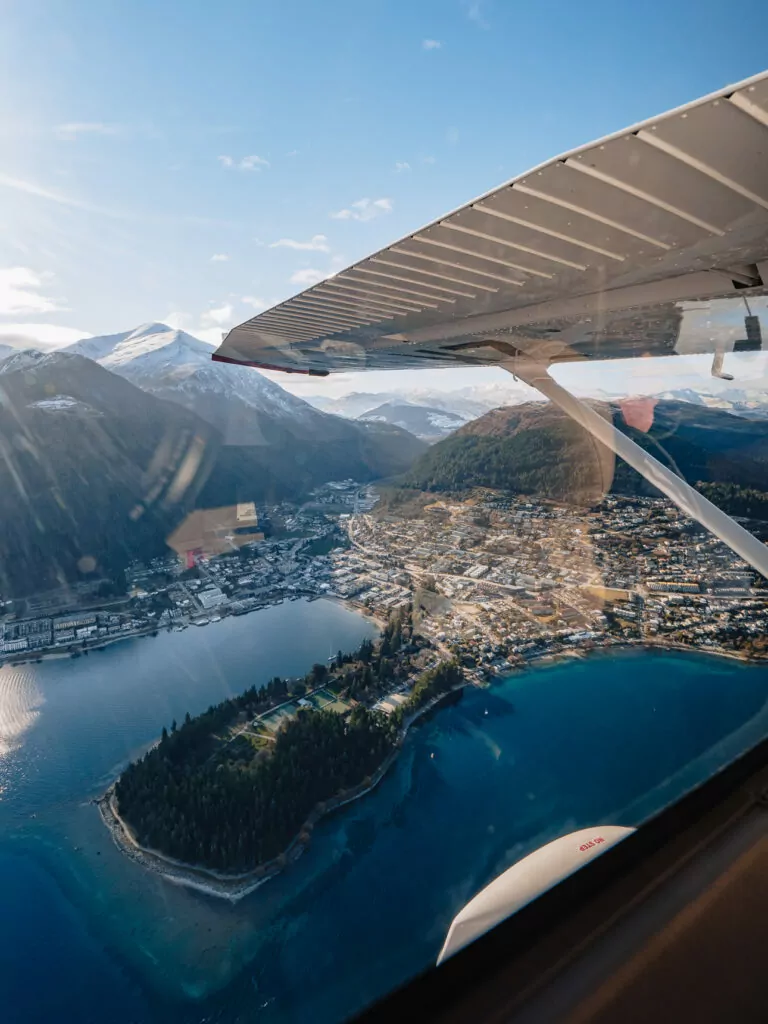
Queenstown is the South Island’s premier tourism destination, widely regarded as the Adventure Capital of the World thanks to its long and varied menu of adrenaline rushes. Bungy jumping began here, you can skydive, paraglide or zipline over forests, raft over rapids or jetboat through narrow canyons, you can even leap out of the water in a shark-shaped semi-submersible 👀 yes, for real.
Throw in luxury hotels, upmarket dining precincts and designer retail stores, plus panoramic views of mountains and Lake Wakatipu, and it’s no surprise Queenstown is so popular.
- Queenstown
- Brennan Wines

On the other side of the Crown Ranges is Wānaka, a smaller, quieter, slower-paced and less commercialised option, though it’s developing pretty rapidly and visitor numbers are growing year on year.
You could choose one as a base and day trip to the other to tick it off the list, or if you’ve got more time in Central Otago consider staying in both and seeing which one you like best.
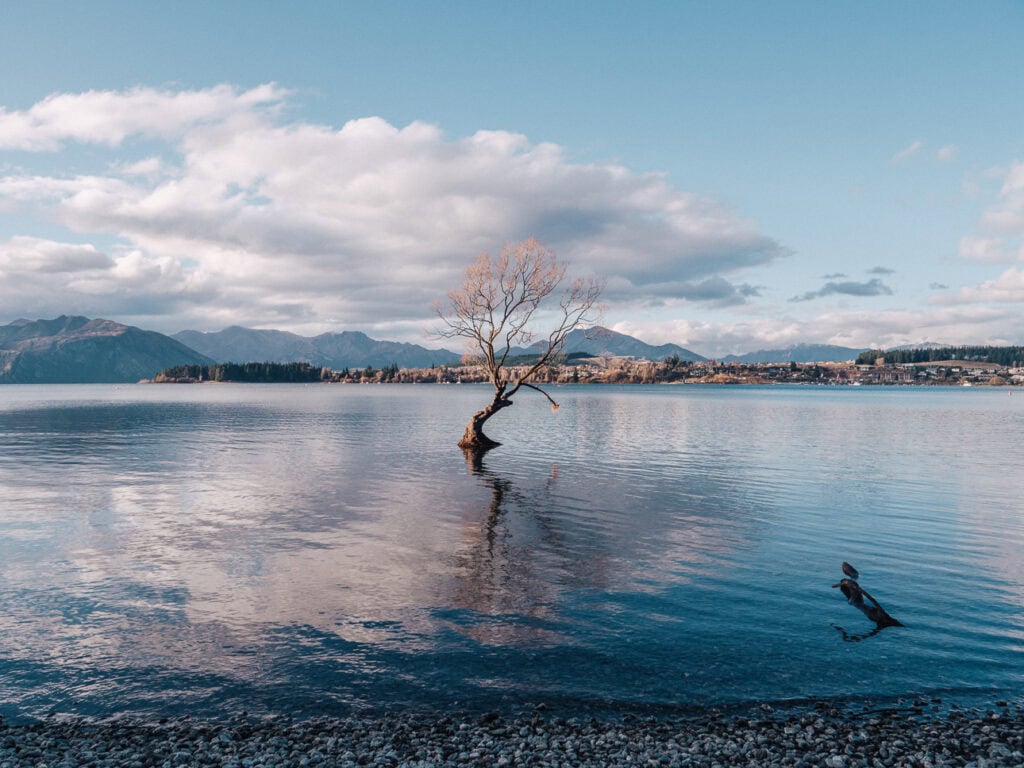
- Region: Otago
- Best for: Skiing/snowboarding, bucket list adventures, epic hikes, fine dining, fancy hotels, wineries.
- Key places: Queenstown (tourism hot spot), Wānaka (more local vibe), Arrowtown (historic goldmining village famous for autumn foliage), Glenorchy (gateway to the Routeburn Track & a bunch of LOTR filming locations).
- My absolute #1 must-do: Nearly impossible to choose but I think I have to go with Wildwire Wānaka, one of NZ’s only via ferrata (rock climbs using iron rungs and cables) and the highest waterfall cable climb in the world.
➡️ Read more: The perfect five day Queenstown itinerary
Fiordland
Larger than Yellowstone and Yosemite National Parks combined and 2-3 times wetter than the Amazon Rainforest, Fiordland National Park is alllll about the extremes.
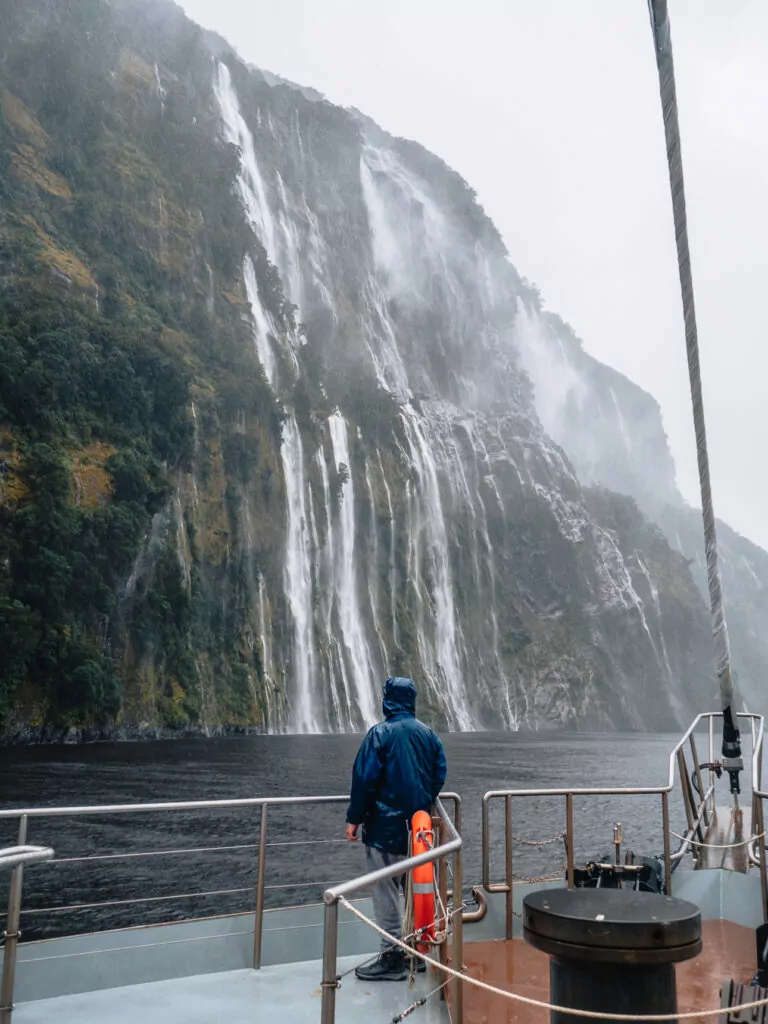
Milford Sound / Piopiotahi gets the majority of the tourist attention here, with daytripper-filled buses pouring in from Queenstown each morning for the two hour cruise before the long drive back, but Doubtful Sound / Patea is more secluded, more intimate and less-visited if that’s what floats your boat.

If you can spare a night or two in Fiordland itself you can cut drive times, have more room for extra activities, and your trip will be exponentially more enjoyable.
- Milford Sound Lodge
 Kayaking with Roscos Milford Kayaks


- Region: Southland
- Best for: Fiord cruises and kayaking, Great Walks (huts need to be booked in advance in season), waterfalls, scenic road trips and landscapes so beautiful they’ll probably bring tears to your eyes.
- Key places: Te Anau (basecamp for Fiordland National Park), Milford Sound (unofficial 8th Wonder of the World), Doubtful Sound (less-visited alternative), Manapouri (gateway to Doubtful).
- My absolute #1 must-do: Stay in Fiordland overnight. You could use Te Anau as a base to be closer to the action, book Milford Sound Lodge or its onsite campground to be one of the lucky few who get to witness a Piopiotahi sunset, stargaze or sunrise, or splash out on an overnight cruise on Milford or Doubtful Sound for the ultimate Fiordland adventure.
➡️ Read more: Milford Sound vs. Doubtful Sound: Which one is best?
Dunedin & the Otago Peninsula
Settled by Scots in the 19th century and ruled by students pretty much ever since, Dunedin is the South Island’s second-largest city, sitting on the southeast coast about 3.5 hours east of Queenstown and 4.5 hours south of Christchurch.
Just 20 minutes from the city centre is the Otago Peninsula, a mecca for nature lovers and photographers. Here you can see rare yellow-eyes penguins nesting in the windswept coastal scrub, massive sea lions defying gravity (🎤💚🩷) to haul themselves onto the rocks, and royal albatross enjoying their only mainland breeding colony in the world.
- Larnach Castle
 Portobello, Otago Peninsula
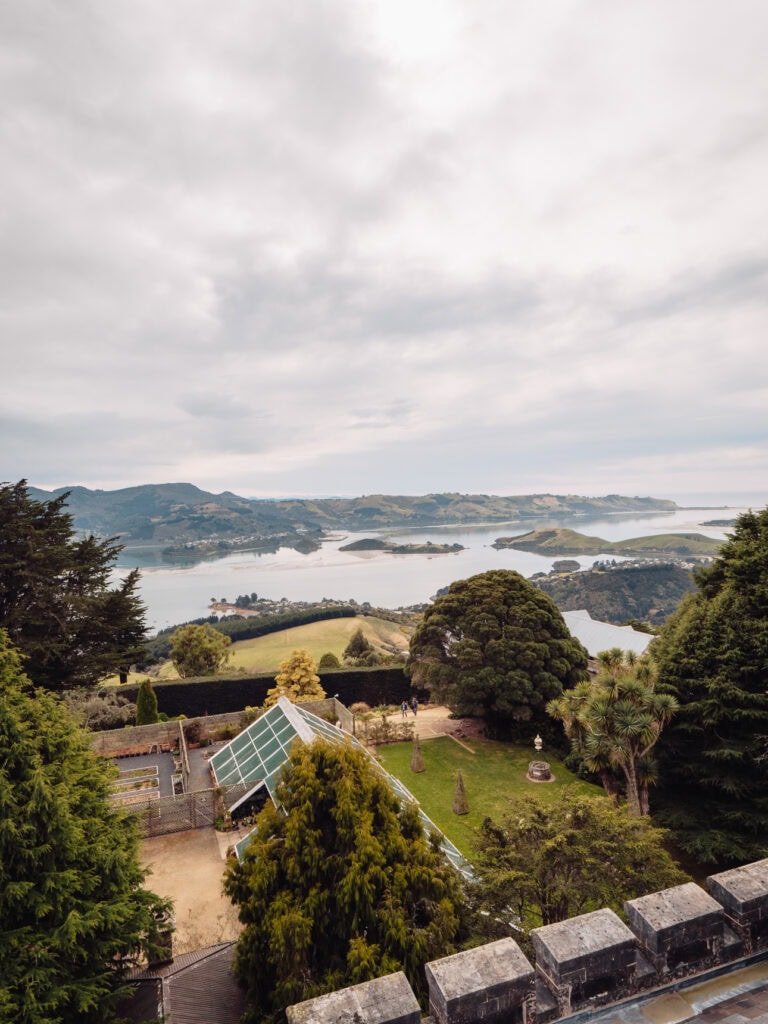
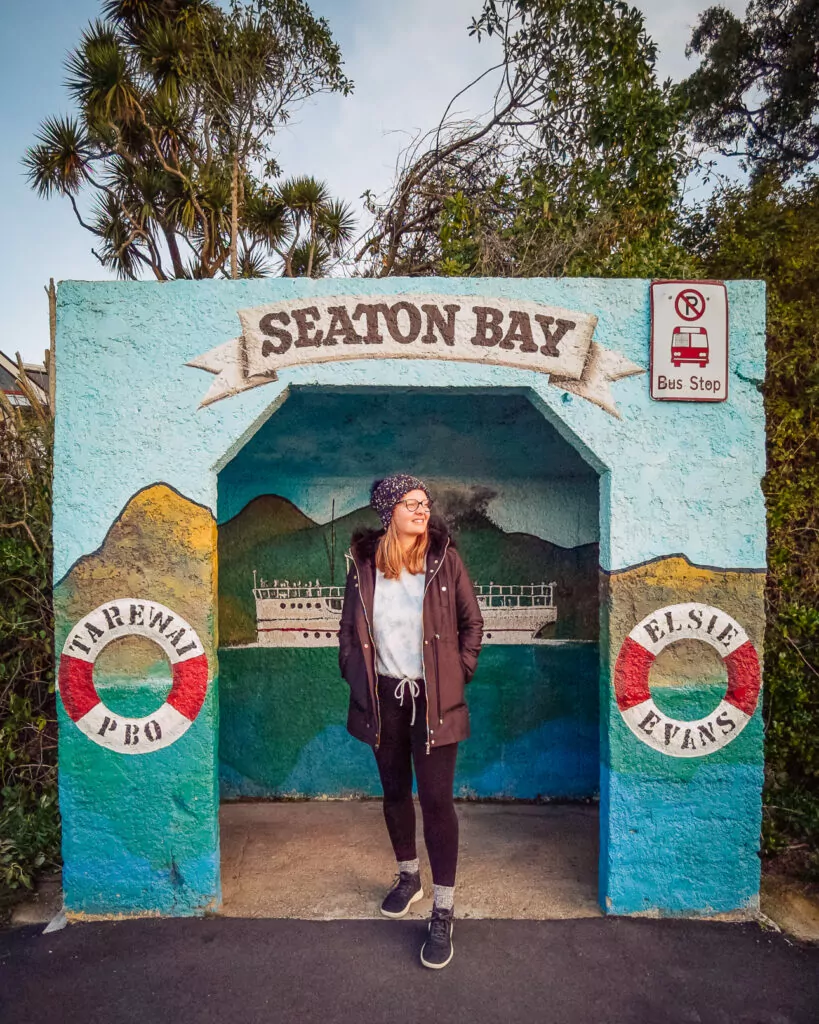
This part of the country often gets skipped in favour of more iconic destinations by time-challenged travellers, but if your South Island trip is more than a few weeks, or if wildlife spotting is a top priority, it’s a worthy contender for a less touristy detour.
- Region: Otago
- Best for: Wildlife watching, heritage architecture, craft beer, street parties if you’re in your late teens/early 20s🙃
- My absolute #1 must-do: I haven’t actually done this yet because they weren’t running when I last visited Dunedin, but this top-rated wildlife tour will be first on my agenda.
The Catlins
The bottom right corner of the South Island is one of the most raw and rugged places in Aotearoa, with wind-battered headlands, seaside villages that feel like a step back in time, and a literal petrified forest that only appears at low tide.
I know “hidden gem” is ridiculously used by travel bloggers but there’s genuinely no better way to describe this slice of the coast, even many Kiwis won’t have heard of it before! Those who do make it here tend to be intrepid campervanners, surfers or keen hikers with an appetite for unspoiled scenery, close-up wildlife experiences and off-grid stays.

- Region: On the Otago and Southland border
- Best for: Road tripping, surf beaches, waterfalls, wildlife encounters, feeling like you’re at the end of the earth (because you basically are!).
- Key places: Nugget Point (iconic headland with a lighthouse and viewpoint), Kaka Point (popular park-up spot for campervans close to Nugget Point), Owaka (tiny service town), Papatowai and Waikawa (tiny settlements on either side of the Catlins Forest Park), Curio Bay (Petrified Forest location + nesting area for yellow-eyed penguins), Porpoise Bay (next to Curio, known for Hector’s dolphins), Slope Point (southernmost point of the South Island).
- My absolute #1 must-do: My Catlins highlight was kayaking around Nugget Point but the only kayak tour operator has since closed down ☹️ The runner up would have to be seeing Nugget Point from the lighthouse path, ideal at sunrise if you can drag yourself out of bed that early!
Bluff & Stewart Island
At the tail end of the island you’ll find Bluff, a scruffy little port town that marks the end of State Highway 1 for road trippers and the Te Araroa trail for hikers (the 3000km trek from the top to the bottom of New Zealand). If you’re not a take-a-photo-with-a-travel-signpost kind of traveller then there are two other reasons to come here: to try some of the best oysters in the world, and to catch the ferry over to Stewart Island.
Stewart Island / Rakiura sits just offshore, accessed by a one hour boat trip across the Foveaux Strait, and offers visitors unmatched opportunities for birdwatching, stargazing (it’s a Dark Sky Sanctuary), fishing and other outdoor adventures.

If you’re short on time then chances are Rakiura won’t make it onto your list for your first trip, but if the Aurora Australis or seeing a kiwi in the wild is on your bucket list, this is the absolute best place in New Zealand for both.
- Region: Southland
- Best for: Kiwi spotting, hiking, astrophotography, fresh seafood, the Southern Lights (best from March to September).
- Key places: Bluff (mainland ferry terminal), Oban (Stewart Island’s only town, located in Halfmoon Bay), Rakiura Track (the island’s 32km Great Walk), Ulva Island (a predator-free wildlife sanctuary inside the Paterson Inlet, a short water taxi or ferry from Halfmoon Bay or Golden Bay), Invercargill (mainland farm town about 2h 30m from Queenstown with an airport that has 20 min flights to Stewart Island).
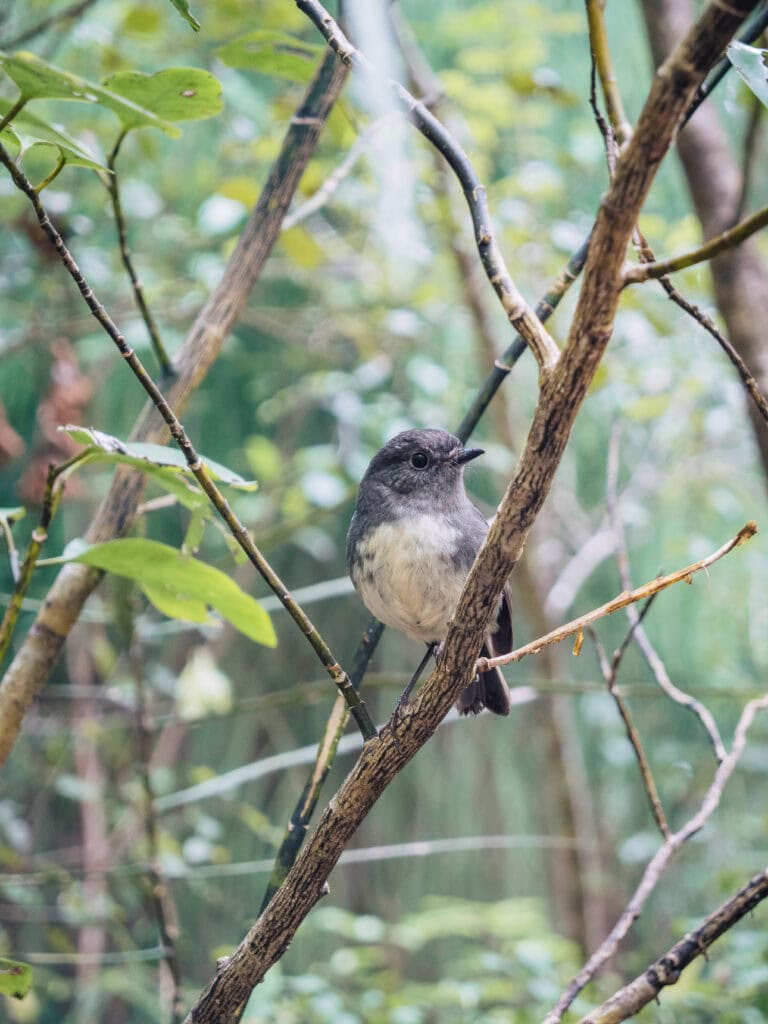
- My absolute #1 must-do: A guided tour to see wild kiwi for sure. They have a really strong kiwi population and few predators which means the kiwi are suuuper chill, it’s not unheard of for hikers to stumble across the normally-nocturnal national icon on the Rakiura Track during daylight hours! But booking a tour (we went with Ruggedy Range) gives you the best chance of spotting them while following all DOC guidelines.
How long to spend in the South Island
There’s no “perfect” amount of time to spend in the South Island. In an ideal world we’d all have a year to explore, but this world is far from ideal and most travellers are limited by budget, annual leave or both.
Instead, it’s all about figuring out what you can realistically, comfortably and safely fit into your timeframe.
The key thing to understand is that this place is deceptively slow to get around. A 100km distance on the map might actually be 175km of winding roads, then add 10 photo stops, an icy mountain pass requiring careful driving, a pie shop calling your name for a mid-trip snack, and ta daaa 🪄 that’s how a 1.5 hour drive turns into four hours on the road!
Weather-dependent activities are another factor to keep in mind if you’ve got any non-negotiable adventures on your list. If your heli-hike is cancelled or the Milford Road is closed and you’ve got no buffer days, you’re going to be disappointed.
One week
A good rule for short South Island trips is to choose a quarter of the island to focus on, otherwise you’ll spend too much of your holiday on the road.
You could pick one region and do it properly, either choosing one base to explore from (Queenstown is ideal, Nelson is a good option for Abel Tasman + Marlborough adventures) or splitting your time between two areas close to each other, like Kaikōura and the Mackenzie district (Tekapo, Aoraki etc.).
Another option is to do a one way trip between two airports (or an airport and the ferry) like my Queenstown to Christchurch road trip via Tekapo or Christchurch to Picton road trip via Kaikōura.

2 weeks
Two weeks is what many international visitors have to work with, and it is enough time to have a brilliant South Island experience, but you’ll need to choose one of two approaches.
The first is what I’d reeeeally recommend: pick a half (top, bottom, east or west) and explore it at a comfortable pace with time to truly enjoy each stop, with a bit of a weather buffer just in case.
Follow my Top of the South itinerary around the less-touristy regions, or link my Queenstown to Christchurch road trip with my Christchurch to Hanmer Springs road trip and then follow the West Coast road trip heading south to get back to Queenstown. Too easy!

The second is what most travellers from afar do if this is a once-in-a-lifetime trip: cram the major bucket list spots like Milford Sound, Queenstown, Franz Josef Glacier, Tekapo, Abel Tasman and Kaikōura into a full island loop.
It’s doable at a push, but expect long days behind the wheel and zero flexibility if weather derails your plans or you discover somewhere you want to linger longer. You’ll get to see a lot of beautiful places for sure, but I guarantee you’ll leave the country feeling like you travelled too fast. Don’t say I didn’t warn you 🙃
If you do want to take on this challenge it’s best in a campervan, that way you can claw back a bit of time by avoiding the constant unpacking/repacking.
3 weeks
Three weeks gives you more options.
If you know you’ll only come to the South Island once and want to see all the best bits, you could do the full island bucket list loop at a fast but comfortable pace, with a few buffer days for flexibility.
If you prefer slower travel or if you know this is just the first of multiple South Island visits in your lifetime, spend three weeks exploring half of the island properly with time to really get under the skin of each region.
The full Top of the South route would be brilliant with three weeks, or you could do a deep dive into the bottom half covering Queenstown, Glacier Country, Fiordland, Stewart Island, the Catlins, Waitaki and the Mackenzie District.
4+ weeks
Four weeks or more and the island’s your (Bluff) oyster!
With this much time you can follow my ultimate South Island road trip itinerary, which hits all of the regions at a fast pace. Alternatively you could choose your priority spots, stay 4-5 nights in the places you really love and still have buffer days for spontaneous side quests or weather changes.
Four weeks also means you can venture into the quieter corners most visitors skip, like Stewart Island, the Catlins, the Hurunui district or the remote parts of the West Coast, where you can find some of Aotearoa’s best-kept secrets.

How to get to the South Island
The short answer: Most international travellers arrive by air into Christchurch (CHC), the main South Island gateway for long-haul flights, or fly into Auckland (AKL) in the North Island and book a connecting domestic flight from there. If you’re coming from the North Island then the 3.5 hour Cook Strait ferry from Wellington to Picton is a bucket list experience in itself. Trans-Tasman visitors can also fly into Queenstown (ZQN) or Dunedin (DUD).
Option 1: By air ✈️
There are three international airports in the South Island (two are only trans-Tasman), plus a bunch of small regional airports for domestic flights.
1. Christchurch (CHC)
- The only South Island airport equipped to deal with the huge long-haul jets
- Direct flights to/from Australia, the Pacific Islands, Asia and North America
- Large selection of rental cars and campervans
- Easy access to Kaikōura, Hanmer Springs, Hurunui, the Mackenzie District and the upper West Coast (all under 3h 30m by car)
2. Queenstown (ZQN)
- Popular domestic hub and Trans-Tasman gateway with direct flights to major airports on Australia’s East Coast
- Voted one of the most scenic airport approaches in the world, a window seat is a MUST!
- Rental cars and vans are often more expensive and sell out faster than Christchurch due to higher demand and smaller fleets
- Flights can be disrupted by the temperamental alpine weather, make sure your travel insurance covers additional costs due to delays/cancellations because airlines don’t have to cover these in NZ if the reason was out of their control (like weather)
- Easiest access to Wānaka, Fiordland and the Deep South
- Similar distance to Glacier Country and the Mackenzie District as Christchurch
Which side of the plane is best for flying into Queenstown?
Contrary to what AI or viral social posts might tell you, there is no “best side” of the plane when landing in Queenstown, because the direction of the plane’s approach will totally depend on where you’re coming from, weather conditions, air traffic control and loads more.
Queenstown is surrounded by mountains so both sides will get spectacular views no matter what, but if you reeeeally want to pick the perfect seat, look up your flight number on Flight Radar and see if there’s a typical route it takes to land.

3. Dunedin (DUD)
- Primarily a domestic hub but recently restarted a few trans-Tasman flights each week with Jetstar (Dunedin – Gold Coast)
- If you’re linking the two countries then it’s worth comparing this route with Queenstown and Christchurch prices
- Handy entry point if you want to focus on the coastal Otago region
4. Domestic flights to regional airports in the South Island
If you’re arriving from afar into Auckland or Wellington and need to connect domestically, or if you’re already going to be in the North Island and need to fly south, there are a few other regional airports to consider.
- Nelson (NSN) or Blenheim (BHE) for easy access to the top of the South Island (Abel Tasman, Marlborough, Kaikōura, upper West Coast)
- Invercargill for easy access to the Deep South, Stewart Island or even Fiordland without having to deal with the Queenstown chaos
One important note about domestic flights is that they can be notoriously expensive in New Zealand, especially around school holidays, commuter days, if you’re inflexible with your plans or if you’re booking last minute. Book in advance if you need to fly between the islands.
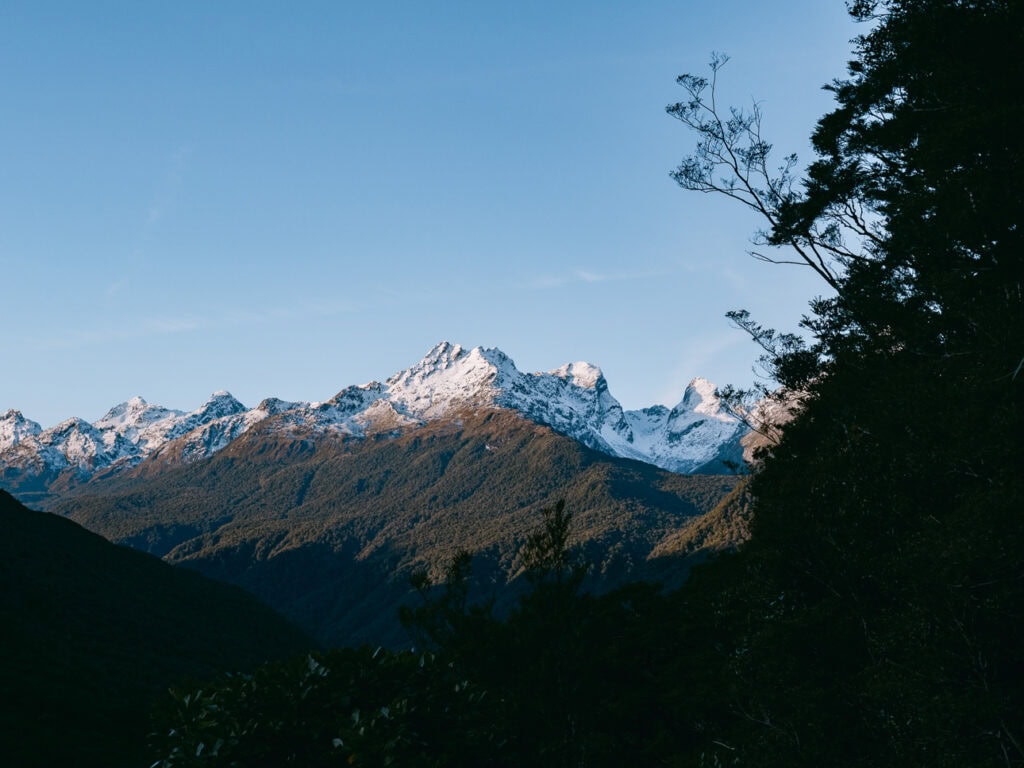
Option 2: By ferry ⛴️
If you’re already in the North Island, or if you’re planning a full New Zealand road trip, the Cook Strait ferries are how you (and your vehicle) get between the islands.
Important things to know about the Cook Strait ferries
- Ferries link Wellington in the North Island with Picton in the South Island
- The crossing takes about 3h 30m each way
- You can travel as a walk-on passenger or take a car, campervan or motorbike on board
- The Cook Strait is pretty exposed and the sea can be rough, ferries will be cancelled if conditions are unsafe but “safe” swells can still be pretty uncomfortable if you’re not used to boating on the open ocean. Take seasickness medication with you!
- The approach into Picton through the Marlborough Sounds is stunninggggg, try to be out on the top deck for this part if the weather is okay
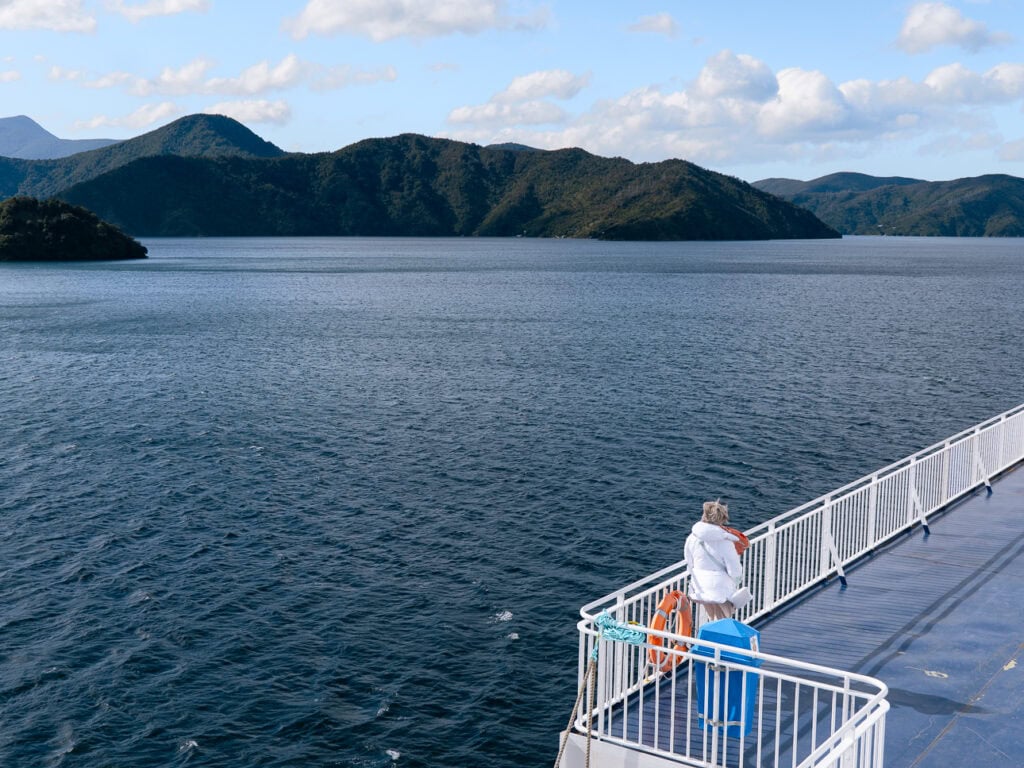
Perhaps most importantly though, book your ferry crossing well in advance. The ferries often get fully booked, especially if you’re travelling during summer or around school or uni holidays. If your trip relies on getting a vehicle from one island to the other, book as soon as you’re happy to commit to a date.
What happens if the Cook Strait ferry is cancelled?
If your Cook Strait ferry is cancelled you’ll usually be moved to the next available crossing or offered a refund, but weather-related cancellations can often hit a number of sailings and cause a messy backlog.
It’s a good idea to add a buffer after your planned crossing day before diving into the South Island adventures, this way if you do take a day or two to get there it won’t absolutely derail your trip.
If a ferry has been cancelled for a reason within the company’s control, like staff issues or mechanical problems (not external things like weather), you’re within your rights to claim for foreseeable losses or additional costs like extra accommodation, but this process can take a while. You can read all the info on that consumer.org >>
Which Cook Strait ferry is best?
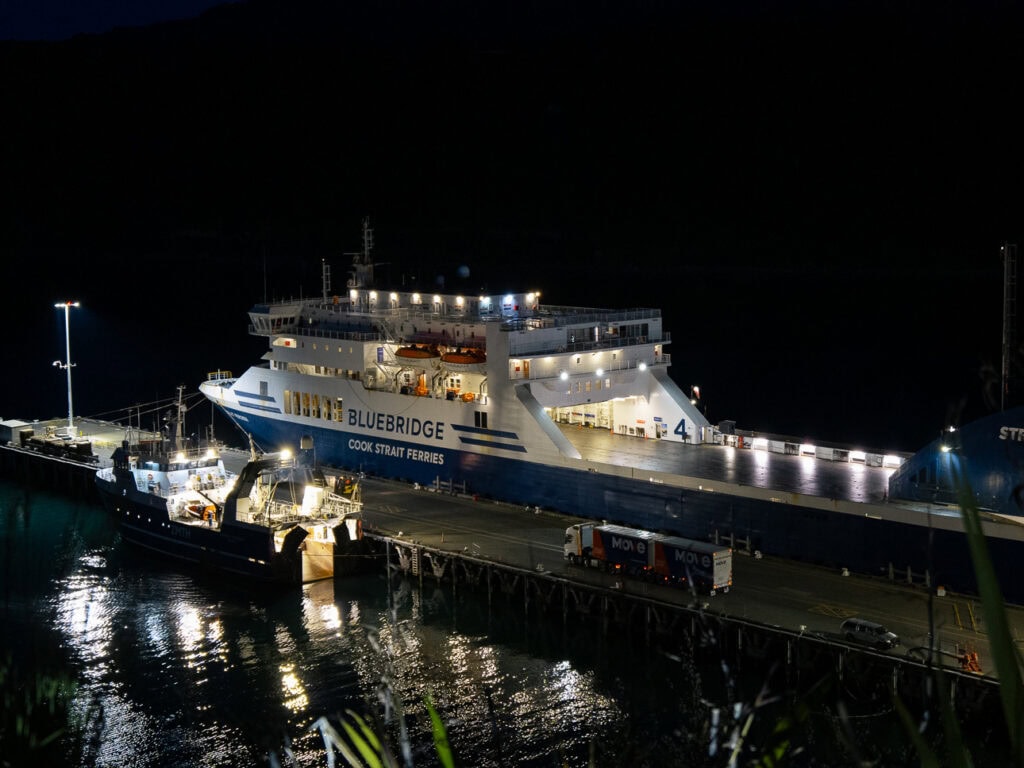
Two companies operate ferry services over the Cook Strait: Interislander and Bluebridge.
For most travellers it won’t make a huge difference which one you choose. They both service the exact same route in the same amount of time with pretty similar timetables. Both currently have two ships (Interislander used to have three but retired one in August 2025, and won’t get their two new ships until 2029 at the earliest).
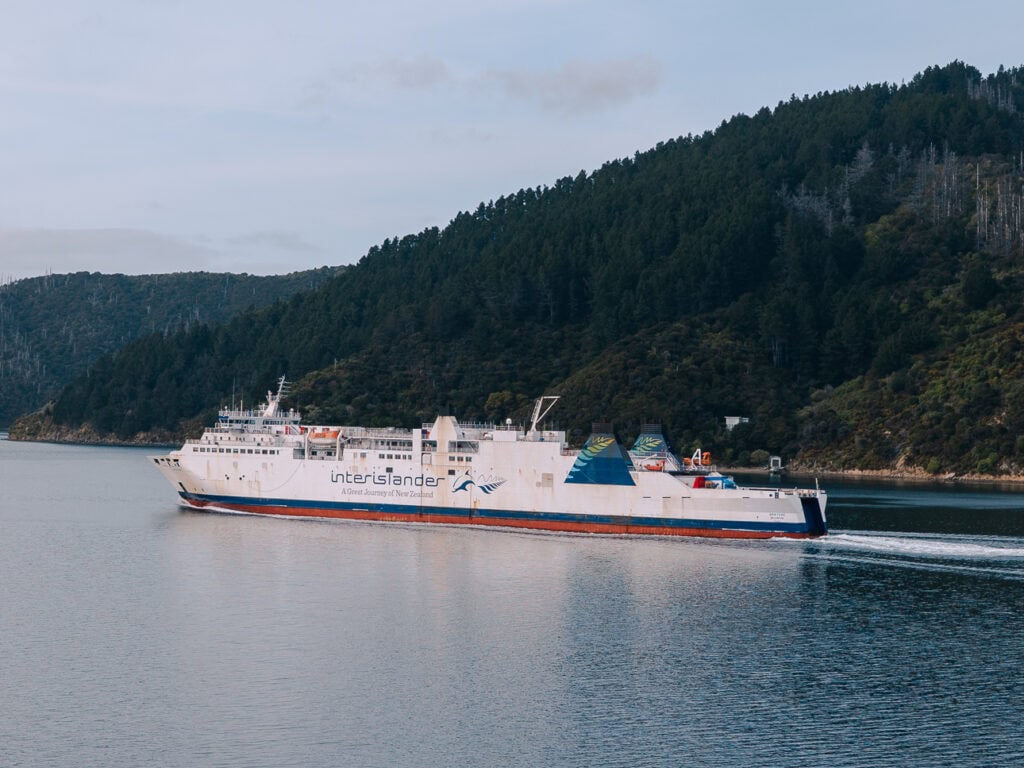
All of the ships are comfortable for a quick journey but nothing fancy, certainly don’t expect a cruise ship with entertainment! Exact amenities depend on the specific ship but all of them have casual dining options, viewing decks, dedicated kids zones and various seating areas.
I personally prefer travelling with Bluebridge for a few reasons:
- Both of their ships have private twin cabins for $60 and I loooove being able to drop my stuff in my room while I run around the decks taking photos. It’s also much comfier to have your own bed to lie down in if the sea’s a little rough.
- One of the Interislander’s ships has four-bunk cabins for $80 (same as Bluebridge’s family cabins) but no cheaper option with fewer beds, so not ideal for a solo traveller or couple/duo.
- They have dog-friendly cabins! Not that I have a dog, but this just makes me happy.
- Prices are based on demand but generally a Bluebridge sailing will be $20-80 cheaper than the equivalent Interislander.
- If cabins are sold out, their Connemara ship has the Pōhutukawa Lounge, a premium child-free zone with food and drink included for $80 per person in advance ($85 on board).
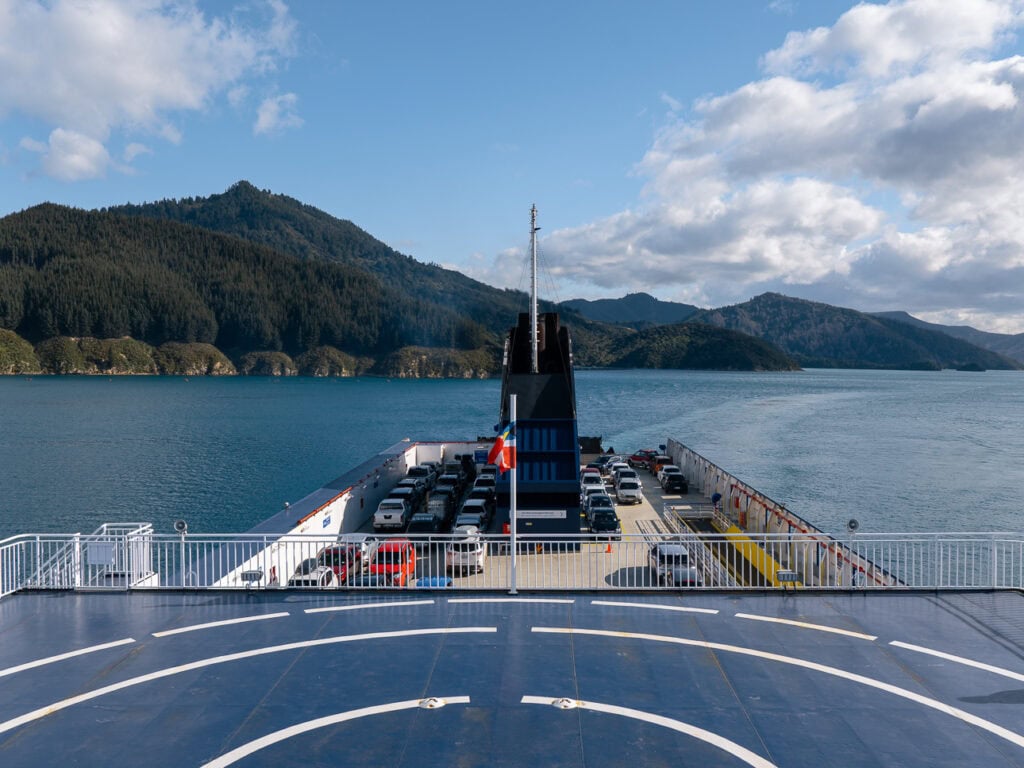
⚠️ IMPORTANT: Taking a rental car on the Cook Strait ferry
All of the Cook Strait ferries allow vehicles, some rental companies encourage dropping a car off at one terminal and picking up a new car on the other side, and at least one company doesn’t allow their vehicles on the ferries.
Here’s what you need to know:
- You need to check with your rental car company what their ferry policy is before you make your plans, you can’t try and sneak it past them because it’ll void your insurance if anything goes wrong
- Most rental companies allow vehicles on the ferry but many charge very high relocation fees (up to $1000NZD) if you’re dropping it off on the other island
- Some rental companies have depots in both Wellington and Picton and allow a North Island/South Island exchange, which means you can buy a walk-on passenger ticket for the ferry (much cheaper) and avoid such a pricey inter-island relocation fee.
- Some companies might not allow their cars on the ferry at all. It used to be a small handful but I’ve just read a bunch of rental policies and the only one I can see now that’s a hard no is Europcar, most of the others (including Thrifty, Hertz, SNAP, Ezi and Dollar Rentals) allow ferry crossings but with their relocation fees and exchange options clearly stated.
Basically you just need to take into account the additional costs for any options you consider: inter-island one-way fees, one-way fees on the same island, one or two ferry crossings, the difference in price for one long rental vs. two short rentals.
Getting around the South Island
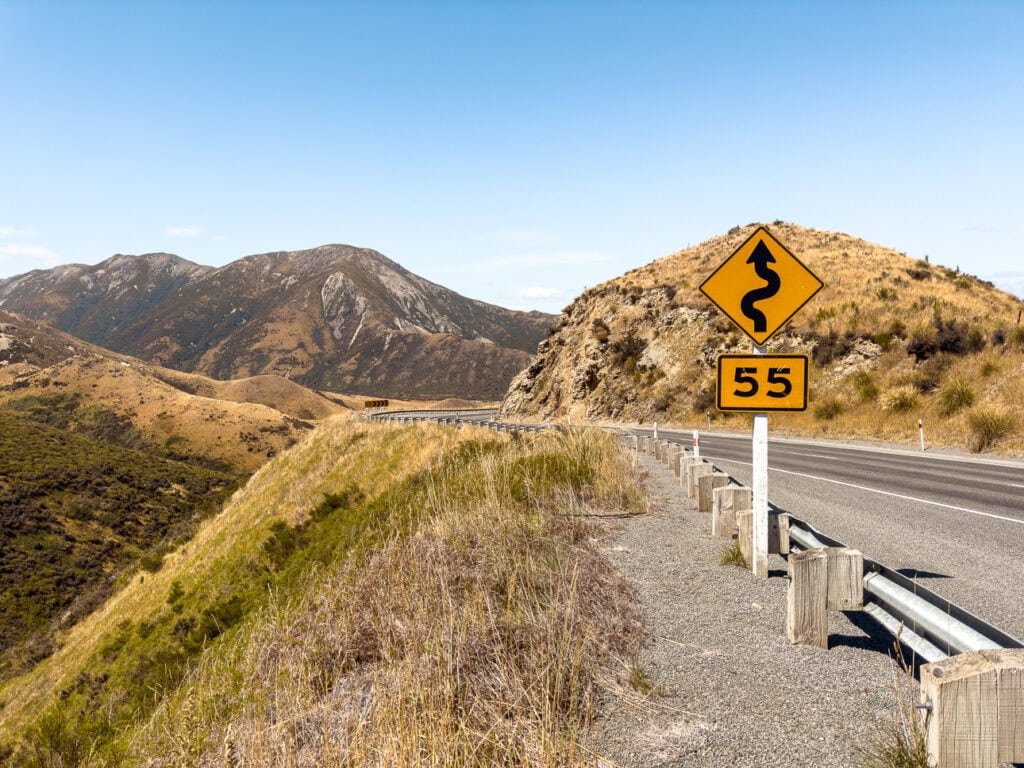
Getting around the South Island is an adventure in itself, with some of the most scenic drives on the planet, winding mountain passes, a ridiculous number of one-lane bridges and the odd farm animal traffic jam.
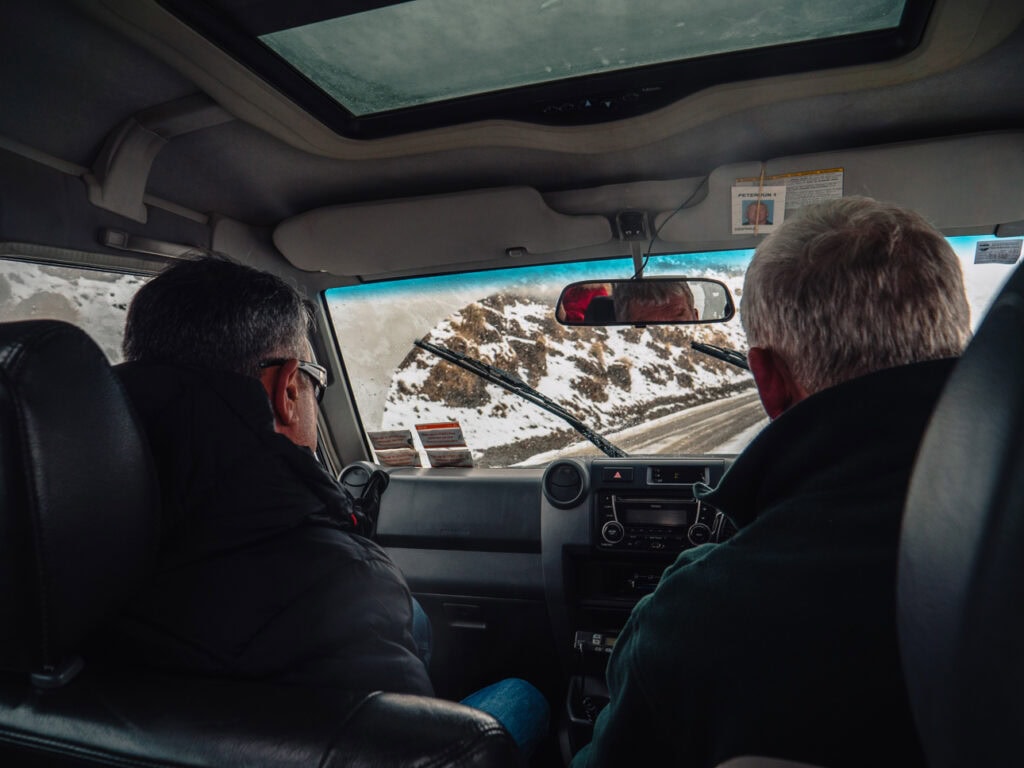
While it is possible to get around using public transport if you’re patient and plan ahead, the reality is that the South Island is built for road tripping. The best hikes, viewpoints and special stays are located far from town centres and bus stops, so having your own set of wheels gives you the freedom to explore properly.
Here’s a quick rundown of your transport options:
1. Renting a car (the most flexible way)
For most first-time visitors, this option offers the best balance of cost and convenience. Modern cars handle the South Island’s narrow roads much better than chunky campervans, you’ll spend less on fuel, and you won’t go mad trying to figure out what cupboard keeps rattling every time you hit a bump in the road.
Important things to know about renting a car in the South Island:
- Book in advance for busy periods, summer fleets sell out months ahead
- Dropping off in a different city can incur a hefty relocation fee, dropping off on the other island can cost up to $1000
- Some rental companies allow you to swap cars at the ferry terminal so you have a car for each island, avoid the inter-island relocation fee, and can save money by buying a walk-on ferry ticket instead of a vehicle
- Most rental cars in NZ are automatic, if you need a manual you might need to shop around to find one
- NZTA Waka Kotahi have a helpful Driving in New Zealand guide for international visitors (available in different languages), give it a read before you hit the road
➡️ Use RentalCars.com or Klook to compare rental car prices across the major operators
Free relocation deals: Bargain or too good to be true? You can sometimes score a free or $1/day rental car on Transfercar or imoova with their relocation deals. They’re generally pretty inflexible (usually 2-4 days, up to 7 days for long distances) but they’re perfect for one-way hops or short trips if you can find cheap flights to/from a regional airport to make it a loop.
2. Renting a campervan (the iconic way)
While a car might be the easier choice, I’d be lying if I said van life didn’t have my heart.
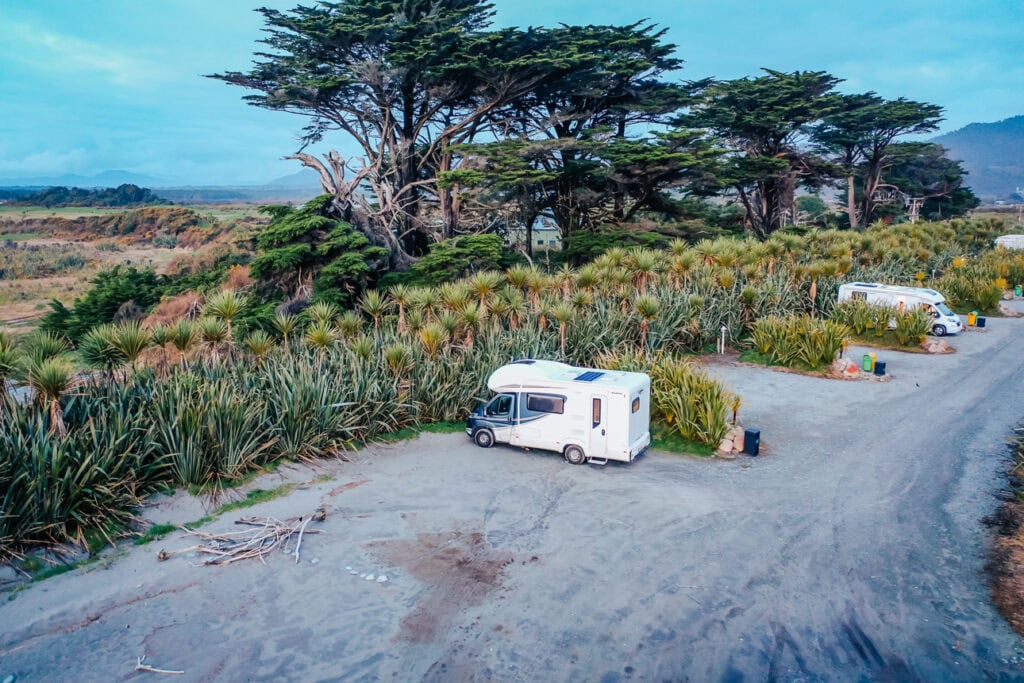
The South Island is a campervanning paradise. It’s got a brilliant selection of campgrounds from holiday parks to DOC sites to freedom camping spots, you can be at the beach for breakfast, the mountains for lunch and the other coast by dinner, and (unlike our trans-Tasman neighbour) you don’t need to check your engine bay or wheel wells for snakes after spending a night parked up next to the bush.

Important things to know about renting a campervan in the South Island:
- If you’re hoping to save money by campervanning, and I cannot stress this enough, avoid the summer months. The exact same campervan can be 2-4 times the price in December-February than if you visited in April-October.
- As with rental cars, book in advance to get the best deals. Campervan fleets have higher demand than supply most of the year, if you leave it too late you might be stuck with no options or premium prices.
- Van life ain’t cheap! On top of the daily rate you’ll want to budget for upgraded insurance (essential, vans are very expensive to fix if something goes wrong), campground costs, Road User Charges for diesel vehicles (usually charged back to you by the rental company) and refuelling every few days.
- Freedom camping rules are currently going through some big changes in different districts, and a new “Green Warrant” certification for self-contained vans will be required from June 2026. If your van isn’t certified to this new standard, you won’t be able to freedom camp or stay anywhere that only allows self-contained vehicles.
- Vans are like yachts with wheels, they catch the wind and require proper concentration and careful driving, especially on winding mountain passes and during winter. Expect drives to take longer and plan this into your itinerary so you’re not stressed on the road.
3. Public transport (the affordable way)
If you don’t drive, if you’re watching your wallet or if you’re a solo traveller who can’t justify the cost of a rental vehicle with no one to split it with, you can still see the major highlights with a bit of patience and planning.

Here are the public transport options for the South Island:
- InterCity buses: The main way to get around without a car, InterCity buses have daily (or more) services on major routes like Queenstown <> Christchurch and Christchurch <> Picton, and more remote regions like the West Coast have a handful of services each week. Journeys are long but the buses are comfortable and prices are relatively affordable.
- Scenic trains: There are only two passenger trains in the South Island, the TranzAlpine between Christchurch and Greymouth and the Coastal Pacific between Christchurch and Picton. They’re tourist-focused bucket list trips rather than just a way to get from A to B, but if you don’t want to drive they’re a great way to connect Marlborough with Christchurch and onwards to the West Coast.
- Hop-on hop-off passes: Maximum flexibility without having to plan all the logistics from scratch, the Kiwi Experience bus is a backpacker classic (super social!) and InterCity’s TravelPass offers a convenient pre-planned route that you can get on and off as you wish.
4. Multi-day tours
In New Zealand there are plenty of extended tour options for different travel styles, from backpacker bus tours, family-friendly group trips, solo-only adventures or high end experiences for the most discerning of visitors.
➡️ Check out all the New Zealand tour options and compare routes and ratings on TourRadar
5. Day trips
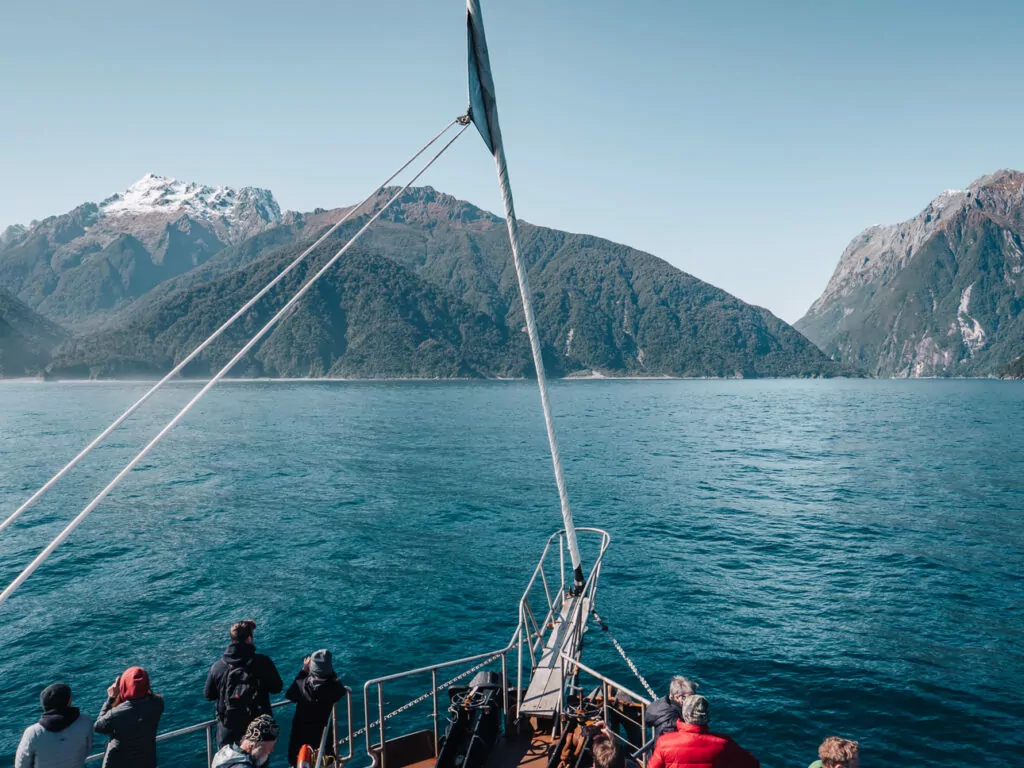
Organised day trips from hubs like Queenstown and Christchurch are an easy and convenient way to tick off some of the bucket list spots without needing to spend hours behind the wheel yourself, ideal if you’re short on time. Some of the most popular day trips in the South Island are:
- Milford Sound
- Doubtful Sound
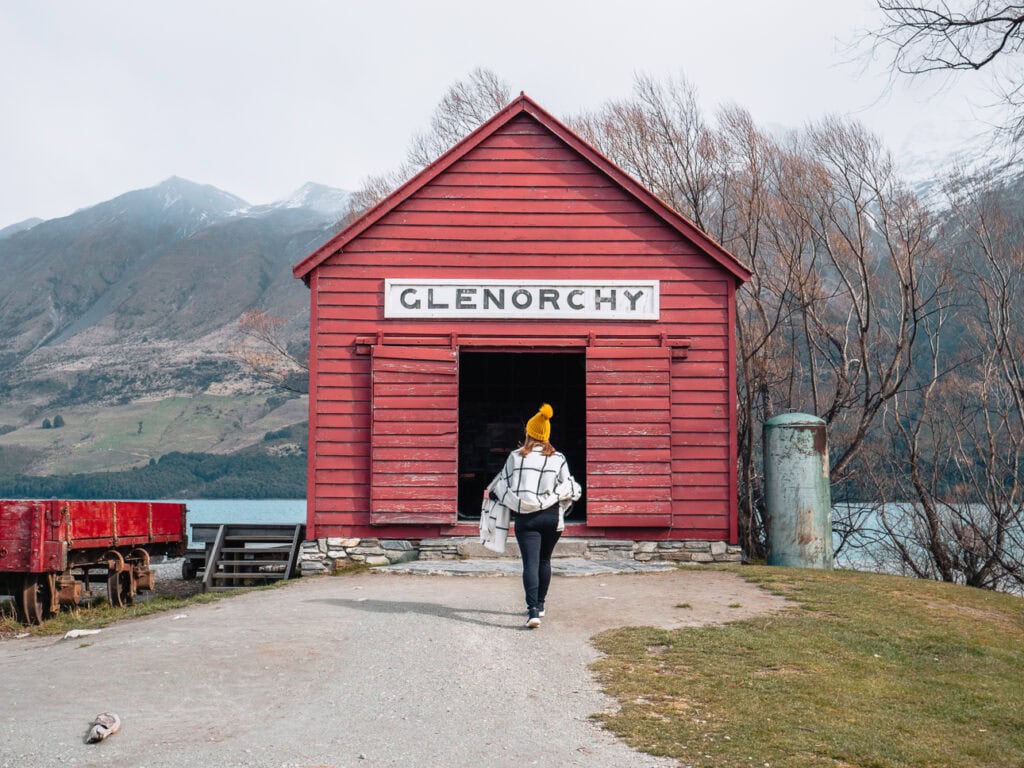
- Glenorchy
- Aoraki / Mount Cook and Tekapo
- Wine tours around different wine regions
- Lord of the Rings film location tours
Some day trips offer hotel pick up and drop off, some will have a set meeting point, some are in big buses, some in smaller vans, some offer private tours. Most will be in English but there’s a growing number of operators who offer guided day trips in different languages.
One thing to note with day trips is that they are, by design, incredibly touristy. If you have your own car, one of the travel rules I live by is to stay overnight at classic “day trip” destinations, because these places are always at their best before the buses arrive and after the day trippers depart.
6. Shuttles & transfers
If you just need to get from A to B without the faff of getting to a bus stop, there are private transfers and shared shuttles that offer door-to-door transport around the South Island.
These are generally small local operators and there’s no comprehensive transfer directory for NZ, so your best bet is to just Google ‘transfer from x to z’ to find the options.
Where to stay in the South Island
While some travellers think that accommodation is just somewhere to sleep at night, I firmly believe that your hotel, hostel or even your campground can absolutely make or break your trip.
Types of accommodation
From award-winning luxury lodges to basic DOC campsites and everything in between, here’s a quick rundown on the different types of stays you’ll find around the South Island:
- Hotels: Mainly found in the main cities and tourist towns (Christchurch, Queenstown, Dunedin). There’s a small number of international chain hotels but most are local chains or independently-owned.
- Motels: By far the most common accommodation option in the South Island, you’ll find them everywhere from the big cities to tiny villages in the middle of nowhere. They’ll usually have studios with kitchenettes perfect for short stays, some will have multi-room options with full kitchens. Quality, comfort and price can vary drastically, so always read recent reviews before booking anything.
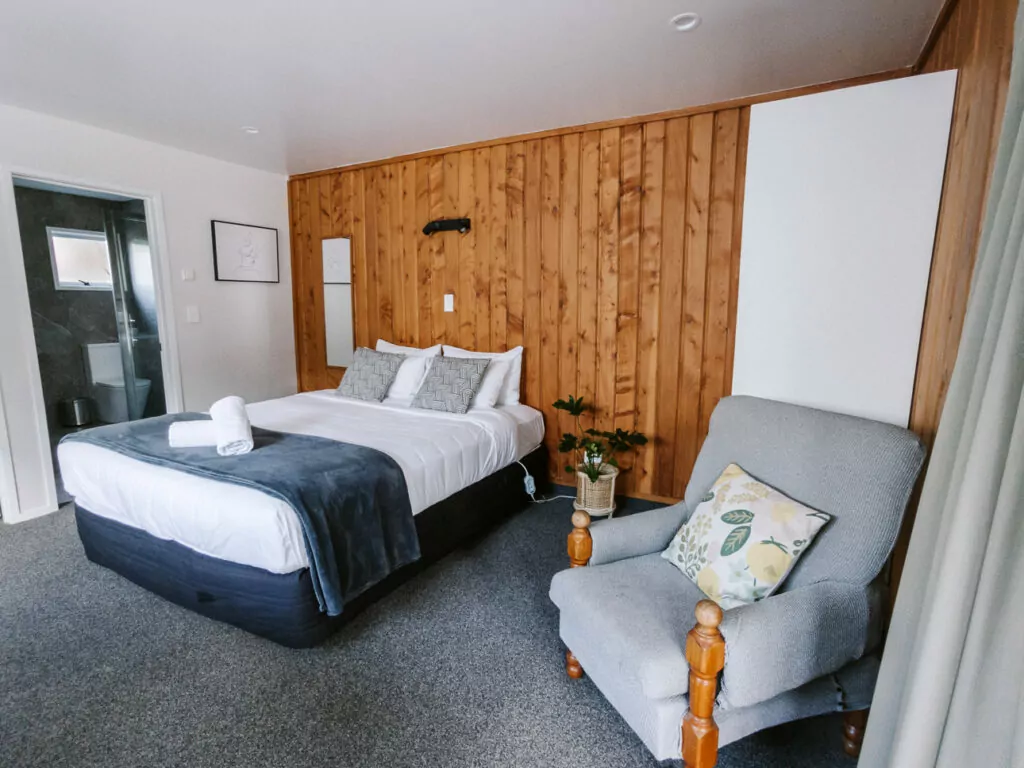
- Holiday parks & campgrounds: Not just for campervanners! Many Kiwi holiday parks have offerings for different travel budgets, like non-powered tent sites, powered sites for vans, cheap cabins, family units and even glamping tents and fancy apartments. Most will have shared kitchen and bathroom facilities, some have additional amenities like games rooms, hot tubs, swimming pools and playgrounds, and then there are back-to-basics campgrounds that offer simple facilities for a low nightly price. The main holiday park chains are TOP 10, Tasman Holiday Parks and Hampshire Holiday Parks, but there are lots of independent ones too. Again quality can vary, use the Rankers or Campermate apps to check reviews.

- Hostels: From basic backpacker dorms to modern capsule-style rooms with premium amenities (and premium prices), hostels are a great way to save money and meet other travellers. NZ’s hostel scene was hit hard by Covid so don’t be surprised if some online recommendations no longer exist or show up under a different name.
- Luxury lodges: Ultra-exclusive retreats in remote locations with spectacular views, often with gourmet dining, world-class service and a hefty price tag. Some of the best are Hapuku Lodge (Kaikōura), Amuri Estate (Hanmer Springs), Mt Cook Lakeside Retreat (Lake Pūkaki), Fiordland Lodge (Te Anau), Azur Lodge (Queenstown) and Blanket Bay (Glenorchy).

- Holiday homes & Airbnbs: Handy for groups, families or longer stays, short-stay holiday homes and apartments usually give you more space, a full kitchen, laundry facilities and home comforts. They’re often quite fairly priced if you’re splitting the cost between multiple people, but watch out for cleaning fees, strict cancellation policies and logistics like key pickup or check in/out times.
- Farm stays: The most authentic way to experience classic southern hospitality, a farm stay is usually a bed and breakfast-type setup or self-contained accommodation on a working farm. Some will offer farm tours or homecooked dinners for an additional cost.

- DOC campsites: DOC (Department of Conservation) manages more than 100 different campsites on conservation land around the South Island, often the cheapest option for an overnight stay. Facilities vary, and usually the more accessible locations require bookings in advance.
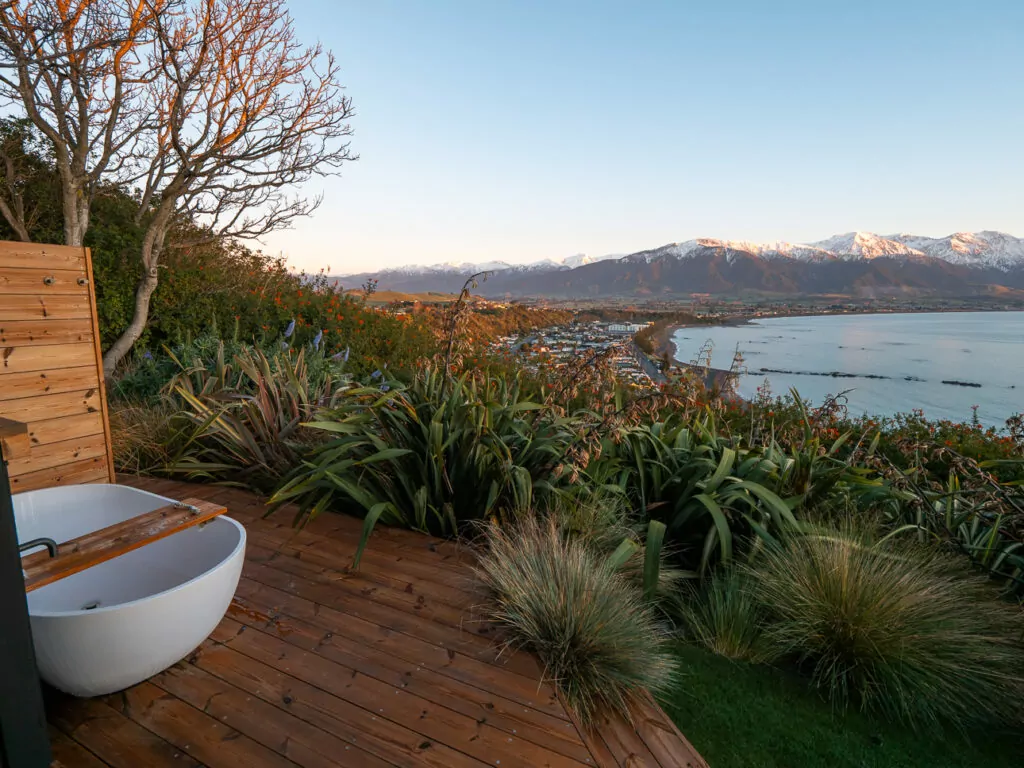
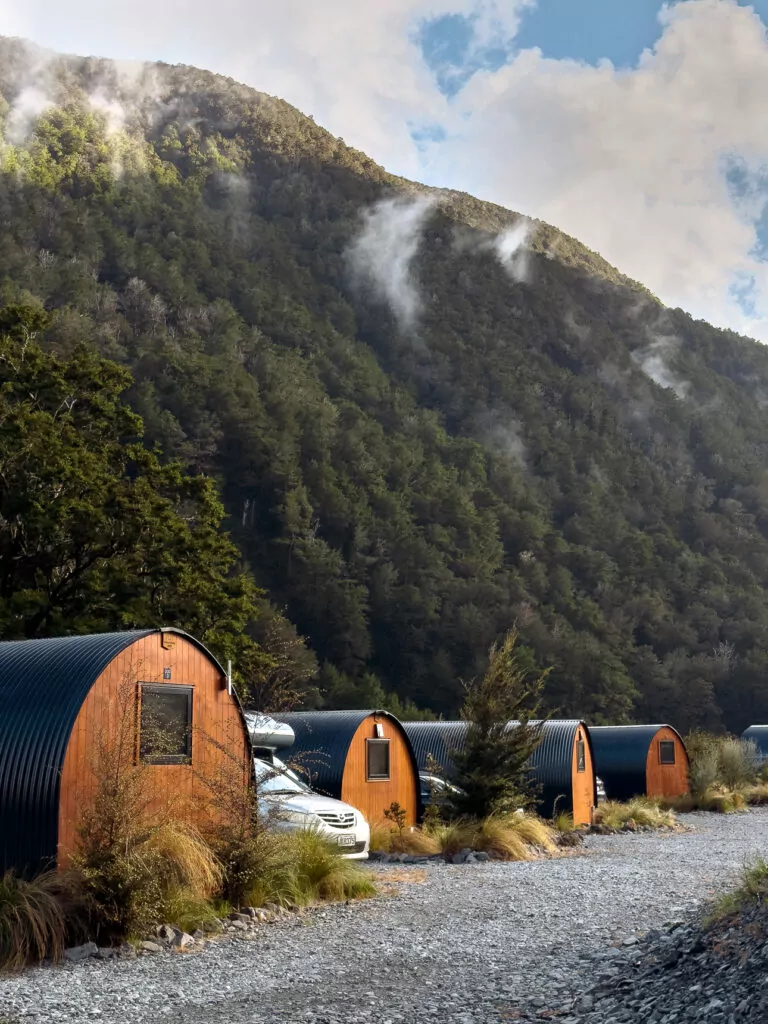
- Special stays: And last but certainly not least we have my favourite type of accommodation, those pinch-me places that you’ll be raving about for years. There are loooads around the South Island, including all-glass eco-cabins, geodesic domes, boutique treehouses, off-grid hideaways and coastal retreats. Some of my favourites are PurePods (multiple locations), Valley Views (Waitaki), Clifftop Cabins (Kaikōura), Tawanui Farm (Hurunui), SkyScape (Twizel) and Rainforest Retreat (Franz Josef).
Where to splurge vs. save on accommodation
Not every night on your South Island trip needs to cost you a week’s worth of rent and food, but there are definitely places where spending a bit more will truly elevate your experience.
The trick is to be strategic, save money by staying in simple but functional accomm most of the trip so you can pick 1-2 places to go hard and not feel bad about it.
When & how to save money on accommodation
- Transit towns or single night stops: Don’t waste your money on a fancy stay if you’re only arriving at 9pm and leaving as soon as the sun’s up. If you’re stopping overnight to break up a long drive or you know you’ll be getting in after dark, just book somewhere clean and comfortable with decent reviews.
- No-view destinations: There are far too many beautiful places in the South Island to waste money on a fancy hotel in the middle of Invercargill. Sorry Invercargill.
- Bigger hubs with lots of options: Cities and larger towns usually have a decent range of mid-budget options, whereas more remote locations might not have much between basic motels and exclusive hideaways, so opt to save money where there’s plenty of good value spots.
- Swap central locations for satellite towns: Swap central Queenstown for Frankton, swap Tekapo for Twizel, swap Christchurch CBD for the motel strips just out of the city.
- Don’t snub holiday parks: Holiday parks in New Zealand often have comfortable private ensuite units with access to kitchen facilities, for much cheaper than you’d pay at a hotel or for an Airbnb. TOP 10 Holiday Parks also has a cheap membership which gives you 10% off your stays + discounts on the InterIslander and other tourism operators.

Where & when it’s worth splurging:
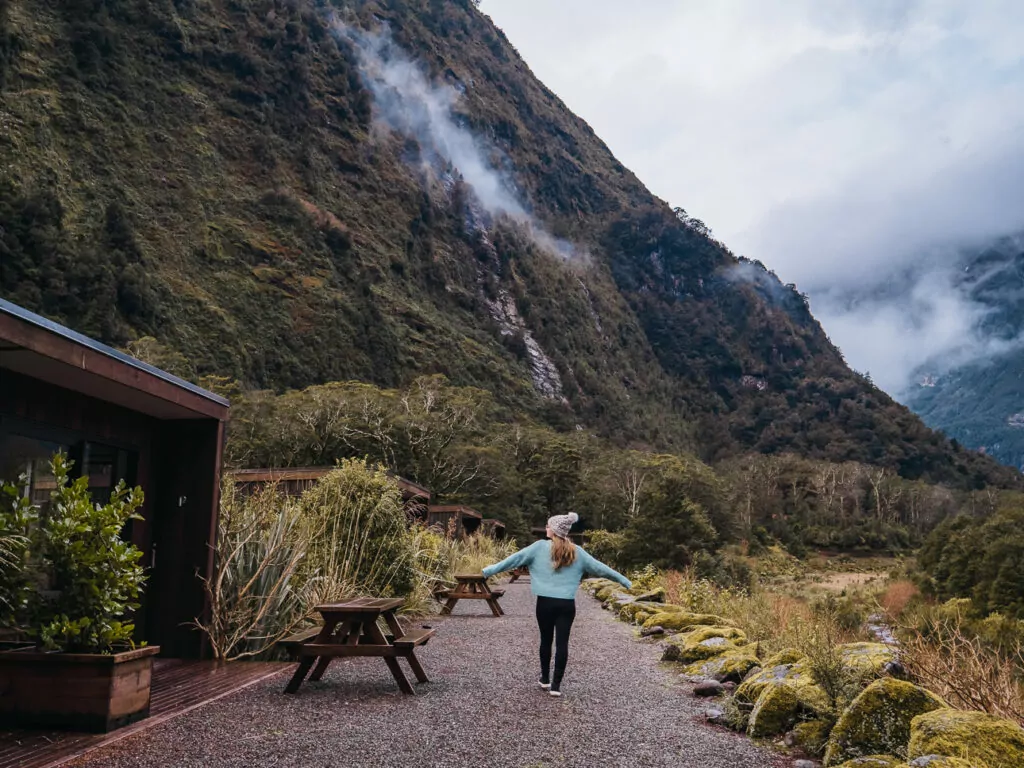
- Staying in Milford or Doubtful Sound: An overnight stay inside Fiordland National Park is guaranteed to be a life highlight, and I cannot emphasise enough how much better this is than just seeing the fiords on a day trip. Book a cosy chalet at Milford Sound Lodge or a site at their campground if you’ve got a campervan, or treat yourself to a night on the water with a Milford Sound or Doubtful Sound overnight cruise.
- Remote stays in Dark Sky areas: In places like Tekapo, Kaikōura or Stewart Island / Rakiura, treating yourself to a cosy stay with big windows, an outdoor bathtub or a glass ceiling will pay off big time if you get clear skies for the Milky Way or, if you’re really lucky, an aurora display. And if you don’t get clear skies, at least you’ll have a cosy stay with an outdoor bathtub!
- After a big outdoor adventure: If you’ve just smashed a massive multi-day hike or spent a few intense days on the slopes, book yourself a “reward night” to catch up on sleep, rest your muscles and decompress.
- Special occasions: Big birthday, honeymoon, first long-haul trip, divorce finalised… whatever the milestone is, choose somewhere ultra-luxe to go all-in. Better yet, tell the place you’ve booked what you’re celebrating and you might arrive to some bonus treats.
- Your final night: Who doesn’t want to end their holiday on a high? If budget allows, book your final night in a convenient location to the airport, with enough space to repack your bags, and enjoy a solid sleep before you jump on a plane to head home.
How much does a trip to the South Island cost?
The South Island is certainly not a cheap destination overall, especially when you throw in bucket list activities, lots of driving and the food/fuel prices that come with being a small country at the bottom of the planet, but if you plan things properly there are some simple tricks to make your money go further.
Let me run you through the main big expenses to budget for, some very rough per-day ranges, and some easy ways to save while you’re here.
💰 “It’s cheaper than I expected!“
If you earn USD, GBP or EUR, you might find the South Island surprisingly affordable. The NZD has taken a dive against most major currencies in the past year or so, which means travellers from these places benefit from stronger purchasing power.
Unfortunately, locals are not having the same experience. Cost of living is wild (especially housing) and wages have not caught up, so most Kiwis are stretched thin right now. Enjoy the favourable exchange rate quietly but don’t be that guy who raves to locals about how cheap things are compared to back home.
Big-ticket costs & rough prices
Getting here
Whether you’re catching the ferry from the North Island, flying trans-Tasman or arriving from further afield, the cost of reaching the South Island in the first place is probably going to take a chunk out of your budget.
Flight connections to New Zealand are limited (quite a few routes stopped flying during Covid and haven’t yet returned), and high demand means high prices, so book early to get the best deals (or risk prices skyrocketing).
Transport
Your chosen mode of transport has a big impact on your costs.
- Car rentals in shoulder season tend to start from $30-$45NZD per day for economy cars with basic insurance, but expect to pay more during busy periods or if you’re booking last minute
- Campervan pricing varies huuugely with the seasons, and summer prices are exponentially higher than the rest of the year. As an example, a basic JUCY Condo (the classic green backpacker vans you’ll see all over the country) starts from about $80NZD per day in June booking six months in advance, the exact same van booking a year in advance for next December starts from $208 per day 🤯
- Bigger motorhome-style vans can cost anywhere from $150 to $800+ per day
- Using InterCity buses or a hop-on hop-off pass is generally more cost-effective for solo travellers or anyone on an extended trip
- A direct Queenstown to Christchurch InterCity ticket costs around $125NZD, an InterCity TravelPass that loops the South Island highlights costs $755NZD (stop as many times as you like), and the same route with Kiwi Experience (with 10 separate segments) costs $999NZD
Gas
- Average petrol prices (Unleaded 91) typically sit between $2.60-$2.90NZD per litre (about $5.60-$6.25USD per gallon) as of late 2025. You might find some cheaper spots in farm areas along the eastern rural highways, and on the remote lower West Coast it can be over $3NZD per litre.
- Diesel is cheaper at the pump but you usually have to pay the extra Road User Charges (RUC) to the rental company at the end of your trip, which makes it about the same as petrol
- Gaspy is a free app that shows you current fuel prices all around the country
Accommodation
Your nightly spend will tooootally depend on where and when you’re travelling.
- Powered sites at campgrounds run from about $20 to $80 in most places
- Backpacker lodge dorm beds could be as little as $30 off season but shared dorms in fancy hostels can be as high as $250+ in busy spots during summer (Haka House Tekapo 👀)
- Mid-range accommodation varies so much over the country, you might be able to find a cosy B&B on the West Coast for $130 per night in summer, whereas a nice-but-nothing-fancy 3* hotel in Queenstown could set you back $350 outside of peak season
- Luxury accommodation could set you back anything from $250 per night for boutique hotels in the bigger cities mid-week, $500 for a glamping stay in a rural area, or four figures for high-end lodges
Activities and experiences
The South Island has a multitude of bucket list experiences and they add up fast! They’re almost always completely worth it, but most travellers can’t stretch their budget to cover every single one, so decide in advance which ones are non-negotiable for your itinerary.
Think of them a bit like the food pyramid: do more affordable options, do some mid-range options and pick a 1-2 major splurges as a special treat.
- The major splurges ($300+): Heli-hikes, overnight fiord cruises, most skydives, most scenic flights, any private tours, guided hikes in remote areas.
- Mid-range adventures ($100-300): Whale watching, dolphin swimming, small group food and wine tours, kayaking, ziplining, jetboating, Milford Sound cruises, canyoning, some low-altitude skydives, bungy jumping.
- More affordable (less than $100): Hot pools, self-guided e-bike or kayak trips, short scenic cruises, admission tickets for museums and wildlife centres, some big bus wine tours, some stargazing tours.
- Free ($0!): Beaches, lakes, short walks, sunrises, sunsets, gardens, waterfalls, you get the gist.

Food and drink
This is a bit of a weird one, because while NZ’s grocery prices are expensive compared to the OECD average, eating out can be comparatively pretty good value.
- If you’re road tripping around the island and are happy to live off a backpacker diet of instant noodles, baked beans and the odd petrol station pie, you’ll be able to keep your food costs pretty low.
- If you’re self-catering and want proper home-cooked meals with meat, dairy, fruit and veggies, expect to spend similar to the average South Island weekly grocery spend, which is roughly $150NZD per person per week. Ouch.
- The good news is that casual dining options are plentiful throughout the island and they aren’t thaaaat much pricier than if you bought the ingredients for that kind of meal at home, so I wouldn’t feel guilty about budgeting for a decent number of café or pub meals on your trip.
🪙 Do you have to tip in the South Island?
Tipping is not customary or expected in New Zealand, though tips to acknowledge exceptional service are always appreciated. The habit of tipping routinely is hotly debated though, many Kiwis worry that tipping becoming the norm thanks to tip-happy tourists from stronger economies would push already-expensive experiences further out of reach for locals, while shifting the responsibility of fair wages from employers onto customers.
Very rough per-day ranges
Emphasis on very rough.
These are some ballpark figures per person per day in NZD, based on shoulder season travel and booking 3-6 months in advance. Summer/ski season travel and last minute bookings will be higher.
Treat them as a guide, not gospel.
Prices valid as of December 2025.
Budget travellers: $80-150 per day
- Hostel dorms, camping, the occasional budget cabin
- Using buses, hop-on hop-off passes or splitting driving costs with multiple friends
- Self-catering
- Sticking to hiking and other free activities most days, with maybe one mid to high-price experience each week (the upper end of the daily budget evens out to cover this)
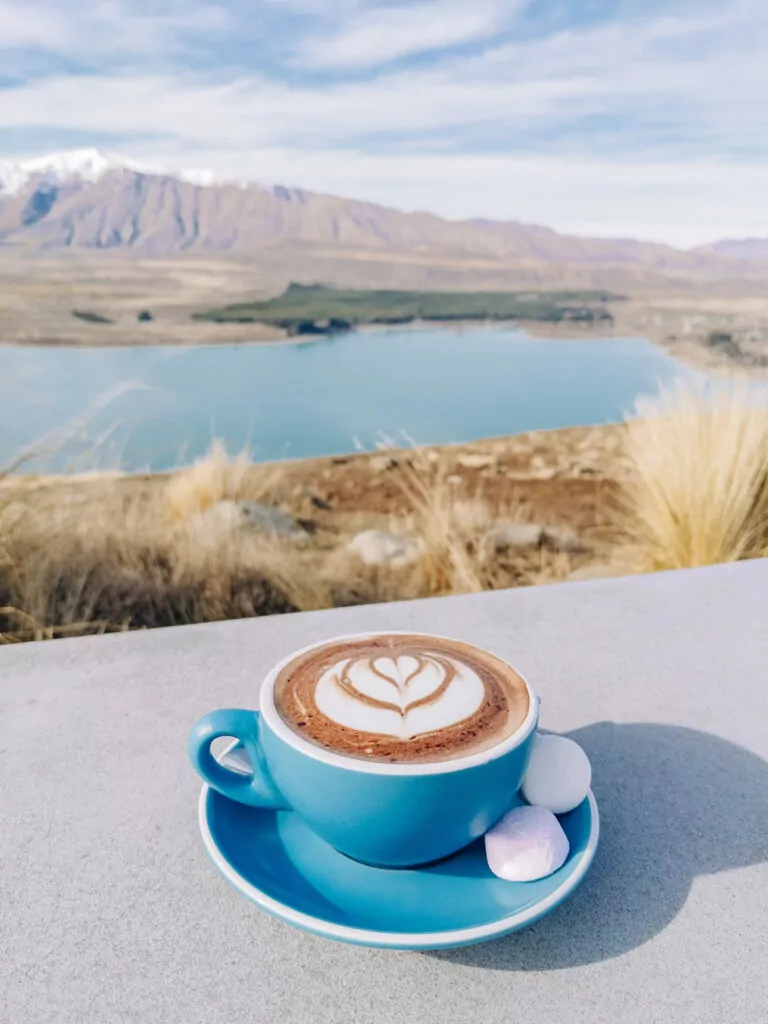
“In-between” travellers: $180-$300 per day
- A mix of motel studios, apartments, holiday park cabins and the odd special stay if you’ve saved elsewhere
- Mid-range rental car or campervan booked well in advance
- Self-catering for two meals a day + snacks with one meal a day out
- A solid balance of free walks and some paid adventures like a wine tour, a wildlife encounter and a hot pool visit, plus one or two biiiig splurges on bucket list fun
Treat yourself travellers: $500+ per day
- Boutique stays and luxury hotels
- Modern rental car, fancy motorhome or a combo of day trips and private transfers
- Dining out for most meals, not skimping on the wine or the cocktails
- Saying yes to all the big ticket experiences
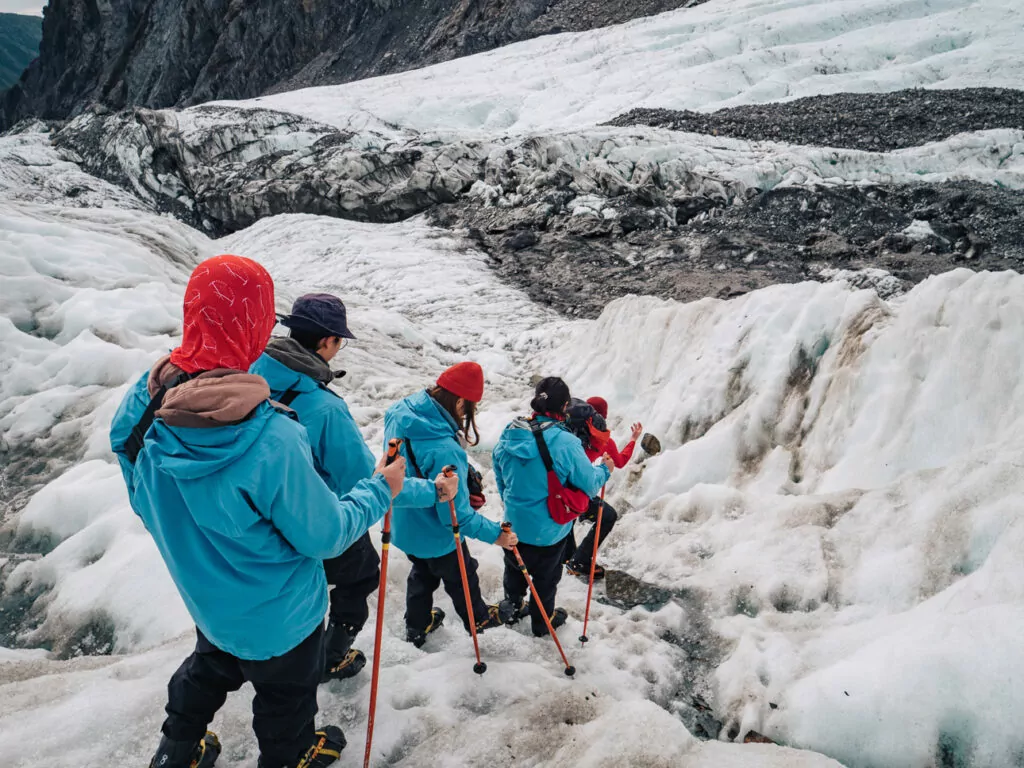
💃🏼 The downside of solo travel
If you’re travelling the South Island solo (like I normally do!), the daily budget breakdown changes drastically if you want private accommodation and transport, because you’ll be taking the full financial hit of a rental vehicle, fuel and overnight stays with no one to share the costs with. Bummer.
Some extra tips for ya:
- Consider holiday park cabins and small motel rooms as alternatives to private rooms at hostels, they’re often priced similarly (or cheaper)
- If you’ve got an extended stay in the South Island, it might be better to hop between tourist hubs using the InterCity buses or Kiwi Experience and then rent vehicles for day trips, rather than paying for a car for three whole weeks by yourself
- If you’re using public transport, prioritise accommodation that’s centrally located rather than trying to save by staying a bit out of the hub. Taxis in small towns are expensive!
Easy ways to save $$$
As a Kiwi who has spent my entire adulthood figuring out how to maximise my money while I’m at home and out exploring my own backyard, here are some top tips to making your South Island travel budget stretch further.
- Travel outside of peak season! If value is top priority then avoid summer at all costs, stick to March-November (and try time Queenstown for outside of ski season, or keep your visit there brief).
- Check local school holidays and avoid those too if you can help it, particularly the break after Term 1 which encompasses Easter weekend and ANZAC Day
- If your visit does coincide with a busy period then book in advance, because affordable accommodation and rental cars get snapped up early
- Balance pricey experiences with free or cheap adventures like hikes, beaches and viewpoints instead of booking paid activities every day
- Check Bookme for last minute and off-peak deals (often 20-50% off) on things like wine tours, ziplining, jetboating, even heli-hikes and Milford Sound day trips. Don’t rely on it for non-negotiable bucket list stuff because there’s no guarantee your dates will have deals or availability, but 2-5 days before a free day in your itinerary, scroll through what’s on offer and see if you can nab a brilliant deal.
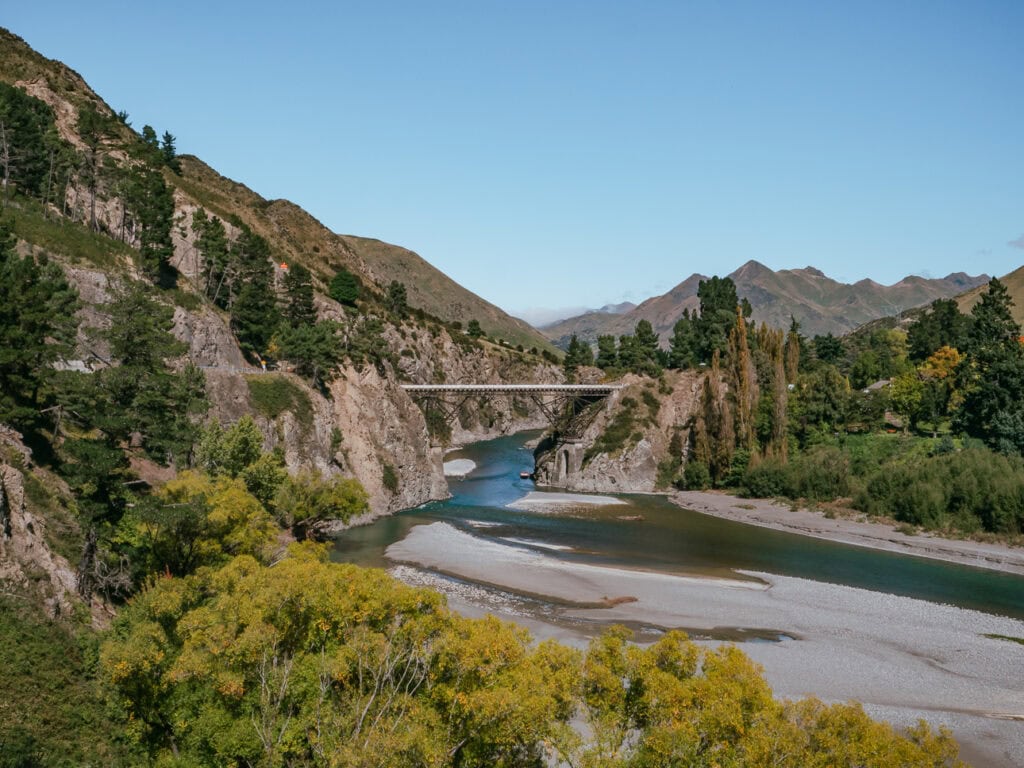
- Use FirstTable to get 50% off your meal if you’re happy to take the first or last time slots of the dinner service. Particularly ideal for Southern European visitors who are used to eating late anyway, a ‘late’ dinner in New Zealand is 8pm 😂 (as a night owl this KILLS ME)
- Download the free Gaspy app to find the cheapest fuel prices nearby and plan out when is best to top up during a long drive
- Do your bigger supermarket shops in cities or larger towns, ideally at a PAK’nSAVE (the low cost supermarket) if you can find one. Four Square, On the Spot and convenience stores in tourist hubs have less range and charge premium prices.
- There’s a free app called Grocer which lets you compare prices for products at different supermarkets and can help you save $$$. You need to select the supermarkets you want to compare (and they use their actual location names like “New World Three Parks” which is the New World in Wānaka), then you can either search the product name if you know exactly what you want, or use the ‘scan’ function to scan a product while you’re shopping and see what it costs at the supermarket across the road.

Practical South Island travel tips
Your South Island holiday is without a doubt going to be the trip of a lifetime, but we want to make sure that’s for all the right reasons. These final travel tips will make sure everything runs smoothly, despite the inevitable weather curveballs, budget blips or any unexpected itinerary changes.
Packing essentials for the South Island
- A combo of mountains, exposed coastline and a temperate climate = weather whiplash, it could be t-shirt weather on a winter bluebird day before a snow dump a few hours later. Layers are vital!
- A breathable base layer and a proper waterproof jacket are must-haves for any season
- Quick-dry clothing is a life saver when you’re on the move every couple of days
- Aotearoa sun can be brutal, even in winter and even if it’s cloudy. Use SPF30+ and reapply every two hours (yep, you read that right) or after swimming.
- Sandflies are tiny menaces that can send the calmest of travellers into a rage spiral. A strong DEET repellent usually keeps them at bay, but the best stuff is actually the natural bug spray you’ll find at pharmacies and gift shops all along the West Coast and in Fiordland.
- Bring a reusable water bottle to refill on the go, tap water in New Zealand is completely fine to drink unless there’s a boil notice (which your accommodation will tell you about). If you’re at a campsite only drink water from the kitchens or from the water refill stations, and if you’re in the backcountry treat any water source as non-potable unless stated otherwise.

Hiking & outdoor safety
- Check the DOC website for up to date info on any hiking trails you want to tackle, weather events can sometimes cause trail closures and it sucks to find that out after you’ve driven all the way there
- Always follow typical outdoor precautions: take water and a snack even on short walks, pack a warm layer even if the skies are blue when you start, know your hiking limits and turn around if you don’t feel comfortable, and tell someone where you’re going and when you expect to be back.
- Much of the South Island is conservation land managed by DOC, and drones are not allowed without a permit (even small drones, even recreational flights, even for 30 seconds). You can get a DOC green zone permit for one year for $207 to be able to fly in the green zones in the map below, but orange zone permits are very expensive and red zone permits are pretty much impossible. These permits are only for land permission, you still have to follow Civil Aviation rules around airports, helipads, etc. Find full info on DOC permits here and general NZ drone rules here >>

- Trainers/tennis shoes/sports sneakers (whatever you want to call them) are generally fine for short, dry walks on well-maintained tracks, but grippy walking shoes or hiking boots are safer for anything with an incline or slippery rocks
- Instagram can make backcountry routes look tempting and easy, but many are technical trails that require special gear, river crossings and previous hiking experience. Stick to tracks that align with your fitness and skill level.
- Make sure your phone is fully charged and you’ve got offline maps downloaded before you set off for the day, many of the popular short walks have patchy coverage even driving out to them
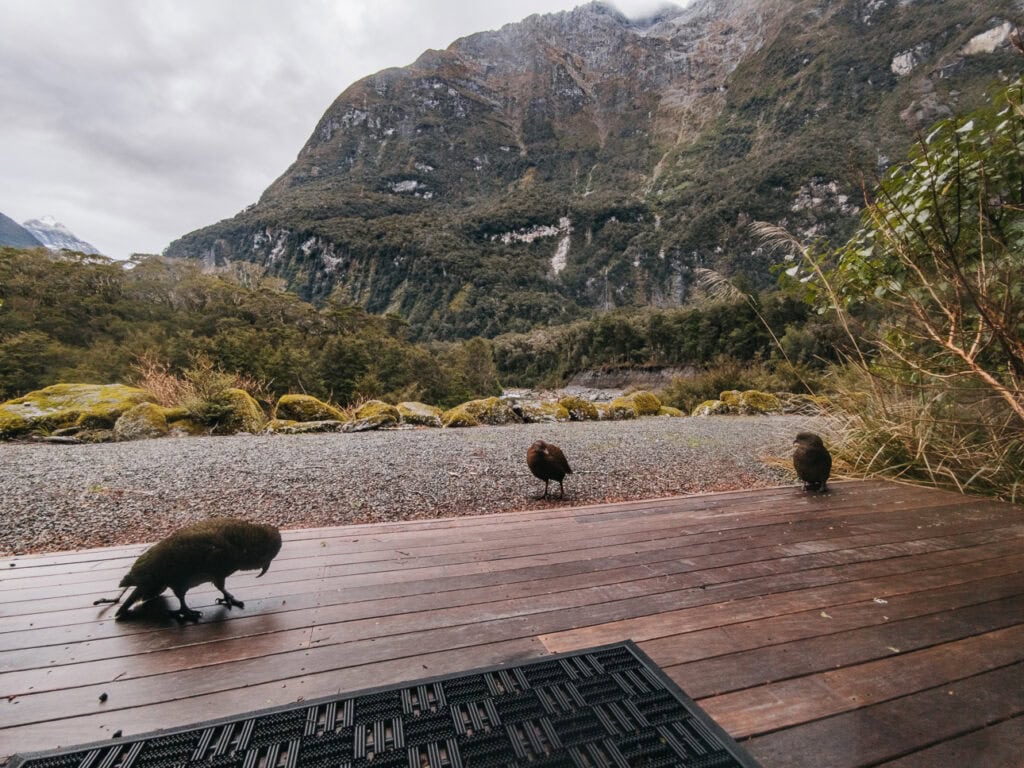
- Give wildlife space and don’t feed any wild animals, especially the cheeky kea!
Cultural respect & responsible travel
- The Tiaki Promise is New Zealand’s visitor code: protect nature, keep NZ clean, be prepared, drive carefully and show respect
- Te reo Māori is the Māori language, Aotearoa is the Māori name for New Zealand, and Te Waipounamu is the Māori name for the South Island.
- Other Māori place names you might notice are Aoraki / Mount Cook, Stewart Island / Rakiura, Franz Josef / Waiau, Milford Sound / Piopiotahi, Ōtautahi (Christchurch), Tāhuna (Queenstown) and Ōtepoti (Dunedin).
- If the Māori word is used in conjunction with the English word with a ‘/’ between them this means that it’s an official dual name, you’ll see both names together on signs.
- If you’re ever unsure of what place a Māori word is referring to, Google will be able to tell you!
- A rāhui is a temporary restriction placed on an area to protect people, a resource or to show respect, for example after a death. If an area is under rāhui or closed, choose another spot and return later.
- Wāhi tapu are sacred places. If a sign asks you not to enter, not to touch, not to swim or not to photograph, please follow it even if others do not.
- Much of rural Aotearoa is private farmland right next to public tracks. Only enter with permission, leave gates as you found them, and slow down for stock on country roads.
- If your boots, clothing or other gear have touched the water in any South Island lake or river, it’s a legal requirement to Check, Clean & Dry your stuff before visiting another river or lake, to prevent the spread of invasive algae
- Pounamu (greenstone) is a taonga (treasure) of the Ngāi Tahu (an iwi/tribe) in the South Island, and it’s a beautiful, meaningful souvenir when you buy it from authentic carvers and galleries. You can also carve your own pounamu in a few places, I did this in Hokitika with Bonz’n’Stonz and it remains one of my all-time travel highlights!

Connectivity, navigation & money
- South Island mobile coverage has seriously improved in recent years, but remote areas and national parks can still be patchy or totally dead. Download offline maps before you set off, and screenshot key info like DOC track details before you lose reception.
- Spark, One NZ and 2degrees are the three mobile networks, each of them has strong and weak spots so there’s no ‘best’ one to go with if you’re exploring the whole island
- Tourist SIMs from the big three above are shit value, don’t get sucked in to their kiosks at the airport
- You can find much better deals on eSIMs, but not all eSIMs are created equal! I’ll write a comparison post on NZ eSIMs soon but I always use MobiMatter ($30.50NZD for 20GB). DO NOT go with Airalo ($68NZD for 20GB) or Holafly ($7.80NZD per day for a 3 week trip).
- Recharge a power bank each night and keep a cable or car charger handy for long drives, maps, photos and road trip playlists will chew through your battery

- 111 is the emergency number in New Zealand
- PayWave, contactless and credit cards are widely accepted in tourist areas, often with a small surcharge (1-3%) until surcharges are banned in May 2026. In more remote areas or at small retailers there might be a minimum spend for card payments (usually $10-20).
- I almost never carry cash in New Zealand, but farmers’ markets or low key campsites in someone’s spare paddock might be cash-only so it’s a good idea to have a few notes and coins with you
- Unmanned petrol pumps (common throughout the South Island) require a physical chip-and-PIN card, signature-only cards and Apple Pay/Google Wallet etc. generally won’t be accepted. Make sure your card has a PIN before you leave home, or get a Wise card before your trip.
- Visa and Mastercard are accepted everywhere that accepts card, these days Amex is fine at most big retailers or hospitality providers but small businesses might not accept it.
- Always carry a backup card somewhere safe and keep it separate from your usual wallet
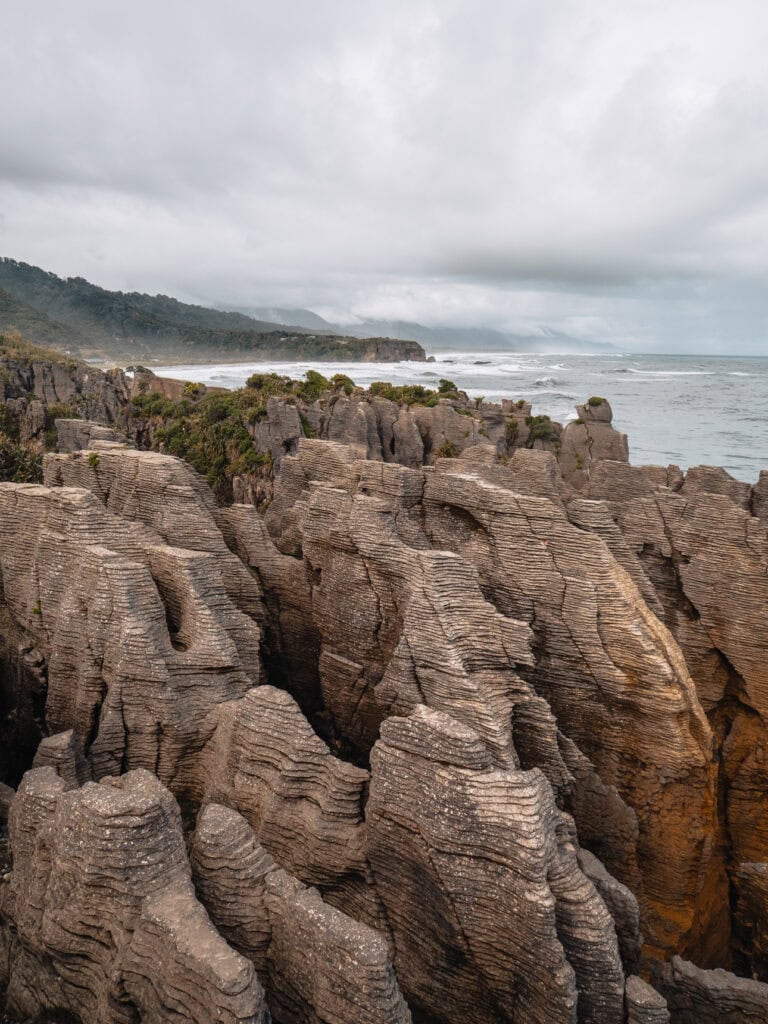
Accessibility
- Overall New Zealand does pretty well in terms of accessible travel, but (and I’m sure this is an unfortunate reality in most places) if you have reduced mobility or specific needs, it’s best to research in advance and get written confirmation of the exact features you require. Ask for door widths, ramp access, lift availability, grab rails, bed height and anything else you need, don’t book until you’ve got that all confirmed in an email with photos/videos if necessary, and that way you’ll hopefully avoid any disappointments on arrival.
- Big accommodation providers and tourism operators will generally have standard accessible options and may be able to make further accommodations on a case-by-case basis. Always confirm availability for your exact dates, accessible rooms and transportation options can be limited and get booked up early.
- Small businesses in less touristy spots might not be able to offer full step-free access or roll-in showers, but Kiwis are typically friendly, inclusive and innovative, and many will be happy to help you find practical workarounds if you let them know what you need.

- A limited number of accessible parking bays are generally available at most major trailheads but can get snapped up quickly on busy days.
- Quite a few of the popular short walks have well-maintained wheelchair-friendly boardwalks at least to viewpoints, this will be clear on the DOC website.
- Some trails might be classified as ‘easy’ but still have steps, ledges or inclines that make them unsuitable for people with limited mobility.
- Public toilets can be few and far between along the remote roads and may not have accessible cubicles, so it’s best to plan rest stops in major transit hubs.
- isite visitor centres are dotted all over the island and are a brilliant one-stop-shop for any travel or accessibility questions, they will be able to point you in the right direction.
Useful apps & websites
- DOC: Official track info, alerts and hut bookings
- MetService and the Windy app: The most accurate weather forecasts (though take any forecast with a grain of salt)
- Rankers and CamperMate: Campsite reviews, dump stations and other van life stuff
- First Table: Discounts on dining out
- Bookme: Last minute activity deals
- Gaspy: Current fuel prices all around the island
- Grocer: Compare food prices at supermarkets
- MobiMatter: Best value NZ eSIMs
- AirShare: Drone rules and no-fly zones
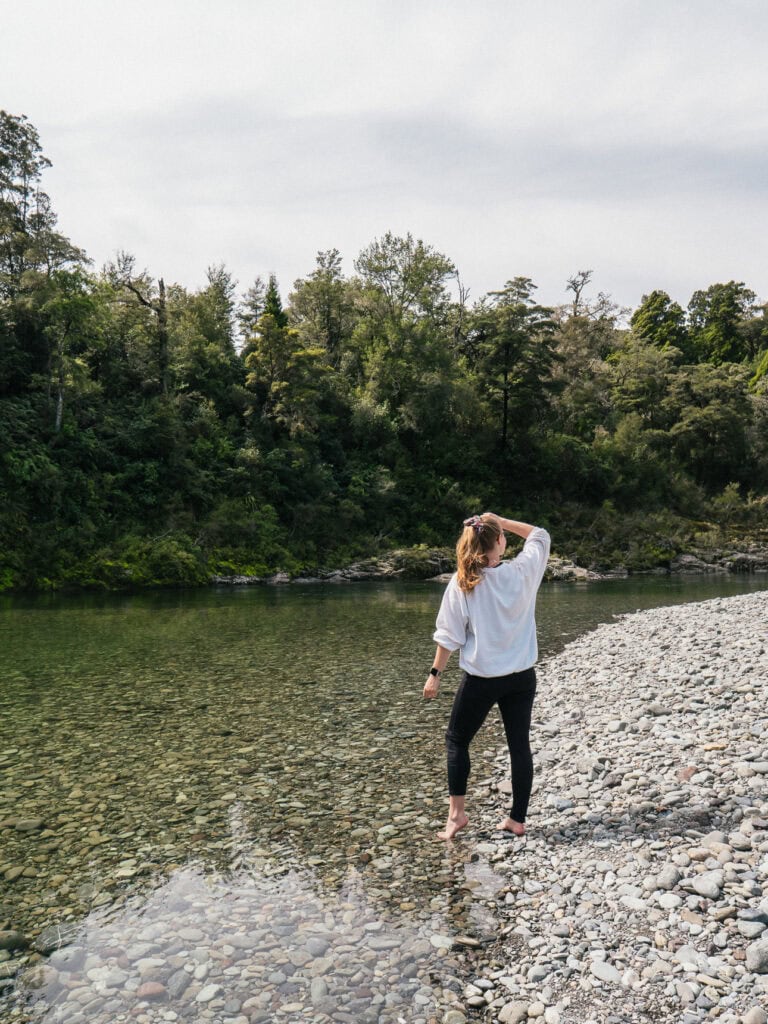
South Island FAQs
How many days do I need to visit the South Island?
You need a minimum of 10-14 days to see the major highlights (Queenstown, Wanaka, Milford Sound, Tekapo and Aoraki / Mount Cook) comfortably, but you’d need 3-4 weeks to add on the West Coast and the Top of the South Island (Abel Tasman, Marlborough, Kaikoura etc.), or 4+ weeks to include remote regions like the Catlins and Golden Bay without feeling rushed off your feet.
Is the South Island expensive to visit?
New Zealand is generally a pricey destination but affordability varies based on region, season, and the strength of your home currency. Fuel is typically more expensive than North America and Australia, rental vehicles can be very expensive at times of high demand, and bucket list activities like bungy jumping, skydiving and glacier heli-hikes really eat into your budget. Booking early, travelling in the shoulder season and visiting less touristy regions can help you get the best value for money.
When is the best time of year to visit the South Island?
The best time for pleasant weather without peak season crowds and prices is March-April (outside of Easter weekend). Winter (Jun-Aug) is excellent for skiing, crisp mornings and off-season bargains in coastal places. The South Island has unpredictable weather year-round so don’t plan your trip based on when it should be sunny, be prepared for four seasons in one day.
Do I need to book South Island accommodation in advance?
For summer (Dec-Feb) and any school holidays, you absolutely need to book South Island accommodation in advance because affordable and quality options sell out. Queenstown, Wanaka, Aoraki, Fiordland and Tekapo need to be booked ahead year-round due to constant demand, but places like the West Coast, Abel Tasman, Kaikoura and the Otago coast generally have capacity for last minute bookings outside of busy periods, though it’s best to book in advance so you know you can find something within your price range.
Can I drink the tap water in the South Island?
Yes, tap water is safe to drink in all urban centres across the South Island. Backcountry huts and remote campgrounds don’t always have drinkable water but there’ll be signs making this clear. Severe weather events can temporarily impact drinking water but your accommodation will let you know if this is the case.
Do I need to carry cash in the South Island?
Cards are accepted almost everywhere in the South Island, but you might need cash for farmers’ markets, roadside “honesty box” fruit stalls and some campsites in remote regions. Carry a small amount of cash (notes and coins) just in case.
Do I need a visa to visit New Zealand?
Most travellers from visa-waiver countries (including the US, UK, Canada and EU countries) require an NZeTA (New Zealand Electronic Travel Authority) before flying. Australian citizens are exempt, other travellers should check the official immigration website for up to date info.
Do I need travel insurance for the South Island?
Yes, you absolutely need comprehensive travel insurance for the South Island. Reciprocal healthcare agreements (like with the UK and Australia) only cover urgent and medically-necessary public healthcare but exclude non-urgent treatment, prescriptions, dental and emergency transport like ambulance. A good travel insurance policy covers illness, trip disruptions, lost luggage and medical repatriation.
Can I use my credit card in the South Island?
Visa and Mastercard are widely accepted throughout the South Island, though many retailers here currently add a 1.5-3% surcharge for contactless and credit card payments (which is going to be outlawed in mid-2026). American Express is usually accepted at major retailers and hospitality businesses but often not accepted at smaller businesses. Some self-service fuel stations require a chip-and-pin credit card and signature-only cards won’t be accepted.
Will my phone work in New Zealand?
For your phone to work in New Zealand you’ll need to enable roaming on your home SIM, buy a local SIM or get an eSIM. I prefer eSIMs for convenience and value for money, prices vary drastically but MobiMatter has options from just $1.38NZD per GB (much cheaper than Airalo and Holafly).
Plan your South Island trip: Next steps
If you’ve made it this far then you’re clearly committed to planning the ultimate South Island trip, because that was more than 14,000 words 🫠 and if you’ve just skim-read it then honestly I don’t blame you.
Now you know when to visit, how to get here, transport options on the ground, the different types of accommodation, all the best places and where they are in relation to each other, rough budget guidelines and loads of helpful tips to make your trip memorable for all the right reasons. You’re going to have the time of your life, I just know it!
If you’re ready to get into the nitty-gritty of organising your South Island adventure then I’ve got some destination deep dives and plug-and-play road trip itineraries to help you plan it all out ⬇️
Road trips & itineraries
- The ultimate South Island road trip itinerary (4+ weeks but easy to shorten)
- The perfect Top of the South Island road trip itinerary (2 weeks)
- Queenstown to Christchurch road trip: East Coast and West Coast options (1 week)
- West Coast road trip: Wānaka to Maruia Hot Springs (1 week)
- The perfect five day Queenstown itinerary (<1 week)
- Christchurch to Hanmer Springs road trip (<1 week)
- Te Anau to Milford Sound: Where to stop along the way (day trip)
Best things to do (by destination)
- Best things to do in Blenheim & the Marlborough Sounds
- Best things to do in Abel Tasman
- Best things to do in Kaikōura
- Best things to do in Tekapo
- Best things to do in Wānaka
- Best things to do in Franz Josef Glacier
- Best things to do Milford Sound
- Best things to do in the Catlins
- Best things to do on Stewart Island
Reviews of South Island bucket list experiences
- The ultimate New Zealand bucket list (50+ things!)
- Swimming with wild dolphins in Kaikōura
- Milford Sound Flyover from Queenstown
- Winery-hopping in Central Otago from Queenstown
- Paragliding off Coronet Peak in Queenstown
Reviews of South Island special stays (all worth the splurge)
- The best glamping spots in New Zealand
- High Country Cabin, Twizel
- Nest Treehouses, Waitaki
- Cross Hill Domes, Lake Hāwea
- Kamana Lakehouse, Queenstown
- Hokitika Fire Station, Hokitika
- Radfords on the Lake, Te Anau
Want more? See all my New Zealand guides.
MY GO-TO TRAVEL PLANNING RESOURCES
Flights ✈️ I use Skyscanner to find the best flights for my trip and then I’ll always book direct with the airline to protect myself from having to deal with dodgy third parties if anything goes wrong.
Trains 🚂 If I’m travelling through Europe, I try to travel by train wherever possible! For an extended trip (2+ weeks) I’ll calculate if a Eurail Pass is worth it, or I’ll book point-to-point tickets through RailEurope or the local train operator.
Accommodation 🛎️ I book almost all of my accommodation through booking.com, they have a user-friendly website + app and many of their options are free cancellation, easily cancelled with a simple click of a button.
Activities 🗽I use GetYourGuide, Klook and Viator to look for activities in the places I visit, or I just Google ‘things to do in [city]’! P.S. If you book anything on Klook you can use the promocode FINDINGALEXXKLOOK to get 10% off
Travel cards 💳 I’m a Wise gal through and through, they’ve been my chosen travel card for more than five years now. You can easily top up your card from your bank account or through Apple Pay, convert your money to local currency, and spend money with minimal fees and the best exchange rates around.
Travel insurance 🩺 I use Cover-More NZ travel insurance for my own trips, I have a comprehensive policy and I’ve only had good experiences with them. Cover-More also has an Australian company, but if you’re from elsewhere then two popular insurance options for global travellers are SafetyWing (cheaper policy, lower coverage) and World Nomads (more expensive but significantly better coverage).
Luggage 💼 I travel with Samsonite Cosmolite suitcases, one 75cm check in bag and a 55cm carry on bag, and I absolutely adore them and will never travel with anything else! They are SUPER lightweight (2.8kg and 1.9kg respectively) so I have much more space for my actual stuff.
Camera gear 📸 I use a iPhone 15 Pro Max for phone photos/videos, and my camera kit includes a Lumix S9 (incredible lightweight full-frame camera, a game changer for travel creators!) with a 20-60mm lens, a Lumix G9 with an 8-18mm and 12-60mm lens, a DJI Mini 3 Pro drone and a GoPro Hero 10. I do all my writing and editing on my ASUS Zenbook 14, it’s lightweight but powerful enough for photo editing and intense blogging sessions.
