
Sim Local Oceania eSIM review after testing it in New Zealand and Australia
This post includes some affiliate links and I earn a small commission if you book through them. This helps keep this site running and lets me keep writing ultra-detailed travel guides that are free for you to use to plan your next adventure. Read more in my privacy policy.
Looking for an eSIM to cover Australia, New Zealand and somewhere dreamy in the South Pacific? Here’s a super detailed and honest review of my experience using the Sim Local 20GB Oceania eSIM.
As a full-time traveller, finding the perfect eSIM for every trip truly is a fine art, because if I just went with whoever’s featured in the most sponsored posts on Instagram at the time, I’d literally be hundreds of dollars poorer every year 🙃
Luckily for you (and unluckily for me), I take eSIM research and testing very seriously so that I can give you the most helpful, comprehensive and actually-evidence-based eSIM guides for different places around the world. And the next destination on my hit list? Oceania!

I found Sim Local’s Oceania eSIM when I was looking for coverage for my South Island road trip, and it was juuust long enough to cover a long weekend in Australia plus an eight hour stopover in Fiji en route to my next continent, where I knew I’d need a few GB of data for laptop hotspotting in the (likely) event that Nadi Airport’s WiFi was shit.
One eSIM to cover all three destinations? Brilliant, less mental load for me.

But travel rarely goes perfectly to plan, in the end my Fiji Airways flight was canned and I was rerouted through Doha, very much not in Oceania, and when I returned home via Fiji a couple of months later my Sim Local Oceania eSIM was well and truly expired. Oh, and I can confirm Nadi Airport WiFi is, in fact, shit.
ANYWAY I still used Sim Local’s eSIM around the entirety of New Zealand’s South Island as well as in Melbourne, which was plenty of field-testing to give you a thorough review, and I’ve also included some comparisons with alternative eSIMs for this region to show you how Sim Local stacks up against the bigger names.
💰 Save 5% on any Sim Local eSIM with the code ALEXX5
Disclosure: Sim Local sponsored this review, but they have no editorial control over what I write and (as always) every opinion is my own and based on my personal travel experience.

What is Sim Local?
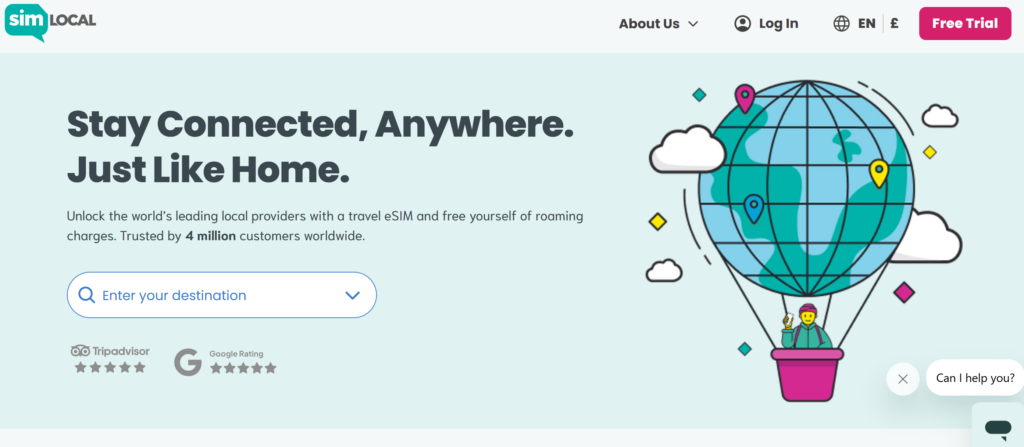
Sim Local is a travel SIM retailer that’s been around for years, with airport stalls selling prepaid local SIM cards to new arrivals in the UK and Europe well before eSIMs even existed.
These days they sell eSIMs through their website too, but unlike most major eSIM brands (Airalo, Holafly, Saily, Jetpac, etc.) they don’t just slap their own label on a generic plan, instead they resell plans from major telcos like Orange, Three, EE and Lycamobile.
Their bread and butter is definitely the UK, they nabbed four of my eight recommendations for the best UK eSIMs (including the overall top pick) and they’ve even got a price match promise there which guarantees a refund of the difference if you find a cheaper price for a comparable plan, but their product range extends all over the globe.

Sim Local’s Oceania eSIM at a glance
- Data: 20GB
- Validity: 31 days
- Price: $35USD
- Price per GB: $1.75
- Network: Orange (a French telco)
- Coverage: Australia, New Zealand, Fiji, French Polynesia, New Caledonia, Papua New Guinea, Tonga, Vanuatu and Brunei
- Notable exclusions: Samoa and the Cook Islands (but no regional eSIM covers the Cook Islands)
- Speed: 4G
- Hotspot/tethering: Yes
- Phone number: French number with 50 SMS and 15 international minutes included (which is very rare for eSIMs)

A full review of Sim Local’s Oceania eSIM
Setting up the eSIM
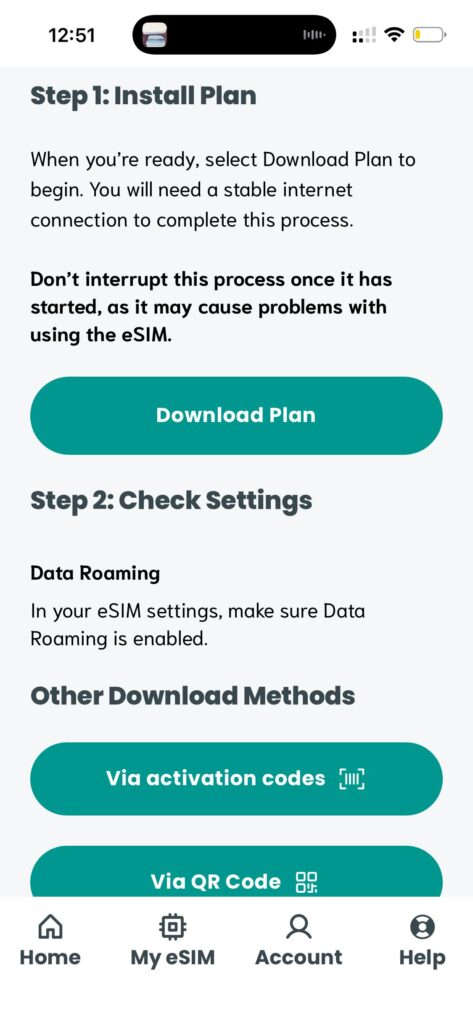
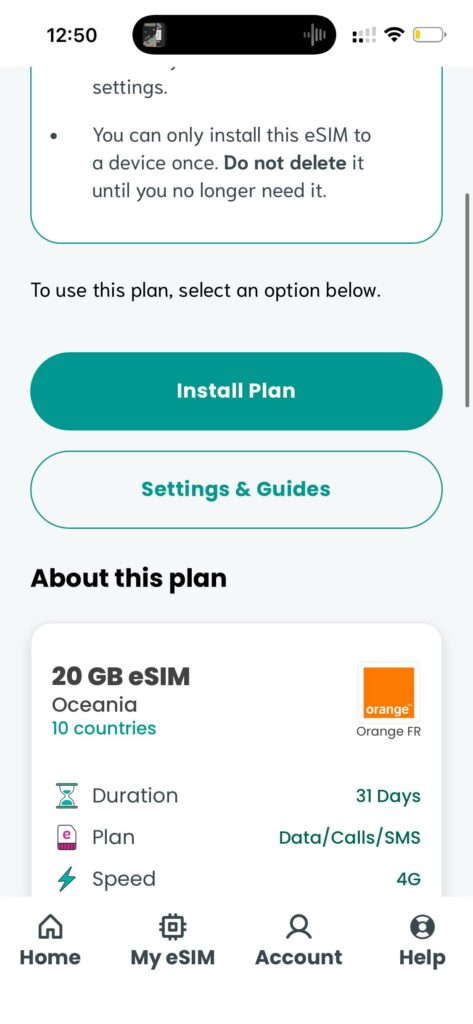
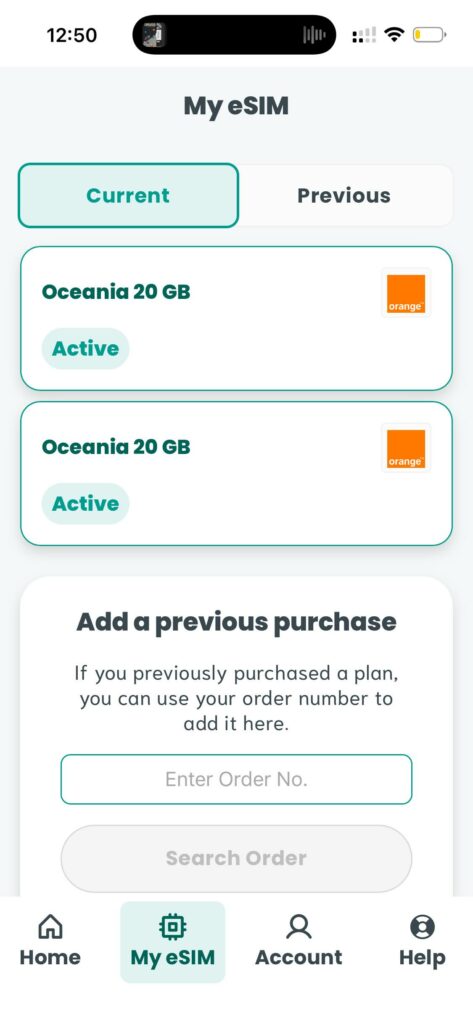
If you buy an eSIM on Sim Local’s website, the QR code and instructions to install it will land in your inbox within a few minutes. If you buy it through the Sim Local app then you can simply click into ‘My eSIM’ and install the plan from there.
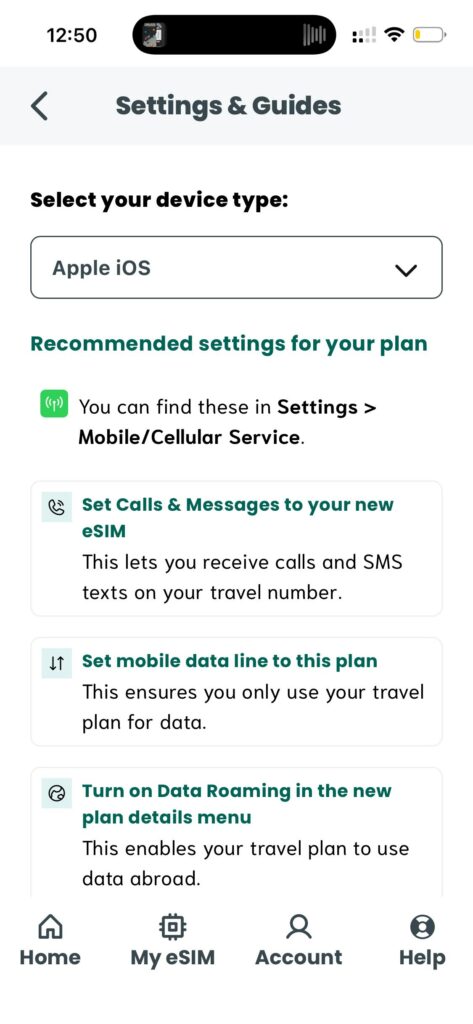
Setting up an eSIM is easy once you’ve done it a few times but there are a number of steps involved and they can vary slightly depending on your device, so you do need to follow the instructions carefully to make sure you’re ready to hit the ground running and won’t get stung with roaming charges from your home SIM by accident.
I was already in New Zealand when I installed my Sim Local eSIM, but I’d recommend buying and installing an eSIM just before you fly (so you aren’t reliant on airport WiFi to do it), then when you land it’ll auto-connect to a local network and you’ll be ready to roll.
The Oceania eSIM activates (as in the 31 day validity period starts) when your phone connects to a network in the coverage zone, so there’s no risk in installing it before you go.
Performance
I did have an issue with my eSIM at first, with random dropouts in weird places (like the middle of a suburban area that should have full service) and the usual fixes of restarting my phone, toggling mobile data etc. didn’t seem to help, but I got in touch with the Sim Local team and they immediately sent me another QR code to install a replacement plan.
After that it was totally smooth sailing, no issues at all across New Zealand or in Melbourne.
I took the eSIM all over Aotearoa, from Auckland right down the North Island, caught the ferry over to the South Island, and did a loop down the east coast from Picton to Christchurch, inland past Lake Tekapo and the Southern Alps to reach Queenstown and Wanaka, then cut over Haast Pass to Glacier Country and up the West Coast, cut across Lewis Pass towards Hanmer Springs and Hurunui, back up past Kaikoura to Marlborough and Abel Tasman. PHEW!

The Oceania eSIM worked perfectly everywhere I’d expect it to (like the main urban centres) and even gave me data in places I was surprised to see any bars at all, like an off-grid glamping pod on a farm in Central Otago (which literally markets itself as having no cell service haha) and along some remote drives that are normally patchy at best.
In Melbourne it connected to a local network once I turned airplane mode off, so I could immediately message my brother and sort out my pick up, without having to line up at the Optus stall in the arrivals terminal.
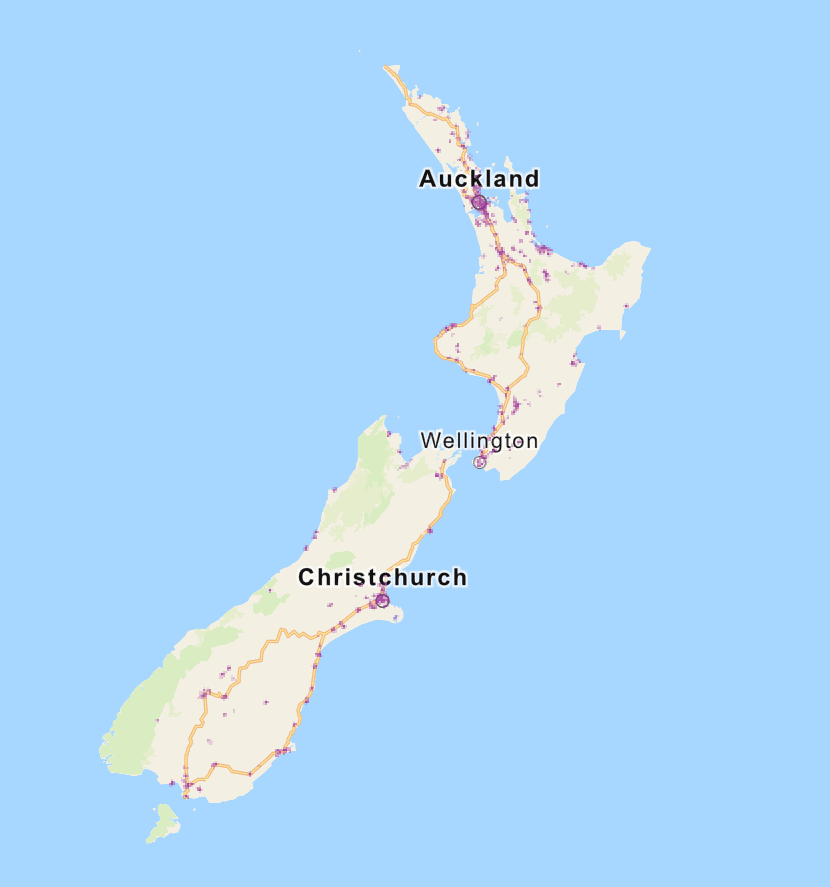
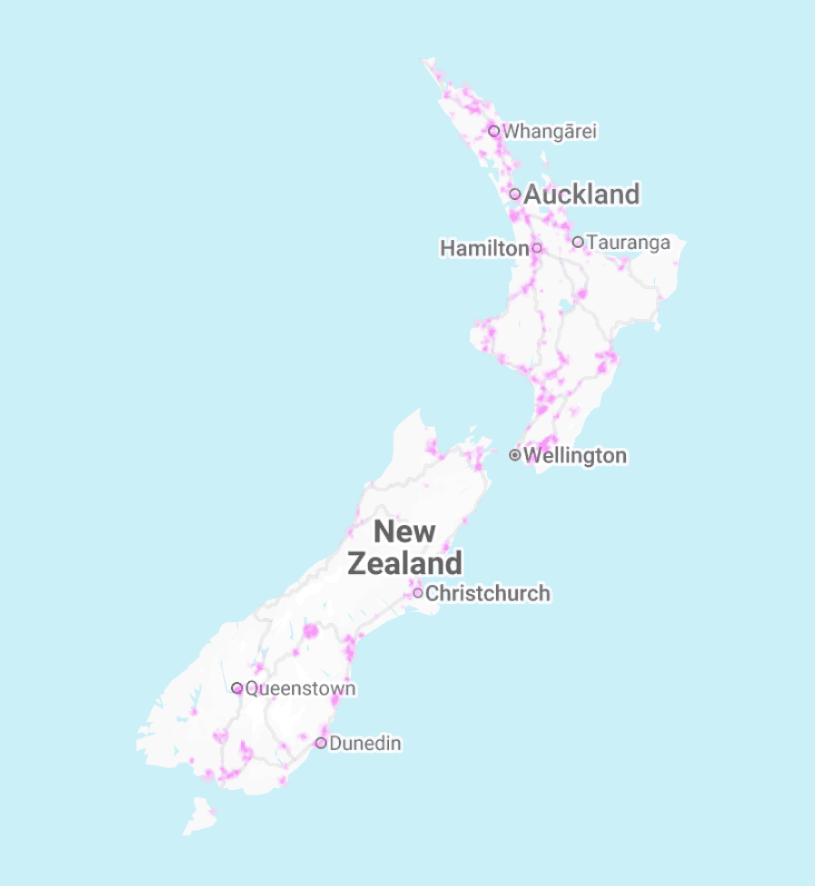
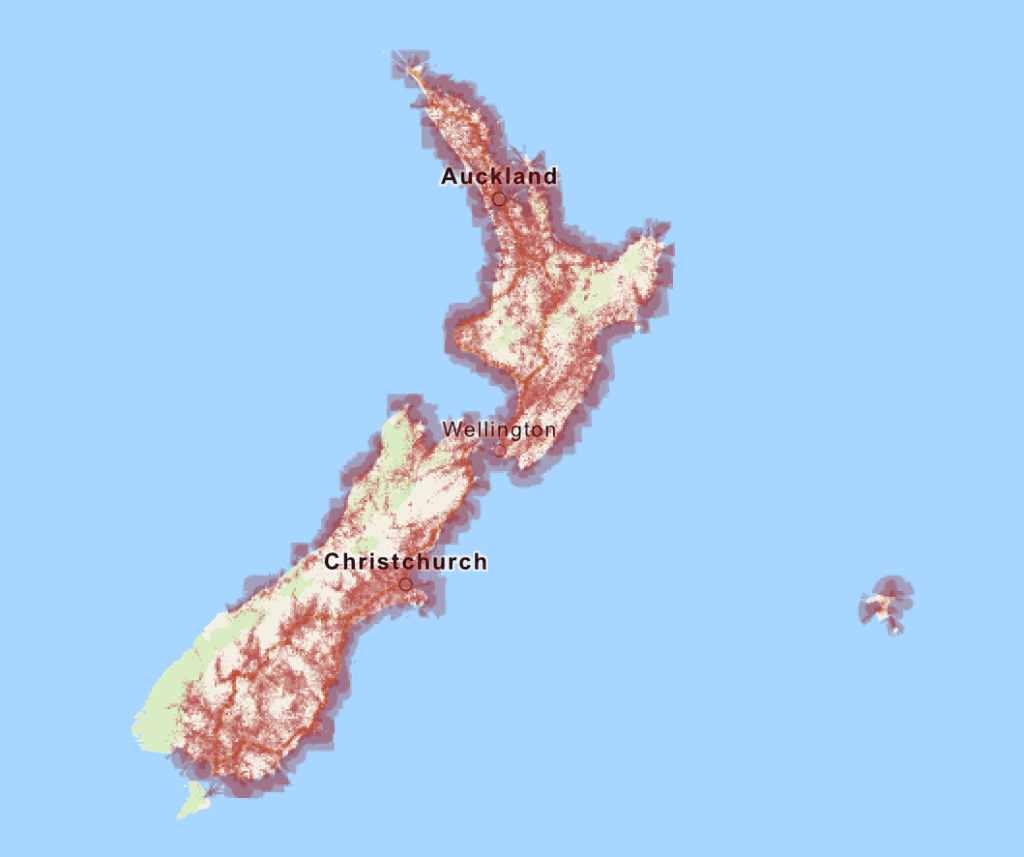
One thing to note is that it is a 4G-only eSIM, which matters in some places and makes no difference in others. In New Zealand the 5G network is mostly centred in bigger cities like Auckland, Wellington, Christchurch and Dunedin, so if you’re road tripping the South Island like I was, you’ll be on 4G the vast majority of the time anyway.

One NZ’s 5G coverage 
Spark’s 5G coverage 
One NZ’s 4G coverage 
Spark’s 4G coverage
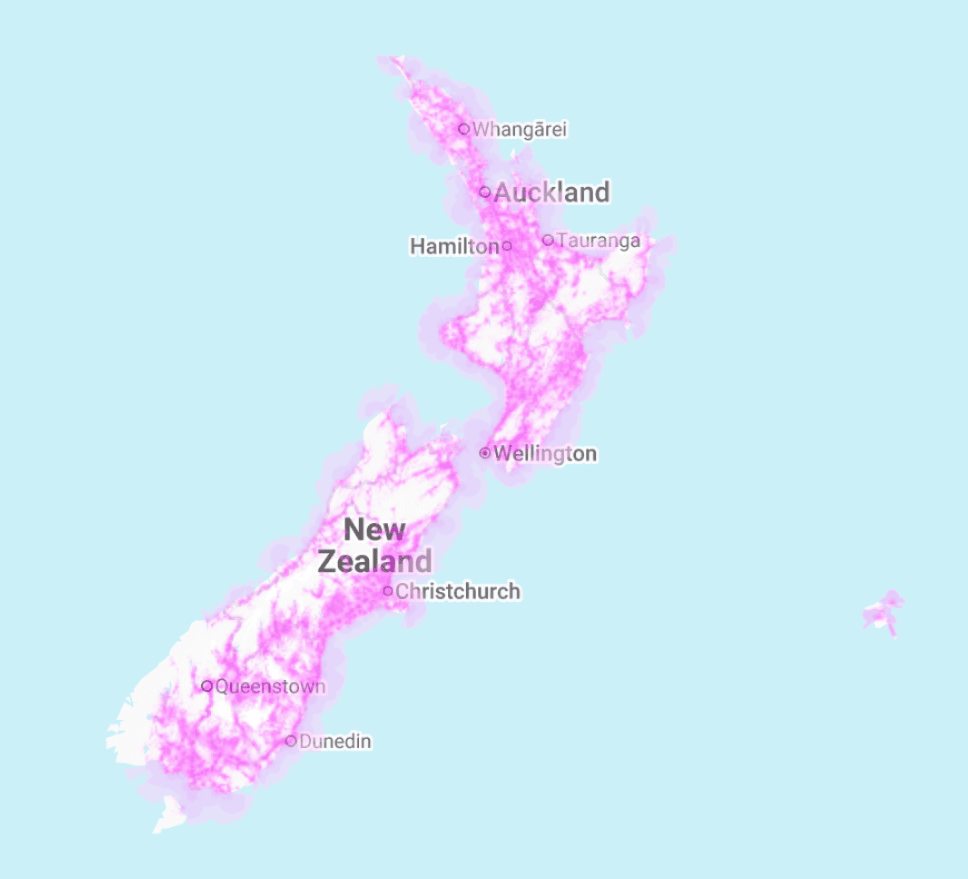
If you were using the Oceania eSIM in the Pacific Islands you’d find the same thing, 5G is in the very early stages of rollout over there, and in Australia 5G coverage is decent in most cities but notoriously terrible in Melbourne CBD and limited when you’re driving through less-populated parts of the coast.
All of this to say, only having access to 4G isn’t going to make that much of a difference to you for many Australia, NZ and Pacific itineraries.
I did a fair bit of laptop tethering while I was in NZ, especially at holiday parks with subpar WiFi when I had to work from my campervan, and the speed was more than sufficient.

This particular eSIM does come with a French phone number and 15 minutes to call international numbers, I didn’t end up using them (because I’m a classic phone-call-averse Millennial) but having these as an emergency back up would be super handy in the event you needed to urgently contact your hotel, a tour operator or roadside assistance.
And another brilliant thing about Sim Local is that many of their eSIM plans can connect to multiple networks in the destination you’re visiting, so when I drove into a region with a weak connection on one network, it’d automatically switch me to the strongest network.

Pros of Sim Local’s Oceania eSIM
- Best value Pacific-inclusive eSIM for anyone using 20GB or less in a month, nothing else that includes Fiji, Tonga, Vanuatu and French Polynesia comes close on price per GB
- Auto-switches between networks in destinations where multiple are available, so you’re always on the strongest connection
- Unrestricted hotspot and tethering, great if you need to work from your laptop on the road like I did
- Backup French phone number with 50 SMS and 15 international minutes, handy for emergencies if your data fails, especially in destinations without rideshare apps
- Responsive customer service available 24/7 via WhatsApp (a real human, not a chatbot or ticket queue)
- Super easy and quick setup with no app download or account creation required
- One eSIM for Australia, New Zealand and a bunch of islands so you don’t need to buy and install multiple eSIMs or worry about paying for data you won’t even use
- Covers French Polynesia and New Caledonia when almost no one else does, this is because Orange (who the eSIM runs through) is a French company and has local network partners in French Territories. For comparison, Saily’s French Polynesia eSIM is $15.99USD for 1GB or $39.99USD for 3GB, so if you’re linking AU or NZ with Tahiti or Bora Bora, the Sim Local Oceania eSIM is a no-brainer.

Cons of Sim Local’s Oceania eSIM
- No in-app data usage tracking. The Sim Local app doesn’t show you your data usage, to find this you’ve got to dial #123# or register your eSIM with Orange directly to access it in your Orange account, and the registration process requires finding your eSIM phone number from your emails and then uploading a passport photo to verify your identity. This is easy enough for most people but my brain doesn’t do well with multi-step processes 😂 especially when I’m on a hectic solo road trip, so I never actually got around to doing it, and just hoped I was sticking within my data limits!
- The data is zoned for some of the Pacific Islands. The full 20GB can be used in Australia, New Zealand and French Polynesia, but only 15GB in New Caledonia and 5GB across Fiji, PNG, Tonga and Vanuatu. For a week or so in the islands (where your resort will have WiFi) that’s fine for most people, but heavier users or longer stays might find the 5GB limit too low.
- It doesn’t cover Samoa or the Cook Islands (though the Cook Islands isn’t covered by any international eSIM company from what I could see, you can only get a local SIM through Vodafone when you’re there)
- Not 5G-compatible

Pricing and value
At $35USD for 20GB over 31 days, Sim Local’s Oceania eSIM works out to $1.75USD per GB, or $1.66USD per GB with my code ALEXX5 to save 5%.
For 31 days of connectivity across nine destinations, with unrestricted hotspotting and a phone number thrown in with 15 international minutes, that’s really solid value!
The one thing to factor in is the data zoning if you’re spending time in the islands outside of French Polynesia and New Caledonia, because the eSIM limits you to 5GB of usage in Fiji, PNG, Tonga and Vanuatu, which obviously brings that price per GB rate up (though still competitive compared to other single-country eSIMs for those islands).

Sim Local’s Oceania eSIM vs. other Oceania eSIMs
All eSIM companies wax lyrical about how they’re saving you so much money versus if you roamed with your home plan, which is technically true, but what about comparing one eSIM to another eSIM? One eSIM might save you 30% vs. roaming, but if it’s 50% more expensive than a different eSIM then you’re still losing out on savings 🤷🏼♀️
This is why all my eSIM guides are evidence-based and backed up by literal hours of spreadsheet input and analysis, so I can show you exactly how each plan stacks up against the alternatives.
Here’s a quick breakdown of Sim Local’s 20GB Oceania plan next to the closest alternatives.
|
eSIM |
Data |
Price (USD) |
Price/GB |
Pacific coverage |
Differentiators |
|
20GB |
$35 |
$1.75 |
FJ, PF, NC, PG, TO, VU |
French Polynesia + New Caledonia |
|
|
20GB |
$49 |
$2.45 |
FJ, NR, PG, WS, TO, VU |
Samoa + Nauru, no PF or NC |
|
|
50GB |
$72 |
$1.44 |
FJ, NR, PG, WS, TO, VU |
Samoa + Nauru, no PF or NC |
|
|
10GB |
$59 |
$5.90 |
FJ, PF, NC, NR, PG, WS, SB, TO, VU |
Widest coverage (PF, NC, WS and NR + SB) but very expensive |
|
|
Unlimited |
$74.90 |
N/A but $2.50 per day |
FJ, PG, TO, VU |
No PF, NC, WS or NR, and a 1GB/day hotspot limit |
Country codes: FJ (Fiji), PF (French Polynesia), NC (New Caledonia), NR (Nauru), PG (Papua New Guinea), SB (Solomon Islands) TO (Tonga), WS (Samoa), VU (Vanuatu)
So what does this actually mean for your trip? Let me explain.
If you’re a typical data user doing an AU, NZ and Pacific trip that includes Fiji, Tonga or Vanuatu, Sim Local wins. It’s the best value option at $1.75 per GB unless you pay more than twice as much for a 50GB Airalo plan, and Airalo’s equivalent 20GB plan is 40% more expensive than Sim Local’s.
The data zoning is something to keep in mind for sure, but if you’re staying at a resort you’ll be on WiFi most of the time, and if you’re away from the routers you’ll probably be scuba diving, hiking, waterfall chasing or otherwise living your best life, which means you’re unlikely to be streaming GBs of Netflix on your phone.

If French Polynesia or New Caledonia are on your itinerary, Sim Local is even more worth it. These are the two destinations that almost every other provider’s eSIMs don’t cover, and your only real alternative is Ubigi at an eye-watering $5.90 per GB.
If Samoa’s on your list then Sim Local isn’t what you need, go with Airalo instead. Their 20GB plan is $49 (vs. Sim Local’s $35) which is a bit of a jump, but it’s still cheaper than Ubigi’s $59 option for only 10GB of data. If you’re a heavy data user, Airalo’s 50GB plan at $72 brings the per GB rate down to $1.44 which takes the top spot for absolute best value, but only worth it if you actually use that much data.
And if you’re only going to Australia and/or New Zealand with none of the islands at all, you’ll find better value options for single-country or dual-country eSIMs that don’t include the premium that comes with Pacific coverage.

Final verdict: Is Sim Local’s Oceania eSIM worth it?
Yes, for most Oceania travellers including one or more Pacific Islands, this is the eSIM I’d buy!
If your trip includes Australia, New Zealand and one or more of Fiji, French Polynesia, New Caledonia, Tonga or Vanuatu, and you’re a moderate data user who’ll stay under 20GB in a month, Sim Local’s 20GB Oceania eSIM is the best value option on the market.
The per GB price beats any other Pacific-inclusive eSIM with the same (or lower) data allowance, it’s got unrestricted hotspotting, the backup French number is a useful emergency safety net which could save you horrendous roaming fees from your home provider, and customer support is available 24/7 via WhatsApp.
The main reasons to skip it are niche: if Samoa or the Cook Islands are on your list, or if you’re a heavy data user, you’ll find better-suited options in the comparison section above.
Let me know if you want a full comparison of all the Oceania eSIM options, or what destination you want me to cover next!
💰 Don’t forget you can save 5% on any Sim Local eSIM with the code ALEXX5
MORE NEW ZEALAND TRAVEL GUIDES:
MORE AUSTRALIA TRAVEL GUIDES:
