
Best Switzerland travel passes: Which one should you buy in 2026?
This post includes some affiliate links and I earn a small commission if you book through them. This helps keep this site running and lets me keep writing ultra-detailed travel guides that are free for you to use to plan your next adventure. Read more in my privacy policy.
The short answer: For the vast majority of travellers spending 3+ days in Switzerland, the best value travel pass actually ends up being the Swiss Half Fare Card, especially when you can combine it with pre-booked Saver Day Passes for intercity trains or panoramic journeys.
Sometimes stacking it with regional passes for in-depth mountain coverage can maximise your bang for buck too.
But small itinerary changes, swapping mountains or the ages of your crew could flip the Swiss Travel Pass into the top spot, so it’s best to compare all your options!
Switzerland has one of the most efficient and well-connected transportation networks in the entire world, but it can also be horrendously expensive if you’re paying full fare for every train, bus, boat and cable car you want to take. I’m talking 130CHF from Zurich to Zermatt, 260CHF+ for the Jungfraujoch excursion in summer, 159CHF for the fancy Glacier Express panoramic train (and that’s for 2nd class 😳).
That’s where travel passes come in! They can save you money, time and stress… as long as you buy the right one. Buying the wrong pass for your itinerary, or planning the wrong itinerary for the pass you’ve already bought, is one of the easiest ways to waste your precious travel funds.
Figuring out exactly which pass is perfect for your itinerary can honestly feel like you need a master’s degree in data analysis, but as a frequent Switzerland visitor with a minor spreadsheet addiction and a personal mission to help you get the absolute best value for money while you travel, I’m here to help.
This guide is your big picture look at every single Switzerland travel pass available to tourists in 2026. We’ll cut through the confusing jargon, crunch the actual numbers, see what small changes could make a big difference to the pass calculations, and figure out exactly how to stretch your francs as far as they can possibly go.
Quick summary: Switzerland travel passes at a glance
|
Best for |
Transport coverage |
Mountain excursions |
Cons |
Starting price (adult 2nd class) |
|
|---|---|---|---|---|---|
|
Ultimate hop-on hop-off convenience, panoramic trains, multiple intercity trips, families, under 25s |
Free travel on trains, buses, boats & city transport across Switzerland |
Rigi, Stanserhorn & Stoos are free, 50% off most others, 25% off final leg to Jungfraujoch |
High upfront cost |
3 days from 254CHF, discounts for under 25s |
|
|
Budget-conscious travellers, multi-region mountain-heavy itineraries, families |
50% off trains, buses, boats and city transport nationwide |
50% off most mountain excursions (incl. Jungfraujoch so it beats the STP) |
Still have to buy tickets for every journey |
150CHF for a month (flat rate) |
|
|
Jungfraujoch, Interlaken and the mountain villages of Grindelwald, Lauterbrunnen, Wengen & Mürren |
Trains, boats and some buses in the Jungfrau Region |
Best discount on Jungfraujoch, free travel to Grindelwald-First, Harder Kulm and Schynige Platte, 25% off the final leg to Schilthorn |
Doesn’t cover transport to the region & Jungfrau still costs 63-79CHF on top |
3 days from 210CHF, discounts for HFC holders |
|
|
Schilthorn, Brienz Rothorn and less-touristy Bernese Oberland mountains, getting to/from Interlaken by train, and for under 25s |
Most trains, boats and buses in the Bernese Oberland region + connections from/to Bern, Lucerne, Montreux and Brig |
Over 25 mountains free (incl. Schilthorn & Brienz Rothorn), 50% off 20 more (incl. First and Titlis), 25% off Jungfraujoch |
Jungfrau & Grindelwald-First are still pricey |
3 days from 240CHF, discounts for under 25s and HFC holders |
|
|
In-depth exploring around Lake Lucerne & Central Switzerland mountains like Pilatus and Titlis |
Unlimited train, buses and boats in the Lucerne region + the connection to Interlaken |
Fully covers Rigi, Pilatus, Stanserhorn, Titlis, Brienz Rothorn, Stoos + more |
No discount by combining with the HFC |
3 days from 240CHF |
|
|
Zermatt Peak Pass (ZPP) |
Zermatt-focused trips with multiple excursions |
Local buses, Matterhorn Gotthard Bahn trains between Randa, Tasch and Zermatt |
Fully covers Gornergrat, Matterhorn Glacier Paradise, Sunnegga and a few others |
Very expensive |
1 day from 212CHF, discounts for HFC holders |
|
Multi-country Europe trips that include a couple of Swiss train journeys |
Free intercity, regional and panoramic trains + Lake Thun/Brienz boats |
25-50% off many major mountain excursions |
Doesn’t cover mountain railways, cable cars, lake cruises (some are discounted though) |
Not worth comparing because you wouldn’t get a short pass just for Switzerland |
|
|
1-month GA Travelcard |
Longer trips with lots of intercity trains |
Unlimited travel across trains, buses, boats & city transport |
Rigi, Stanserhorn & Stoos are fully included in the ‘GA Travelcard validity area’ and some mountain excursions offer discounts |
High upfront cost + you need to verify your ID when purchasing online (or at a ticket counter) |
440CHF for a month (flat rate), discounts for under 25s |
|
Friends Day Pass |
2, 3 or 4 friends all under 25 travelling together |
One full day of unlimited travel across trains, buses, boats & city transport |
Same included mountains as the 1-month GA Travelcard but not eligible for discounts on most others |
Doesn’t cover most mountain trips |
One day from 80CHF (covering up to four people) |
|
Saver Day Pass |
If you know in advance what days you’ll be doing expensive intercity or panoramic trips + if you also have an HFC |
One full day of unlimited travel across trains, buses, boats & city transport |
Same included mountains as the 1-month GA Travelcard but not eligible for discounts on most others |
Prices increase with demand, they’re non-refundable, not useful for most mountain trips |
One day from 52CHF (no HFC) or 29CHF (with HFC) |
Why trust this guide?
I’m Alexx, a full-time traveller and Switzerland obsessive with nine trips under my belt so far (soon to be ten).
I’ve travelled more than 2500km on Swiss trains, used most of these Switzerland travel passes myself, and wasted so much money in my first few trips from not doing enough research that now I spend a ridiculous amount of time writing ultra-detailed pass comparisons to save you from doing the same.
If you find this post helpful, add my website to your preferred sources on Google so my honest guides and realistic itineraries pop up first the next time you’re planning a trip ❤️
What you need to know about Switzerland travel passes
What is a Switzerland travel pass?
A Switzerland travel pass is basically a prepaid ticket that covers unlimited travel, or a discount card that gives you reduced rates, across trains, buses and boats of the public transport network, plus some provide extra benefits like discounted mountain railways and cable cars, free museum entry and savings on local activities.
There are three main types of Switzerland travel passes to know about:
- Unlimited nationwide travel passes like the Swiss Travel Pass, 1-month GA Travelcard, Friends Day Pass and Saver Day Pass where you pay upfront for total freedom across the entire public transport network and a few included mountains excursions for a set length of time, from a day to a month. Some of these passes also get 25-50% discounts on many mountain excursions.
- Regional travel passes like the Berner Oberland Pass, Jungfrau Travel Pass and Lucerne Travel Pass, where you get unlimited public transport and free or discounted mountain excursions within a particular region, usually for 3-10ish days. Mountain coverage and discounts depend on the pass and can change each year so it’s super important to check current specifics before buying.
- Discount cards like the Half Fare Card, where you pay an upfront fee and then get 50% off every ticket you buy during your trip, across the whole public transport network and most mountain excursions too.
If your Switzerland itinerary includes at least a couple of intercity trains and a mountain excursion or two, chances are a travel pass could save you some serious money vs. buying individual full fare tickets for each journey.
For under 25s, families with children, last minute bookers or itineraries that include Jungfraujoch or expensive panoramic trains like the Glacier Express or Bernina Express, it takes even less for a travel pass to pay itself off.
It’s also worth noting that this guide is all about transport and sightseeing passes, not ski passes. Skiing is a whole different beast with its own separate products, and none of the usual year-round travel passes include the cost of ski lifts. If you’re coming to Switzerland to hit the slopes, you’ll need to look at specific resort or regional ski passes for your trip.
Is a “Swiss Travel Pass” the same thing as a “Switzerland travel pass”?
One massive mistake I see first-time visitors make is assuming the Swiss Travel Pass is the only Switzerland travel pass worth looking at, or that both of those terms refer to the same thing. This is not the case!
- The Swiss Travel Pass is a specific product for visitors to Switzerland, offering access to the Swiss travel network for a set number of days
- Switzerland travel passes on the other hand are a category of products, an umbrella term that covers every single option available to help you save money on transport, including national, regional and even day passes. You might have also read about Switzerland rail passes or Switzerland transport passes, they all refer to the same thing.
The Swiss Travel Pass is a type of Switzerland travel pass, but not all Switzerland travel passes are Swiss Travel Passes.
In reality, there’s an impressive range of passes to suit all different types of travellers and itineraries, from the heavily-marketed national pass and the underdog Swiss Half Fare Card to mountain-focused regional passes and the secret weapon many visitors don’t know about: Saver Day Passes.
We’ll dig into all of these (and more) individually so you know which ones might be relevant for your trip.
Are Switzerland travel passes actually worth it?
For the vast majority of Switzerland trips that venture beyond a single city, a travel pass of some sort is almost always worth it.
The key is picking the right travel pass for your trip, because that’s what’ll determine whether you end up saving precious travel money or wasting it on coverage you won’t actually use.
A transport network this efficient, convenient and comfortable isn’t cheap to run, so it’s no surprise that ticket prices are high. Full fare tickets between Zurich and Lucerne (~1h) are 27CHF, Zurich to Interlaken (~2h 10m) will set you back 73CHF, and longer journeys like Zurich to Zermatt (~3h 30m) are 130CHF without a travel pass. Ouch.
💡 WT(CH)F? If you have no frame of reference for the Swiss Franc (CHF), it typically sits between the Euro and the Pound Sterling (GBP). Basically, transport is expensive 🙃
Mountain excursions are operated by private companies and their rates can vary drastically, but most of the popular ones charge between 40-120CHF for a return journey in low season, with higher rates for more commercial summits and in peak season.
Tickets from Interaken to Jungfraujoch (the highest train station in Europe) are an eye-watering 261.20CHF full price during summer 🤯 so using a Half Fare Card on that to save 130.60CHF makes the 150CHF fee for the HFC almost worth it for that single trip alone!
How ‘worth it’ a travel pass is for your itinerary will entirely depend on where you go, how long you’re travelling for and the exact journeys you’re taking, and we’ll get into all that soon so you can figure it out, but here are a few examples of what the right Switzerland travel pass could save you:
- If you followed my five day Switzerland itinerary (Zurich to Interlaken, Grindelwald-First, Jungfraujoch, Interlaken to Zermatt, the Glacier Express panoramic train), a Half Fare Card would save more than 172CHF vs. buying full fare tickets
- If you followed my mountain-heavy 10 day Switzerland itinerary (Zurich to Lucerne, Interlaken, Zermatt, the Glacier Express and the Bernina Express, plus seven major mountain viewpoints), a Half Fare Card would save more than 472CHF vs. full fare tickets
- But if you cut the 10 day itinerary down to 8 days, swap out the expensive excursions for fully covered ones like Rigi, Stanserhorn and lake cruises, the Swiss Travel Pass ends up 35% cheaper (238CHF) than full fare tickets and 10% cheaper than the Half Fare Card
A mini vocab lesson: Terminology to understand before we dive in
Switzerland is undeniably brilliant at building and running world-class transport systems, but let’s just say giving things within those systems clear and distinct names isn’t exactly its strong suit 🫠
You’ve got the Swiss Travel Pass and the totally-unrelated SwissPass (not even a travel pass), a Half Fare Card and a Half Fare Travelcard which are different products, and when they say a pass covers “unlimited travel by train”, this doesn’t actually include mountain railways. Not to nitpick, but if something transports passengers along a track in a connected line of carriages, isn’t it… a train?
Here are the terms you need to know before we get into the pass details.
- SBB: Switzerland’s national railway company and biggest transport operator, they manage the majority of passenger trains nationally, as well as the SBB website/app (the main booking platform for the transport network) and the whole-country travel passes.
- Public transport: This pretty much refers to the entire transport network across Switzerland that connects inhabited places. This covers SBB’s own trains, timetabled lake cruises, buses, city transport like trams, even private operator’s panoramic trains and a handful of mountain excursions* that locals also use to reach their remote mountain villages. Way more comprehensive than just buses or trams within a single city (which is what “public transport” means in many other countries).
- GA Travelcard validity area (or simply “GA area”): The official map showing the full network of public transport that’s free with the GA Travelcard (the main travel pass Swiss residents use) as well as Swiss Travel Passes, Saver Day Passes and any other GA-related passes. It includes all public transport I mentioned above. Any route that isn’t free might still be discounted, and discounts can differ between GA cards, Saver Day Passes and Swiss Travel Passes. You can see the GA Travelcard validity area map here >>
- Swiss Travel System: This is the marketing term they used to use in tourist-facing content to refer to the public transport network, e.g. “Swiss Travel Passes allow unlimited free travel on the Swiss Travel System”, but they’ve kind of phased it out and now just say “unlimited travel on trains, buses and boats”, when really it refers to the GA validity area, which means nothing to tourists. Annoying because I think “Swiss Travel System” was quite a useful term, I hope they bring it back!
- Swiss Travel Pass: The major national travel pass for tourists which covers unlimited travel on almost exactly the same trains, buses, boats and the few free mountain excursions as the GA validity area** plus 50% off most other mountain excursions and free entry to 500+ museums.
- SwissPass: The online login system and physical card that hold long-term travelcards mostly used by Swiss residents, like the 1 month GA Travelcard and annual travelcards. This can get super confusing so to make it crystal clear: SwissPass ≠ Swiss Travel Pass, and you do not need a SwissPass account to buy or use your Swiss Travel Pass.
- Saver Day Pass: A one-day pass that gives you unlimited travel across the GA area for a specific date until 5am the following morning. It doesn’t offer discounts on mountain excursions (apart from the ones included for free in the GA area).
*Rigi, Stanserhorn and Stoos are the main mountain excursions that are considered part of the public transport network.
**There’s only one difference between the free routes in the GA validity area and what’s free with a Swiss Travel Pass, and that’s the Haut-de-Caux to Rochers-de-Naye cogwheel near Montreux which is included in GA but 50% off with the STP.
- Half Fare Card: The one-month discount card for tourists which gives you 50% off all public transport and most mountain excursions.
- Half Fare Travelcard: The annual discount card with the same 50% off benefit, but mostly targeted at Swiss residents or frequent visitors. You do need a SwissPass for this one.
- Swiss Family Card: A complimentary card you can get with the Swiss Travel Pass or Half Fare Card that lets accompanying kids aged 6-15 travel completely free around the entire country, including mountain excursions.
- Mountain excursions: An umbrella term for tourist trips up to summits and viewpoints like Jungfraujoch, Schilthorn, Pilatus and Titlis, run by private mountain transport operators and mostly excluded from the GA area, though many offer 25-50% discounts for valid travel passes.
- Mountain railways: Train-based mountain excursions, not included when travel passes say “unlimited trains, buses and boats”. All mountain railways are mountain excursions, but not all mountain excursions are railways, some are cable cars 🚠
- Panoramic trains: Switzerland’s famous scenic train routes with fancy carriages that have panoramic windows for maximum sightseeing, like the Glacier Express and Bernina Express. Included in the GA area so covered or discounted by valid travel passes, but some have mandatory seat reservations which you need to pay for on top.
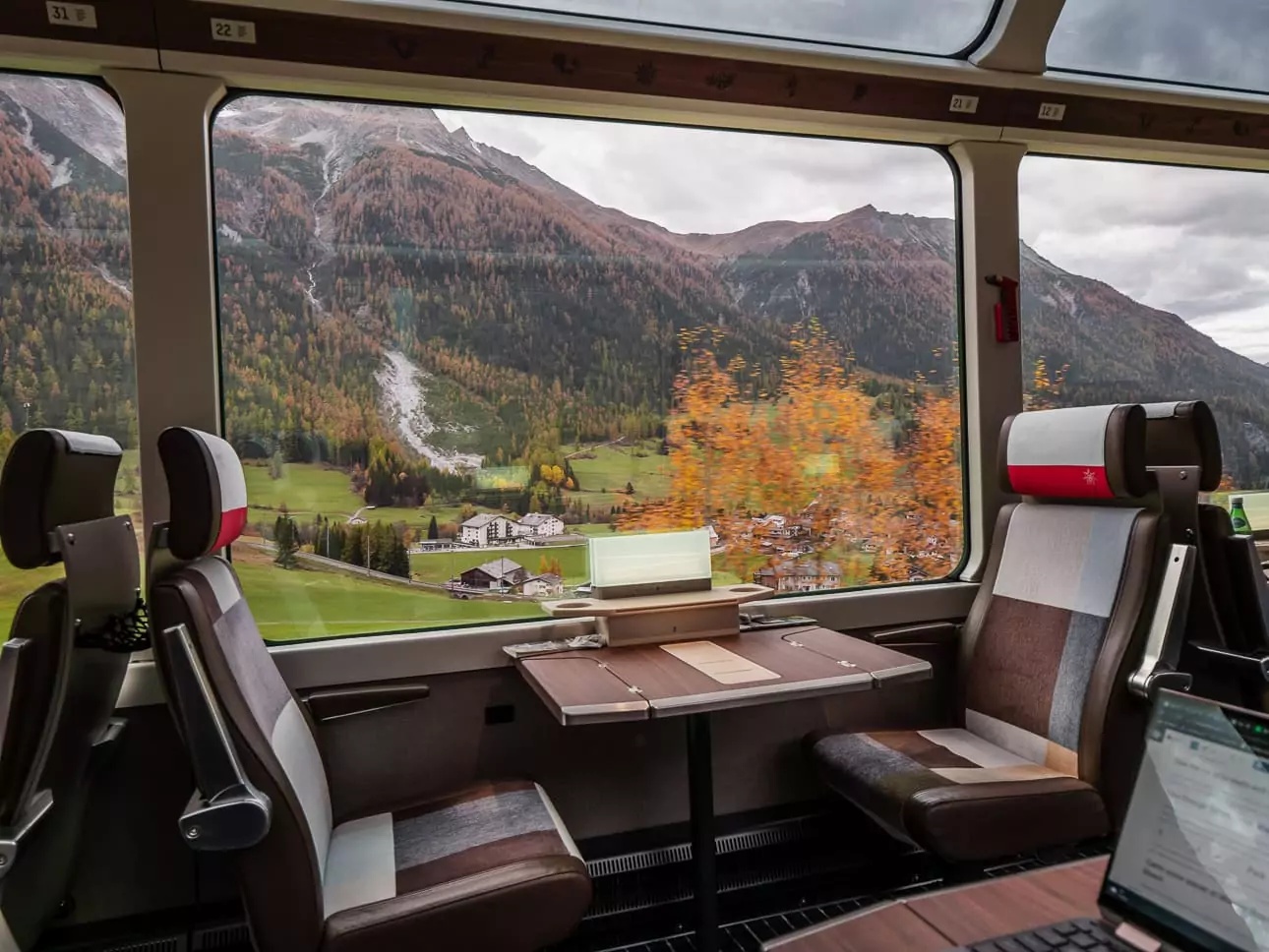
- Regional/local trains: This usually refers to standard passenger trains that service small towns across the public transport network, and some of them cover the exact same routes as the panoramic trains but without the fancy carriages or mandatory reservations.
- Boats/regular boats/scheduled boats: Timetabled lake boats that run between lakefront stops on a fixed schedule, these are part of the public transport network just like buses and trains.
- Point-to-point or full fare ticket: A full price, flexible ticket for a specific route from A to B on a specific day, but you can take any train that day and even hop on and off trains along that route if you want to make a day of it.
- Supersaver Ticket: Discounted, non-refundable train tickets that are valid only for the specific departure you’ve selected, limited availability for each connection and if they’re sold out you have to buy point-to-point tickets at full price.
- Reduced fare/reductions (or just ‘reduced’): Just a discounted price on a travel pass or mountain excursions for certain conditions, like under 25s or if you hold a specific travel pass
- Class upgrade: Paying extra for a specific journey or a whole day to upgrade to 1st class carriages/boat decks when you only have a 2nd class ticket or travel pass
- Consecutive vs. Flex/flexible: Whether a multi-day pass is valid on consecutive days only or lets you choose your travel days within a longer window.
- Seat reservations/supplements: An extra fee on top of your ticket or travel pass for a guaranteed seat on certain trains and excursions, mandatory on the Glacier Express and Bernina Express year-round and for Jungfraujoch in peak season.
💡 An important warning about the SBB app/website: One thing that trips up almost every first-time visitor is that the SBB app and website default to show the half fare price when you search a route, so you have to click into the dropdown and manually select ‘full fare’ to get accurate pricing for travel without any pass. You don’t want to do all your calculations based on the default half fare price and then have that muck up your travel pass decisions!
How to choose the right Switzerland travel pass for your trip
Picking the right Switzerland travel pass for your trip is rarely a straightforward or obvious decision, it’s more like a weighted analysis of a bunch of different factors.
While finding the absolute best value option is usually the main goal, things like flexibility, convenience and how much mental energy you want to spend each day of your trip all play a part too.
Skip the maths with my Switzerland travel pass calculator
If you’ve already pencilled in an itinerary and just want to know which Switzerland travel pass is best in thirty seconds, I built a free tool that does all the backend work for you 🤓
It’s based on current 2026 prices for major routes, mountain excursions and different pass options, and even takes seasonal rates into account.
But if you’re still in the dreaming and planning phase and you want to understand the logic behind the passes so you can squeeze the maximum value from whichever one you go for, keep reading.
The undeniable Half Fare Card calculation
I share all my travel tips on Instagram and TikTok (but keep in mind they can’t be updated like blog posts, so any videos from last year might have out-of-date pricing) and I’ve received a small number of comments like these:
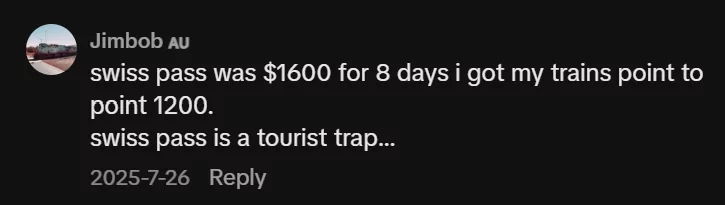
It’s true, travel passes can be very confusing, but there is one super simple calculation which will at least stop you from wasting money on full fare point-to-point tickets like poor Jimbob here.
💸 If all of your Switzerland journeys (including trains, boats, buses and mountain excursions) add up to 300CHF at the full fare price, the Half Fare Card literally pays for itself.
That’s not a subjective statement or my opinion, that’s a mathematical certainty.
The Half Fare Card costs 150CHF for one month and it gives you 50% off pretty much the entire transport network, including mountain excursions like Jungfraujoch. If you’d otherwise be spending 300CHF or more on full fare tickets and excursions, the card saves you at least 150CHF, which cancels out the cost and means anything you save beyond that is basically free money that you would’ve wasted otherwise.
Reaching 300CHF in transport costs is scarily easy too, all it takes is a combo of 3-5 intercity journeys and mountain excursions and you’re almost guaranteed to tip the scale.
Even a simple three-journey itinerary of Zurich → Interlaken, Jungfraujoch return and Interlaken → Zurich comes out at 407.20CHF full fare in peak season, but using a Half Fare Card brings that down to 353.60CHF total.
Unfortunately this doesn’t tell you whether the Half Fare Card beats any other passes, and calculations like this are much harder to do with others because they’re dependent on too many of the factors we’re about to dive into.
But if you’re stuck in absolute analysis paralysis or don’t have the time or mental capacity to stay with me for the rest of this guide, just know that 300CHF or more on full-fare tickets = Half Fare Card saves you money. Easy peasy 🍋
Where in Switzerland are you going?
This is the first step of the ‘how to choose a pass’ flow chart because it can quickly rule out the ones that don’t geographically align with your trip.
- If you’re not touching Interlaken then the Jungfrau Travel Pass and Berner Oberland Pass aren’t helpful for you
- No Lucerne in your trip = goodbye Lucerne Travel Pass
- If you’re zipping all over but only have 1-2 days in each region, a national pass will suit you best
Once you’ve got your shortlist down to the national passes and relevant regional ones, it’s all about how much of your trip is happening inside one regional zone.
Regional passes (BOP, JTP, LTP) offer super high value density inside their zone of validity, fully covering public transport and multiple expensive mountain excursions. National passes on the other hand cover public transport across the whole country, helpful for crossing multiple zones, but with much lower coverage of mountain trips.
It all comes down to the exact journeys you’re taking (I’m going to repeat that a lot sorry, but it’s the truth!) because even if a regional pass dominates for one segment of your trip, the cost of full-fare connections everywhere else might wipe out those savings.
One thing that some travellers don’t realise though, and what often ends up being the best value option for itineraries that combine an in-depth focus on one region plus a lighter touch across others, is that you can stack the Half Fare Card with regional passes to get the better coverage in a certain area and still get 50% off everything outside of that zone.
The BOP and JTP even offer HFC-holders ~20-30% off their pass prices, so you’re already working towards covering the 150CHF cost before boarding a single train.
How many big travel days will you have, and are they in a row?
The shape of your travel days (how many + if they’re clustered or spread out) will determine whether a per-day pass earns back its daily cost, or whether the flat-rate Half Fare Card or single Saver Day Passes are the safer bet.
When I say “big travel day” I mean at least one major spend, like a 2h+ intercity journey, panoramic train or a mountain excursion. Days where you’re just using local transport or visiting nearby mountain villages don’t count, these wouldn’t rack up that much in travel costs.
Per-day passes like the Swiss Travel Pass and regional passes generally start at around 70-85CHF per day for the 3-day versions (adult 2nd class), and the daily rate drops as the passes get longer, so longer passes = better per-day value.
Short trips really require multiple big travel days in a row to pay off, which is pretty doable if you’re coming to Switzerland to see the major highlights, but one big day between two city-based days will push you towards a Saver Day Pass instead.
Longer passes might have leeway for a rest day sandwiched between mountain excursions and still be worth it, but if bad weather rolls in and cancels your adventures for three days in a row, you’ve effectively wasted a chunk of that pass.
The Half Fare Card doesn’t care about days at all, it’s a flat 150CHF for a month and it breaks even the moment your full-fare travel adds up to 300CHF, whether that’s across a massive weekend of exploring or a slower-paced two week trip.
It might not save you as much money as a per-day pass put to maximum use, but as long as you save at least 150CHF using it, there’s no risk of you ending up worse off than if you’d just bought point-to-point tickets.
The Swiss Travel Pass has another layer to consider too: whether you want a consecutive pass (3, 4, 6, 8 or 15 days back-to-back) or a Flex pass (same durations but you choose what days to activate within a one month window). Flex is a bit more expensive but it means you can cut the risk of paying for pass days that you won’t actually use.
Are you taking any panoramic trains?
World-famous panoramic trains like the Glacier Express, Bernina Express and Gotthard Panorama Express whisk keen sightseers over the Alps and past natural wonders in fancy carriages with huge windows, charging an absolute premium for the privilege.
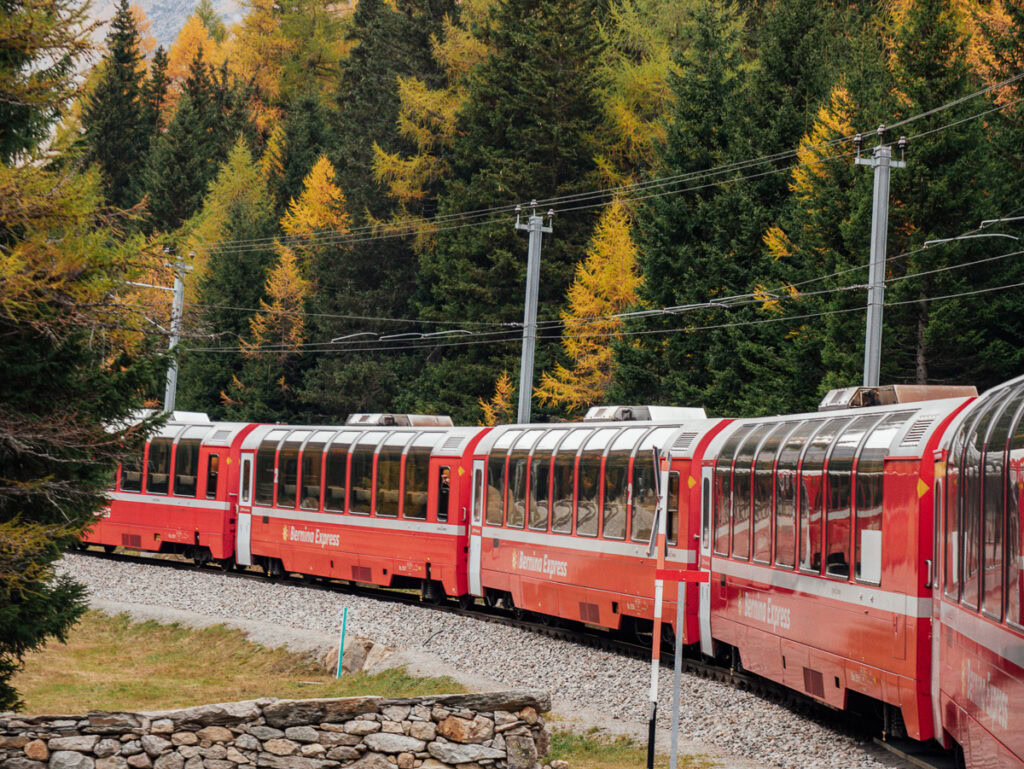
The good news is that all of these routes are included in the GA validity area, which means they’re fully covered by Swiss Travel Passes, 1-month GA Travelcards and the Saver / Friends Day Passes too, while Half Fare Cards (obviously) get 50% off. Just remember that seat reservations/supplements are always additional, no pass covers or discounts these.
Here’s what you’d pay for the main routes with different 2nd class passes (all prices in CHF):
|
Full fare ticket |
With STP, SDP, FDP or GA |
With HFC |
Seat res.(additional + mandatory) |
|
|---|---|---|---|---|
|
Glacier Express (Zermatt-St Moritz) |
159 |
0 |
79.50 |
54 |
|
Bernina Express (Chur-Tirano) |
66 |
0 |
33 |
40-44 |
|
GoldenPass Express (Interlaken-Montreux)* |
56 |
0 |
28 |
20 |
|
Gotthard Panorama Express (Lucerne-Lugano)** |
135 |
17 |
67.50 |
24 |
*Also fully covered by the Berner Oberland Pass, reservations strongly recommended
**The 17CHF with passes includes the required class upgrade for the train since the train is 1st class only
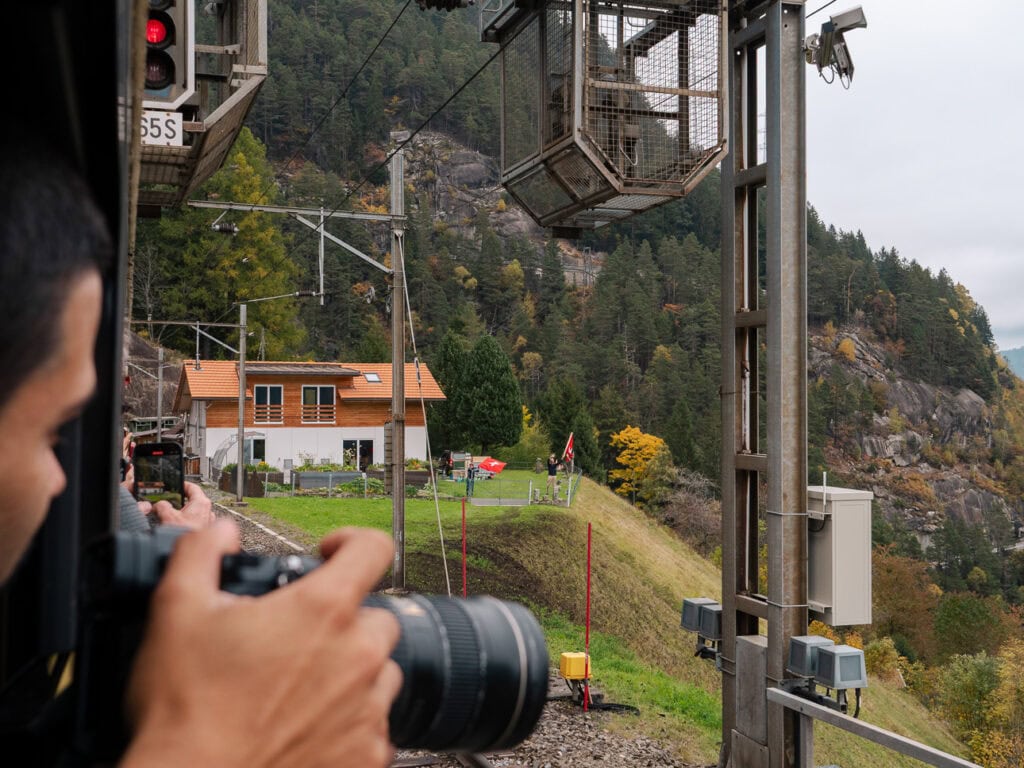
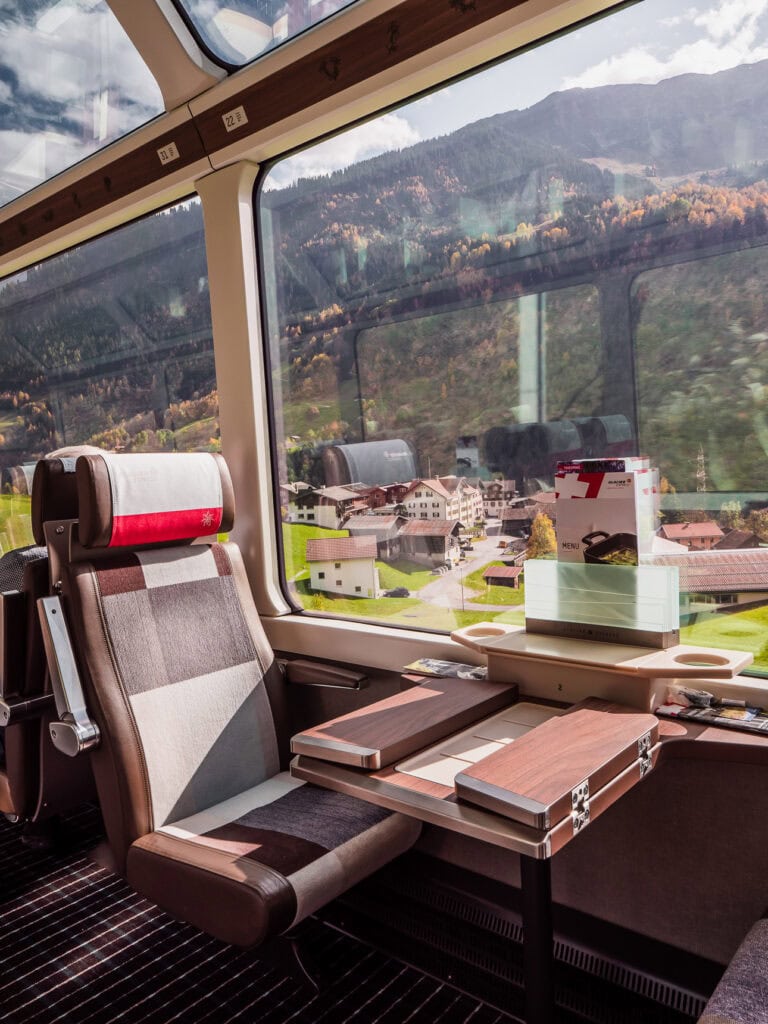
If you’re planning on taking the magical Glacier Express, which I’d highly recommend, the 159CHF you’d save on your ticket immediately pays off a massive chunk of your Swiss Travel Pass! Throw in the connecting Bernina Express the day before or after and that’s another 66CHF saved, so you’ve recouped 225CHF across just two trips.
Even if the Glacier Express or Gotthard Panorama Express is your one and only splurge, chances are a day pass will still save you money vs. paying full price, because Saver Day Passes are as cheap as 52CHF when you book well in advance, and you’ve got to lock in your seat reservation early anyway.
And if the seat reservations would blow your budget, you can take regular trains on the exact same routes the panoramic trains use and they’re completely free with an STP or any GA area passes.
Which mountains are non-negotiable for you?
After the fanciest panoramic journeys, mountain excursions are the next biggest money pits on most Switzerland itineraries, and different passes offer wildly different discounts for them.
If you’ve got specific mountains that you’re planning a trip around, the right pass could end up saving 100-180CHF on a single excursion. Grab the wrong pass without researching what it actually covers, and you might come out hundreds of francs worse off after a week-long trip.
These are the most expensive mountains that are included in typical Switzerland itineraries and how much different passes can save you (based on return tickets in summer):
|
Full fare ticket |
With STP |
With HFC |
Regional passes |
|
|---|---|---|---|---|
|
261.20 |
179.60 |
130.60 |
79CHF with JTP (best discount) |
|
|
105.60 |
38 |
52.80 |
Free with JTP |
|
|
135.20 |
45.70 |
67.60 |
Free with BOP |
|
|
98 |
49 |
49 |
Free with BOP |
|
|
102 |
51 |
51 |
Free with LTP |
|
|
119.80 |
42 |
59.90 |
Free with LTP |
|
|
122.60 |
Free* |
61.30 |
Free with LTP |
|
|
97.60 |
Free* |
48.80 |
Free with LTP |
|
|
132 |
66 |
66 |
Free with Zermatt Peak Pass |
|
|
132 |
66 |
66 |
Free with ZPP |
*Rigi and Stanserhorn are both fully included in the GA validity area, which means they’re free with the Swiss Travel Pass, 1-month GA Travelcard, the Friends Day Pass and the Saver Day Pass too
Another rookie mistake I see a lot is travellers not making the most of the pass they end up buying.
If you’re getting a Swiss Travel Pass, it would be rude to not visit Rigi and Stanserhorn while you’re in Lucerne! They’re both totally covered so you’ll pay nothing extra, whereas if you do Pilatus or Titlis you’ll only get a 50% discount.
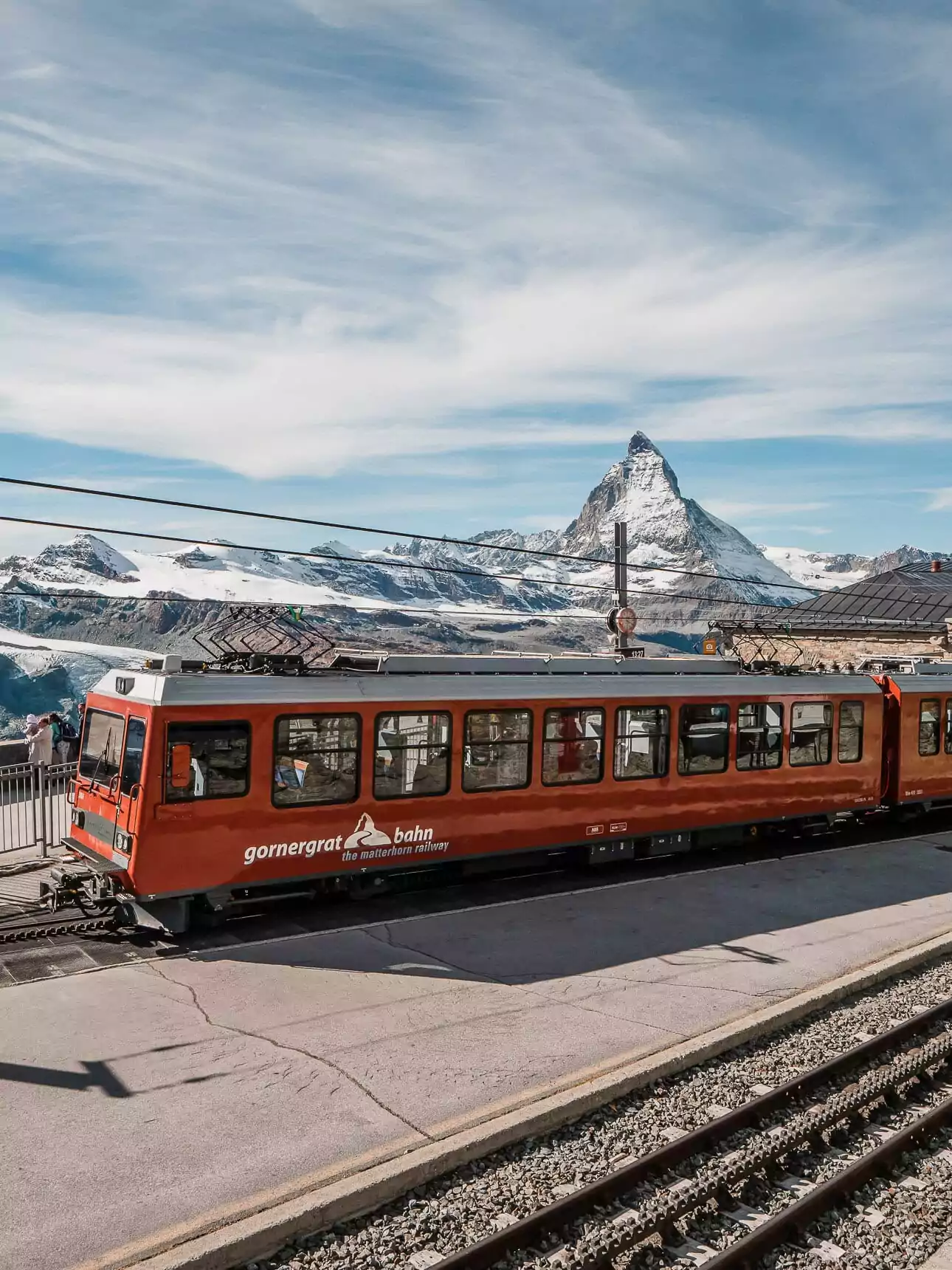
If you’re getting a Jungfrau Travel Pass to get the best deal on Jungfraujoch then also tack on Grindelwald-First, Harder Kulm and Schynige Platte (summer), or if the Berner Oberland Pass is what you go for then be sure to visit Schilthorn and Brienz Rothorn to get the best bang for your buck (or fun for your Franc 🙃).
Can you lock in your plans early or would you rather wing it?
If you’ve been blessed with the ability to make important itinerary decisions ahead of time, this trait alone is going to save you LOADS in Switzerland.
Switzerland’s transport system uses dynamic pricing (where prices go up and down based on demand) for two things:
- Supersaver tickets (cheap fares on specific train departures)
- Saver Day Passes (single-day travel passes for the GA validity area)
If you know exactly what train you want to take and are happy to lock it in months in advance, Supersaver tickets can save you up to 50% on full fare point-to-point tickets for specific departures, and if you’ve got a Half Fare Card you can even get Supersaver discounts on the Half Fare price for that particular train. We love a stacked discount!
Saver Day Passes give you the best of both worlds in terms of value for money and flexibility. Instead of being tied to an exact train departure they give you unlimited travel across the GA area for a specific day, and they can be booked up to six months in advance, starting from 52CHF without an HFC or 29CHF if you’ve got an HFC too.
A low-priced Saver Day Pass can save you huuuge money on things like the Glacier Express, multi-journey day trips, Rigi/Stanserhorn mountains, or long intercity trains like Zurich to Zermatt or Lucerne to Geneva.
The downside of committing to these before your trip is that there’s no room for flexibility, so I’d recommend using them only for journeys/travel days you know for sure won’t change, like moving cities for accommodation you’ve booked or panoramic trains you’ve already reserved.
If you’re like me and absolutely have no capacity to make important travel decisions ahead of time, winging it is much easier and less stressful with a prepaid multi-day travel pass or at least a Half Fare Card, rather than being stung with full fare tickets every time you need to go somewhere. And I say that from experience 🫠
Are you under 25?
Under 25s rejoice, you’ve got exclusive access to some special travel pass prices right up until the day before your 25th birthday:
- 30% off Swiss Travel Passes
- 27-30% off Berner Oberland Passes (same price as the Half Fare Card discount but without needing the card)
- 80CHF for a Friends Day Pass for up to four under 25s, giving you a full day of unlimited travel in the GA area
These might change up the maths for your trip even if you’re travelling with others who would be better off with a different pass, so don’t rule them out.
Are you travelling with kids 6-15?
Travelling with kids between 6 and 15 is where the Swiss Travel Pass and Swiss Half Fare Card reeeally pull ahead of the pack, because both of these give you the option of adding a complimentary Swiss Family Card, which lets accompanying children travel for free across the entire network, plus mountain excursions where their parents only get a discount.
Yes, you read that right!
If you’ve got an STP or HFC and you’re using it for expensive mountain trips like Jungfraujoch, Schilthorn or Pilatus, as long as you’ve bought your ticket at the discounted STP/HFC price and you’ve got the Swiss Family Card, you don’t need to pay anything extra for a ticket for the kids.
A breakdown of every Switzerland travel pass
Now that you understand the logic behind choosing pass, it’s time to meet the actual contenders.
There’s no such thing as a one-size-fits-all option here, because the pass that saves a fortune for a panoramic train slow travel enthusiast might be a total waste of money for someone wanting to tick off a handful of epic summits around Lake Lucerne or the Bernese Oberland.
Here’s a deep dive into every major Switzerland travel pass available for visitors in 2026, including what they cover, who they’re best for and any downsides you need to know about before you commit.
Swiss Travel Pass
What it covers: Unlimited travel across trains, buses and boats, free entry to 500+ museums, free travel on Rigi, Stanserhorn and Stoos mountains, and 50% off most other mountain excursions.
The Swiss Travel Pass is the country’s flagship pass for tourists.
You get the most out of it when you’re zipping across the country using intercity or panoramic trains, taking day trips to tiny mountain villages in the GA area, cruising across the lakes, visiting museums, and want to hop on and off transport without having to pre-plan or buy individual tickets.
For some travellers it genuinely is the best option in terms of value, convenience or both, butttt you don’t want to buy it on autopilot without cross-checking your planned itinerary with STP coverage, otherwise you might feel ripped off once you realise your dream mountain trip is still going to cost you an entire day’s budget on top of your pass.
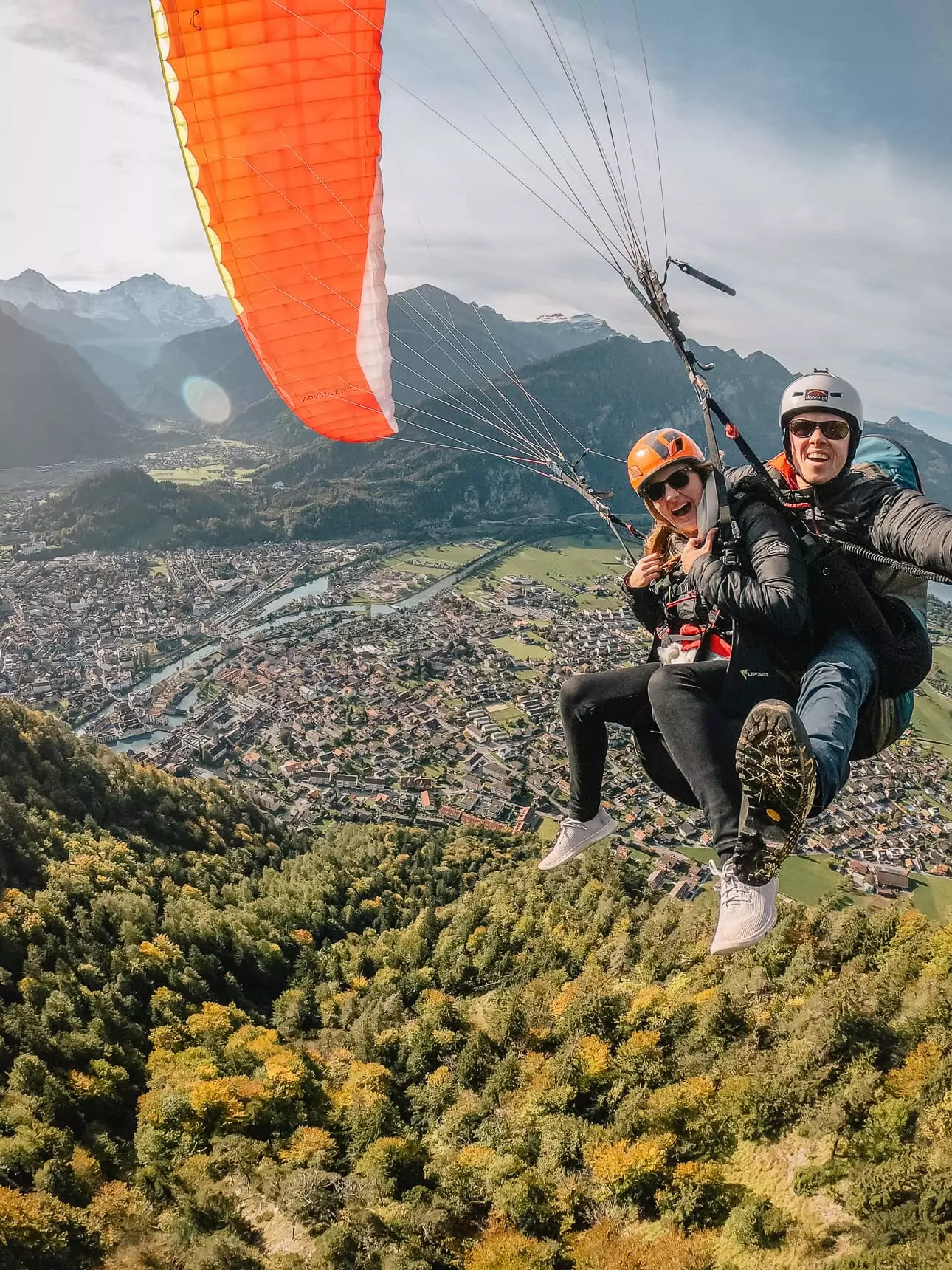
Key things to know about the Swiss Travel Pass:
- The biggest benefit is the spontaneity of being able to jump on and off public transport whenever you please, so if you’re on a train/bus/boat and notice a cute village, you can simply disembark for a wander or a meal before catching the next connection
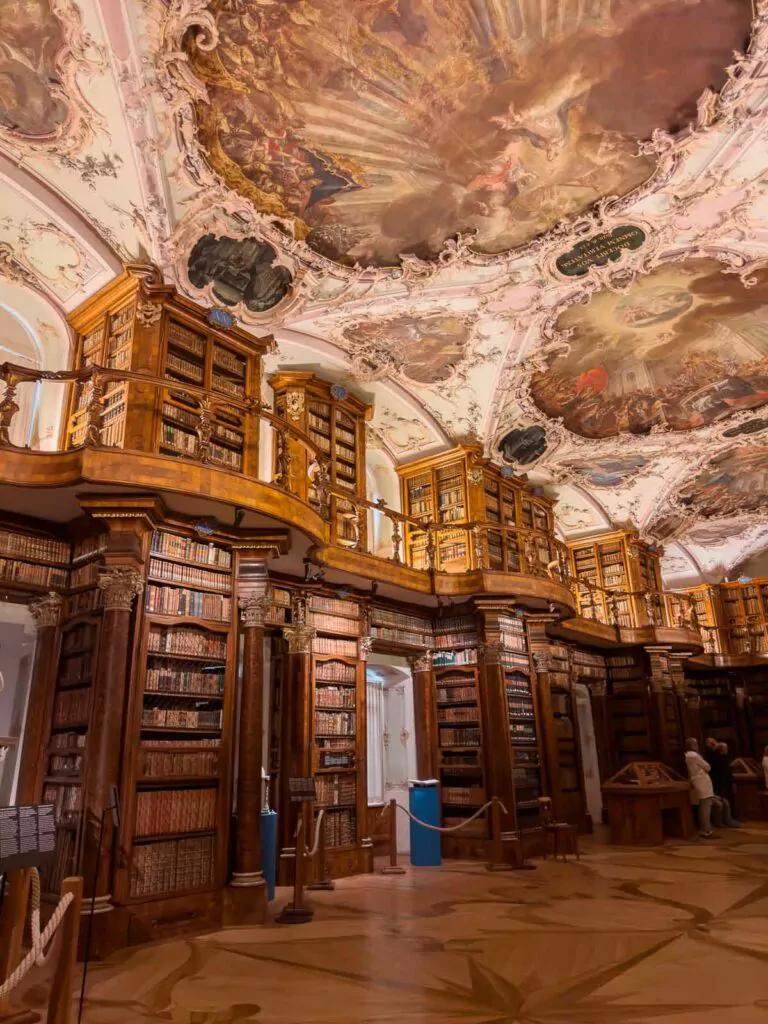
- The museum pass is a brilliant back up for rainy days or if you need a break from summit viewpoints, with inclusions like the spectacular Abbey Library in St Gallen (a must-see!), Swiss National Museum in Zurich and Chillon Castle in Montreux
- If you’re travelling with kids 6-15 you’ll get access to the complimentary Swiss Family Card (exclusive to the STP and HFC) which lets the kiddos travel for free across the entire country when they’re with you, including mountain excursions where you adults only get a discount
- But the downside that catches some travellers out is that the 50% off most mountain excursions still leaves between 35-70CHF to pay on top of your pass for the most popular summits, and Jungfraujoch only gives 25% off the final leg which means STP holders still pay up to 179.60CHF for that trip alone!
- You can choose from 1st class or 2nd class STPs. I’m personally a 1st class gal because I mostly travel solo in Switzerland and then I can have my own single seat with window + aisle access and no one next to me 💃🏼
An example of a no-extra-spend Swiss Travel Pass itinerary
Reckon this is the right one for you?
Check current prices and buy your Swiss Travel Pass here or head to my full Swiss Travel Pass guide for a deep dive.
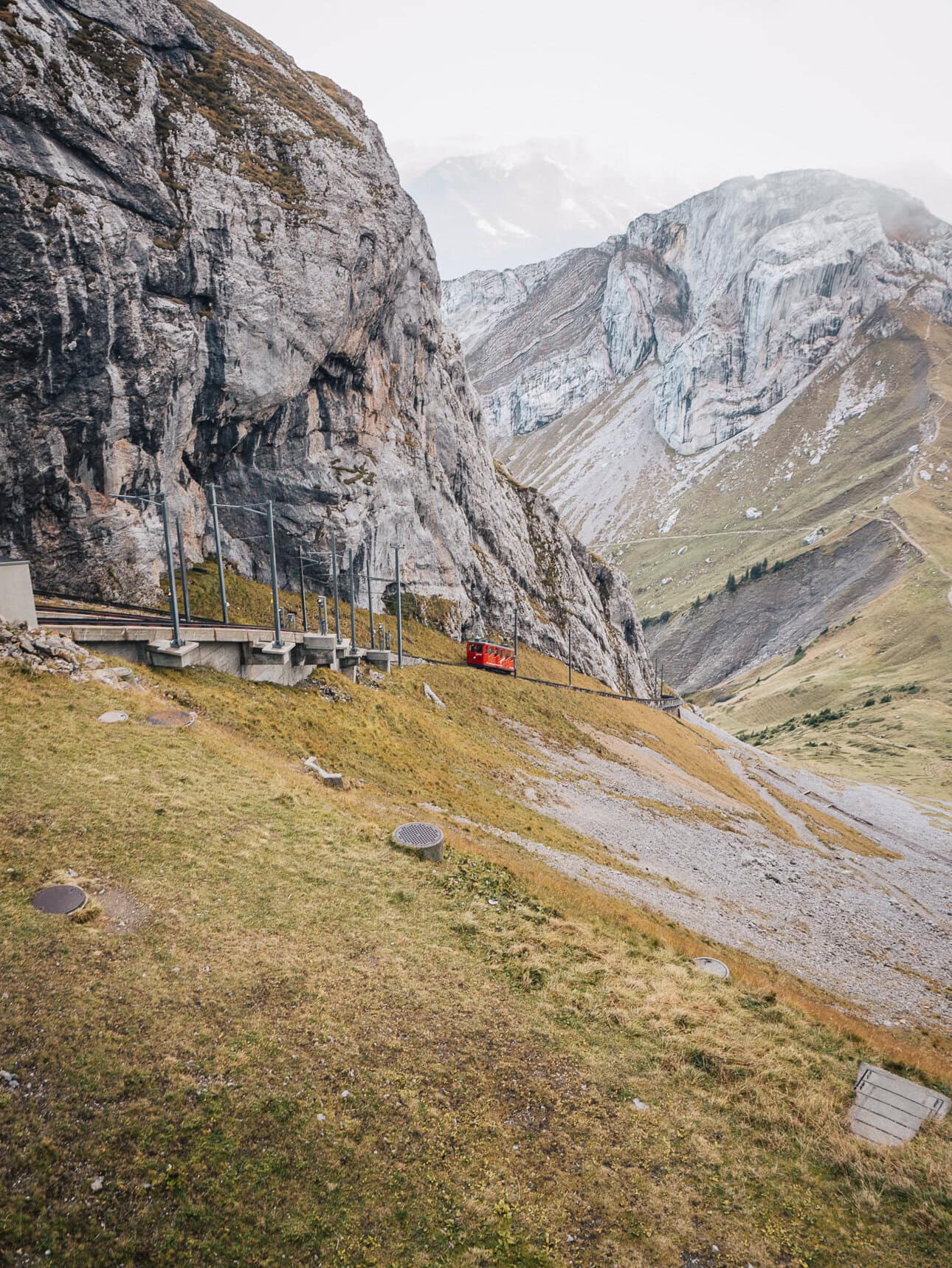
Swiss Half Fare Card
What it covers: 50% off trains, buses, boats, city transport and most mountain excursions across the entire country for one month.
Often overlooked in favour of the full coverage pass, the Swiss Half Fare Card actually ends up coming out as the better value travel pass for the vast majority of Switzerland itineraries.
The maths is super simple: 150CHF flat fee for a month, and the moment your travel costs add up to 300CHF at full fare price, the card has already paid itself off.
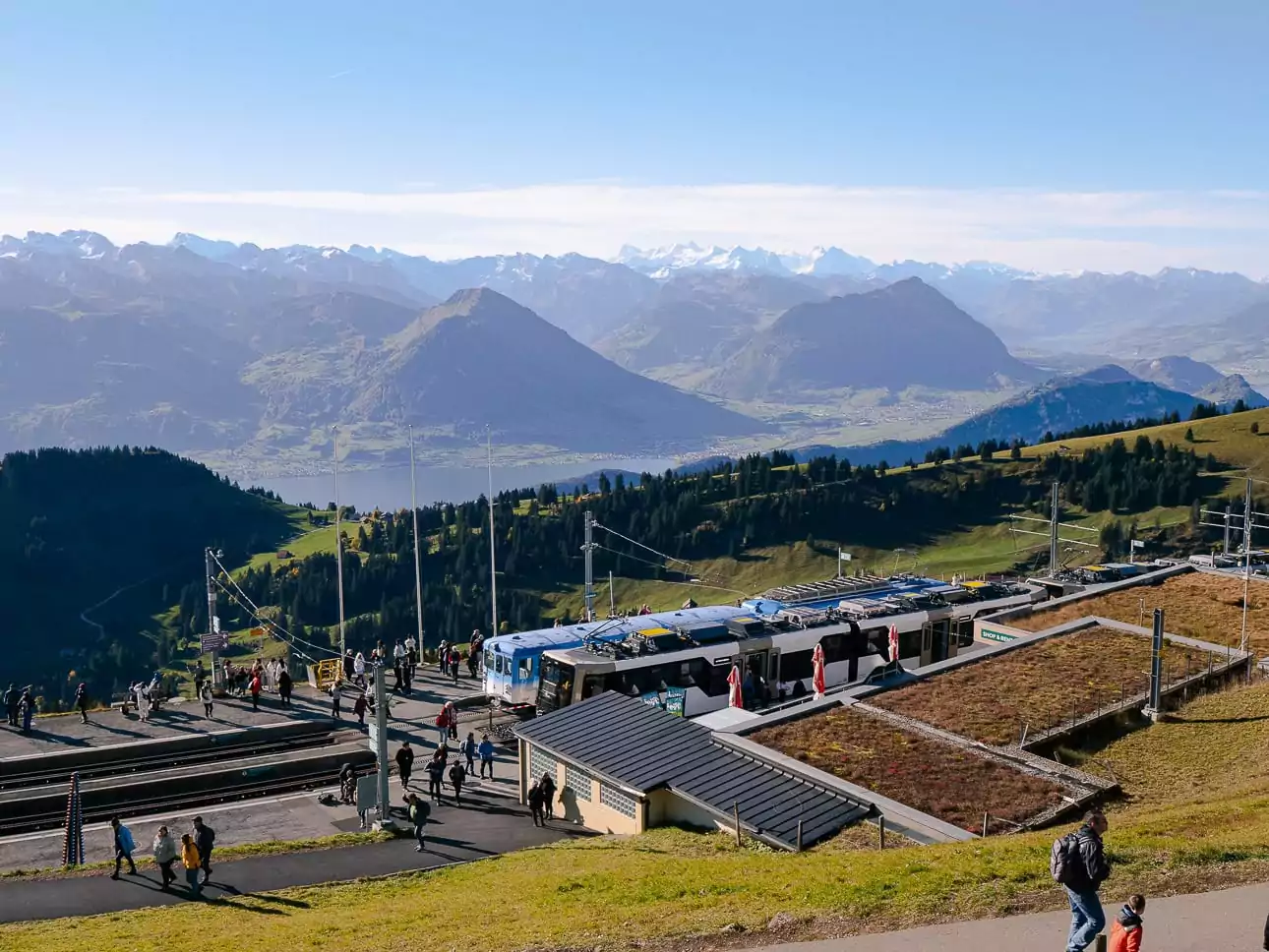
It’s also the lowest-risk pass you can buy, there are no travel days to use up, no regional restrictions, no fully covered mountain excursions that pump up the pass price that you have to visit to get the most out of it, so you can stress less about the specifics and just go with the half price flow.
Key things to know about the Half Fare Card:
- Like the STP, you can add on the complimentary Swiss Family Card which allows kids 6-15 to travel free all over Switzerland when they’re with you (the adult HFC-holder), even though you only get a discount
- It’s stackable with regional passes, so you can get full coverage in a specific area but still save 50% on out-of-zone travel or non-included mountains, and some regional passes are cheaper when combined with a HFC
- If you’re able to book early you can get double-discounted Supersaver tickets for specific train connections, as well as cheaper Saver Day Passes
- You do have to buy a ticket for every journey though (unless you’re getting a Saver Day Pass) so there’s more admin involved than the hop-on hop-off freedom of an STP
- You can choose to buy 1st or 2nd class tickets for each journey, you get 50% off both classes so you could upgrade to 1st for a particular panoramic train or a long intercity trip
Want to save even more money?
Use code FINDINGALEXXKLOOK for 10% off when you buy your Swiss Half Fare Card here, and read my full Swiss Half Fare Card guide for everything you need to know before you use it.

Jungfrau Travel Pass
What it covers: Unlimited travel on a network of trains, cable cars, gondolas and lake cruises within the Jungfrau region, plus the lowest possible price on Jungfraujoch and discounted access to Schilthorn.
If Jungfraujoch is on your Switzerland bucket list, the Jungfrau Travel Pass is the only sightseeing pass that meaningfully softens the financial blow of this wildly expensive experience.
For the return trip from Interlaken right up to the summit you’ll only pay 63CHF in low season and 79CHF in summer with the JTP, compared to ~112-131CHF with the next best option (the Half Fare Card) or ~151-180CHF with the BOP or STP.
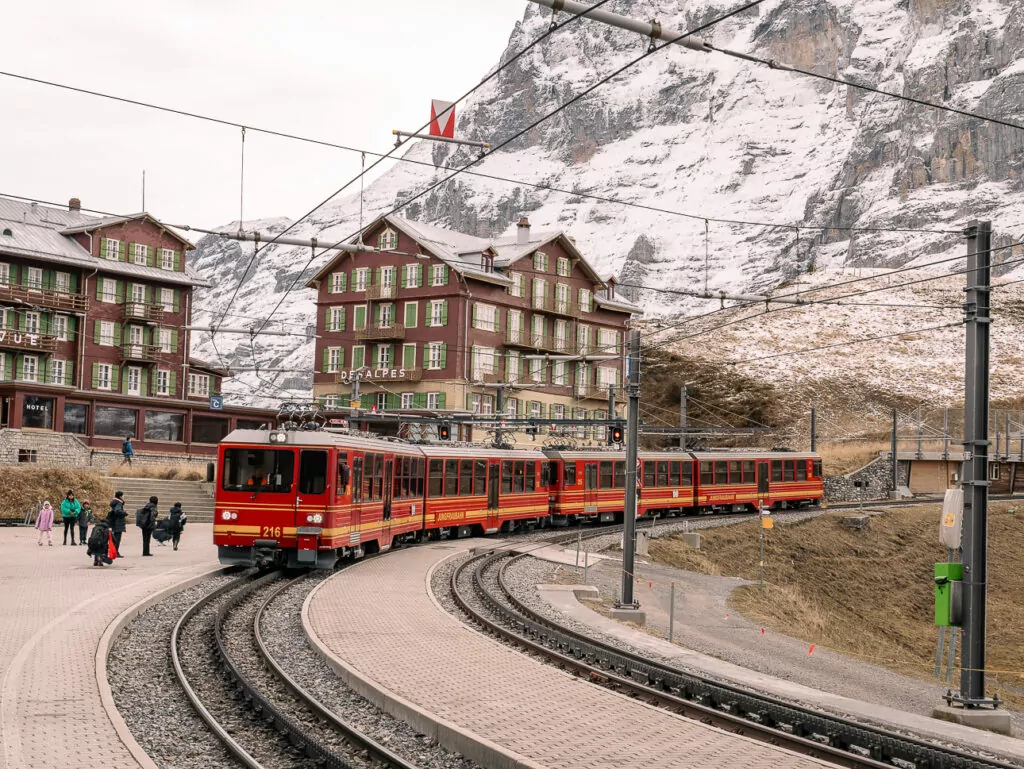
Throw in full coverage for excursions to Grindelwald-First, Harder Kulm, Schynige Platte, trains to the mountain villages, and cruises on Lake Brienz/Lake Thun, and using it for an outdoorsy itinerary could have a significant impact on your total spend.
Key things to know about the Jungfrau Travel Pass:
- I’ll say this again just so it’s super clear, Jungfraujoch – Top of Europe is not fully covered by the JTP. You get free travel to Eigergletscher and then a discount on the final leg, which saves 161-182CHF vs. the full fare ticket for the whole trip from Interlaken, but you’ve still got to pay that 63-79CHF for the connecting ticket to the top station.
- It doesn’t cover any transport into the region, coverage starts at Interlaken and the lakes, so if you’re arriving by train you might be better off pairing it with a Half Fare Card to save 50% on everything before and after this part of your trip, plus that gives you cheaper JTP prices and a better Schilthorn discount too.
- The mountains the JTP covers are the most accessible from Interlaken and therefore the most touristy ones. If you’re keen to escape the crowds and hike where the locals hike then the Berner Oberland Pass (the next pass in this list) might suit you best.
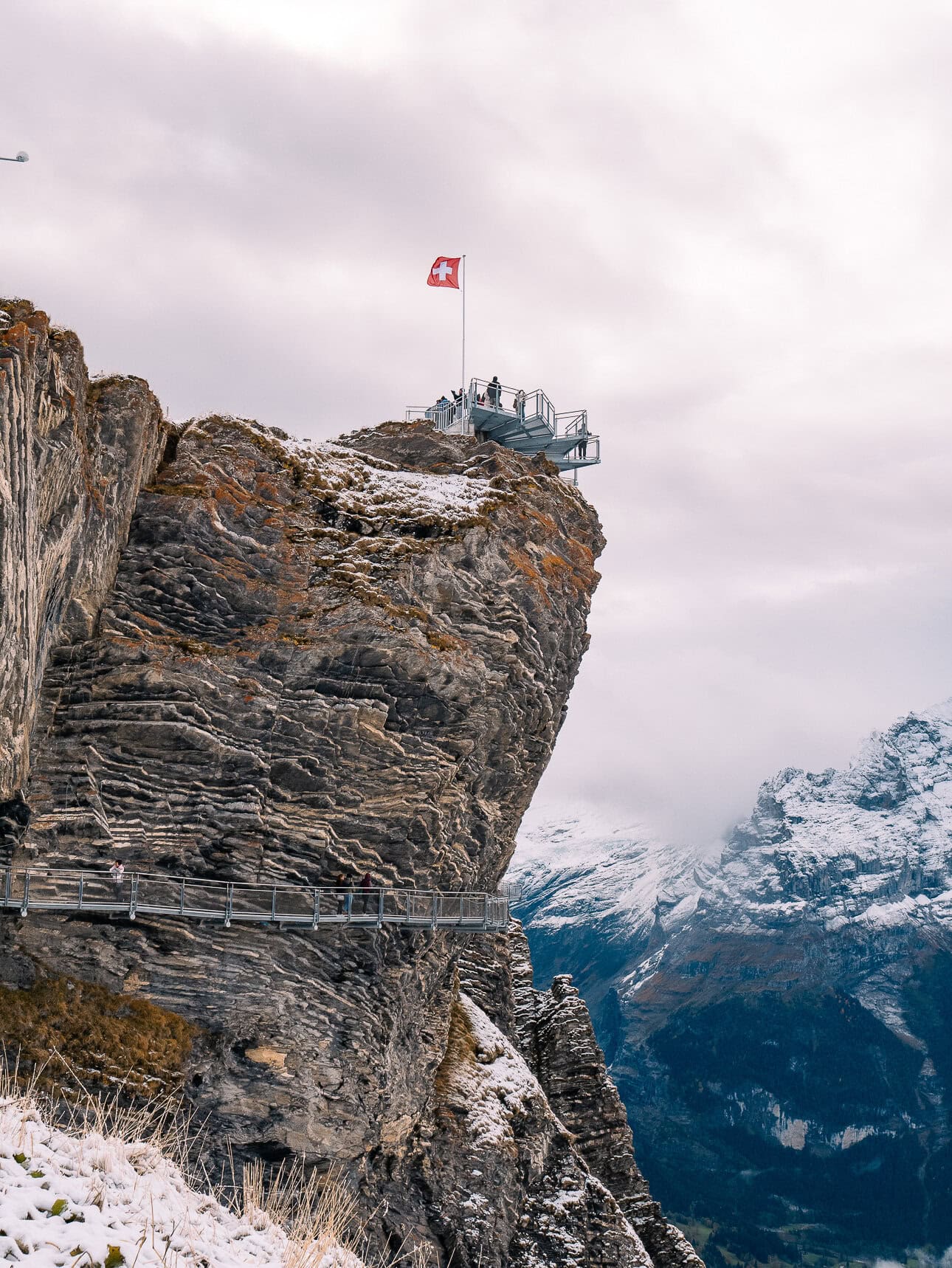
An example of a maximum value Jungfrau Travel Pass itinerary (based in Interlaken)
Triple your discount!
Combine a Half Fare Card with a Jungfrau Travel Pass and you’ll save over 20% on the JTP price, plus buy them both together on Klook and you’ll save an extra 10% on your entire purchase with the code FINDINGALEXXKLOOK.
Still not sure if the JTP is right for you? I’ve shared some itinerary breakdowns in my Jungfrau Travel Pass guide.
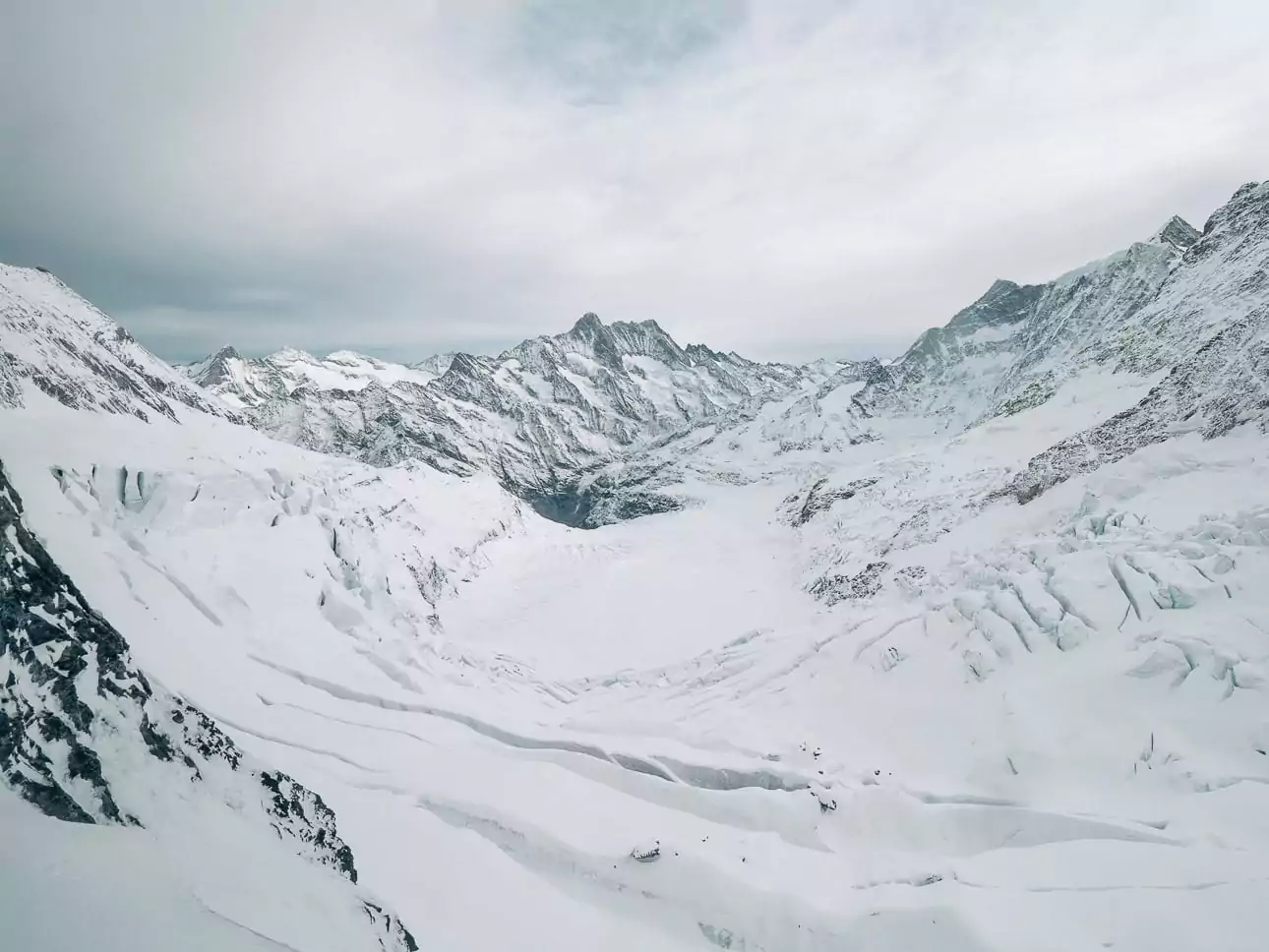
The niche alternative: Unlimited Jungfrau Summer Pass
If you’re planning an extended stint in the Jungfrau region (as in weeks, not days) then you might want to look at the Unlimited Jungfrau Summer Pass, the only pass in existence that actually covers the entire trip to Jungfraujoch with no extra payment required beyond a seat reservation.
It’s a season pass that gives you an unlimited number of journeys on the trains, funiculars and cable cars in the validity area from 3 April to 29 November 2026.
The catch? It’s 549CHF for adults 🙃 or 449CHF if you’ve got a Half Fare Card, but your HFC would have to be valid any time you use the UJSP, so if you’re staying for longer than a month you’d need a second HFC and so on.
As I said, very niche, but if you’re heading to this part of the country for a longer stay and want total flexibility to hike all the different trails then the maths might just work out.
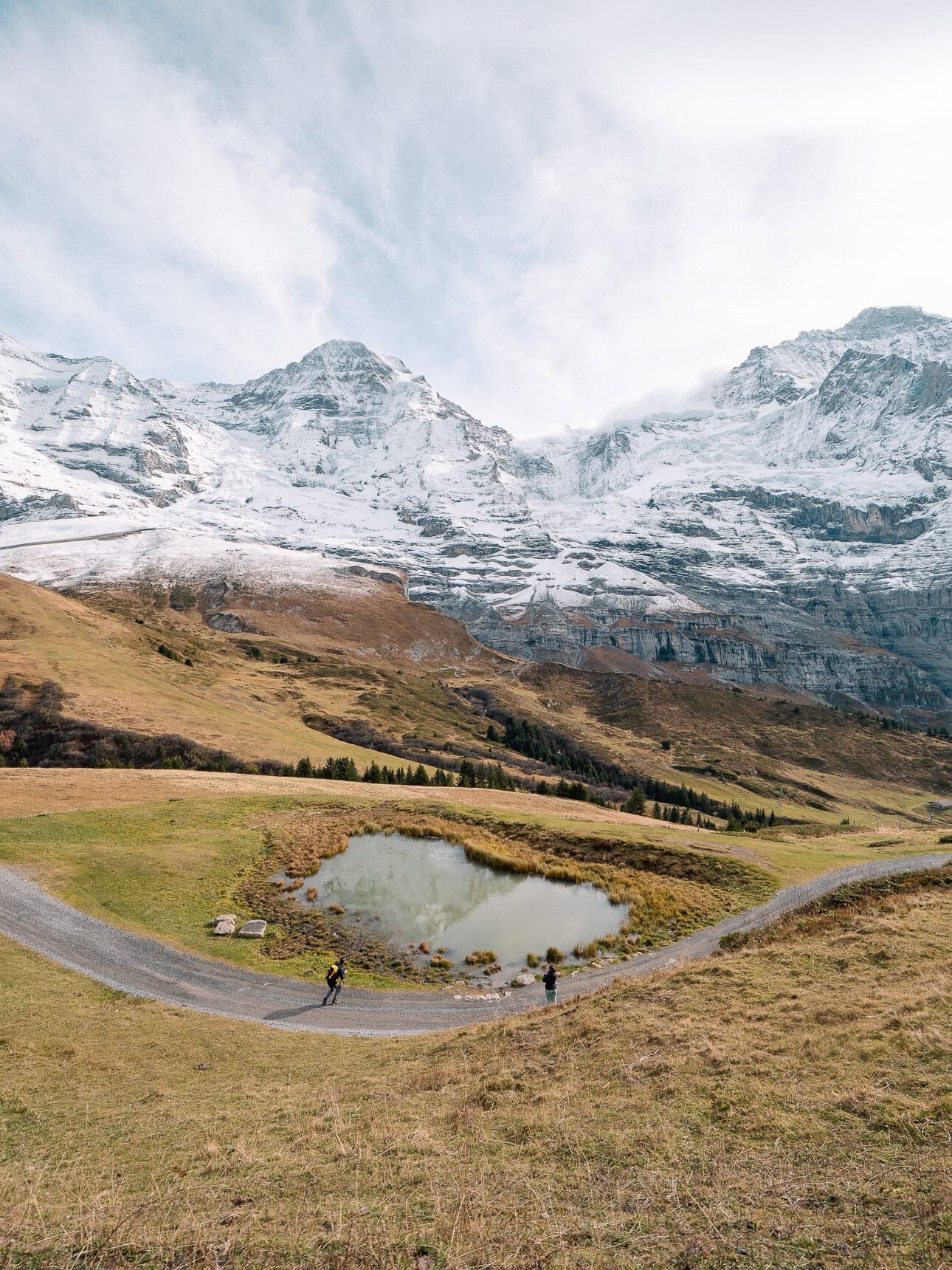
Berner Oberland Pass
What it covers: Unlimited travel on most trains, buses and boats across the Bernese Oberland, connecting routes from/to Bern, Lucerne, Montreux and Brig, 20+ free mountain excursions and another 20 at discounted rates.
The Berner Oberland Pass is the broadest regional pass in Switzerland, covering a huge chunk of the country’s most spectacular alpine territory as well as a handful of connecting train lines to actually get there.
It overlaps the Jungfrau Travel Pass validity area (and stretches way beyond), but it swaps out the Jungfraujoch special price + full coverage of Grindelwald-First and Harder Kulm, and replaces those benefits with free travel to Schilthorn, Brienz Rothorn and more than 20 lesser-known but locally-loved cableways and funiculars that’ll let you escape the tour groups.
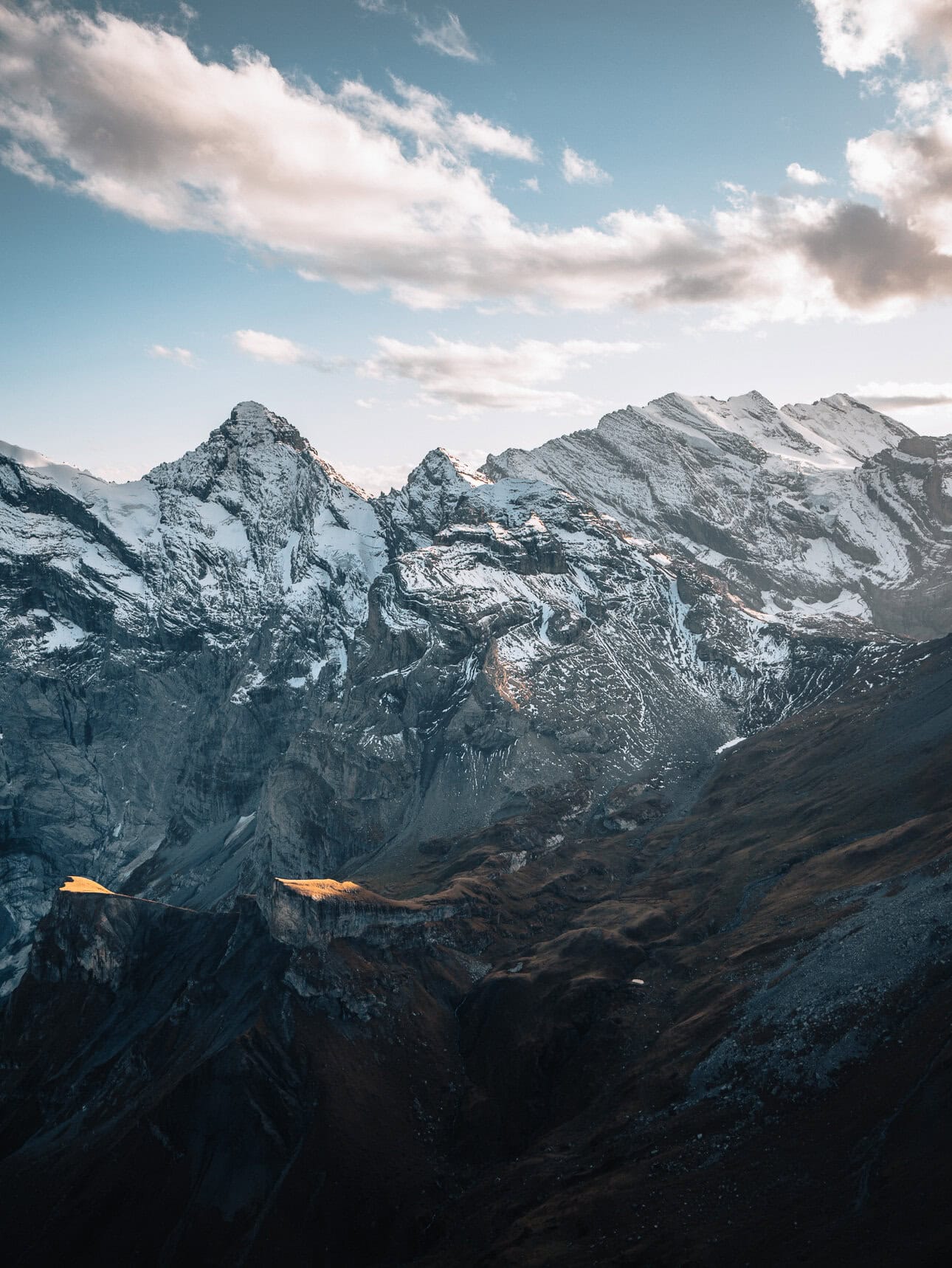
Key things to know about the Berner Oberland Pass:
- The GoldenPass Express Interlaken to Montreux (reservations strongly recommended, 20CHF) and the Luzern-Interlaken Express panoramic train (runs hourly, no need for reservations if you’re flexible with timing) are both included, so you can tack on a comfortable scenic journey
- Schilthorn (the world’s steepest cable car) and Brienz Rothorn (125-year-old mountain railway) are the biggest mountain savings, full fare tickets are 115CHF and 98CHF respectively from their base stations
- It gets you to Grindelwald or Wengen for free but the remaining segment to Jungfraujoch is only 25% off, so still very pricey!
- Pair it with a Half Fare Card for 27-30% off the BOP price, and then you’ll also get 50% off outside of the validity area plus a better Jungfraujoch discount
- Under 25s get the discounted BOP price without needing the Half Fare Card
- There are 1st class BOPs available if you want to travel in comfort on the intercity journeys or lake cruises
Does this sound like it suits?
Grab your Berner Oberland Pass here and see my full Berner Oberland Pass guide for real-world itinerary breakdowns and detailed comparisons with the JTP.
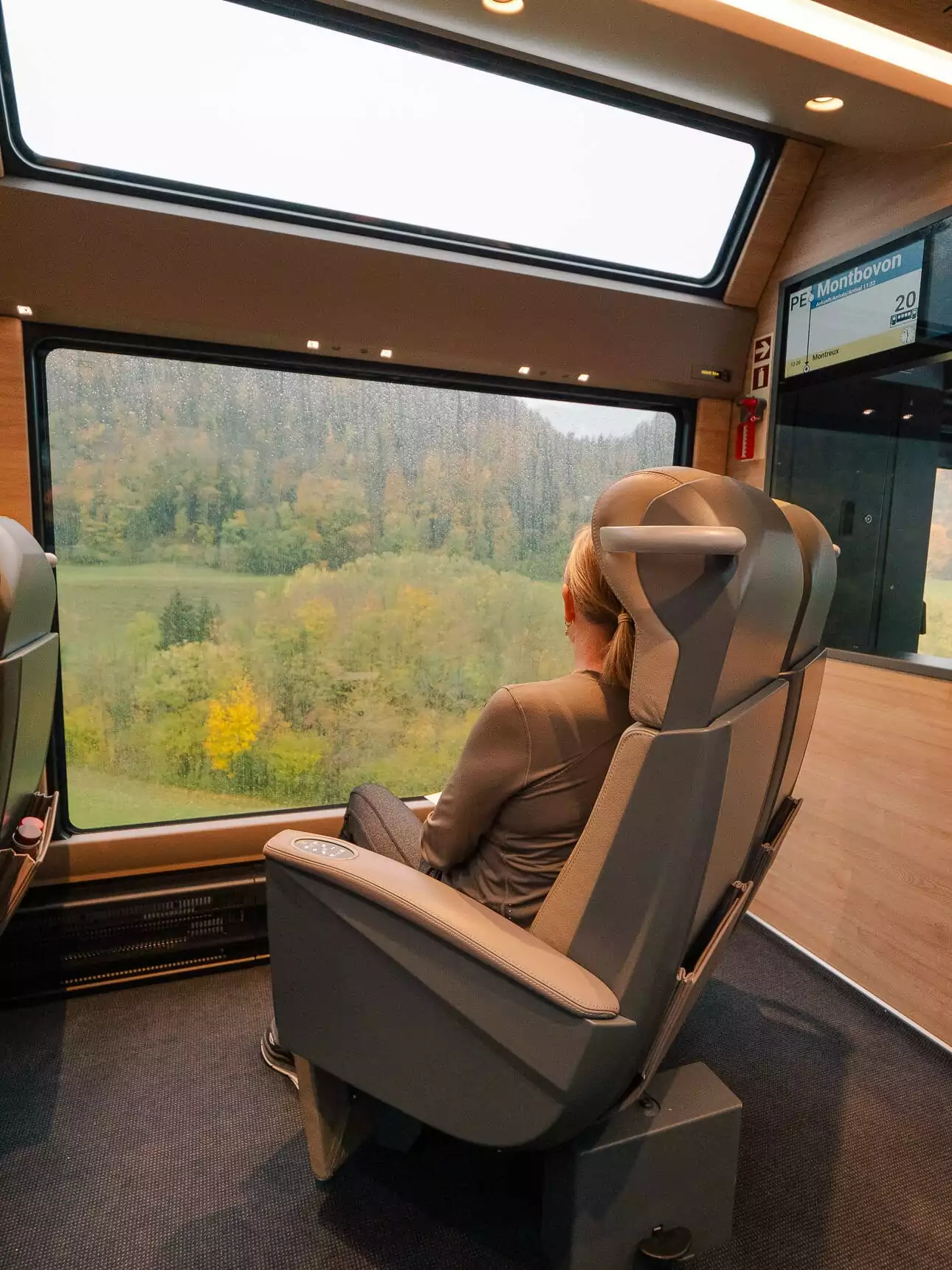
Lucerne Travel Pass (formerly the Tell Pass)
What it covers: Unlimited trains, buses and boats across the Lake Lucerne region, including the Luzern-Interlaken Express and full coverage of top tier mountain excursions like Pilatus, Titlis, Rigi, Stanserhorn and Brienz Rothorn.
The Lucerne Travel Pass is the regional pass for Central Switzerland, and it’s a fantastic option for Lucerne-based multi-mountain itineraries.
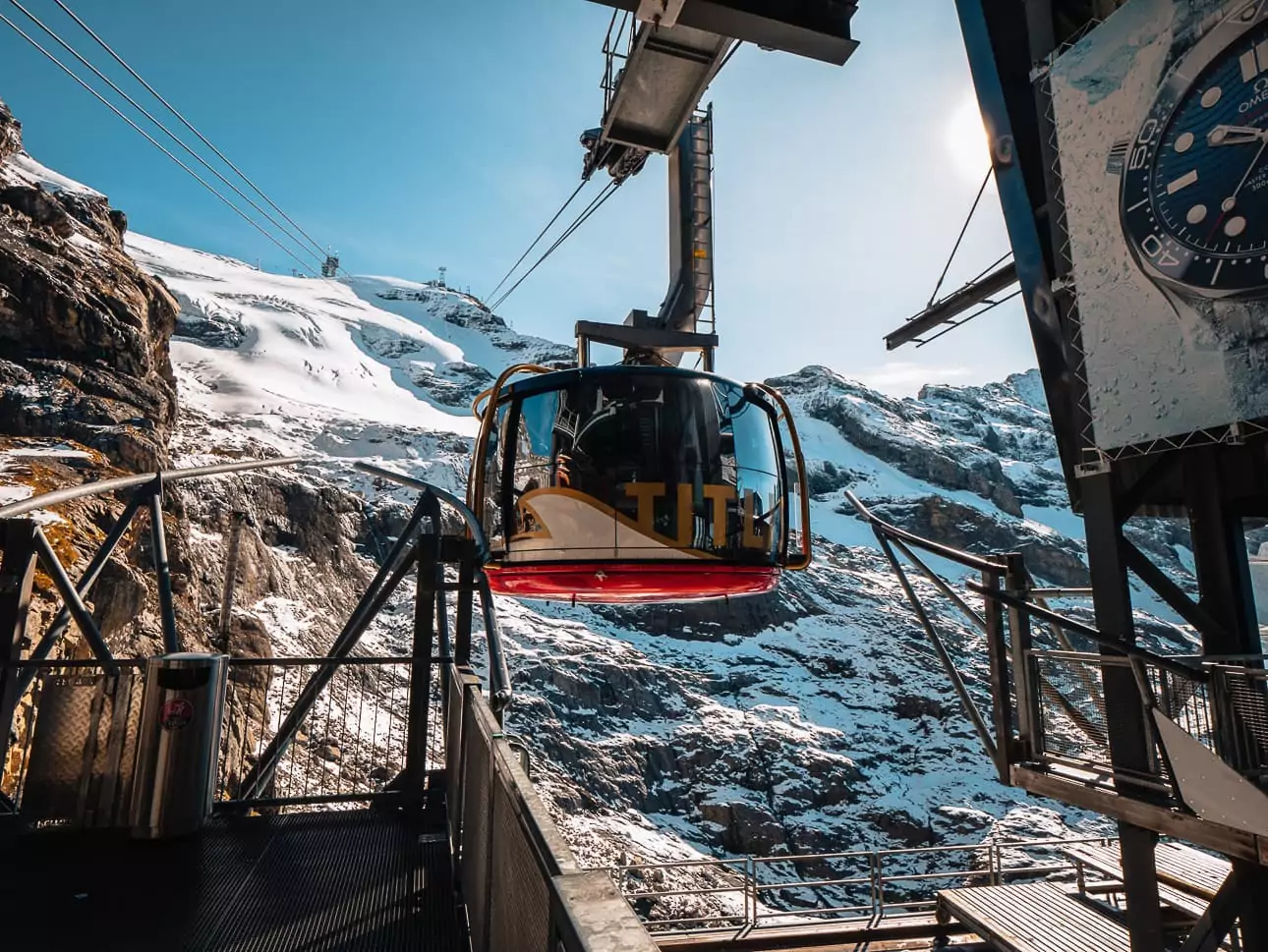
Unlike most Switzerland travel passes which cover a couple of headline mountains in full and just discount the rest, the LTP gives you free travel up Pilatus, Titlis, Rigi, Stanserhorn AND Brienz Rothorn, which would set you back more than 540CHF if you paid full fare for those five individually.
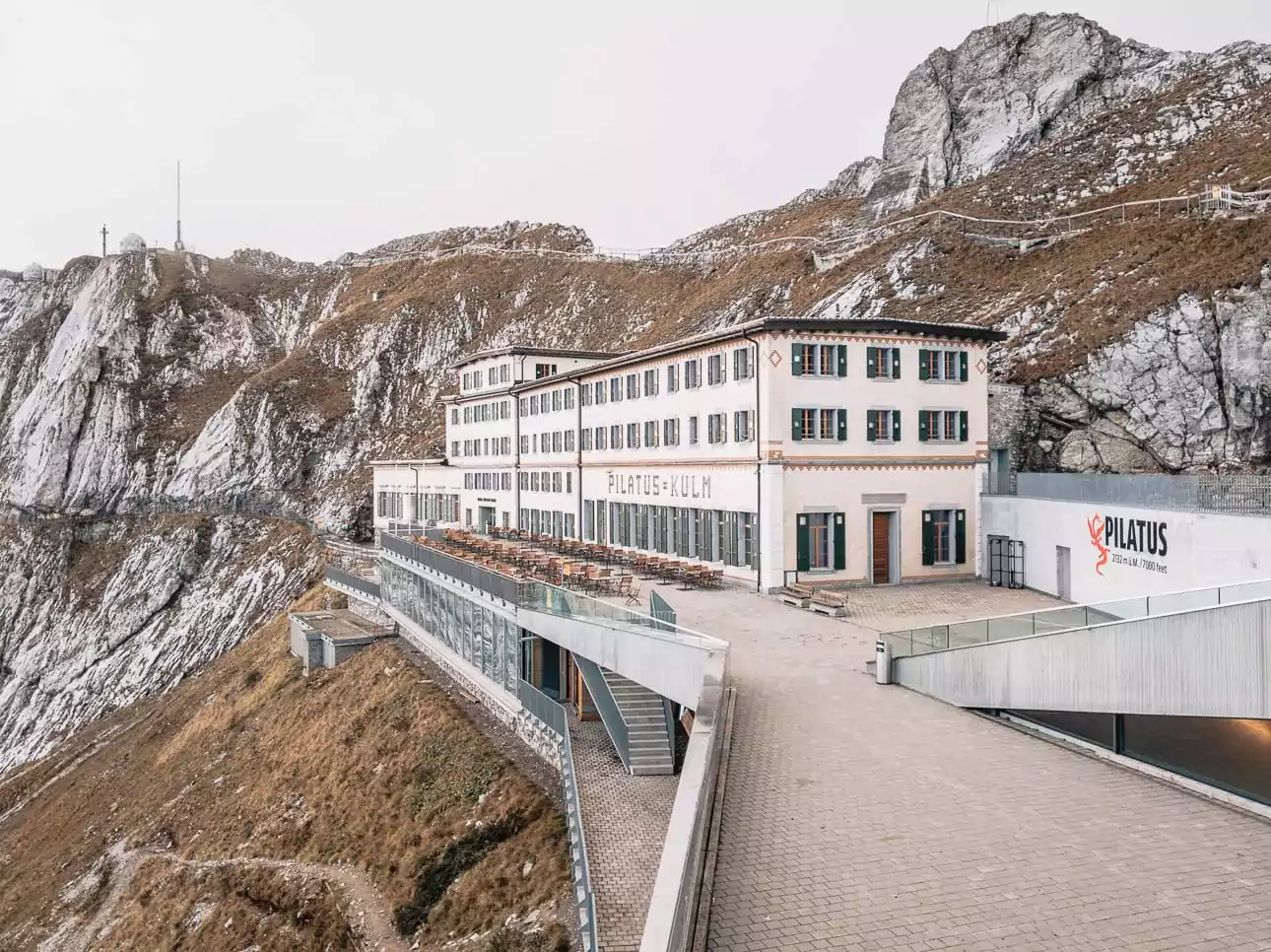
Key things to know about the Lucerne Travel Pass:
- It was rebranded from the ‘Tell Pass’ in April 2026 and there were some big changes to how it worked and what it covered, so make sure any information you’re basing your purchase decision on is up to date
- There are no discounts for under 25s or Half Fare Card holders, the pass price is the pass price
- It covers the Luzern-Interlaken Express which makes it easy to pair with the Jungfrau Travel Pass, no need to pay out-of-pocket for the connection
- The geographical spread of the mountains means weather conditions between the peaks can vary massively on any given day, and the LTP’s coverage gives you flexibility to head somewhere with blue skies when the clouds hamper your original plans. Just check the webcams when you wake up in the morning and figure out your day from there!
Is Lucerne calling?
Save 10% on your Lucerne Travel Pass when you buy via this link with promocode FINDINGALEXXKLOOK, and check out my Lucerne Travel Pass guide to see exactly when it’s worth it.
Zermatt Peak Pass
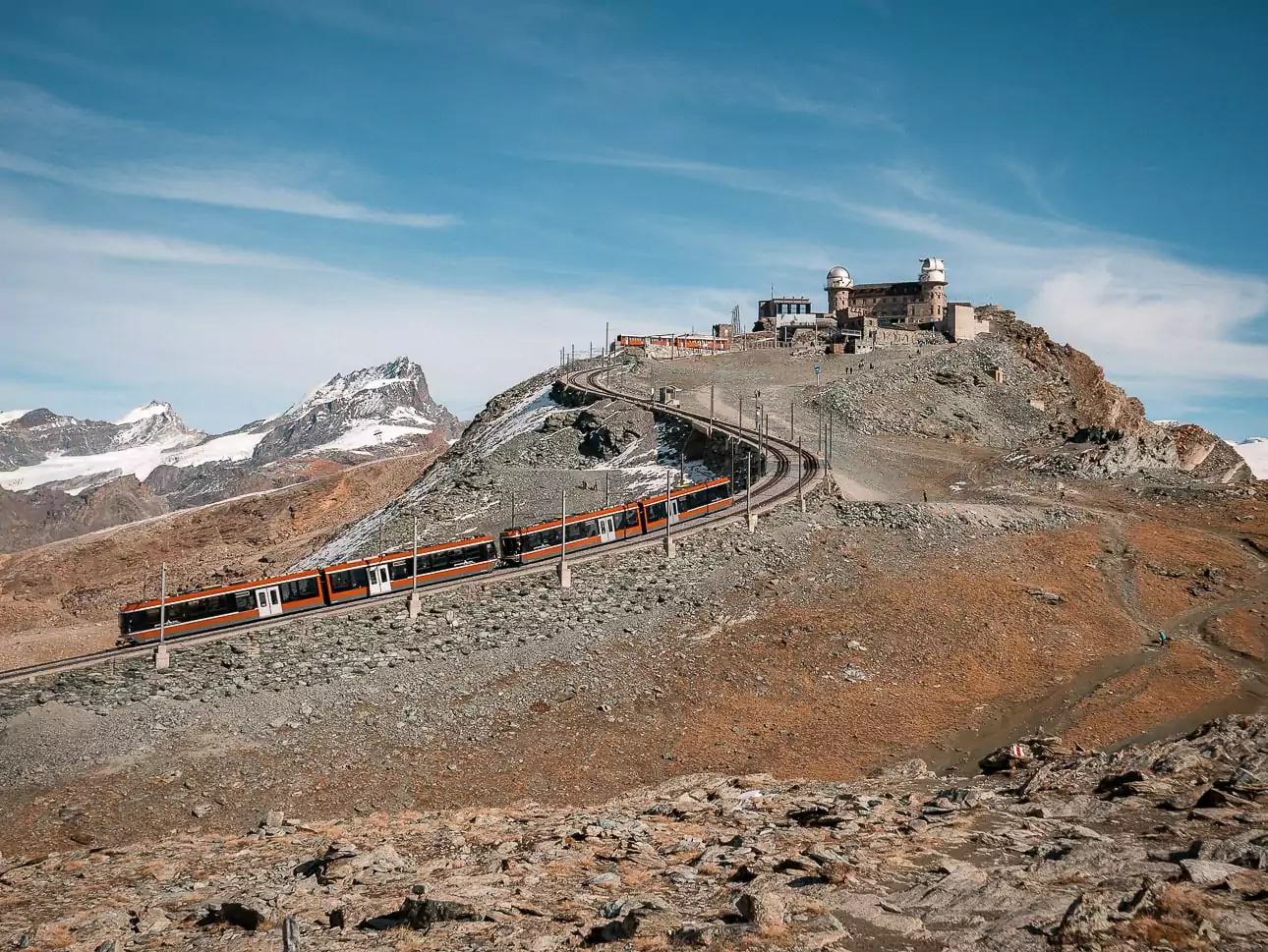
What it covers: Unlimited travel on the Gornergrat railway, Matterhorn Glacier Paradise, Sunnegga-Rothorn lifts, the Furi-Riffelberg cable car, the Randa-Täsch-Zermatt train, plus free entry to the Glacier Palace and ZOOOM the Matterhorn VR experience.
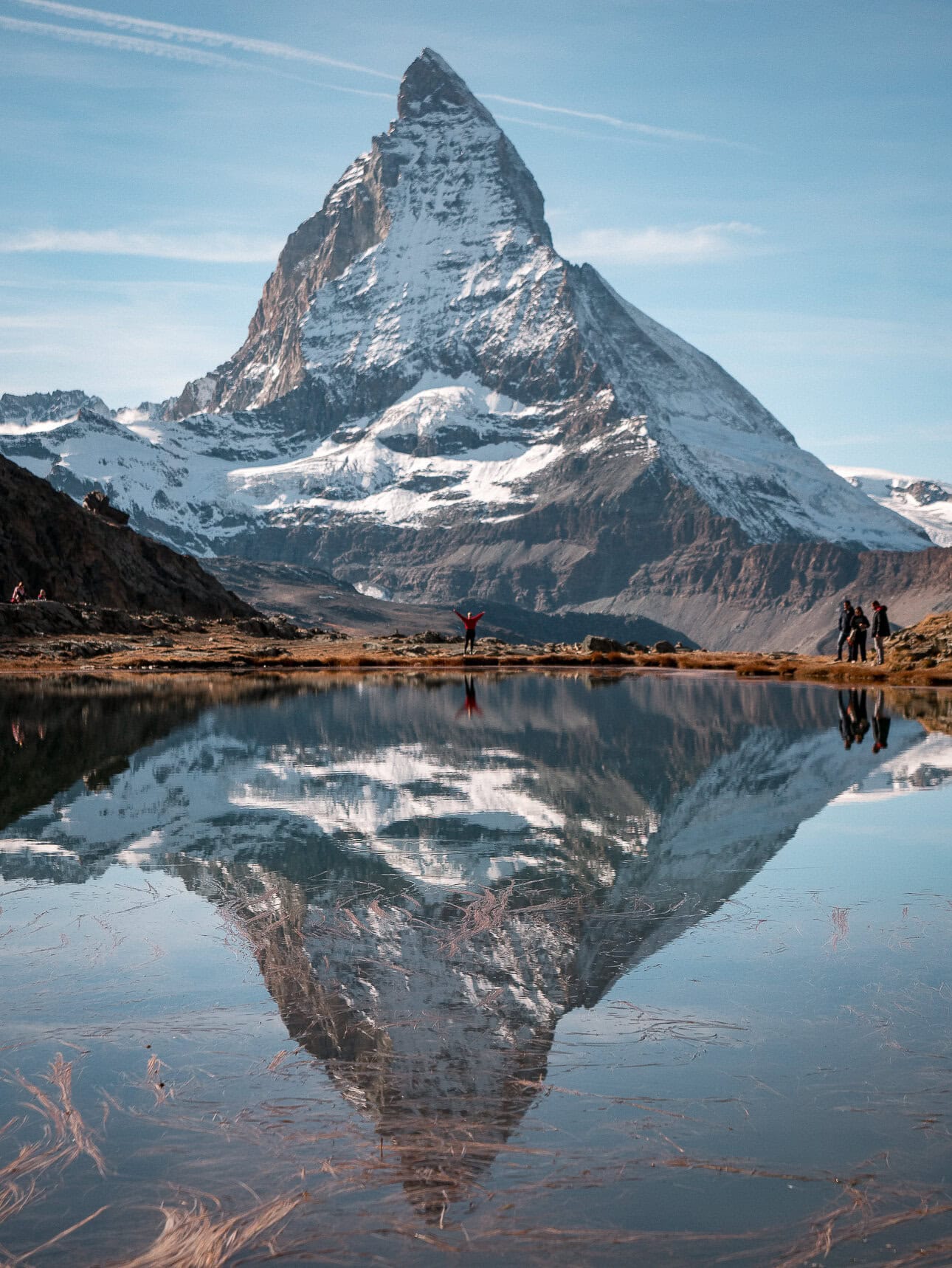
The Zermatt Peak Pass gives you access to the iconic alpine playground that’s ruled by the mighty Matterhorn, including the trip to Matterhorn Glacier Paradise at the dizzying height of 3883m and the iconic Gornergrat Railway for the most famous view of Europe’s most recognisable peak.
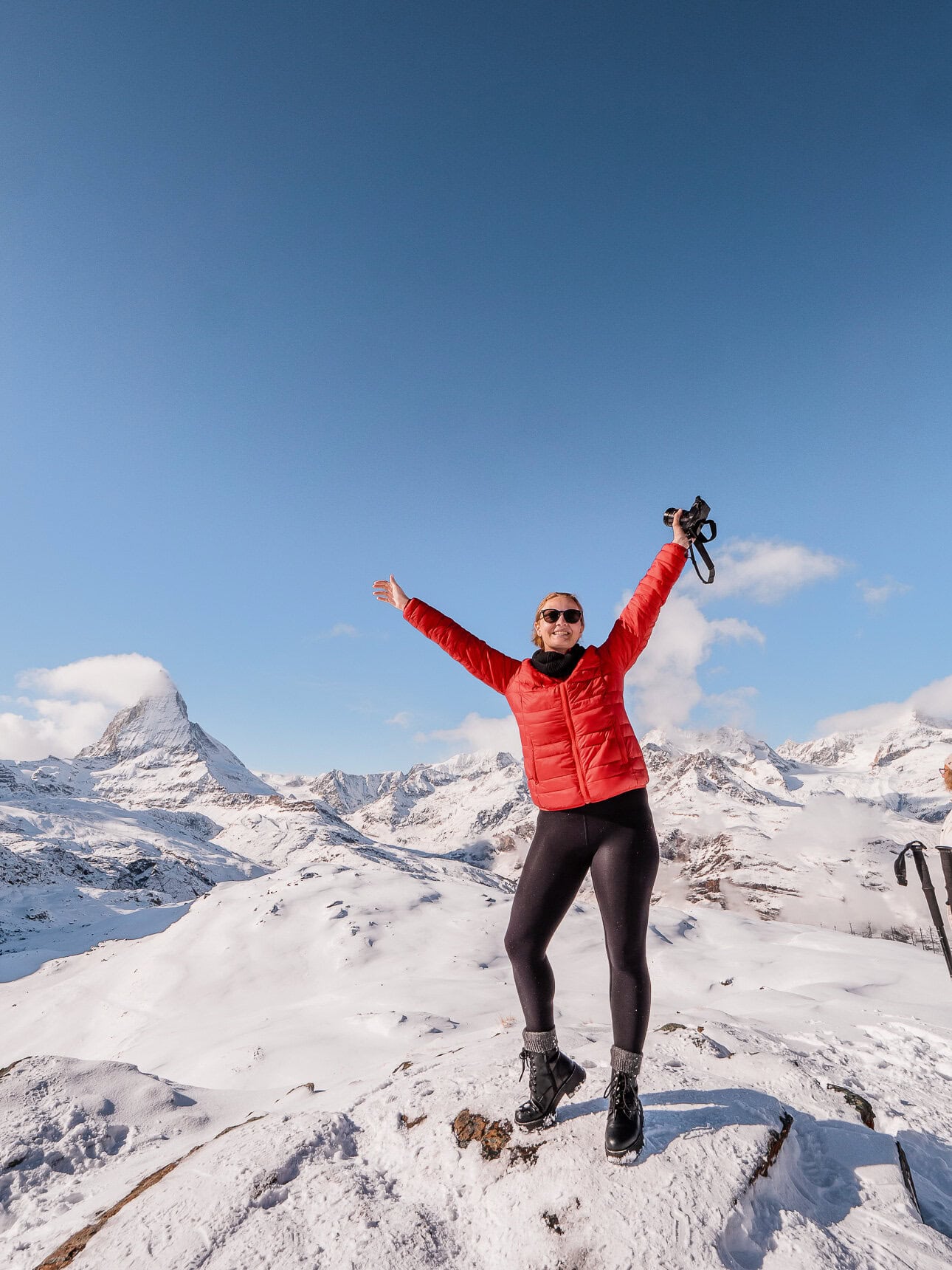
They’re certainly priced for Zermatt’s typical crowd though, RICH PEOPLE 🤑
The pass is craaazy expensive, in peak season 1 day = 234CHF, 2 days = 260CHF and 3 days = 294CHF 🫠 Glacier Paradise and Gornergrat are 132CHF each in summer so you only save 4CHF with the pass if you give them a day each, but the other lifts included in the ZPP are nowhere near as expensive, so the value really does come from using the same lifts multiple times for different hiking trails rather than just summit-hopping and sightseeing.
Key things to know about the Zermatt Peak Pass:
- They have passes starting from a single day up to to 14 consecutive days, then 21-day and 1-month options, plus Flex options with 3/4 travel days in a 5/6 day window, so you can split your time between hiking/sightseeing and relaxing
- They do seasonal pricing with November-April as pre season (the pass doesn’t cover skiing though), May / September / October as basic season and June to August as peak season
- You can get a 25% discount on the ZPP if you’ve got a Half Fare Card, but you’d probably be better off buying individual tickets for 50% off instead
- If your goal is to do both MGP and Gornergrat in one day, the separate Peak2Peak ticket includes them both for just 212CHF in summer or 153CHF in winter, cheaper than the equivalent 1-day Peak Pass. It does them in an easy loop (Zermatt → Matterhorn Glacier Paradise → Riffelberg Express gondola → train up to Gornergrat → train back down to Zermatt), but it only runs in pre and peak season, not the shoulder months.
- Kids under 9 travel free with adults that hold the Peak Pass (vs. under 6 for most regional passes)
1-month GA Travelcard
What it covers: Unlimited travel across trains, buses and boats across the GA validity area, including Rigi, Stanserhorn & Stoos mountains, and 50% off most other mountain excursions.
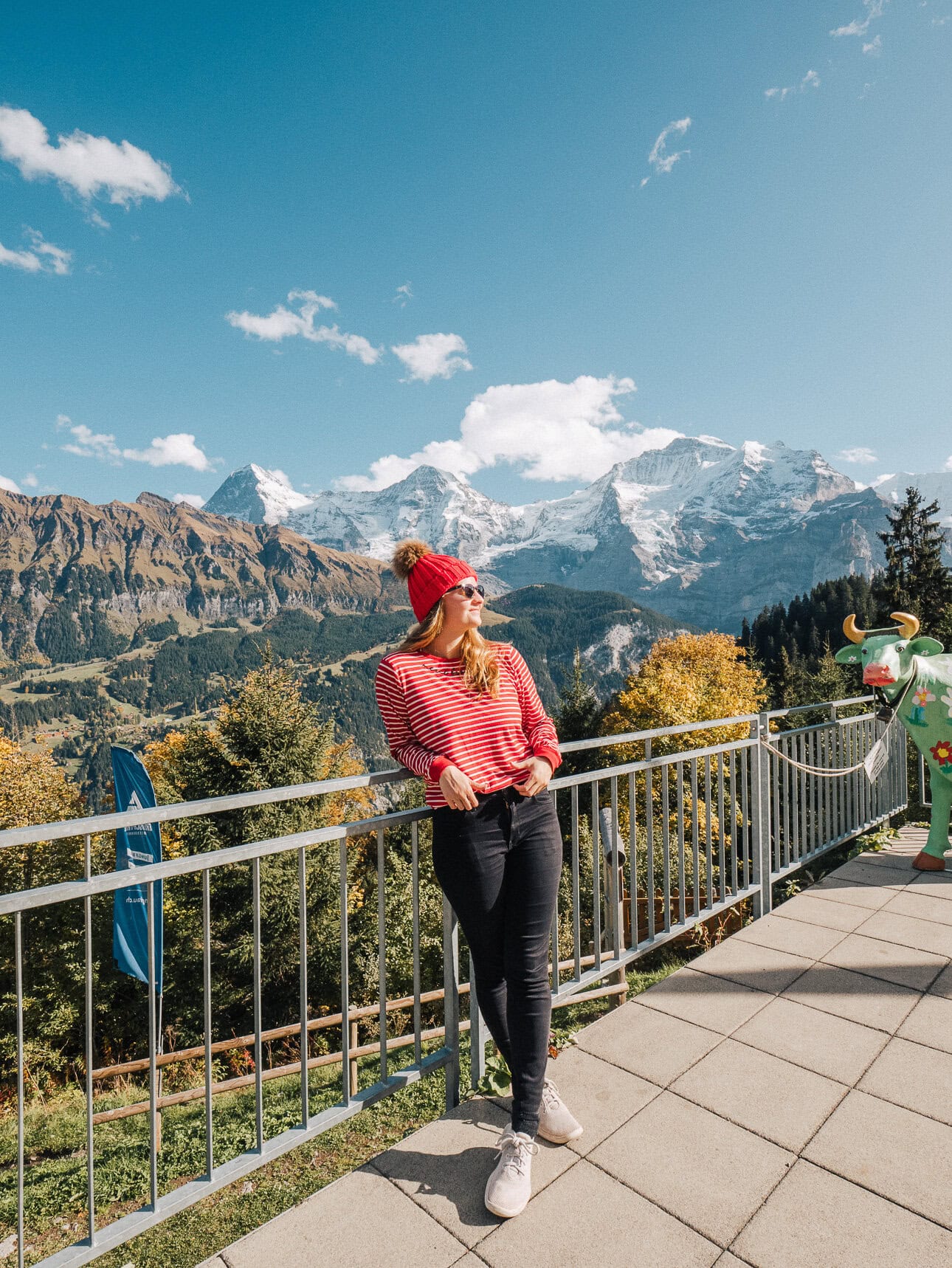
The GA Travelcard is the everyday travel pass that many residents use to get around Switzerland, with a minimum 6 month contract period which obviously doesn’t suit tourists, but what most people don’t realise is that there’s a shorter 1-month GA Travelcard that’s technically available for short-term visitors (though it’s not marketed that way).
It covers the entire GA validity area including the same free mountains as the Swiss Travel Pass, most other mountain excursions offer 50% off for GA Travelcard-holders (including Jungfrau, which beats the STP’s 25% discount), and under 25s get a sweet discount on the Travelcard price.
Key things to know about the 1-month GA Travelcard:
- A 2nd class 1-month GA Travelcard costs 440CHF for adults (25+) or 295CHF for under 25s (including kids aged 6-15). There’s no Swiss Family Card with this one, kids 6 and up need their own pass, so that almost certainly puts it out of play for families.
- Buying it online isn’t as simple as buying a Swiss Travel Pass or Half Fare Card. You need to set up a SwissPass account online and verify your identity by uploading a photo of your passport, but their system is notoriously finicky with international IDs and it kept timing out for me. It would be easier to go to an SBB ticket counter once you arrive in Switzerland, they’ll just need a local postal address to send you the physical card (your hotel works fine) and they’ll set up the digital version on the spot so you can start using it straight away.
- The upfront price is steeeep and most mountain excursions still give you the same discount as the (much cheaper) Half Fare Card, so it’d only really be worth it if you were using intercity trains extensively over 3-4 weeks and sticking to the free mountains
- If you’re an international student heading to Switzerland for a short exchange or you’re spending a few weeks there for a work trip then it could be perfect! But for typical tourist travel with lots of mountain exploring, the Half Fare Card is likely to beat it overall.
It’s probably the niche-est pass in this guide, but worth knowing about in case it aligns with your plans.
Eurail or Interrail Global Pass
What it covers: Unlimited travel on most trains in the GA area including panoramic trains, free cruises on Lake Brienz and Thun, 50% off most other cruises, plus 25-50% off most mountain excursions.
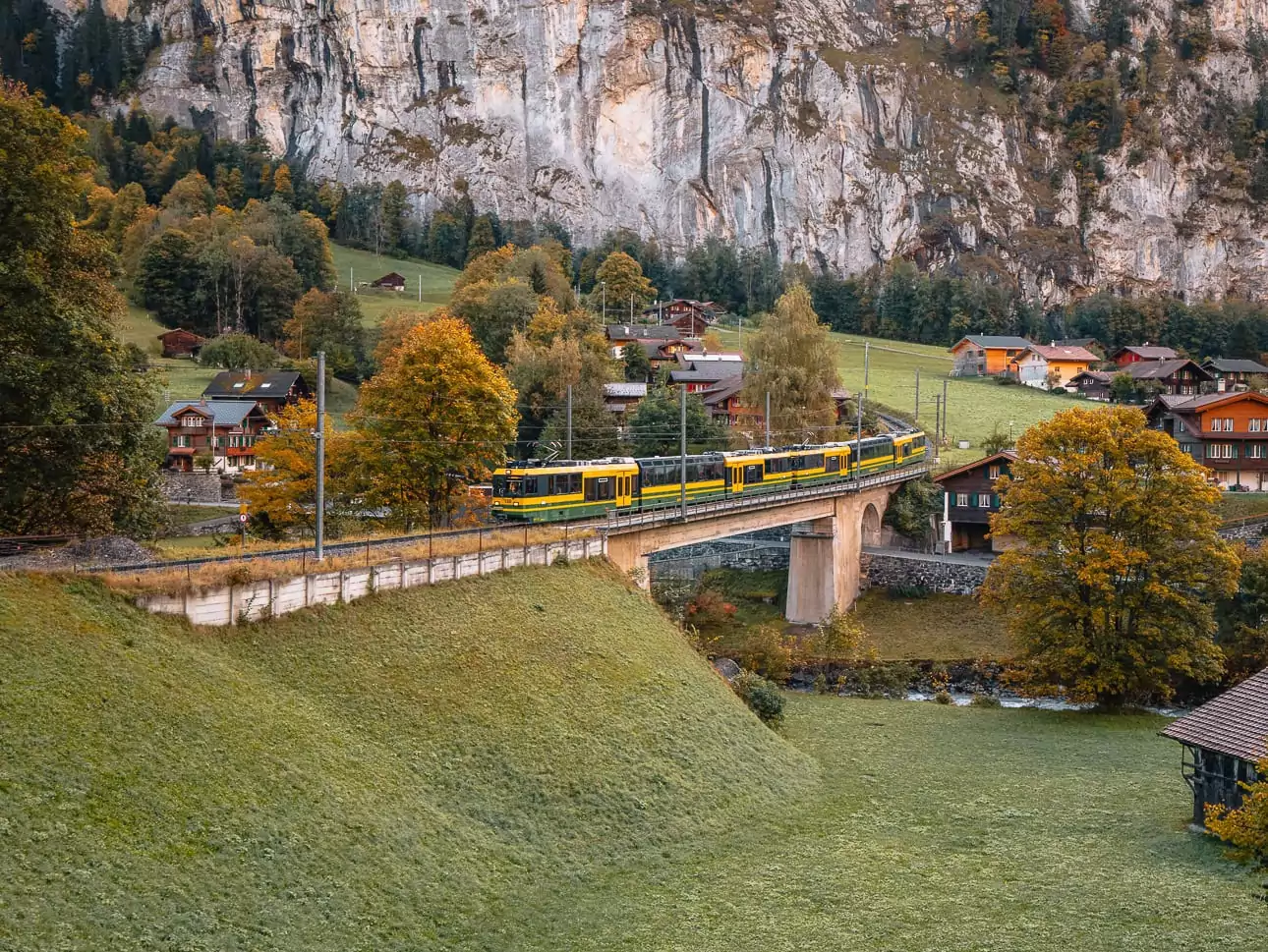
The Eurail Global Pass (or Interrail Global Pass if you’re a European resident) is designed for multi-country train trips across the continent rather than Switzerland-focused adventures, but it can be a handy tool for keeping costs down if you’re connecting Switzerland with Northern Italy, Austria, Germany, France or beyond.
I spend a few months travelling Europe by train every single year and I’ve used a Eurail Pass in Switzerland multiple times, including recouping a massive 20% of my ’15 days in 2 months’ 1st class pass with a single travel day on the Glacier Express 🤯 so if you’re wondering if a Eurail Pass is worth it, the answer is it absolutely can be… if you’re using it on the right things.
Wait, what happened to ‘Eurail’? 🚆
On 10 September 2026 the Eurail Pass was folded into the Interrail brand, so if you live outside Europe you now buy an Interrail Pass instead. It covers all the same trains, passes are the same price as they were before, you use the same Rail Planner app, and any Eurail Pass bought before the switch is still valid. I’m updating all my Europe itineraries and travel guides one by one with the new details, so you might still see “Eurail” in places for now, but I’m working my way through them. The full rundown of what changed is in my Eurail vs Interrail explainer >>
Key things to know about the Eurail/Interrail Global Pass:
- It covers intercity trains and fancy panoramic trains like the Glacier Express just like a Swiss Travel Pass, but seat reservations are extra
- Mountain excursion discounts aren’t great, 50% off some (Pilatus, Rigi and Schilthorn as examples), 25% off others (Jungfraujoch, Titlis) and some don’t offer any discount at all
- City transport (like buses and trams) isn’t included so you need to pay out of pocket for these
- If you’ve got a continuous Eurail/Interrail Pass then use this for any and all train travel, but if you’re spending more than 300CHF on mountain excursions or boats it’s worth you buying a Half Fare Card too (or maybe a regional pass if your trip is focused on Jungfrau, Zermatt or Lucerne)
- If you’ve got a Flexi Pass (where you choose which days to activate the pass), look at your whole Europe itinerary carefully to make sure you’re using your precious travel days wisely. You don’t want to waste one on a Switzerland day trip where you only save 30CHF by catching an included train but still have to pay 60CHF for a half price excursion.
- Anything fully covered requires you to activate a travel day of your Eurail/Interrail Pass (if you have a Flexi Pass), but you can make use of discounts during your entire pass validity period without needing to activate a travel day
Planning a wider Europe trip?
I’ve got a three month Europe itinerary (without a car), a two month itinerary using a Eurail Pass and a full guide on how to use a Eurail Pass. And if you’re already sold, you can buy your Eurail Pass here or Interrail Pass here.
Alternatives to the usual Switzerland travel passes: Day passes & tickets
The passes we’ve covered so far are built for multi-day coverage around the country or in a specific region, but they’re not your only options.
Single-day passes and individual journey tickets can be smart standalone solutions in certain scenarios, especially if you’re layering them on top of a Half Fare Card to squeeze even more value out of them. Here are the ones that are most likely to benefit your budget.
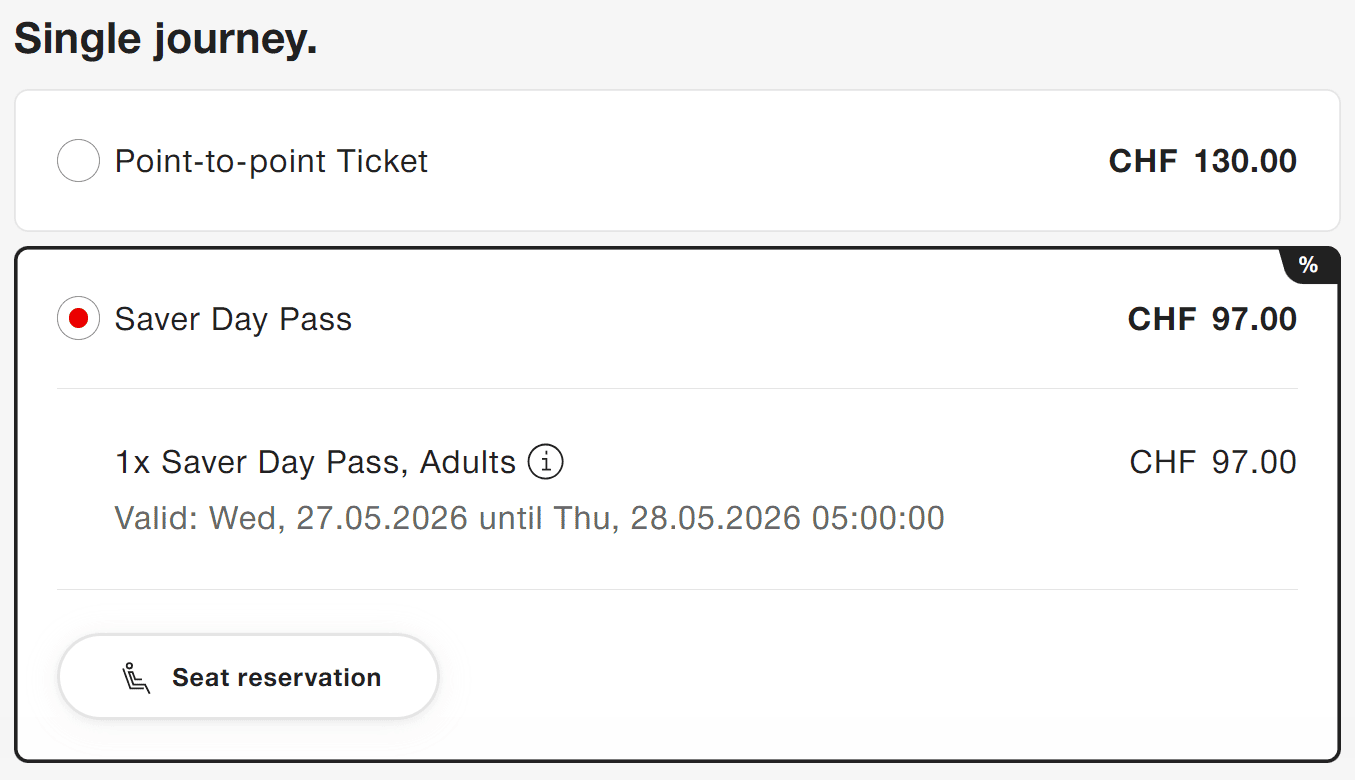
Saver Day Pass
What they cover: Unlimited travel for one day (until 5am the following morning) across the GA validity area.
It wasn’t until my 3rd Switzerland trip that I heard about the game-changing Saver Day Passes, and it pains me to think about how many other travellers come here without realising that locking in their travel days a few months earlier could’ve saved them from needing a multi-day travel pass in the first place.
Saver Day Passes are kind of like 1-day Swiss Travel Passes but without the tourist extras (no museums, Swiss Family Card or mountain excursion discounts), sold on a quota system where they’re priced based on demand for that day.
You get full access to the GA validity area and can hop on and off any service that day without needing to buy separate tickets.
Key things to know about Saver Day Passes:
- You can book them up to six months in advance and right up until a day before travel (unless they sell out prior) but prices can change without notice, so the earlier you book, the higher the chance of getting a fab deal
- If you don’t have a Half Fare Card, SDP prices start from 52CHF in 2nd class or 88CHF in 1st class. If you were doing the Glacier Express train (159CHF 2nd / 272CHF 1st for the base fare) and got your hands on the lowest-tier SDPs by booking early, that’s an immediate saving of 107CHF in 2nd class or 184CHF in 1st class 😱
- If you do have a Half Fare Card, you get even cheaper Saver Day Passes, from just 29CHF in 2nd class or 49CHF in 1st
- They’re non-flexible and non-refundable 30 minutes after purchase, so only lock them in when you know for sure that you’ll be travelling that day
- They do cover the mountains included in the GA area (Rigi, Stanserhorn etc.) but you won’t get access to most mountain excursion discounts that are extended to the Swiss Travel Pass or 1-month GA Travelcard
- There’s no Swiss Family Card with a Saver Day Pass, so kids aged 6-15 need their own day pass or ticket
Scenarios where Saver Day Passes can be particularly perfect
The best thing about Saver Day Passes is that once you know they exist, there are two very simple ways of checking if they’re worth it for you:
- If you know the date of a “big travel day” (refer back to about 5000 words ago for the definition), you can head to the SBB’s Saver Day Pass calendar and plug in your date to see the current prices and lock in your pass if it’s cheap enough
- If you’re planning an intercity journey and aren’t sure it classifies as a “big travel day” or if a Saver Day Pass would be of value, you can just search the journey on the SBB app or website like you usually would, and if a Saver Day Pass is available it’ll show up in the options along with the point-to-point ticket and any Supersaver fares. Thank you SBB 👏🏼
Friends Day Pass
What it covers: Unlimited travel for one day (until 5am the following morning) across the GA validity area for up to four under 25s.
If you and your travel buddies are all under 25, the Friends Day Pass for Youth is by far the cheapest way to move around Switzerland.
It gives you full access to the GA validity area (including panoramic trains and the included mountain excursions) for a flat 80CHF in 2nd class or 120CHF in 1st class.
That’s just 20CHF per person 2nd class if you split between four of you, which is SO CHEAP for a country where a single intercity ticket can easily set you back 70-100CHF.
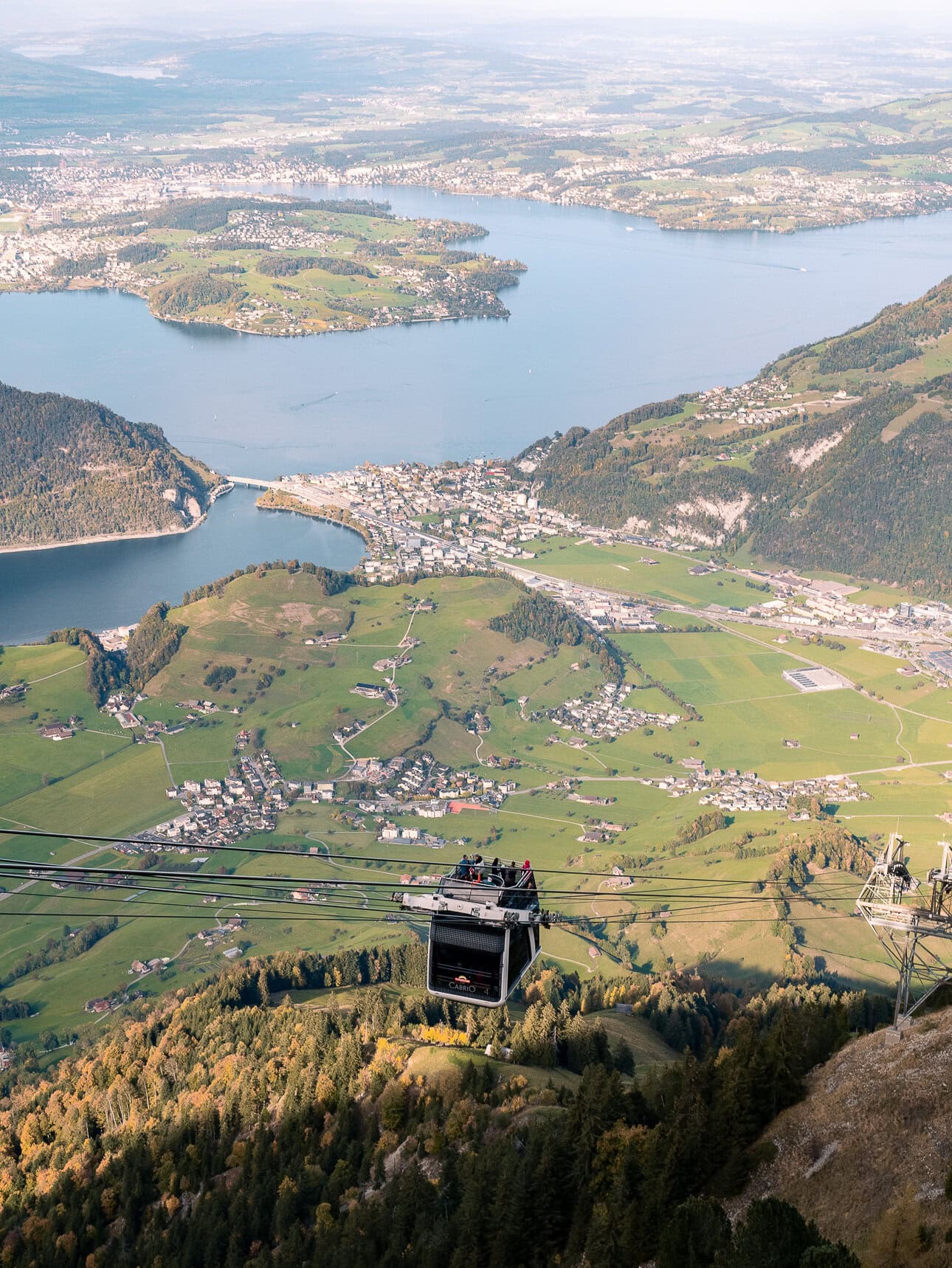
Coverage is identical to the Saver Day Pass but the price is fixed and you can grab it on the day, no need to book ahead.
Key things to know about the Friends Day Pass:
- You can get the Friends Day Pass for one, two, three or four people, as long as everyone’s under 25 on the day of travel
- If you’re solo then a Friends Day Pass could still be worth it for you if your travel that day is over 80CHF full fare and if the Saver Day Pass price is over that too
- The GA area mountains (Rigi, Stanserhorn etc.) are included but you won’t get a discount on other mountain excursions with the FDP
- All of you need to have your passport with you to prove your age to ticket inspectors
When skipping a pass makes sense
Not every Switzerland trip needs a travel pass.
If you’re staying in one place for most of your visit, doing a couple of intercity hops at the most, or have a car to get around rather than relying on public transport, you might be better off with one of the following options instead.
City/canton cards
City and canton cards are local passes that focus on free public transport within a city or region, often paired with free or discounted entry to cultural attractions and some discounts on activities and retail shopping.
Some are paid like the Zurich Card or Geneva City Pass, where you buy the pass for a set period (usually 1/2/3 days), and these can be excellent for a city break long weekend or culture-heavy trip rather than outdoor exploring.
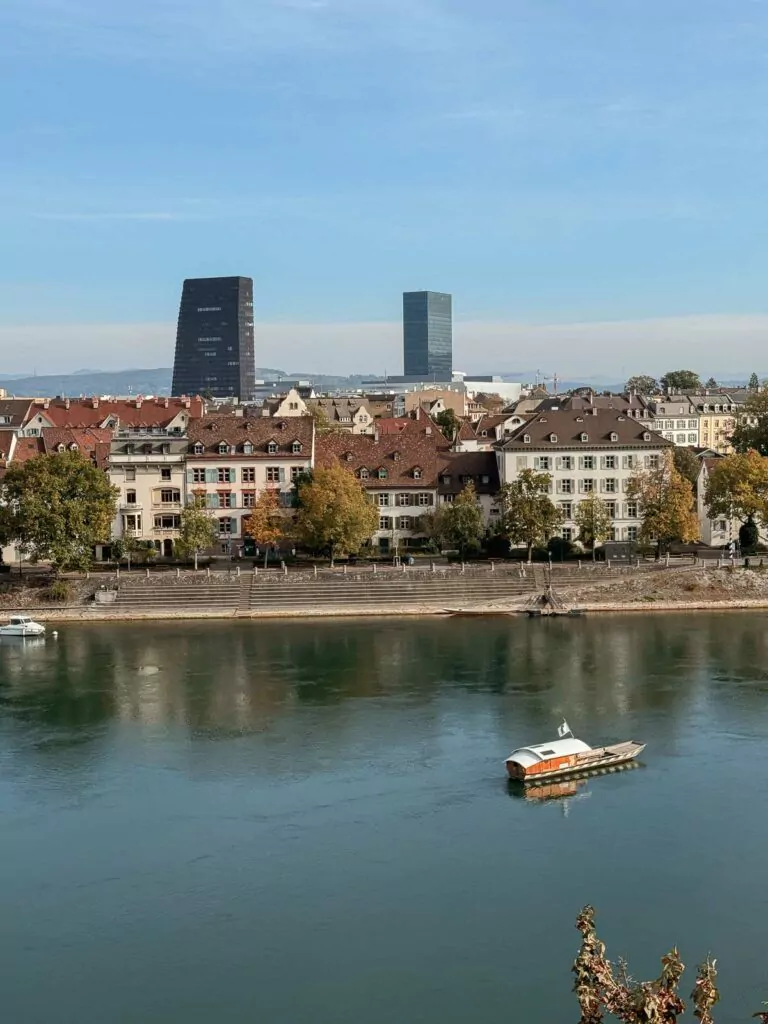
Some parts of Switzerland have cards included in your accommodation booking, a benefit that’s partly funded by the local tourist tax, like the Ticino Ticket, BaselCard and Interlaken Guest Card. Sometimes a digital card will be sent to you over email before your arrival, but sometimes it’s just a physical card that’ll be in your room when you check in.
Their coverage for big-ticket things is pretty minimal so I wouldn’t count on them to save you loads on mountain excursions or to get you between major cities, but they might be sufficient for short visits, stopovers, rest days or to avoid wasting a proper travel pass day on just 15CHF worth of public transport.
Supersaver tickets
Supersaver tickets are dynamically-priced tickets for specific train departures, and they can save up to 50% on full-fare point-to-point prices if you book up to six months in advance, but they’re limited for each connection and once they’re gone they’re gone.
The ones with the biggest discounts are completely inflexible, you’re tied to that exact journey with no ability to alter the departure time or route, and no way to get a refund if your plans change.
There are also Supersaver Flex tickets which have a smaller discount but they’re 50% refundable, though if you’re not entirely sure of your plans then maybe a travel pass is better for you after all!
Key things to know about Supersaver tickets:
- Supersaver tickets exist for HFC-holders too, so you can save 50% on the point-to-point ticket with your HFC, and then save up to 50% on that if you’re booking early enough for the best Supersaver deal
- They’re designed to fill up off-peak departures rather than add to already-busy trains, so they aren’t available during commuter hours. You’ll find the best deals first thing in the morning, in the middle of the day and in the evenings.
- If they’re available, you’ll see the Supersaver ticket price on the SBB app or website whenever you search a route, alongside the point-to-point ticket and a Saver Day Pass if that’s an option too. The cheapest ticket is automatically selected so you won’t miss it.
Point-to-point tickets
Full-fare point-to-point tickets are straightforward to buy and use, but, and I cannot emphasise this enough, they can be sooo expensive. Here are some popular routes to give you an idea of costs for one way journeys:
- Zurich ↔ Lucerne: 27CHF
- Lucerne ↔ Interlaken: 34CHF
- Zurich ↔ Interlaken: 73CHF
- Interlaken ↔ Chur: 101CHF
- Interlaken ↔ Basel: 64CHF
- Basel ↔ Lugano: 92CHF
- Zurich ↔ Zermatt: 130CHF
You can see how quickly your full fare spend could hit that 300CHF break-even point for the HFC, right?
And if you’re planning a trip for 2027, sorry to be the bearer of bad news but Swiss public transport nationwide is going to get even more expensive when they do their annual timetable release in mid-December, with an average 3.9% price increase to tickets and non-tourist travelcards. They’ve specified that the Swiss Half Fare Card and Swiss Travel Pass won’t increase (they just had their prices put up for 2026) so that’s going to make those passes even more worth it.
What’s great about point-to-point tickets is that they cover the entire route for the day you buy it, so you can catch whatever train you want, break up the journey along the way if you want to stop for lunch and then get on the next one that comes through.
If you get stuck with a point-to-point ticket because you book too late to grab a Saver Day Pass or Supersaver ticket, at least make a day of it and maximise the value by taking a side quest to discover one of the smaller stops you’ve never heard of.
Can you combine Switzerland travel passes?
You absolutely can, and for some itineraries a combo of two or three travel passes is what will get you the best value possible.
These are the travel pass combinations that often save money:
- Half Fare Card + Jungfrau Travel Pass: You’ll immediately save over 20% on the JTP price in the first place, the best Jungfraujoch discount available, 50% off Schilthorn and 50% off travel to/from the Jungfrau region plus everything else you do outside, and you can save 10% off both passes when you buy them together via Klook using the code FINDINGALEXXKLOOK 💰
- Half Fare Card + Berner Oberland Pass: This combo gets you 27-30% off the BOP price straight off the bat, a higher Jungfraujoch discount (50% off with HFC vs. 25% with BOP) and it fully covers your travel to the region from Bern, Lucerne, Montreux or Brig, with 50% off the rest of your trip.
- Lucerne Travel Pass + Jungfrau Travel Pass: These two don’t overlap, but between them they cover an impressive number of the country’s most epic mountain excursions. Zurich to Lucerne is 27CHF full fare, then your LTP lets you see Rigi, Titlis, Stanserhorn, Pilatus, all of Lake Lucerne, even Brienz Rothorn which is right on the Lucerne/canton of Bern border, plus it covers the Luzern–Interlaken Express so there’s no need to pay out-of-pocket for the transit day. Once you’re in Interlaken, you get Jungfraujoch for the best price, Grindelwald-First, Harder Kulm and other mountain fun for free, and to get back to Zurich it’s 73CHF or cheaper if you can nab a Supersaver ticket or Saver Day Pass.
- Swiss Travel Pass Flex + a regional pass: If you plan on visiting a few (or more) different regions but want flexibility to wing it rather than committing to specific travel days in advance, this combo might work. A Swiss Travel Pass Flex can cover Rigi, Stanserhorn and all your intercity journeys on the days you choose to activate it, then you could use a dedicated regional pass for wherever you want to spend the most time in the mountains.
- Half Fare Card + Saver Day Pass: The HFC drops Saver Day Pass prices down to 29-69CHF (compared to 52-119CHF full fare), so you can lock in your big intercity journeys or panoramic trains at SDP prices and use your HFC for 50% off everything else.
- Eurail/Interrail Pass + a regional pass: Eurail covers your trains to and from a region, a regional pass like the JTP or LTP gives you the best value access to mountains that Eurail barely makes a dent on.
And combos which will almost never end up being worth it:
- Half Fare Card + a short Zermatt Peak Pass: The ZPP is so pricey for the shorter pass lengths that if you’ve already got an HFC, you’d be hard-pressed to meet the minimum daily spend to make the Peak Pass worth it, unless you’re hiking loads and taking more than just a return mountain trip each day.
- An activated Swiss Travel Pass + a regional pass: Some regional passes have reduced prices for STP holders, but your STP has to be active on that day for your reduced regional pass to be valid, which means you’re basically paying twice for that day.
Switzerland travel passes compared with real itineraries
Ready to see how the receipts tally up when we compare different passes for actual realistic Switzerland itineraries?
I’ve taken a few different travel styles and trip lengths, from a whirlwind long weekend to a proper 10 day multi-region adventure, and plugged them into my calculator to see which pass takes the win for each.
All prices are based on summer travel in 2026, off-season would be a bit cheaper but some mountains would be closed.
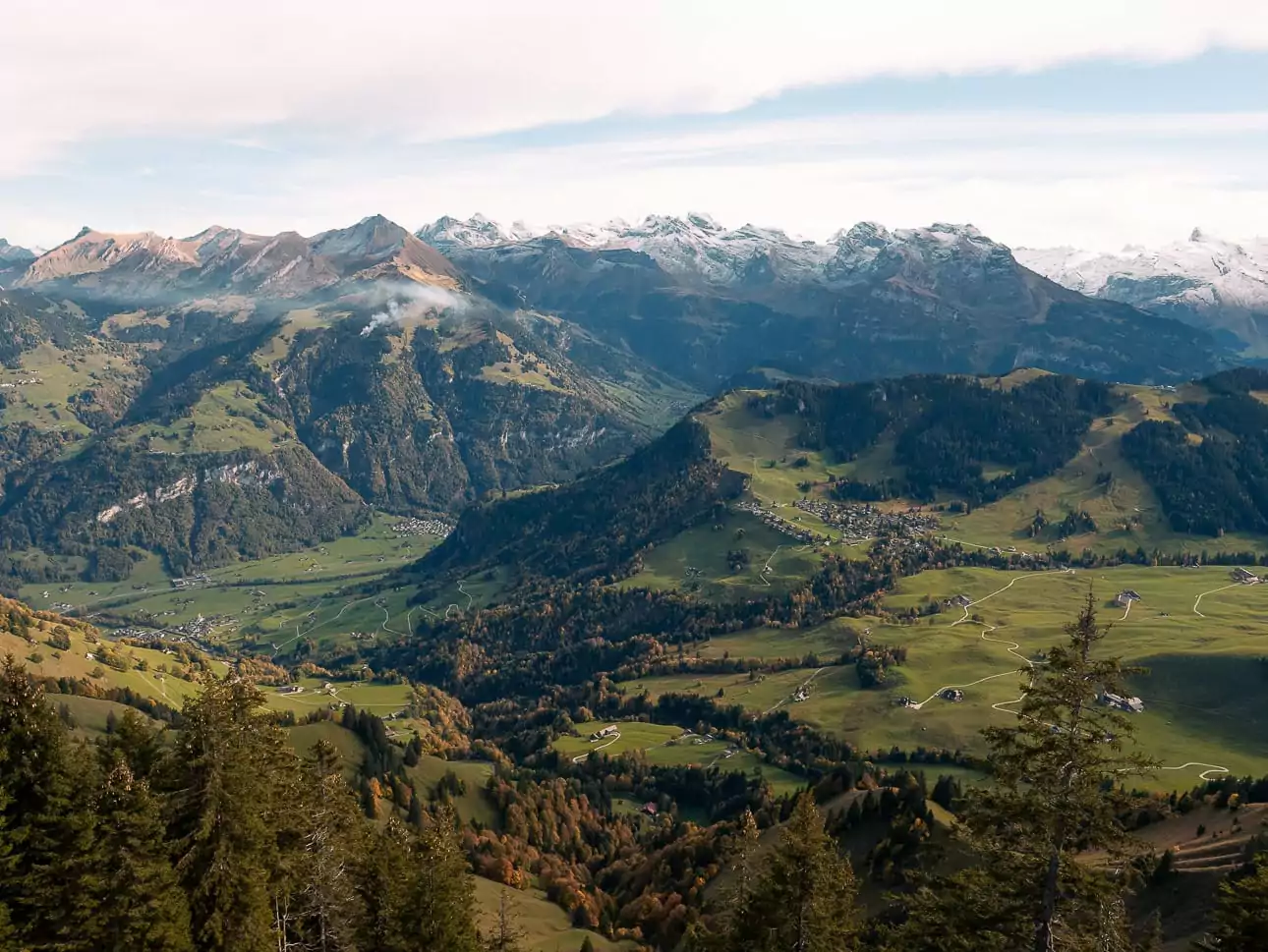
Best Switzerland travel pass for a 3-day trip
I’m not trying to be annoying when I say that the answer depends on what your three days look like, so here’s an example of how differently the maths stacks up when we look at four common 3-day itineraries.
Classic highlights reel: Half Fare Card wins
If you’re hoping to squeeze Switzerland’s greatest hits into 72 hours and don’t mind moving cities each day, you’re crossing too much ground for a regional pass, so the HFC or STP are already the likely winners.
🗓️ Sample itinerary:
- Day 1: Zurich → Lucerne + Rigi excursion
- Day 2: Lucerne → Interlaken + Jungfraujoch excursion
- Day 3: Harder Kulm + Interlaken → Zurich
🧮 The maths:
- With a Half Fare Card: 430.90CHF 🥇
- With a 3-day Swiss Travel Pass: 455.60CHF
- With a 3-day Jungfrau Travel Pass: 545.60CHF
- Full fare: 561.80CHF
- But if you’re under 25, the 3-day Swiss Travel Pass Youth actually overtakes the HFC and brings the total down to 380.60CHF
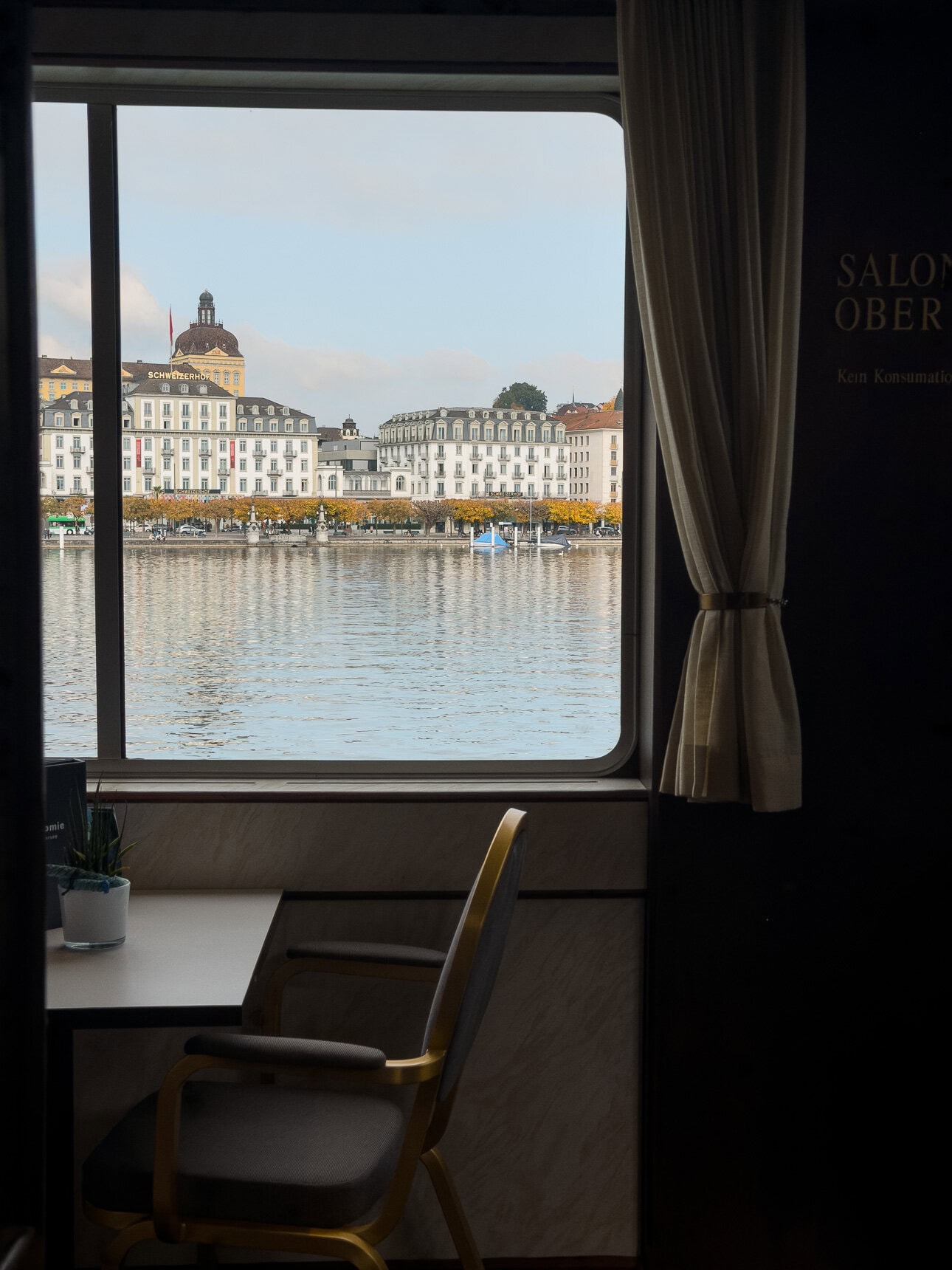
Jungfrau regional focus: Jungfrau Travel Pass wins
If you’re keen to spend your whole three days in the Jungfrau region using Interlaken as a base, the regional pass ends up being well worth it if you use it wisely.
🗓️ Sample itinerary:
- Day 1: Zurich → Interlaken + Harder Kulm
- Day 2: Jungfraujoch + Lake Thun + Brienz cruises
- Day 3: Grindelwald-First + Interlaken → Zurich
🧮 The maths:
- With a 3-day Jungfrau Travel Pass: 435CHF 🥇
- With a Half Fare Card: 469.90CHF
- With a 3-day Swiss Travel Pass: 493.60CHF
- Full fare: 639.80CHF
- But again, if you’re under 25, the 3-day Swiss Travel Pass Youth comes out at 418.60CHF and just pips the JTP
- And if you switched Jungfraujoch out for Schilthorn (and kept everything else the same, based on adult prices) then the Swiss Travel Pass would take the top spot
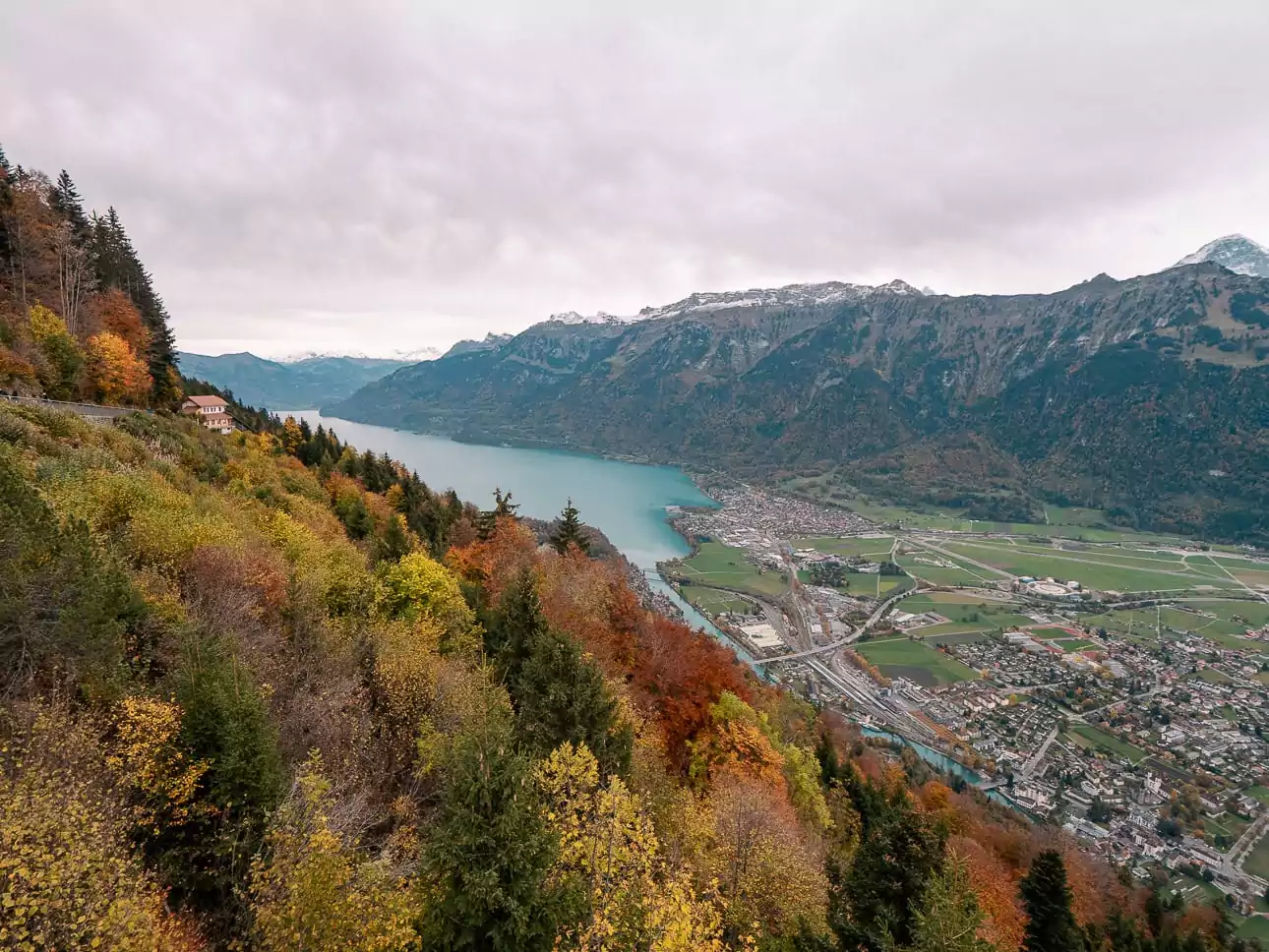
Lucerne regional focus: Lucerne Travel Pass wins
If you want to park up in Lucerne for your long weekend and tick off a different mountain each day, the LTP is your best option.
🗓️ Sample itinerary:
- Day 1: Zurich → Lucerne + Pilatus Golden Round Trip
- Day 2: Titlis from Lucerne
- Day 3: Stanserhorn + Lucerne → Zurich
🧮 The maths:
- With a 3-day Lucerne Travel Pass: 294CHF 🥇
- With a 3-day Swiss Travel Pass: 347CHF
- With a Half Fare Card: 354.90CHF
- Full fare: 409.80CHF
- I’m a broken record here but you guessed it, under 25s would be better off with the 3-day Swiss Travel Pass Youth for 272CHF
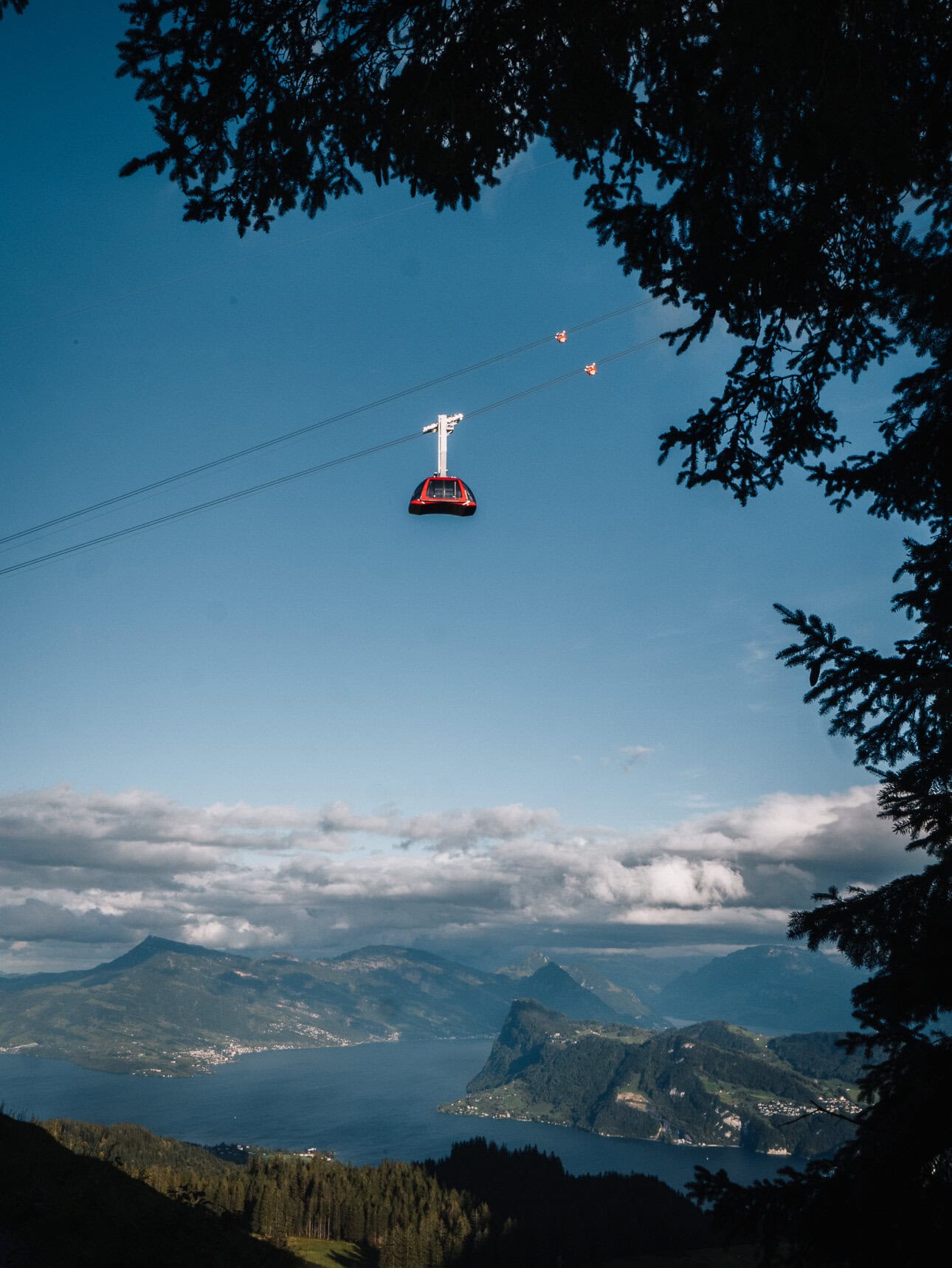
Best Switzerland travel pass for a 5-day trip
If you followed my 5-day Switzerland itinerary, the Half Fare Card is #1 again.
🗓️ Sample itinerary:
- Day 1: Zurich → Interlaken
- Day 2: Grindelwald-First day trip
- Day 3: Jungfraujoch day trip
- Day 4: Interlaken → Zermatt
- Day 5: Glacier Express Zermatt → St Moritz
🧮 The maths:
- With a Half Fare Card: 492.40CHF 🥇
- With a Half Fare Card + 3-day Jungfrau Travel Pass combo: 553CHF
- With a 6-day Swiss Travel Pass: 616.60CHF
- Full fare: 684.40CHF
- Under 25s are still better off with the Half Fare Card for this one, by ~7CHF!
Best Switzerland travel pass for a 10-day trip
Ten days travelling around Switzerland is glorious, but there’s no doubt it’ll hurt your wallet. If you followed my 10-day itinerary (which is one of my all-time favourite trips I’ve ever done in the world!), the Half Fare Card is going to save you nearly 40% compared to buying full-fare tickets 😱
🗓️ Sample itinerary:
- Day 1: Zurich → Lucerne, Rigi excursion
- Day 2: Explore Lucerne
- Day 3: Pilatus day trip
- Day 4: Lucerne → Interlaken + Grindelwald-First
- Day 5: Jungfraujoch + Harder Kulm
- Day 6: Explore Interlaken
- Day 7: Interlaken → Zermatt, Gornergratbahn
- Day 8: Matterhorn Glacier Paradise
- Day 9: Zermatt → St Moritz on the Glacier Express
- Day 10: St Moritz → Tirano, Italy on the Bernina Express
🧮 The maths:
- With a Half Fare Card: 778.10CHF 🥇
- With an HFC + 3-day JTP: 816.60CHF
- With an 8-day Swiss Travel Pass Flex (not activating it on the Lucerne/Interlaken exploring days): 872.60CHF
- Full fare: 1256.20CHF
- And we’re back to the under 25s being better off with the youth STP, 738.60CHF (with the 8-day Flex)
Where to buy your Switzerland travel pass
Swiss Travel Pass
Best for ultimate flexibility and convenience + free Swiss Family Card.
Swiss Half Fare Card
Best for value for money (most of the time!) + free Swiss Family Card.
Promocode: FINDINGALEXXKLOOK
Jungfrau Travel Pass
Best for 3+ days in the Jungfrau region and the Jungfraujoch excursion.
Promocode: FINDINGALEXXKLOOK
Lucerne Travel Pass
Best for 3+ days in Lucerne with multiple mountain trips.
Promocode: FINDINGALEXXKLOOK
Berner Oberland Pass
Best for non-Jungfrau mountains in the Bernese Oberland.
Zermatt Peak Pass
Best for mountain-heavy Zermatt trips.
1-month GA Travelcard
Best for extended trips with lots of intercity trains but not many mountain excursions.
Eurail Global Pass
Best for multi-country Europe train adventures (non-European residents).
Interrail Global Pass
Best for multi-country Europe train adventures (European residents).
Saver Day Pass
Best for if you know your big travel days in advance.
Friends Day Pass
Best for 2-4 friends under 25.
Switzerland travel pass FAQs
How much is a 3-day travel pass in Switzerland?
Most Switzerland travel passes start from between 210-254CHF for three days:
– 3-day Swiss Travel Pass = 254CHF
– 3-day Jungfrau Travel Pass = 210CHF
– 3-day Berner Oberland Pass = 240CHF
– 3-day Lucerne Travel Pass = 240CHF
The Swiss Half Fare Card on the other hand is 150CHF for a whole month of travel.
What does a Switzerland travel pass include?
Most Switzerland travel passes include unlimited public transport (trains, buses and boats) plus some mountain excursions, as well as some added bonuses like discounted mountains and free museums. Exact coverage totally depends on the actual pass you choose. Regional passes have more in-depth coverage in a specific region.
What is the cheapest way to get around Switzerland?
Using public transport with a Switzerland travel pass! Point-to-point tickets are expensive, but different travel passes can save hundreds of francs on a typical 5-day itinerary. Always run your itinerary through my Switzerland travel pass calculator before committing so you know you’re getting the best deal for your trip.
Can I combine Switzerland travel passes?
Yes, and combining them is often the best value option for longer itineraries. The Swiss Half Fare Card is designed to stack with regional passes, some regional passes are 20-30% cheaper if you have the HFC, plus you’ll still get 50% off any travel outside of the validity area.
Which Switzerland travel pass is best for families?
The Swiss Travel Pass and Half Fare Card are the best Switzerland travel passes for families. You can add on a complimentary Swiss Family Card when you purchase either of these passes, which lets accompanying kids aged 6-15 travel free across the entire network, including mountain excursions where parents only get a discount. Kids under 6 travel free throughout Switzerland, no card needed.
Which Switzerland travel pass is best for under 25s?
Under 25s should consider the Swiss Travel Pass Youth (30% off the adult price), the Friends Day Pass (80CHF for up to four travellers, only 20CHF per person), or the Berner Oberland Pass if you’re spending time in that region (27-30% off adult price).
Do I really need a Switzerland travel pass?
Not always. If you’re just staying in one or two cities without any mountain time, or if you’re hiring a car to get around, you can probably skip a travel pass. But if you’ve got at least one big travel day (with an intercity train, Rigi/Stanserhorn mountains or a panoramic journey) then it’s worth checking for a Saver Day Pass, and if you’re spending at least 300CHF on full-fare travel overall then a Half Fare Card is guaranteed to save you money.
Do Switzerland travel passes cover airport transfers?
National passes like the Swiss Travel Pass, Half Fare Card or any GA area passes cover airport transfers that are part of the public transport network, like trains to Zurich or Geneva Airport and buses to Basel Airport.
Do Switzerland travel passes cover the Glacier Express and Bernina Express?
Any travel pass which covers the GA validity area, like the Swiss Travel Pass, Half Fare Card and Saver Day Pass, cover the Glacier Express, Bernina Express and other panoramic train routes, excluding the seat reservation. Seat reservations are mandatory for some panoramic trains and you always have to pay on top of any travel pass.
Which mountain excursions are included in a Switzerland travel pass?
The mountains of Rigi, Stanserhorn and Stoos are included in the GA validity area, which means they’re covered by the Swiss Travel Pass, Saver Day Pass, Swiss Half Fare Card and any other GA area pass. Regional passes like the Jungfrau Travel Pass or Lucerne Travel Pass usually offer full coverage for multiple mountains in the region, check each pass for details.
Can I get discounts on Switzerland travel passes?
Some passes offer youth discounts for under 25s, some passes offer discounted rates if you also hold a Half Fare Card, and you can save 10% on the following passes when you buy through the links below with the code FINDINGALEXXKLOOK (valid for your first purchase so buy two at once if you’re stacking them):
👉🏼 Swiss Half Fare Card
👉🏼 Jungfrau Travel Pass
👉🏼 Lucerne Travel Pass
The final verdict: Which Switzerland travel pass is best?
After spending literally months of my life researching, spreadsheeting, trialling and writing about Switzerland travel passes, I can confidently say that the right pass for you will totally depend on your actual itinerary, and most of the time it’s your mountain excursion choices that’ll swing it one way or the other.
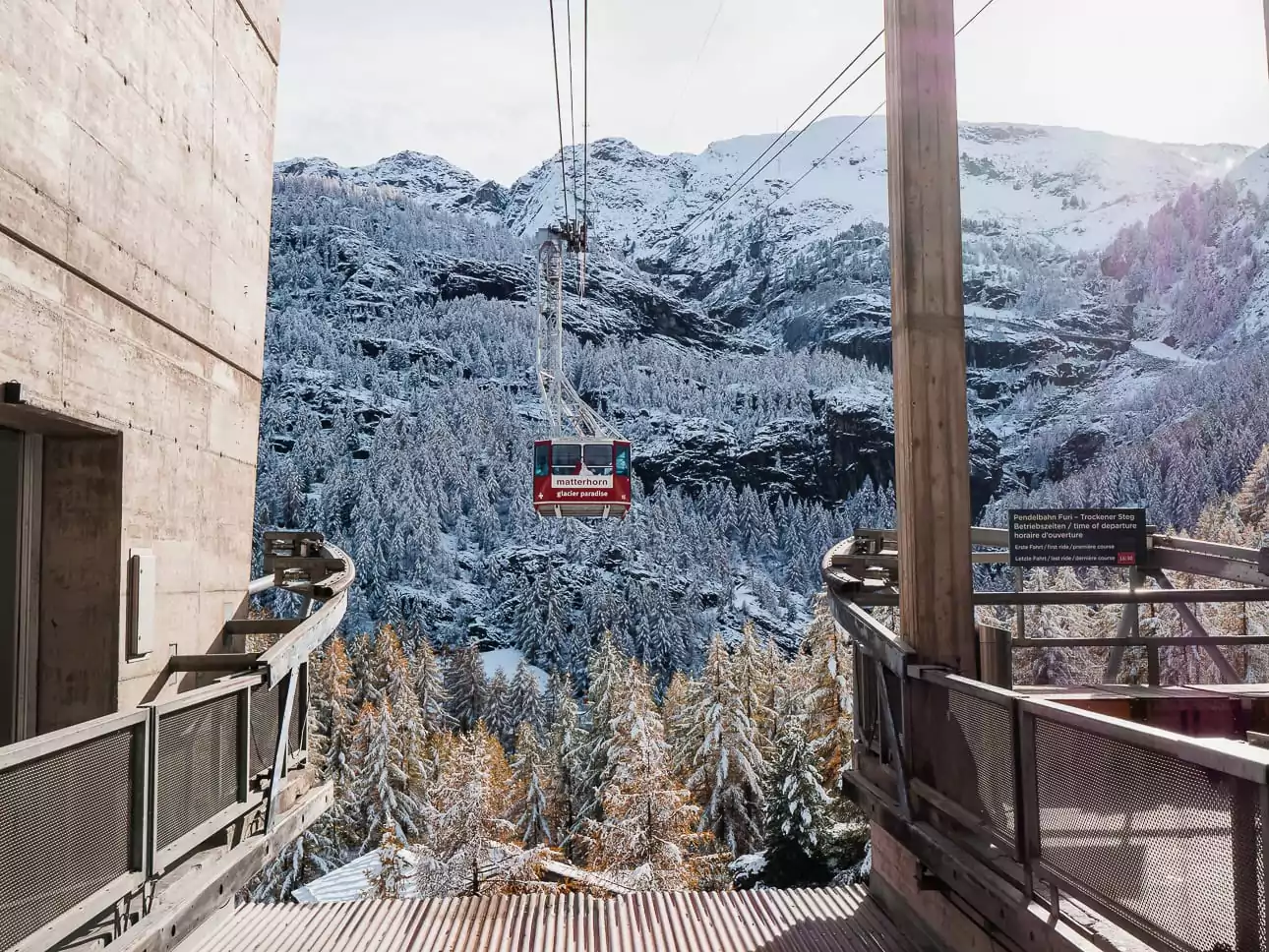
In saying that, the Swiss Half Fare Card is the travel pass that comes out on top for the vast majority of 3+ day itineraries, and the value of it is even better if you’re booking in advance and can take advantage of reduced-rate Saver Day Passes or Supersaver tickets with your HFC.
The flat 150CHF fee for a month of travel, a simple 300CHF break-even point, a hefty discount on almost all mountain excursions (including a better Jungfraujoch deal than the pricier Swiss Travel Pass), and the free Swiss Family Card that you can add on to let your kids aged 6-15 travel free country-wide, it’s a no-brainer for most multi-city Switzerland trips.
The exceptions worth keeping in mind:
- Under 25s get discounted prices for the Swiss Travel Pass and some regional passes, which can push them ahead of the HFC for some itineraries
- For 3+ days in Lucerne, around Interlaken or the wider Bernese Oberland, two or three fully covered mountains might tip the scales in favour of the regional passes instead (or a regional pass + HFC combo may be best)
- If you’d rather have total flexibility to just hop on and off public transport as you wish, the Swiss Travel Pass might end up costing more in total but the convenience and freedom is unmatched
And if you’re still not sure, plug your itinerary into my free Switzerland travel pass calculator and it’ll tell you the best option for your actual route in a matter of seconds!
Happy travels my friends 🚞
MORE SWITZERLAND TRAVEL INSPIRATION:
- How to spend 5 days in Switzerland
- How to spend 10 days in Switzerland
- 33 most beautiful places in Switzerland
- Rigi vs Pilatus vs Titlis vs Stanserhorn: Which one to visit?
- The cheapest place to ski in Switzerland: Liddes Ski Hostel
- 10 reasons to try co-living in Switzerland
- The ultimate Northern Italy and Switzerland itinerary
MORE SWITZERLAND TRAIN & TRAVEL PASS GUIDES:
- Switzerland travel pass calculator (it’s free!)
- Best Switzerland travel passes in 2026: How to choose the right one for you
- Swiss Travel Pass vs Half Fare Card: Which one is best?
- The ultimate Swiss Travel Pass guide
- The ultimate Swiss Half Fare Card guide
- Is the Glacier Express worth it?
- Is the Bernina Express worth it?
- Is the Gotthard Panorama Express worth it?
- Bernina Express vs Glacier Express: Which one should you choose?
- Is the Jungfrau Travel Pass worth it?
- Is the Berner Oberland Pass worth it?
- Is the Lucerne Travel Pass worth it?
MY GO-TO TRAVEL PLANNING RESOURCES
Flights ✈️ I use Skyscanner to find the best flights for my trip and then I’ll always book direct with the airline to protect myself from having to deal with dodgy third parties if anything goes wrong.
Trains 🚂 If I’m travelling through Europe, I try to travel by train wherever possible! For an extended trip (2+ weeks) I’ll calculate if a Eurail Pass is worth it, or I’ll book point-to-point tickets through RailEurope or the local train operator.
Accommodation 🛎️ I book almost all of my accommodation through booking.com, they have a user-friendly website + app and many of their options are free cancellation, easily cancelled with a simple click of a button.
Activities 🗽I use GetYourGuide, Klook and Viator to look for activities in the places I visit, or I just Google ‘things to do in [city]’! P.S. If you book anything on Klook you can use the promocode FINDINGALEXXKLOOK to get 10% off
Travel cards 💳 I’m a Wise gal through and through, they’ve been my chosen travel card for more than five years now. You can easily top up your card from your bank account or through Apple Pay, convert your money to local currency, and spend money with minimal fees and the best exchange rates around.
Travel insurance 🩺 I use Cover-More NZ travel insurance for my own trips, I have a comprehensive policy and I’ve only had good experiences with them. Cover-More also has an Australian company, but if you’re from elsewhere then two popular insurance options for global travellers are SafetyWing (cheaper policy, lower coverage) and World Nomads (more expensive but significantly better coverage).
Luggage 💼 I travel with Samsonite Cosmolite suitcases, one 75cm check in bag and a 55cm carry on bag, and I absolutely adore them and will never travel with anything else! They are SUPER lightweight (2.8kg and 1.9kg respectively) so I have much more space for my actual stuff.
Camera gear 📸 I use a iPhone 15 Pro Max for phone photos/videos, and my camera kit includes a Lumix S9 (incredible lightweight full-frame camera, a game changer for travel creators!) with a 20-60mm lens, a Lumix G9 with an 8-18mm and 12-60mm lens, a DJI Mini 3 Pro drone and a GoPro Hero 10. I do all my writing and editing on my ASUS Zenbook 14, it’s lightweight but powerful enough for photo editing and intense blogging sessions.
