
French Riviera without a car: Everything you need to know!
This post includes some affiliate links and I earn a small commission if you book through them. This helps keep this site running and lets me keep writing ultra-detailed travel guides that are free for you to use to plan your next adventure. Read more in my privacy policy.
The French Riviera is one of the easiest stretches of coastal Europe to travel without a car, thanks to a frequent train line that connects most of the iconic seaside stops, plus local bus services to reach inland gems without the parking headaches. Here’s everything you need to know to plan the perfect car-free Côte d’Azur trip.
Don’t stress about petrol prices, the nightmare parking situation or white-knuckling your way along the Corniche, because after three trips to the south of France sans voiture (without a car), I can confidently say that seeing the French Riviera without a car is totally doable.
Exploring by train and bus isn’t just the affordable option, it’s actually often easier and faster than if you had to city-hop along the coastline with your own set of wheels.
Regional trains link the major spots, a bit of bus know-how unlocks some inland highlights, and seasonal ferries can whisk you over the water to Saint-Tropez or Île Sainte-Marguerite for an offshore day trip. It’s not quite at Switzerland’s level of car-free ease, but you can reach most of the highlights within an hour or so from Nice with just one or two modes of transport.
I’ve been fortunate enough to visit this sparkling slice of southern France three times so far, using Nice and Menton as my two main bases and day tripping to Monaco, Antibes, Cannes, Èze, Saint-Paul-de-Vence and Grasse, both solo and while travelling with friends, without spending a cent on car rental.
All up I’ve explored more than 20 European countries predominantly using public transport, and I’d say this is one of the best-connected seaside stretches of the Mediterranean.
In this guide I’ll cover everything I’ve learnt about travelling the French Riviera without a car: how to get around, the must-see spots that can be reached by public transport, how long to spend here, when to visit, where to base yourself for maximum efficiency, plus a one week itinerary you can replicate yourself if you just want something plug-and-play.
Allons-y! (Let’s go!)
Do you need a car for the French Riviera?
No, you really don’t need a car for the French Riviera!
The coast is pretty perfectly set up for car-free travel, with frequent regional trains, buses that fill the gaps where rail doesn’t reach, a few tram lines within Nice and seasonal ferries in the warmer months.
You could easily spend a couple of weeks here hitting all the top spots without having to think about petrol, parking or peak hour traffic, and you’ll probably save a small fortune in the process.
Where things get a liiiittle more complicated is up in the medieval hilltop villages like Saint-Paul-de-Vence or Èze (easy to reach but take a bit of additional planning and travel time), or if you want to explore beyond the Med and extend your trip into the valleys and national parks that sit slightly further north (best done on an organised tour or with a single-day car rental).
A car would give you more freedom to pop into off-the-beaten-track communes that are well away from the day tripper route, and it’d save you the logistical time and effort of checking transport schedules, but for a first-time Riviera trip focused on the most iconic spots, the train and buses can do the heavy lifting while you sip Kir Royales all afternoon without having to worry about finding a designated driver.
How to get to the French Riviera without a car
Most travellers arrive in Nice, which is well-connected by rail from other hubs in France and neighbouring countries, and by air from all around Europe and beyond.
✈️ By air
Nice Côte d’Azur Airport (NCE) is the main gateway for accessing the Riviera.
It’s served by both low cost carriers and full-service airlines that offer frequent connections to major European cities, as well as a growing list of long-haul routes from North America and the Middle East which open up one-stop flights from pretty much anywhere in the world.
Once you land, Tram Line 2 will take you all the way from the airport to the city in less than 30 minutes, but the ticket situation needs some extra explaining:
- The airport ticket machines only sell an unnecessarily expensive airport-specific ticket and day passes for tourists
- The Lignes d’Azur Tickets app lets Android users buy tickets but it doesn’t have that functionality for iPhones
- You can save €8-ish on a ticket by catching the tram from the airport but getting off at Grand Arénas (the stop immediately after Terminal 1) to buy a normal-priced ticket from a machine there, then jump back on the next Line 2 service to get into the city
Grand Arénas has a bad reputation for pickpocketing because it’s full of first-timers who are easily distracted while trying to navigate the trams, so make sure to take usual precautions for busy places and always keep your phone, wallet and passport somewhere totally secure.
You can also take a taxi or pre-book an airport transfer if you’re staying somewhere away from the tram line or just want door-to-door service.
Marseille Provence (MRS) on the western edge of the region is another arrival-by-air option, from there it’s about 2h 40m to Nice by train and there are stops in Toulon, Cannes and Antibes en route.
🚂 By train
Nice Ville is the main train station in Nice and the gateway to the rest of the Riviera by rail.
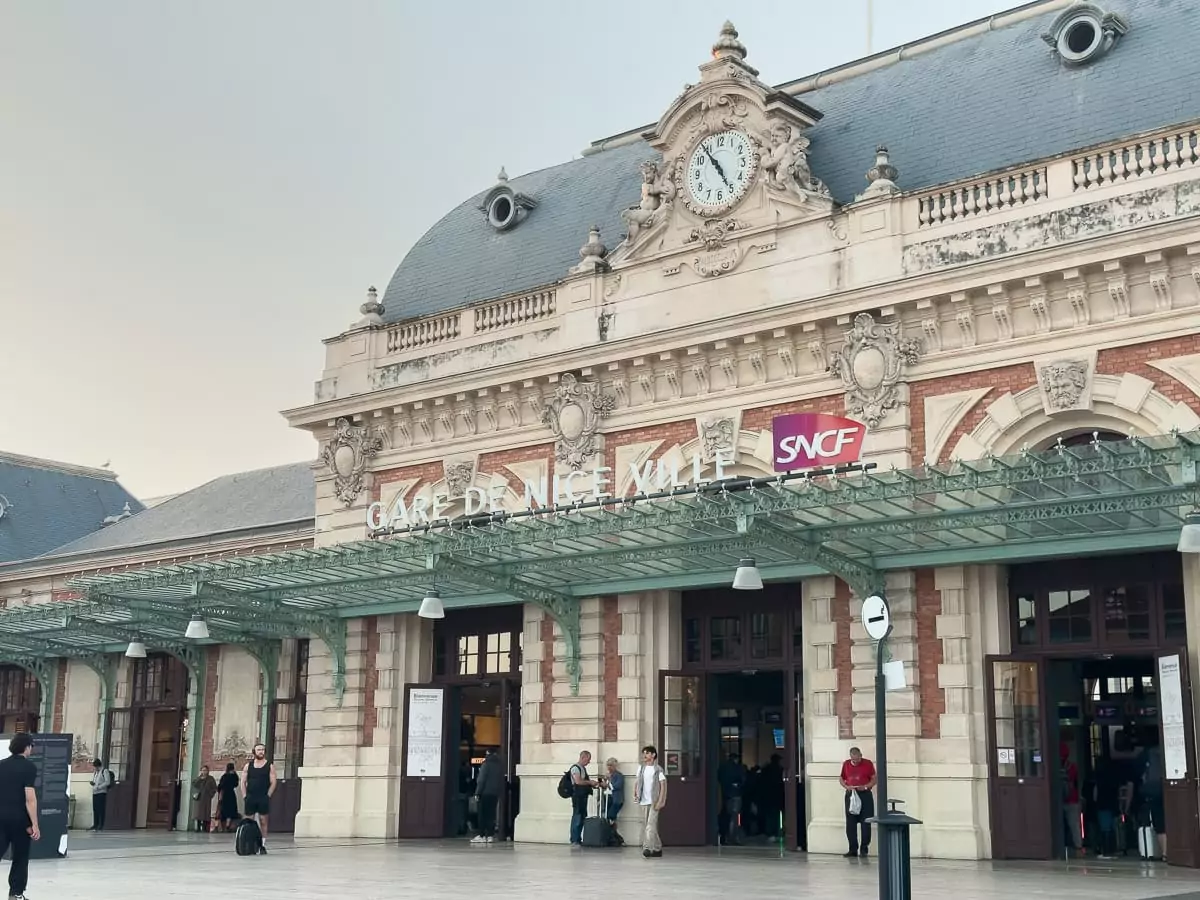
It’s got fantastic connections throughout France, plus easy one- or two-transfer journeys to major cities in neighbouring countries and beyond.
Some key train routes arriving into Nice Ville are:
- Direct TGV (high-speed train) from Paris (fastest: 5h 40m)
- Direct TGV from Lyon (fastest: 4h 40m)
- Direct TGV or TER (regional train) from Marseille (2h 40m)
- One-stop TGV from Geneva (fastest: 6h 30m)
- One-stop InterCity + TER from Milan (fastest: 5h)
- One-stop high-speed train from Barcelona (fastest: 8h 15m)
There’s also an Intercités de Nuit sleeper train from Paris, it departs from Paris Austerlitz (just across the river from Gare de Lyon) at the very respectable time of 8.57pm and rolls into Nice Ville at 9.09am, which is truly the ideal timing for a night train!
Sleeper trains are one of the best ways to maximise your time and money on any car-free Europe trip, you arrive well-rested, you save on a night of accommodation, and you don’t lose half a day to airport chaos or a six-hour TGV.
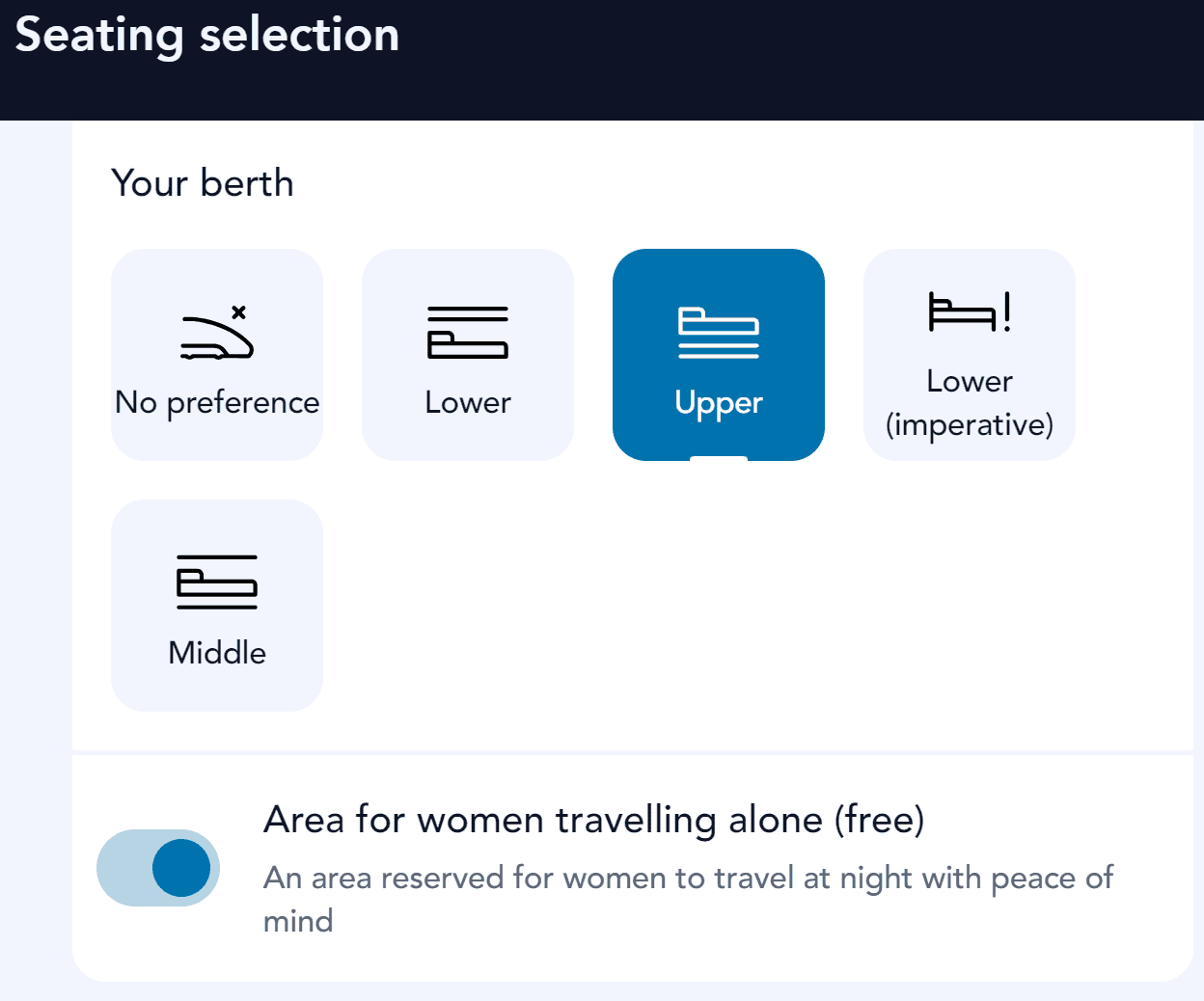
I also LOVE that SNCF (the national railway company) has reserved compartments for women travelling solo on their night trains 💃🏼 so you can book a berth with peace of mind, rather than having to splash out on a private sleeper if you don’t feel comfortable sharing a couchette with random guys. Other train operators: take note!
How to get around the French Riviera without a car
You’ve got four main public transport options to play with: trains, buses, Nice’s tram network and ferries, plus organised tours for less logistical hassle or private transfers if you’d rather spend money than time.
🚄 Trains on the French Riviera (TER + TGV)
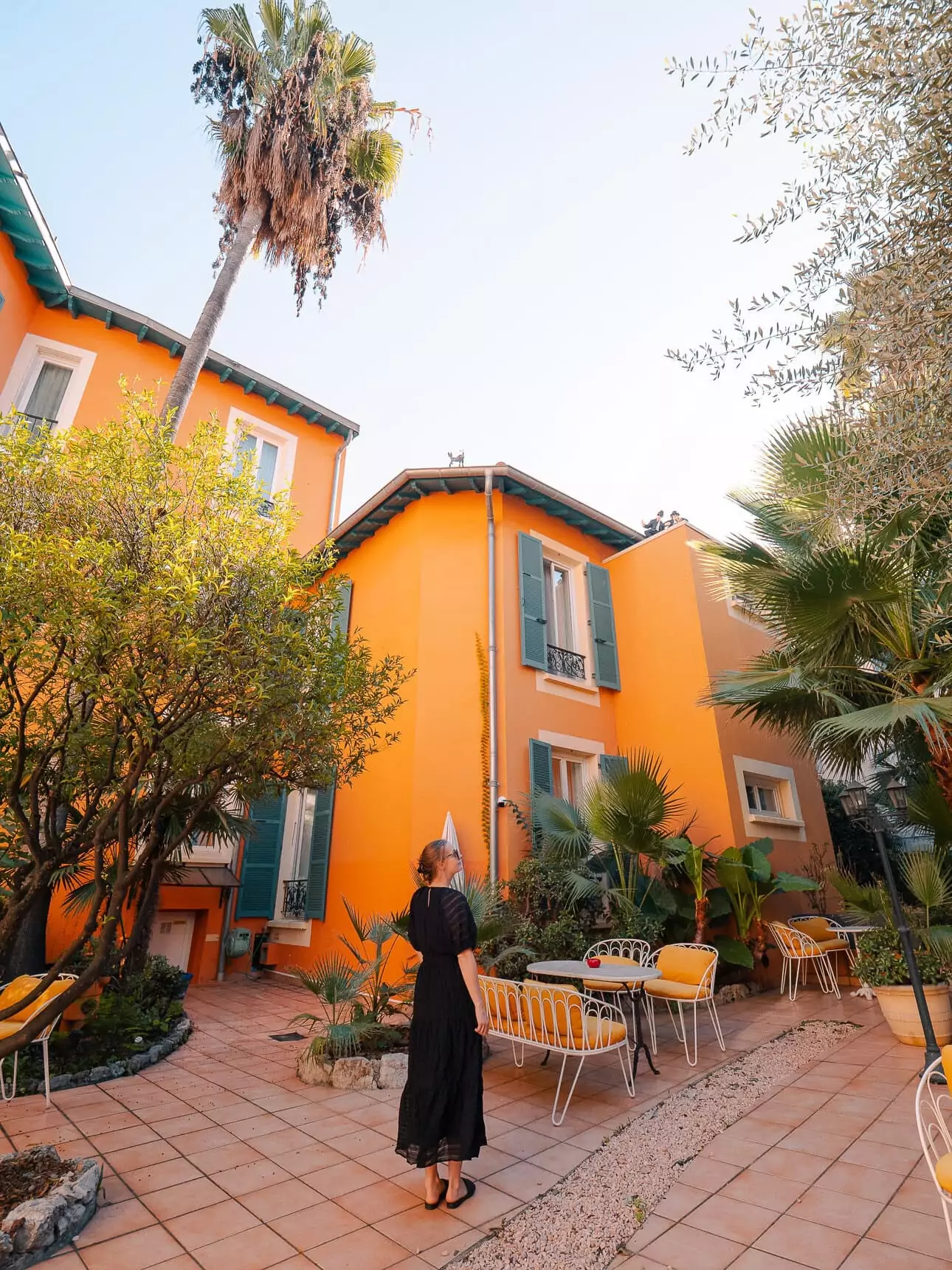
Trains are the lifeline of car-free Riviera travel, running all the way from Marseille through places like Toulon, Saint-Raphaël (closest to Saint-Tropez), Cannes, Antibes, Nice, Villefranche-sur-Mer, Èze-sur-Mer, Monaco, Roquebrune-Cap-Martin and Menton, before crossing the Italian border to Ventimiglia.
Grab a top-deck seat on one of the double-decker TERs and you’ll see why this coastal route ranks up there with the most beautiful train rides in Europe.
If you’re flying into Nice and basing yourself there or nearby, which is what I’d recommend, the stretch between Cannes and Menton (both about 40 minutes from Nice) is what you’ll be using most days.
The train system here is super simple to use on the ground, but there are some niggly things that you need to understand before you go so your trip runs smoothly.
1. There are two types of trains
Regional trains (TER) service the entire coastal line with frequent departures all day long, no seat reservations required, flat-rate fares that don’t change based on demand or when you book, and they can’t sell out (though they can get very crowded in peak season).
TER trains in the Provence-Alpes-Côte d’Azur region use the branding ‘ZOU!’, and the train number on the SNCF app will show something like ‘TER PACA’, but these all mean the same thing down here.
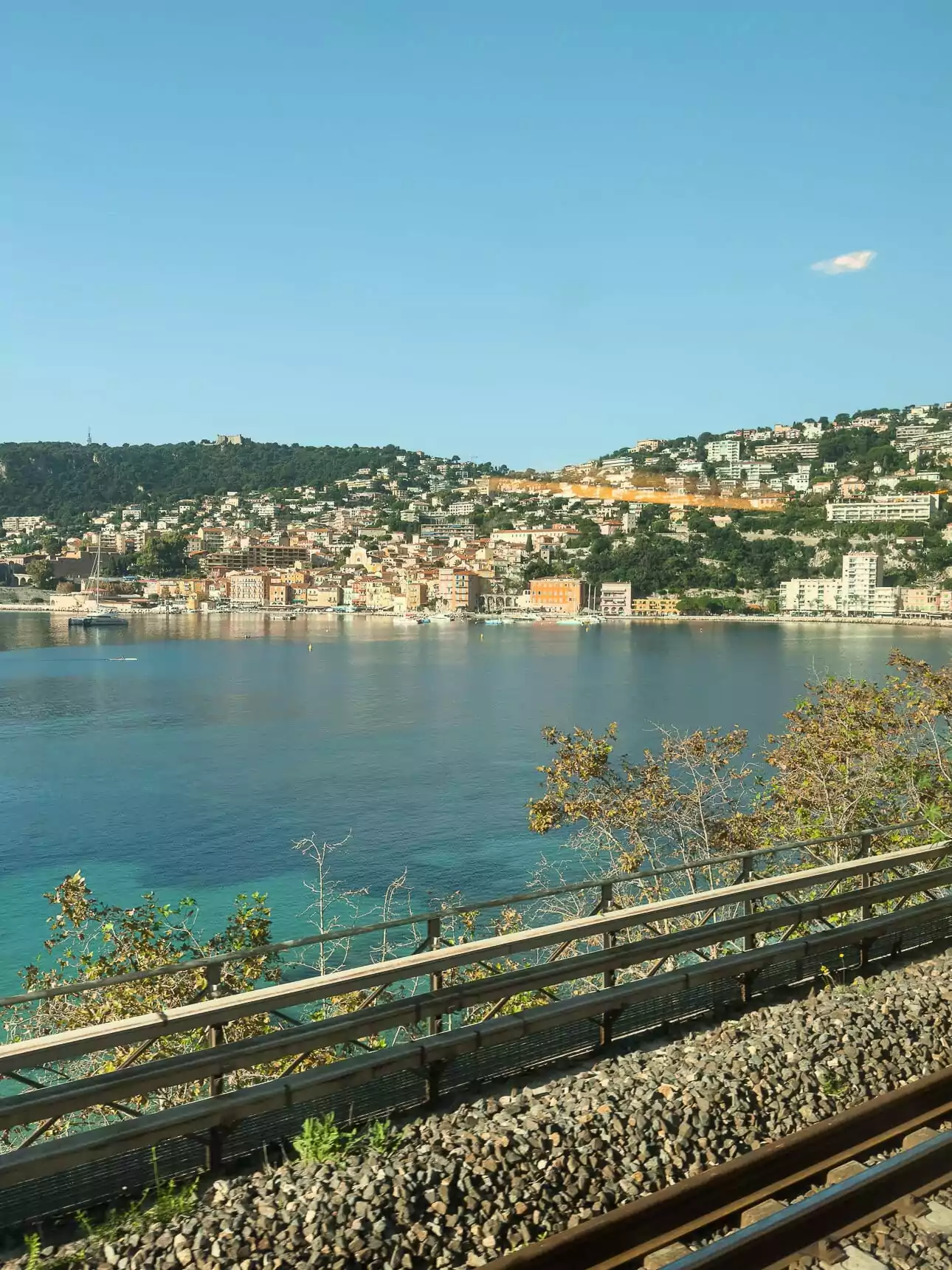
High-speed trains (TGV) come from further afield (Paris, Lyon, Strasbourg etc.) and share the same coastal track as the TER. They’re less frequent, only stop at major stations, priced dynamically (meaning they get more expensive with demand), require a seat reservation for that specific departure, and can sell out.
Even though they’re technically high-speed, on the French Riviera they’re no faster than ZOU! trains on the same route, because they use the exact same railway tracks and have to fit between the TERs anyway. Sometimes they’re a few minutes faster, sometimes they’re a few minutes slower, so don’t default to booking a TGV thinking it’ll save you time.
2. When to use the TER vs. TGV on the French Riviera
There are some clear examples of when one type of train beats the other, and some where you have no choice.
- For smaller stations like Villefranche-sur-Mer, Èze-sur-Mer or Roquebrune-Cap-Martin, or for reaching Ventimiglia in Italy, TER trains are your only option.
- For day trips and short hops between most coastal towns, the TER will be your best bet. They’re more frequent, you can buy a ticket last minute without worrying about price increases or missing out, and if you pre-book and miss your planned departure you can just jump on the next one without any faff.
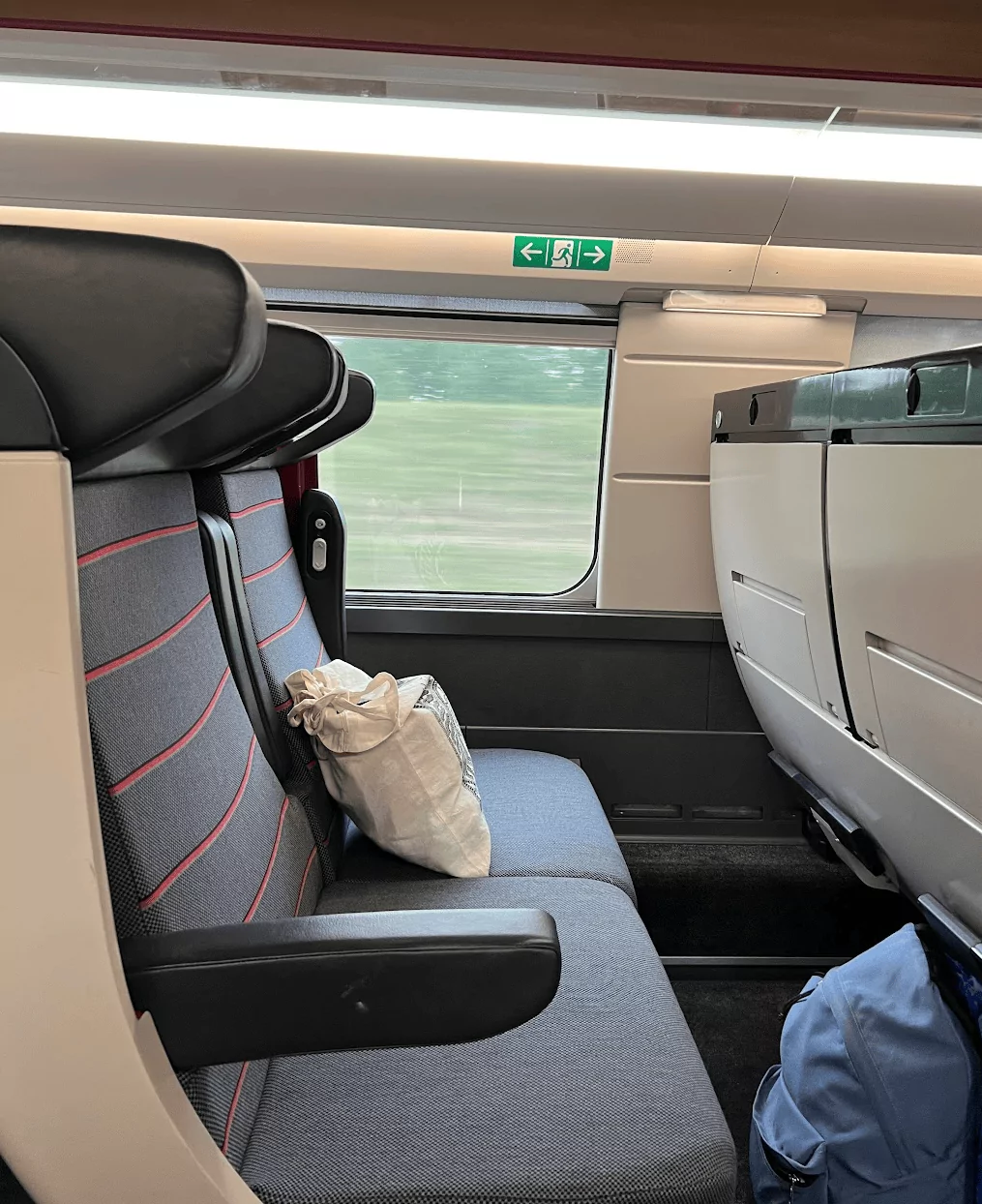
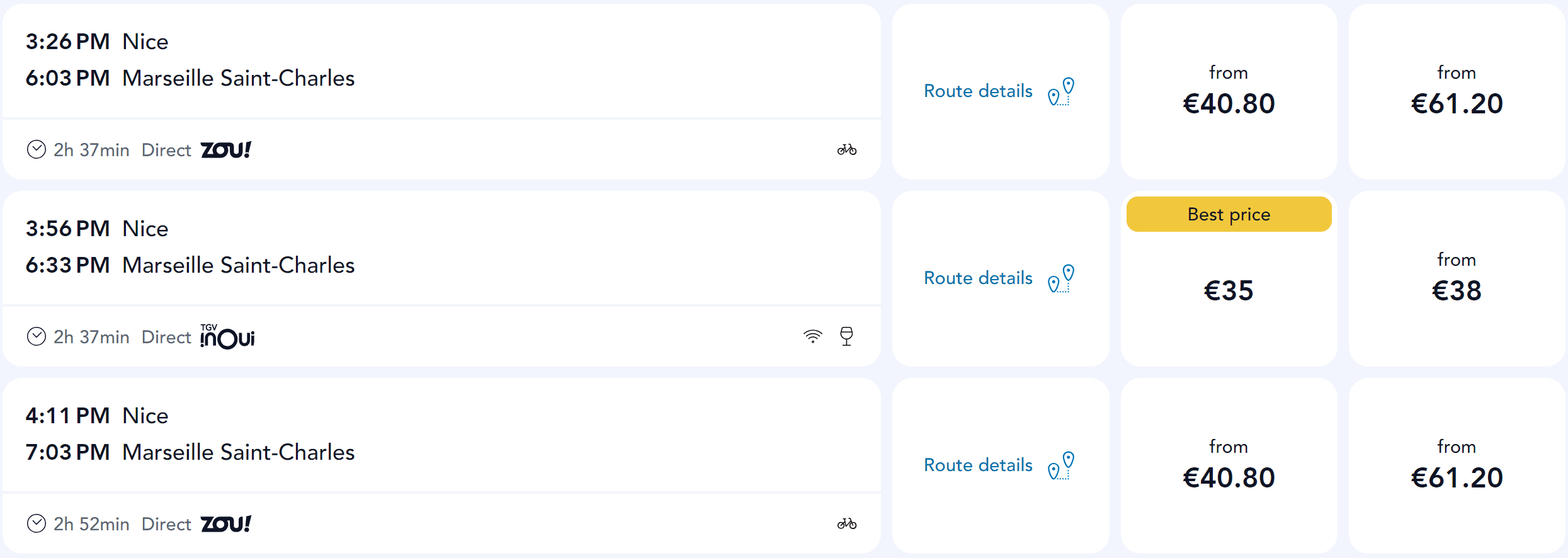
- For longer Riviera trips (like Nice ↔ Marseille), it’ll depend on when you travel, when you book and how much flexibility you want. TGVs can actually be cheaper than the TER trains immediately before or after it if demand is low (below is an example), but the cheapest TGV tickets have minimal flexibility and are only valid for that exact departure, so you need to be certain that’s the train you want to take before you book.
3. How train tickets work (and how to avoid getting fined)
Okay so there is LOTS of incorrect or outdated info online about French Riviera train tickets, and because AI is trained on whatever’s already on the internet, ChatGPT/Gemini/Claude will tell you something completely inaccurate with full confidence aaaand trusting them could land you with a nasty fine 🫠
So why am I any more trustworthy than 2019 Reddit threads or all-knowing robots? Because I have a clinically-concerning level of attention to detail and literally cannot publish a post without fact-checking every single sentence. Fantastic news for you, terrible news for my overall mental wellbeing and time management as a full-time travel blogger.
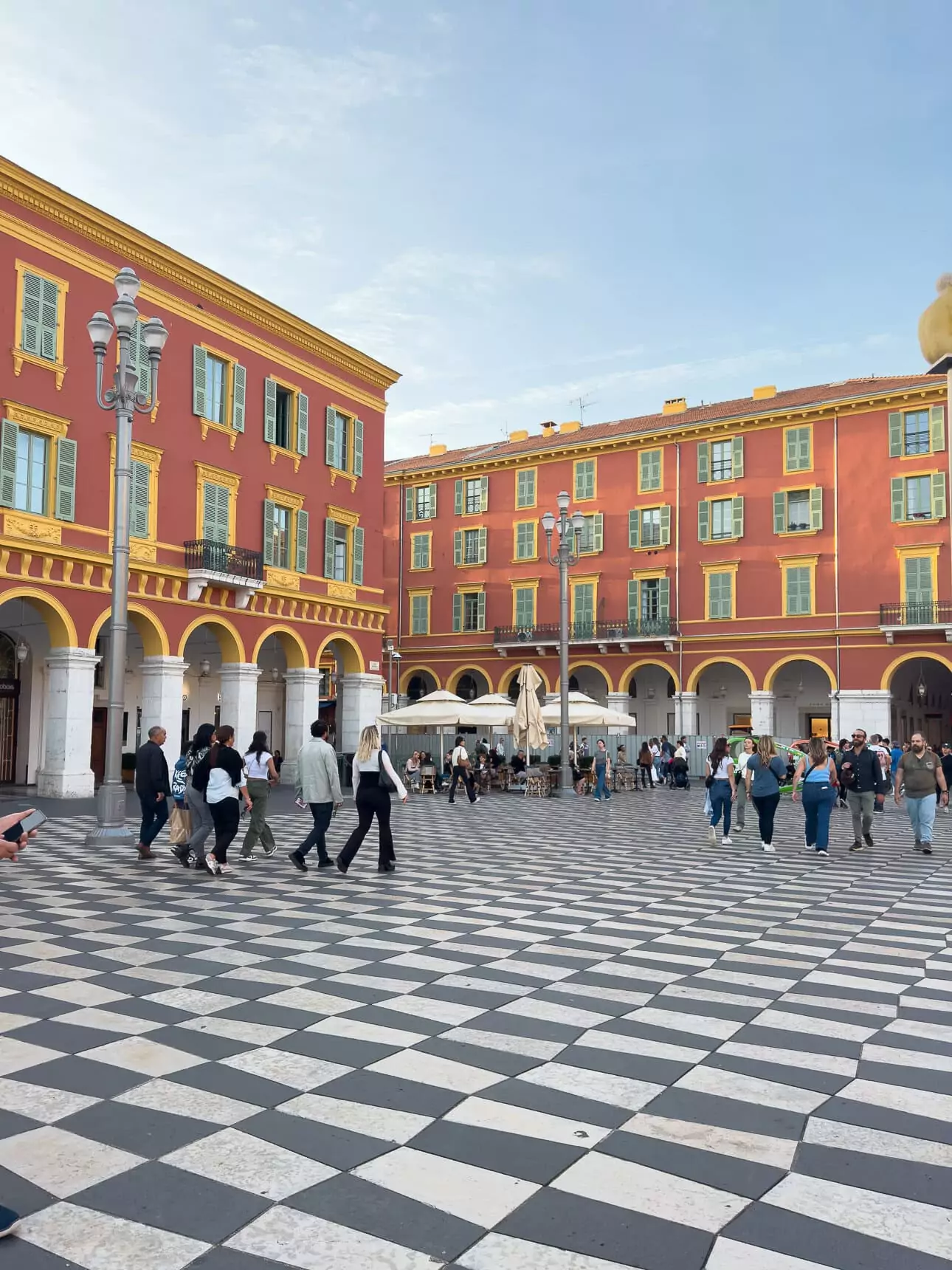
I searched high and low for the specific TER T&Cs for this actual region (which are different from SNCF’s standard T&Cs by the way), read approx. 200 forum and FB group posts to find up-to-date info from people who live there or who’ve visited recently, and have got some myths to bust.
The most common misconception is that you can use one ticket multiple times in a day or break up your journey along the way, e.g. if you buy a Nice to Cannes ticket but want to stop off in Antibes for lunch, your original ticket covers you for both journeys on the route. This is not allowed on trains on the French Riviera, even the ZOU! regional trains, you need a new ticket for each journey.
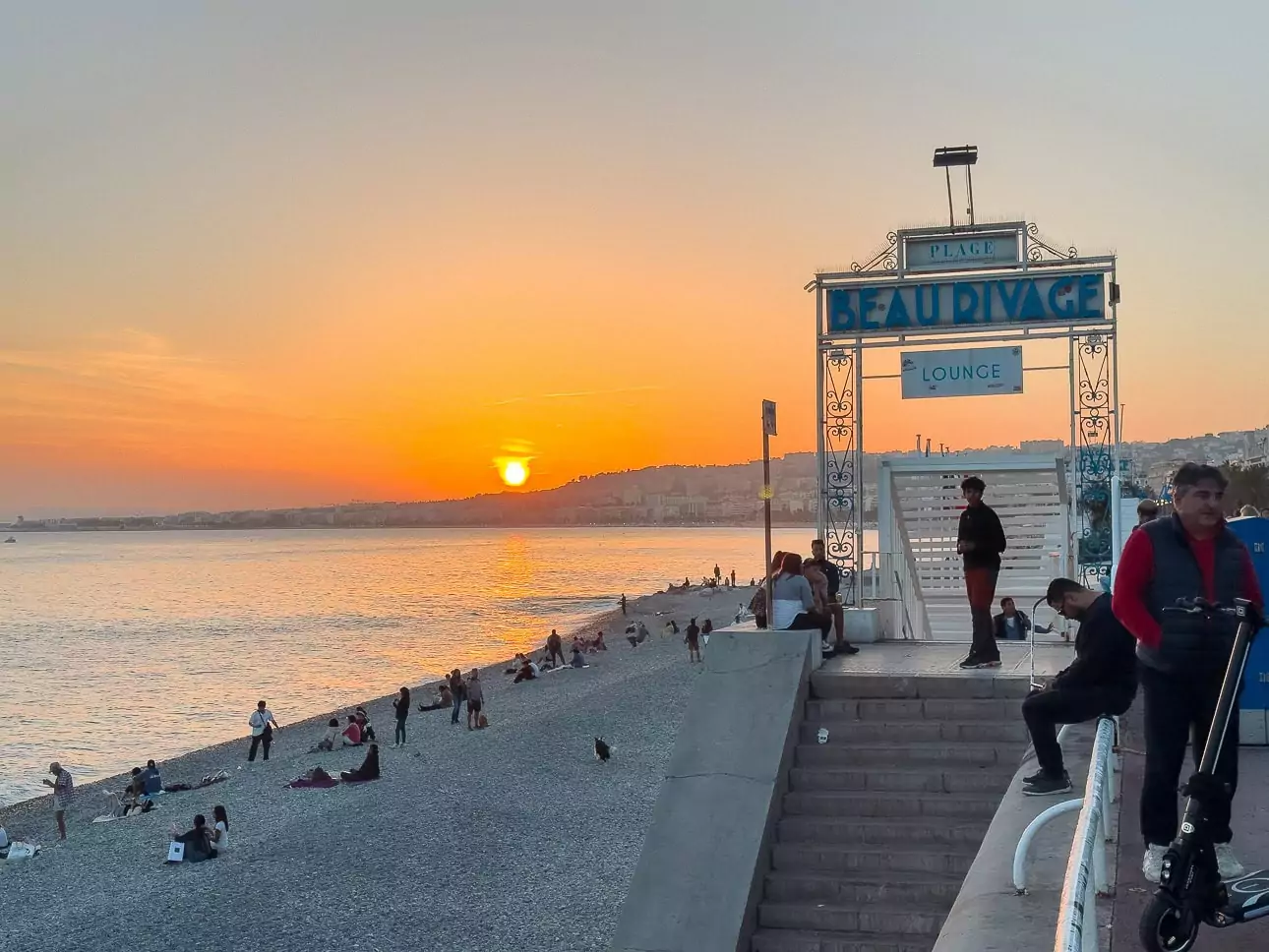
In this part of the country, one TER ticket gets you one trip in one direction, full stop. If you want to stop off somewhere along the way, when you step onto your next train that counts as a new ‘journey’ and you’ll need another ticket for that trip. If your ticket is scanned by an inspector on your first trip and then another inspector tries to scan it a couple of hours later, it’ll show as invalid and you’ll be slapped with a fine.
This does contradict the typical rules for most TER trains in France as well as regional trains in lots of other countries, which is why it’s so confusing. Most regional trains across Europe let you buy a ticket for a specific route and a specific day, and let you use it as a kind of ‘day pass’ for that route which lets you get on and off as you please, but this is not the case in the French Riviera.
The chance of having your ticket inspected on two TERs in one day is relatively low, so in reality many travellers get away with a stopover without having to buy a second ticket, but tickets are so cheap anyway that saving a few Euros by fare-dodging isn’t really worth the risk of ruining your holiday 🤷🏼♀️
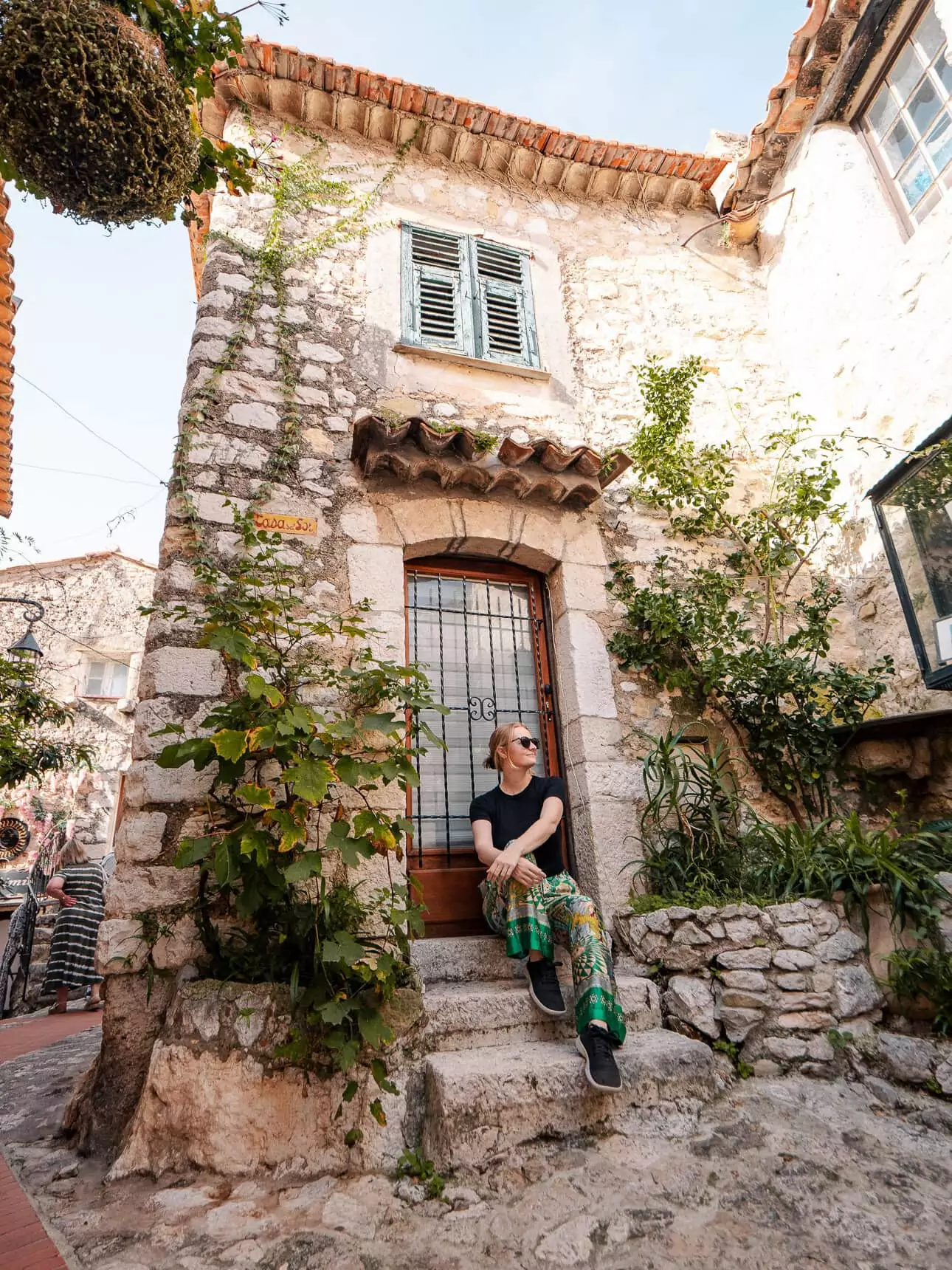
And a few other things to be aware of:
- A TER ticket is valid for any train running on that route on that day, so you can take a train earlier or later than the time selected on your ticket (but I’ll say it again, one ticket required per journey!)
- A TGV ticket is for that specific train departure, you can’t use a TGV ticket on a different train that day without exchanging it
- A TER ticket can’t be used on the TGV and vice versa
4. How often the trains run
Direct trains service the Cannes-Menton section of the track frequently throughout the day, with 3-4 per hour between 6am-ish and 9pm-ish on weekdays, plus some extra services until 11pm-ish on Fridays and Saturdays.
There’s less frequent departures linking Marseille with Nice and other spots on that side of the Riviera, but still usually 1-2 per hour.
5. How much tickets cost
Expect to pay €5-10 for each TER journey between Nice and the day trip destinations (Menton, Monaco, Antibes, Cannes, etc.).
Some sample fares in 2026 are:
- Nice to Monaco: €5.90
- Nice to Antibes: €6.70
- Nice to Menton: €7.40
- Nice to Cannes: €9.40
- Nice to Ventimiglia (Italy): €10.20
- Nice to Marseille: €40.80
TGV fares are priced dynamically remember, so they might be slightly cheaper than the flat-rate fares above, or could be quite a bit more expensive if you’re booking late during peak season.
6. Train strikes
Strikes (les grèves) are practically a national sport in France and it’s not uncommon for them to be called during busy travel periods, because that’s when industrial action has the most impact.
The good news is that they’re unlikely to be catastrophic for tourists with a bit of flexibility.
First of all, you’ll usually have at least a few days’ warning of an impending strike, because public service unions are required to file an official strike notice at least five days in advance and it’ll blow up across news sites and social media as soon as it’s leaked. A quick “SNCF strikes [month]” Google search just before your trip will bring up anything that might cross over.
If there is a train strike planned for when you’re in the French Riviera, honestly the best thing to do is to fully embrace it as an authentic cultural experience 🤷🏼♀️ Cancel your day trip plans, swap your itinerary around to focus on exploring Nice by foot or wherever you’re staying, and treat yourself to a long lunch and beach afternoon rather than playing logistical Tetris with thousands of other disrupted travellers.
Some train services might still run on reduced schedules but they’ll be overflowing, buses will be packed, day tours will get booked up, even if you had your own vehicle you’d still be dealing with the fallout in the way of extra cars on the road, angry commuters and oblivious tourists. No thanks!
You can check SNCF’s disruptions page for confirmed strike action and to see if your specific trains will be impacted.
🚌 Buses
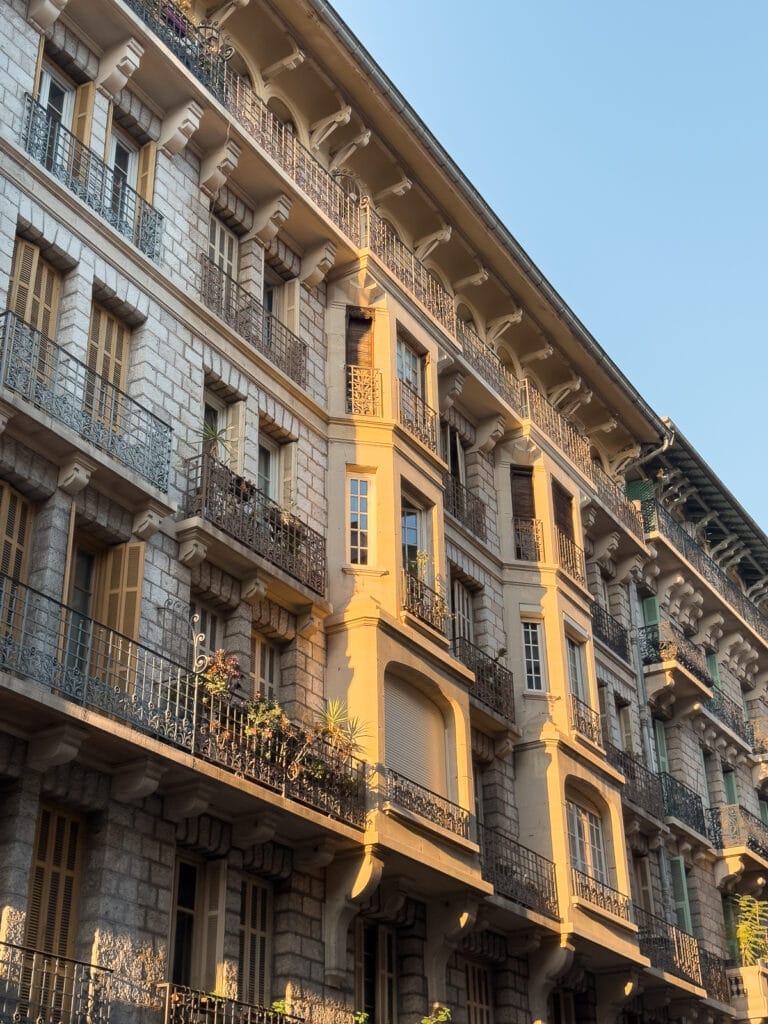
Buses are essential for reaching the famous perched villages or inland spots that sit too far from the railway line for the train to be an option, like Saint-Paul-de-Vence, Vence and Èze village (on the hill, not by the water).
There are two types of buses on the French Riviera:
- ZOU! regional buses run between towns and villages, €2.10 per ticket if you buy before you board, €2.50 if you buy it on the bus.
- Local town networks run within a single town or metropolitan area, predominantly used by locals rather than tourists. Tickets are also cheap (€1.70 in Nice) and can be bought on the bus network’s website/app, at ticket machines or from the driver.
One very important rule though, you must validate your ticket or pass when you board buses on the French Riviera. This is what registers your trip with the system, and forgetting to tap counts as fare evasion even if you’ve got a valid pass (valid ≠ validated!).
Bus drivers can strike too but that tends to happen less often than train strikes, and the Riviera is less reliant on buses than the coastal rail service.
🚊 Trams
Trams only exist in one place on the Riviera: Nice.
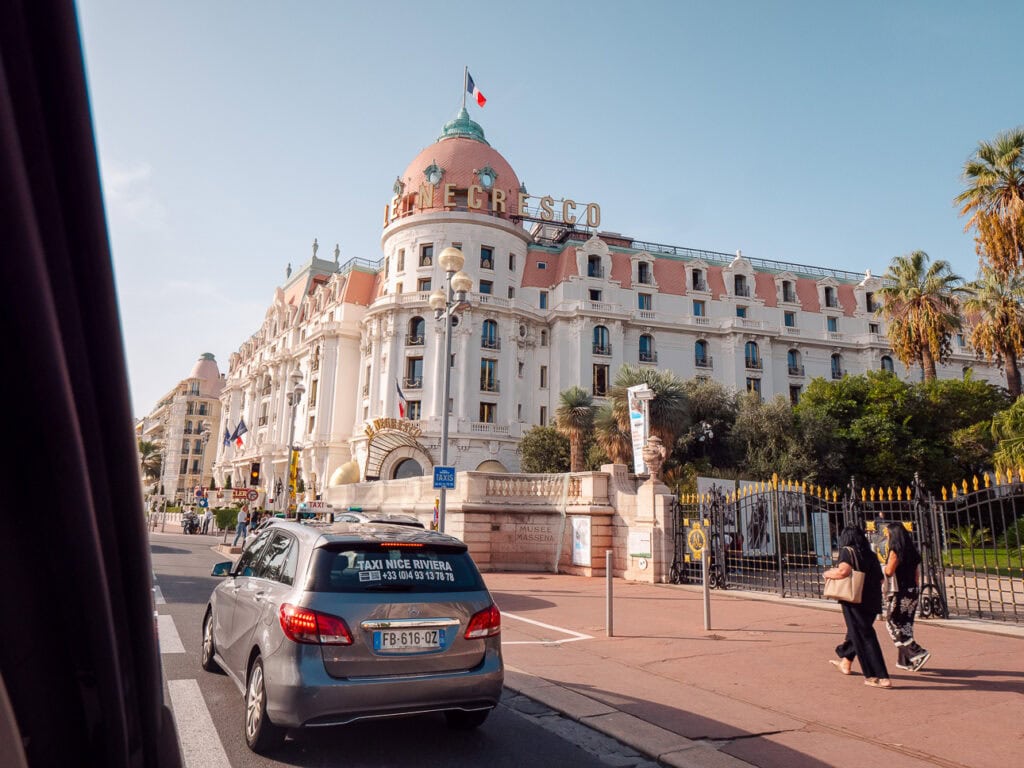
They’re operated by Lignes d’Azur (the same network as the city buses) and are the easiest way to get from the airport to the city or from Nice-Ville train station down to Place Massena if you want to avoid lugging your suitcase along Avenue Jean Médecin.
Tickets work the same as the Nice buses too, €1.70 and you have to validate every time you board.
🚢 Ferries
Ferries are a fun seasonal option for a couple of specific day trips if you’re visiting between May and October (with more frequent services in July and August) operated by Trans Côte d’Azur, plus year-round crossings between Cannes and the pristine Lérins Islands through them as well as some small local providers.
The main ones worth knowing about are:
- Cannes ↔ Saint-Tropez (1h 15m each way, 5h in Saint-Tropez, €71 round trip): The most useful ferry for tourists, because driving to Saint-Tropez in summer is an absolute nightmare and there’s no train.
- Nice ↔ Saint-Tropez (2h 30m each way, 5h in Saint-Tropez, €84 round trip): Direct from Nice so more time on the water.
- Nice ↔ Monaco (45m-1h each way, 6h 45m in Monaco, €49.50 round trip): A scenic alternative to the train if you want to see the coast from the water and skip the horrendous train overcrowding during peak commuter time, but a lot more pricey!
- Cannes ↔ Lérins Islands (15m each way + scenic cruise options, from €19-48 round trip depending on which trip you book): A quick hop across to the pine-forested Lérins Islands, with longer cruises on offer if you want to make a bigger day of it.
🎟️ Pass SudAzur Explore (multi-day transport pass)
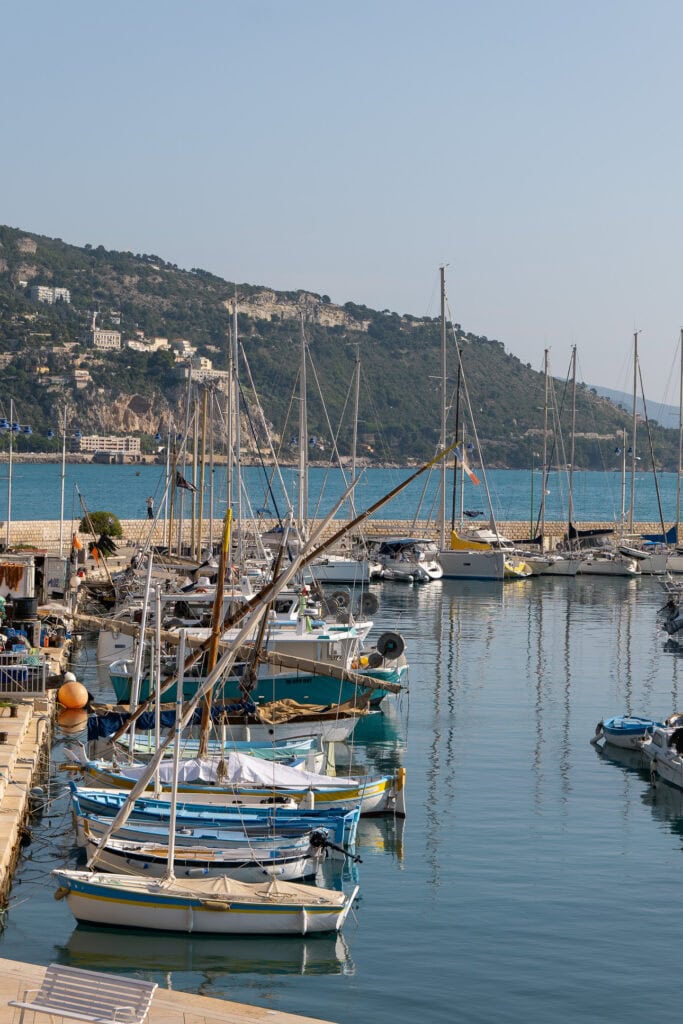
If you’re planning on spending a few days or more taking day trips around the Riviera, the Pass SudAzur Explore is almost always better value than buying single tickets, and it gives you total flexibility to hop on and off as much as you want.
What it covers:
- Unlimited travel on TER trains within the Alpes-Maritimes department (which covers Cannes to Menton Garavan at the Italian border plus inland routes including the scenic Train des Merveilles up the Roya Valley)
- Unlimited travel on ZOU! regional buses
- Unlimited travel on local town networks (like buses and trams in Nice, plus buses in Cannes, Menton, Grasse and more)
The pass doesn’t extend much beyond Cannes to the west, it doesn’t include travel to Ventimiglia over the border, and it doesn’t include ferries.
What it costs:
- 3 days: €35
- 7 days: €50
- 14 days: €80
There’s also a €2 deposit for the smart card the pass gets loaded onto (which is refundable if you return the card, but who has time for that at the end of their holiday 🤷🏼♀️).
Where to buy it:
The easiest spot for travellers arriving by air is the Lignes d’Azur ticket machine right at Nice airport’s tram stop, but if the queues are insane you could catch the tram to Grand Arenas (the one right after the airport, it’s free to get there) and use those machines instead.
If you’re coming into Nice or elsewhere by train, you can get the SudAzur Pass from SNCF ticket counters or ZOU! counters throughout the Riviera.
🚉 Using an Interrail or Eurail Pass on the French Riviera
If you’re doing a wider Europe-by-train trip then you might’ve heard about (or already plan on getting) a Eurail Pass or an Interrail Pass, which covers train travel across 33 European countries.
I’m potentially the biggest Eurail fan alive, I always use one for my annual three month Europe jaunt, and every single year they save me hundreds of Euros vs. buying individual train tickets. If you’re combining your time in France with Italy, Switzerland, Germany or other countries, you should absolutely run the numbers on whether a Eurail Pass is worth it for your specific itinerary before you lock in anything else.
BUT while an Interrail/Eurail Pass can be excellent for getting to the French Riviera from afar on high-speed trains, whether you should use it for your daily coastal hops will depend on the type of pass you have.
If you’ve got a Continuous Pass which gives you unlimited travel for a period of consecutive days, then you can use your Eurail Pass to catch the TER trains without having to pay a cent. No reservations required, just add the trip to your Rail Planner app and show the QR code if the inspector comes to ask for your ticket.
However, if you’ve got a Flexi Pass where you have a set number of travel days to use within a longer window, like 10 travel days in two months, then it’s not worth wasting precious travel days on your French Riviera day trips. The Pass SudAzur Explore I just mentioned or just buying individual tickets will be cheaper than the value of that travel day.
For the practical side of things like activating your pass, adding trips to the Rail Planner app and avoiding rookie mistakes, I’ve got a full guide on how to use a Eurail Pass.
🚐 Tours & private transfers
Public transport connects the majority of the Riviera highlights fairly painlessly, but if you’re short on time or want to reach somewhere beyond the train and bus networks, there are plenty of group or private tours that whisk you between must-sees without any logistical effort on your side.
The convenience comes with trade-offs though, as I found out on my most recent trip 🫠
An honest review of the French Riviera in One Day tour
I booked a ‘French Riviera in One Day‘ small group tour on GetYourGuide for myself and a travel buddy, and our main takeaway was that if something seems too good to be true, it is.
There is no way to see the French Riviera highlights in one day AND actually enjoy each place.
I kind of knew this in advance but I was feeling suuuuper travel-burnt-out after two months of solo travel around Europe without driving or flying, and I was desperate for one day of sightseeing where I didn’t have to carry the mental load of bus timetables, public transport tickets or navigation. The tour had excellent reviews on GYG (4.6/5 from 6000+ reviews) so we gave it a go!
The day started off fine, an easy hotel pick up and then a scenic photo stop at a panoramic viewpoint above Villefranche-sur-Mer, but it went downhill with stop #2 at a tourist trap perfumery where tour companies/guides almost certainly make a commission if you buy something. That ate up 45 minutes I would’ve much rather spent elsewhere.
After that we had a handful of stunning stops but never for long enough:
- Èze on the hilltop for medieval charm, not enough time for the famous botanical gardens (which we could’ve squeezed in if not for the time wasted being herded around a fragrance factory)
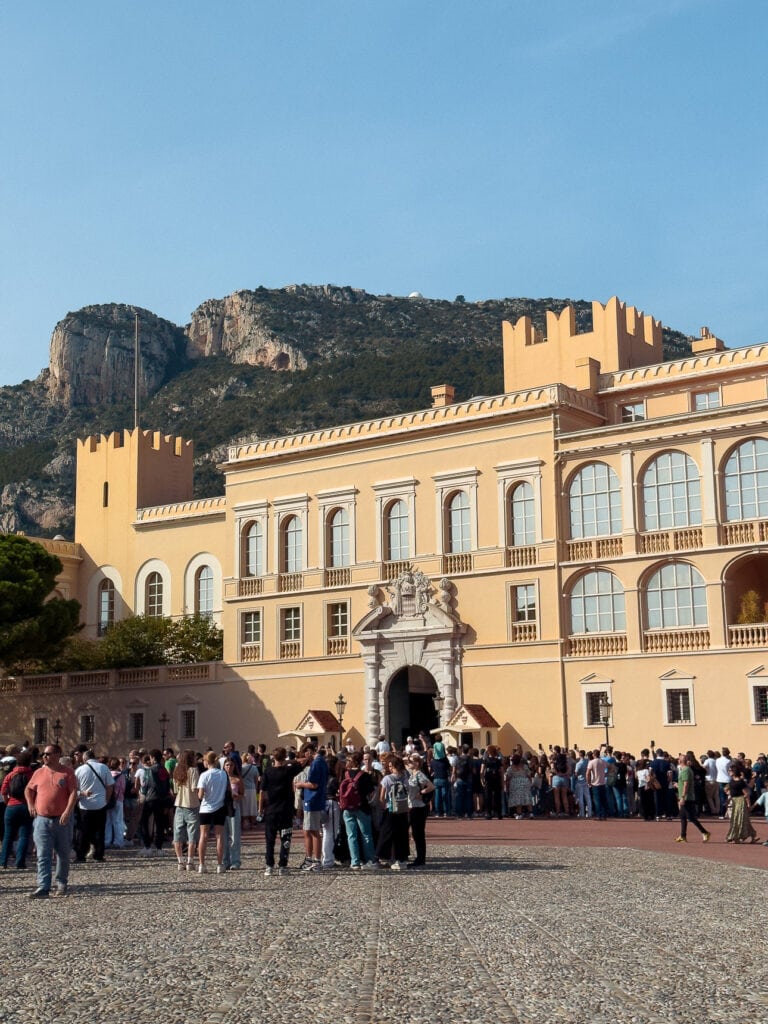
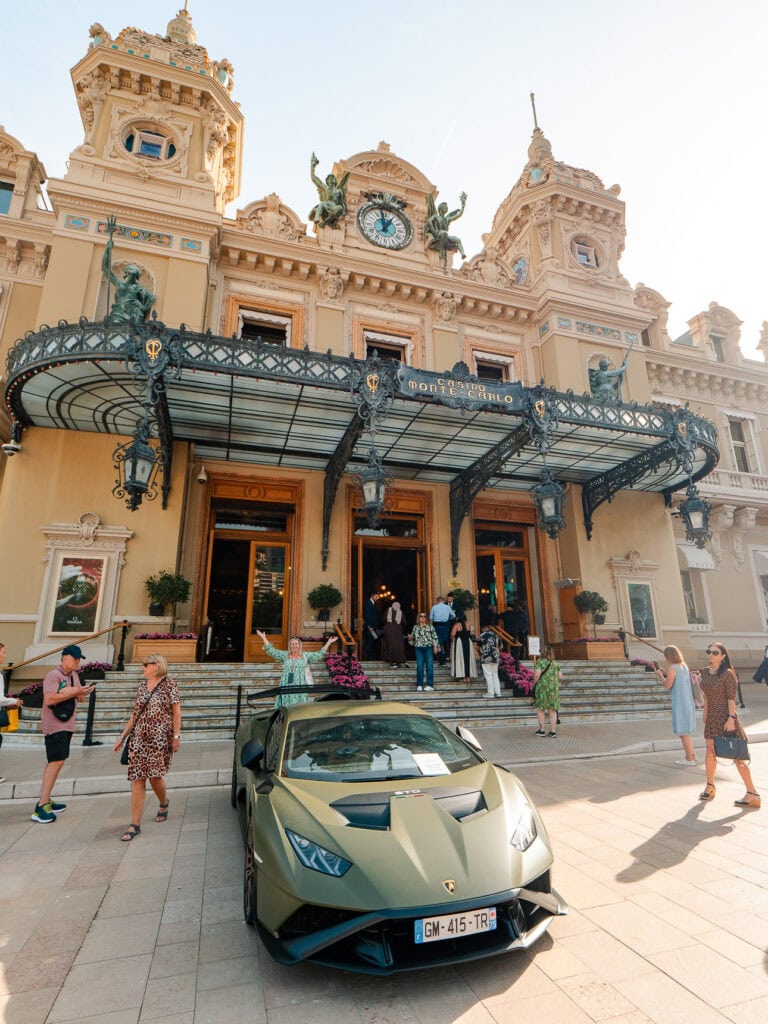
- Monaco for the changing of the guard, supercars outside the casino and what we later realised should’ve been a lunch stop (but our guide didn’t tell us this so we didn’t eat)
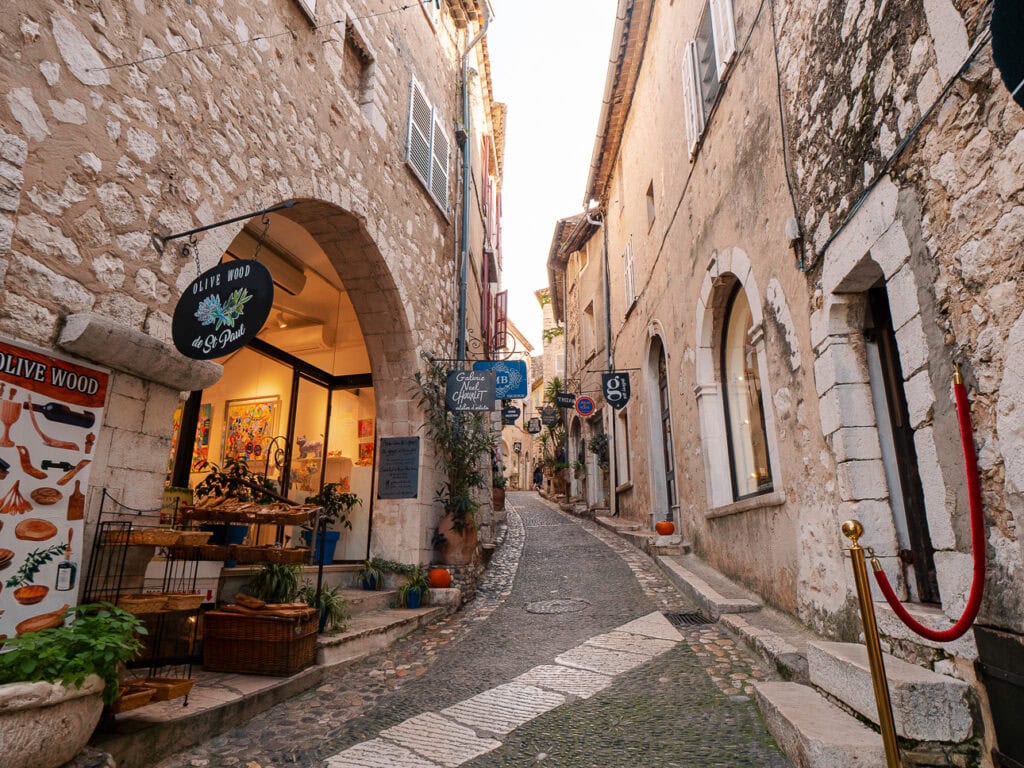
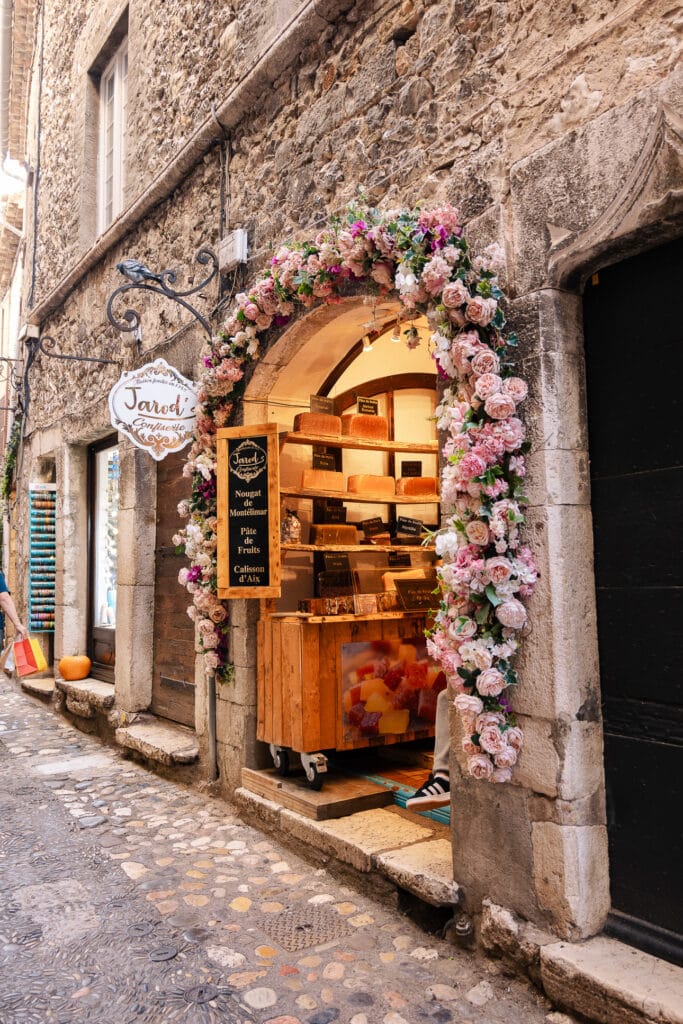
- Saint-Paul-de-Vence (the main reason I’d booked) for its cobbled lanes and art galleries, but by this point we were STARVING so we spent 75% of our time queueing for a table, waiting for food and then having to wolf it all down to get back to the meeting point
- Cannes at sunset for a quick stroll along the Croisette
- Antibes but it was dark by that stage and the ‘guide’ told us nothing about what to see or do, so we found an ice cream shop and laughed about the day’s misadventures
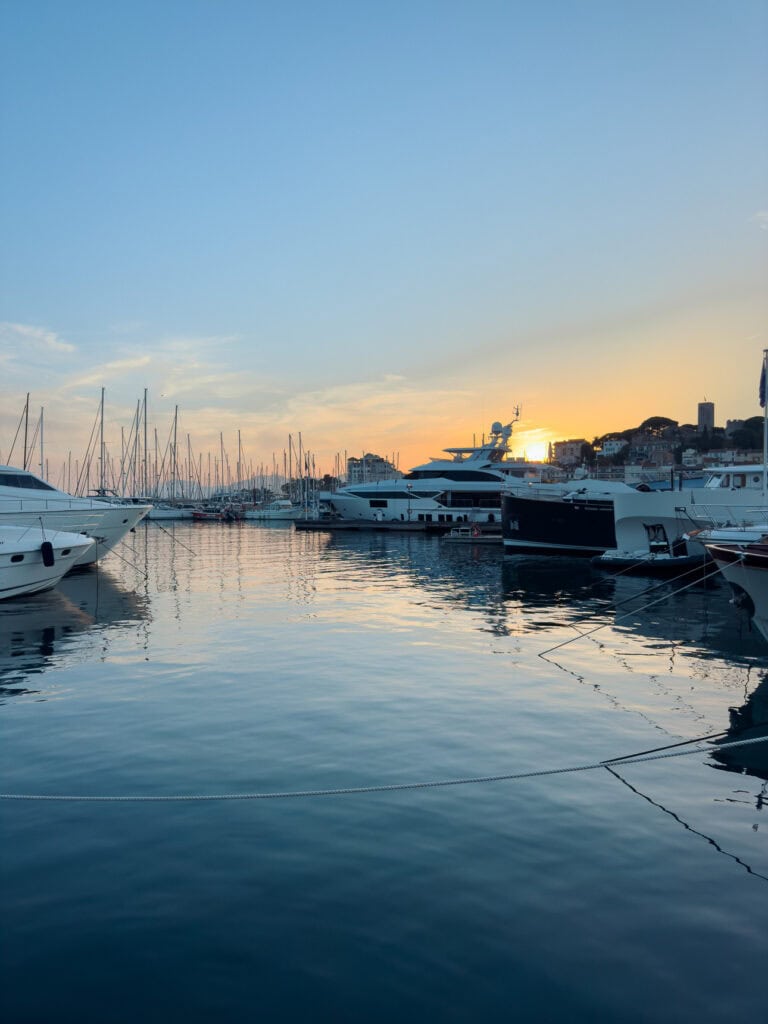
Would I recommend the tour? For most travellers who could otherwise use trains and buses to see the same spots, nope.
It was a load off my shoulders to sit back and enjoy the destinations without a single logistical decision to make, butttt at the same time it was frustrating to waste time where I didn’t want to be and we got literally no ‘guidance’ on any of the places we visited, our driver was a driver and nothing more.
The only travellers I’d point this towards are those with only a single day spare for sightseeing who want a ‘bit of column A, bit of column B’ without committing time to any one spot. If you’ve got a couple of days or more then you could easily see most of these on your own with way more flexibility, and there are better tours that cover less ground but in more depth.
Better tour options for car-free travellers
Tours on the French Riviera earn their place in your itinerary when they unlock something you couldn’t easily do on your own, whether that’s somewhere hard to reach, an experience the train doesn’t deliver, or diving into a specific interest.
These are the types of tours I’d actually recommend instead of the one I did:
- Inland tours to locations that require multi-segment journeys on public transport, like Saint-Paul-de-Vence and Tourettes-sur-Loup
- Specific-interest experiences like making your own perfume in Grasse or Côtes de Provence wine tasting, where the tour adds real expertise rather than just transport
- Beyond-the-Riviera day trips to the spectacular Verdon Gorge or the Provence lavender fields in summer
- Experiential tours like winding along the Corniche in a vintage Citroën, Topolino (the super cute Fiat 500s) your own convertible or even a Ferrari, where the journey is just as epic as the destinations
- History-focused walking tours for travellers who want proper guide-led depth on the places themselves
- Boat trips for a different perspective on the coastline
And the quickest way to tell that a tour isn’t worth it is if it includes Cannes, Antibes or Monaco for self-guided sightseeing without any specialist angle (like an expert guide, included experiences etc.). Those three are so easy to reach by train that a tour adds no real value.
Private drivers
A private driver gives you full flexibility on route and timing, which might make sense for families or bigger groups who can split the cost between multiple people.
Costs vary massively depending on how much of the Riviera you want to cover and the type of vehicle, but you can expect to pay between €150 and €500 per full day for most private drivers.
How long do you need on the French Riviera if you don’t have a car?
I’d personally recommend spending five to seven days on the French Riviera if you’re wanting to cover the major highlights without renting a car, but a shorter trip can still be loads of fun if you’re happy with busy days, and more time turns it from a ‘must-see’ itinerary to a ‘no rush’ one.
3-4 days based in Nice is enough time for a coastal taster, letting you explore Vieux Nice properly plus tick off a couple of coastal hops by train (Monaco, Èze-sur-Mer + Èze village, Menton or Antibes).
You’ll get a solid sense of the Riviera’s vibe but won’t have much breathing room for slow days or longer public transport journeys.
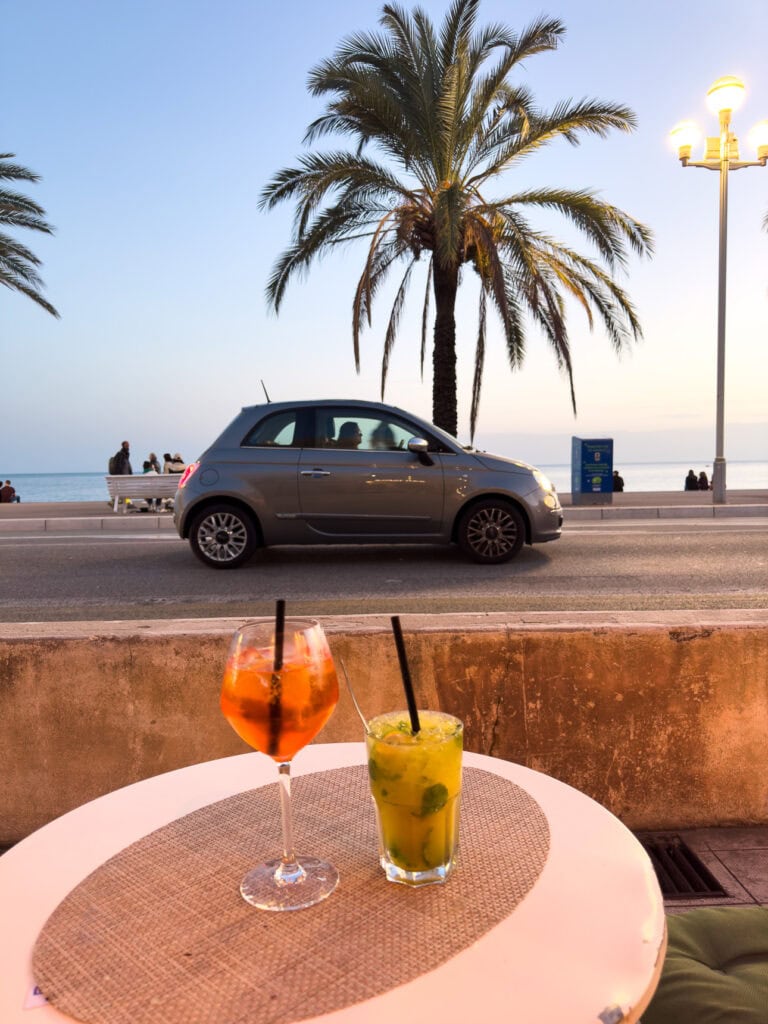
6-7 days on the French Riviera is the sweet spot for sure, I spent a week there on my last trip (mostly based in Nice but with a Menton side quest) and it was divine.
This lets you see the icons on busy day trips but without feeling too frantic, fit in an inland trip to Saint-Paul-de-Vence and/or Grasse, and still have time for a chill beach day or boat trip along the coast.
8+ days gets you past the highlights and into the bits most travellers miss.
You can split your time between two or three bases to see the popular spots before or after the day trip crowds, indulge in long lunches, dedicate full days to villages most people zip through in an hour, and tack on a day tour or two to other parts of Provence like the magnificent Verdon Gorge, or head further along the coast to Saint-Tropez.
When to visit the French Riviera
I feel like literally everywhere is better in shoulder season, but the French Riviera is truly THE ABSOLUTE BEST in shoulder season.
I’ve visited in peak summer (hard no), September (still too much) and most recently late October/early November, and the latter was by far my favourite.
But we all have different travel preferences, so here’s what to know about the various seasons before you lock in your dates.
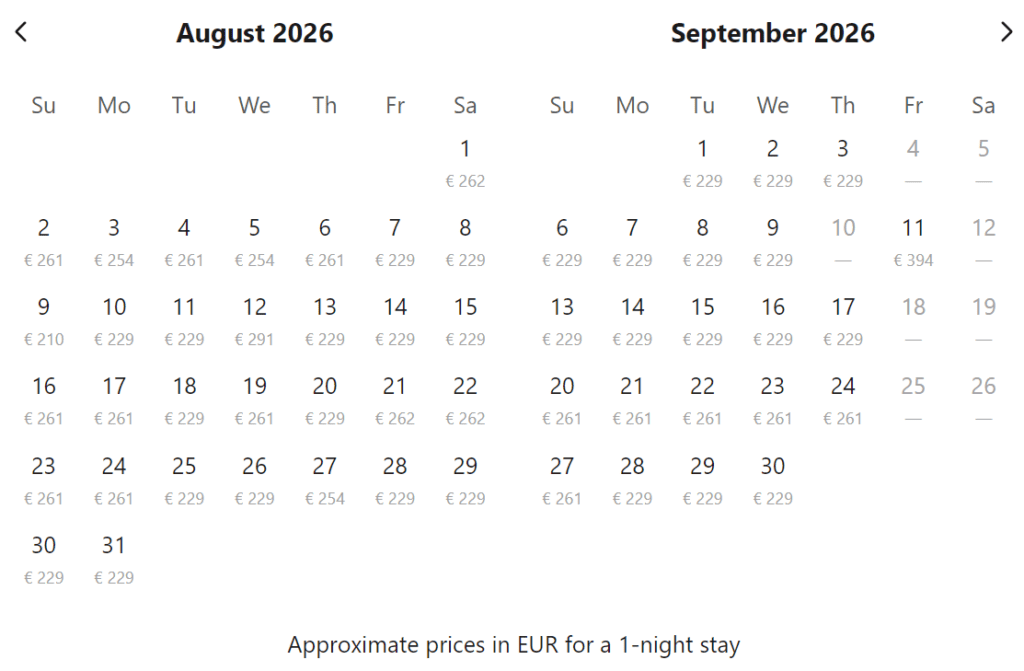
🔥 Peak summer (July/August): Absolute mayhem, sky-high prices and wayyy too many people.
Hotel rates are often double or even triple their shoulder season prices, trains are packed, traffic is insane and you’ll be fighting for a square metre of sand at any non-pebble beach, but it’s reliably sunny and late sunset means more time for sightseeing, so you win some you lose some.
If this is your only window then book everything early and be prepared for the pandemonium.
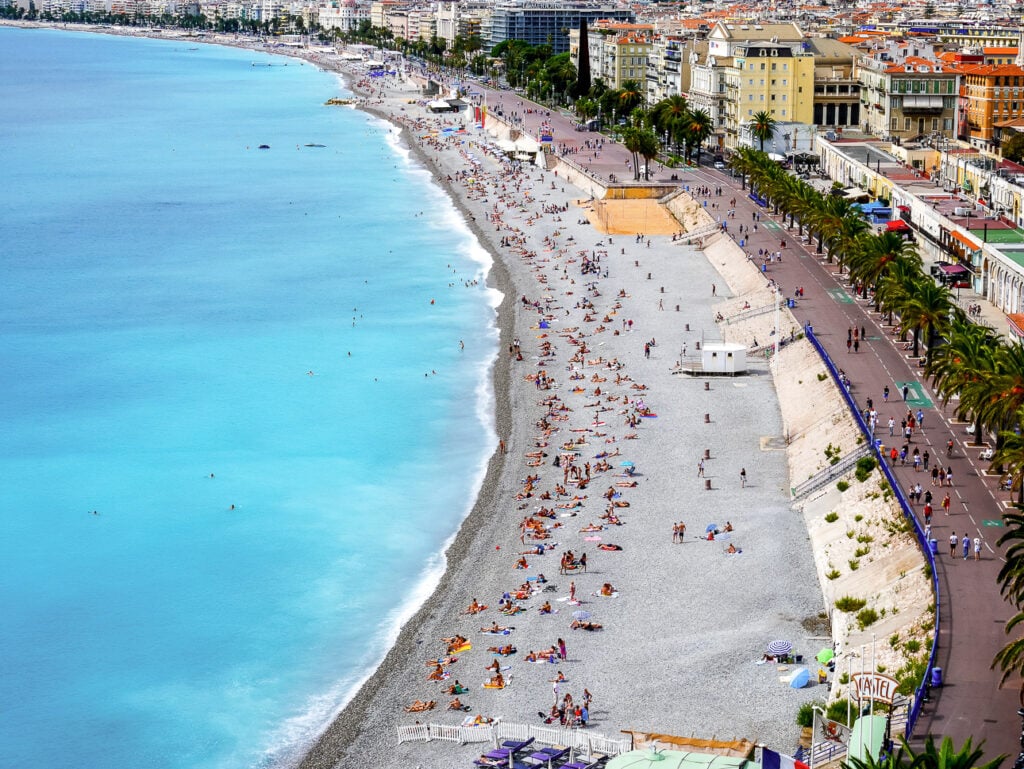
☀️ Basically summer (June/September): Like many Mediterranean destinations, the French Riviera’s typical summer season bleeds beyond the school holidays and into June and September too.
You get warm days, swimmable seas, beach clubs and ferry schedules, but with fewer families as kids are in school until the end of June and start back the first week of September.
It’s still VERY busy though and prices are on par with July/August so don’t expect to save €€€.
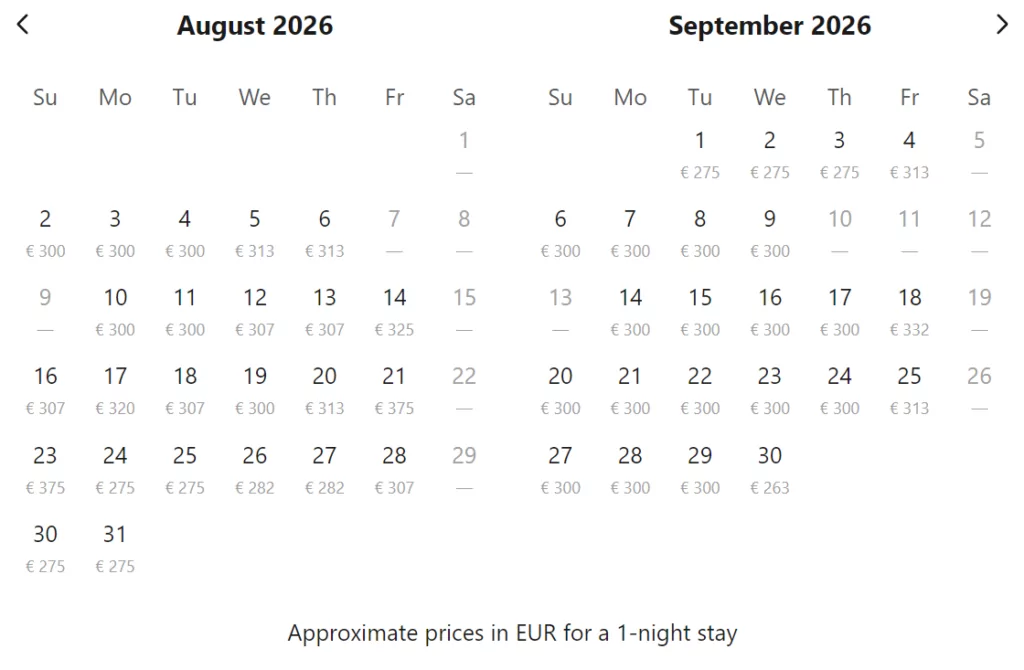
🍂 Shoulder months (October/November and April/May): My top pick for when to go!
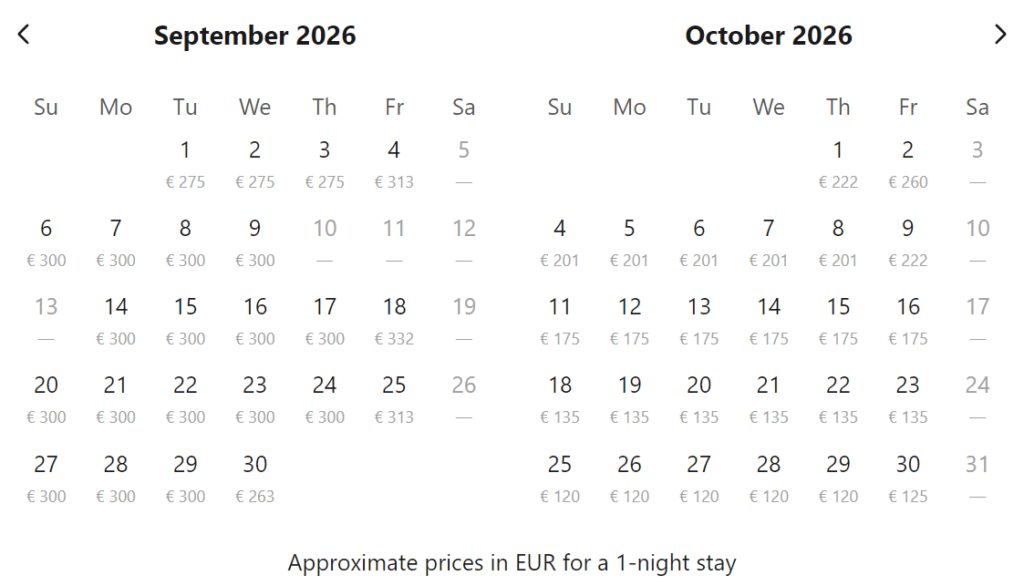
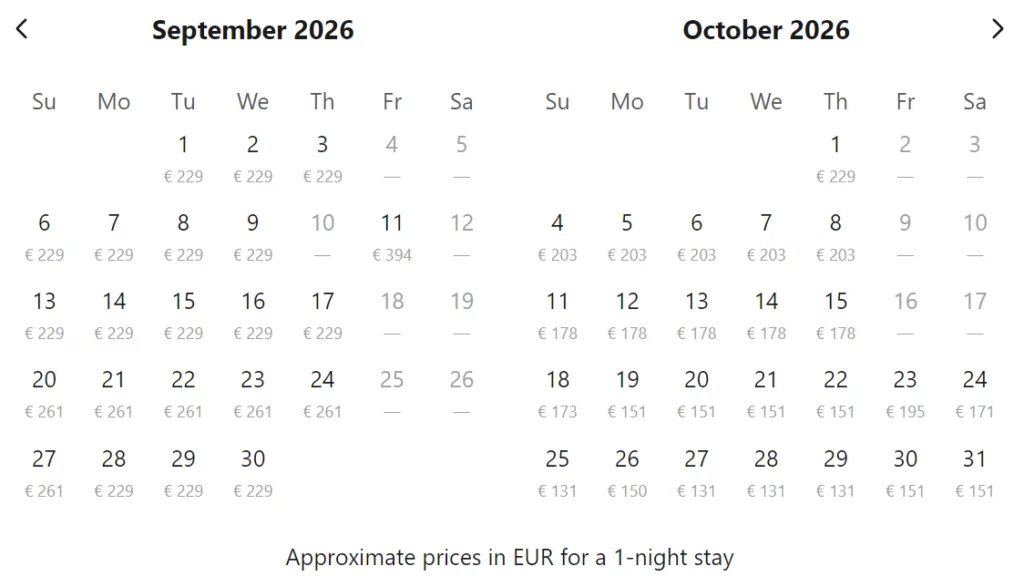
The summer swarms start to subside from late September and you’ll have a full two months of pleasant weather before it gets too cold to consider a swim, and then from April through May there’s lots of sun for village wanders and Provence side quests while waiting for the sea to warm up.
Prices drop significantly from mid-October like clockwork, so this is when to go for maximum value for money.
On my recent trip in late October Nice was still surprisingly busy and the day trip crowds in Èze and Saint-Paul-de-Vence were more intense than I expected, so if you’re hoping for empty promenades and having medieval communes to yourself you’ll have to wait until winter, but it was infinitely more manageable than the hellish summer months.
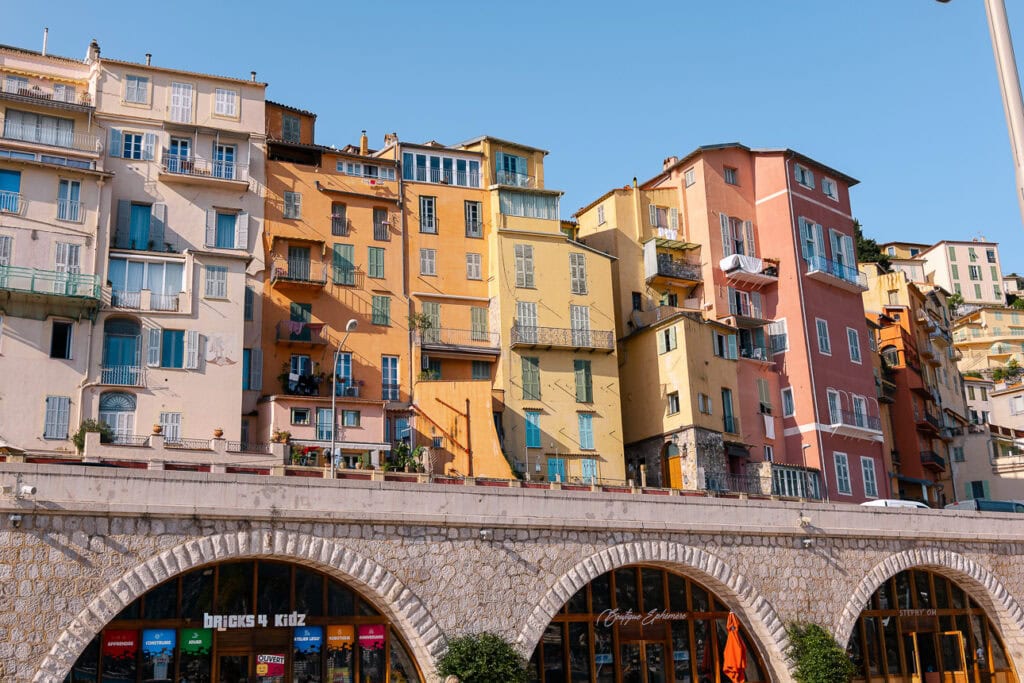
🩵 Low season/winter (November to March): This is the Riviera at its most peaceful, a good option for bargain hunters who aren’t fussed on the beach and don’t mind bringing layers.
Daytime temps are still pretty mild but it can get chilly after dark, and some tourist services run on reduced schedules or shut down shop until spring, but you’ll get the cheapest accommodation rates, tables at world-class restaurants without needing to book weeks in advance, and viewpoints all to yourself.
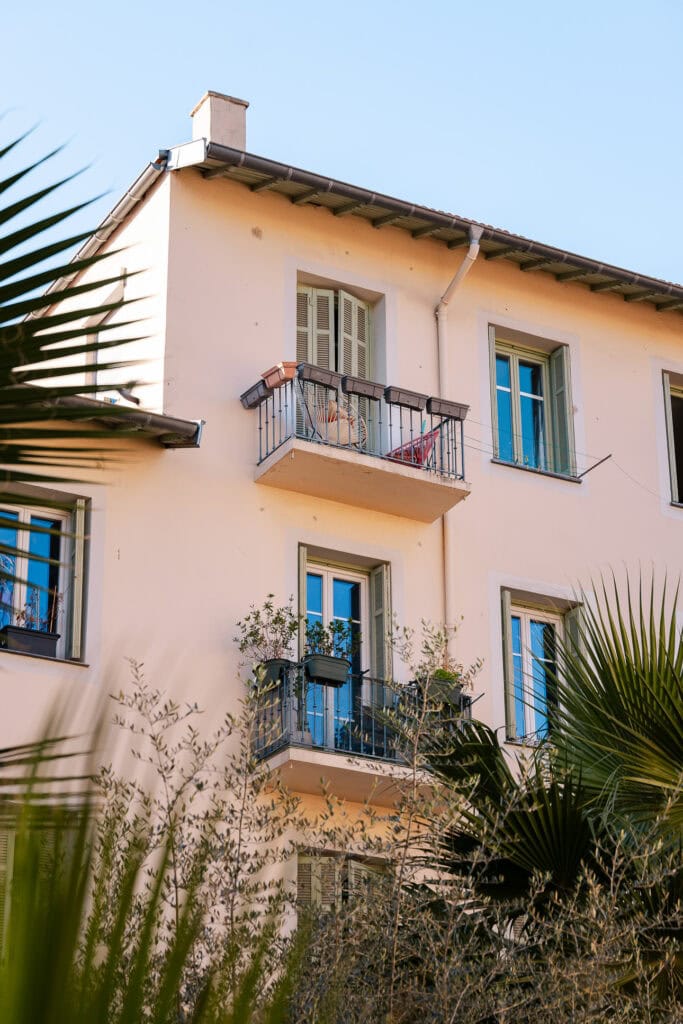
Events to plan around (or for):
- Cannes Film Festival (mid to late May): Cannes is obviously jam-packed and hotel prices can get elevated due to the influx of high rollers, but Nice and that end of the coast don’t feel any different from the rest of May.
- Monaco Grand Prix (late May or early June): If you don’t have race tickets then save Monaco for another time, crowds are wild, restaurants and bars are fully booked and road closures make it a nightmare to get around the usually-walkable city. If you DO have tickets then I’m incredibly jealous 🏎️
- Chassé-croisé (last weekend of July and first weekend of August): The mass swap of French holidaymakers between July and August, when traffic gets so bad that they gave it its own name. Trains and airports are chaos too.
- Carnaval de Nice (mid-Feb to early March): One of Europe’s biggest carnival festivals and a brilliant reason to brave winter on the Riviera.
- Fête du Citron (a.k.a. Menton Lemon Festival, mid-Feb to early March): A quirky citrus celebration with parades, lemon-themed food vendors and market stalls, and giant sculptures made entirely of fruit. If this is a-peeling (😏) then tie it into a Nice Carnival trip.
French public holidays to know about
France has 11 public holidays each year and they can throw your carefully-crafted itinerary into disarray if you aren’t aware of them. And I’m speaking from experience 🙃
I made the rookie mistake of planning my one-day Lyon food crawl for 1 November and was devastated to realise on the day that none of my pinned eateries were open.
Then I ended up on the Riviera at the exact same time of the year two years later and only clocked it when I was standing outside the fromagerie I’d walked 45 minutes to reach, aaaand it was closed 🫠
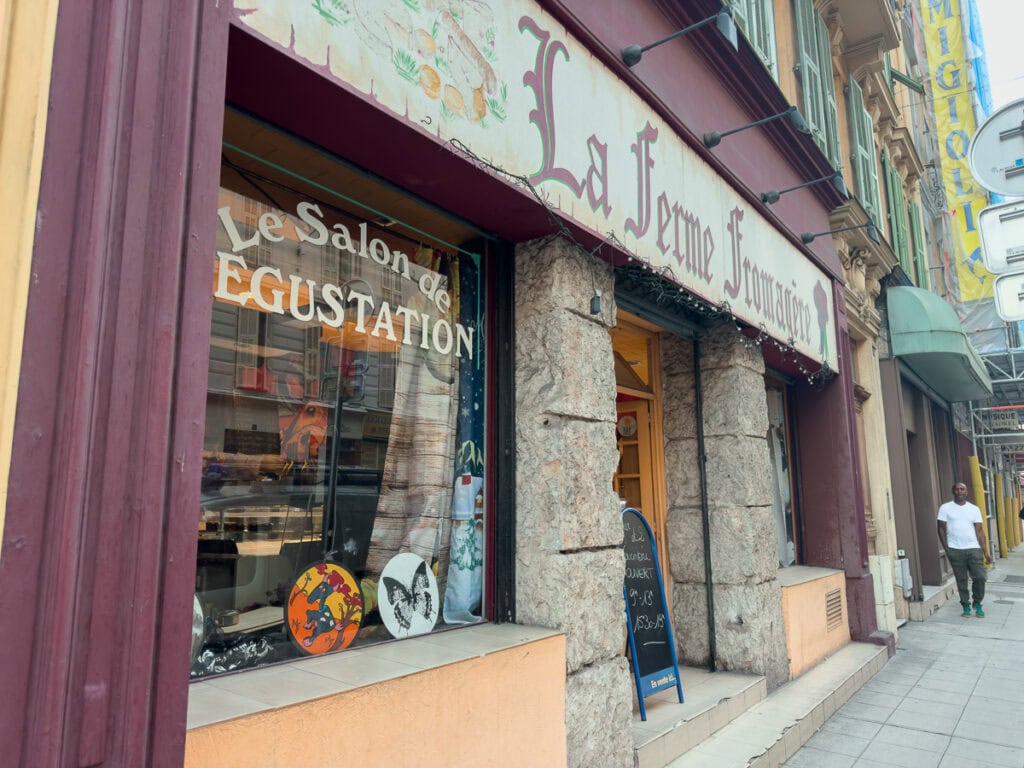
Touristy places and major attractions on the French Riviera tend to stay open on public holidays and just run to reduced hours, but suburban restaurants and shops might be closed for the day.
Most public transport also drops to a Sunday schedule (bigger deal for buses than trains) and high-speed trains to or from Nice are more likely to experience higher demand before or after a public holiday weekend, so book early because the TGV dynamic pricing can be brutal.
These are the dates to be aware of:
- Easter weekend in March/April
- Labour Day (1 May) is the strictest shutdown of the year, very limited public transport along the whole coast, even the trams in Nice don’t run! Most shops close but you’ll find restaurants and bars open and buzzing, though getting a table can be tricky.
- Victory Day (8 May)
- Ascension Thursday (40 days after Easter, usually mid-May)
- Whit Monday (usually late May or early June)
- Bastille Day/La Fête Nationale (14 July) is a major celebration throughout most of France, but a horrific terrorist attack on the Promenade des Anglais after the fireworks in 2016 has turned it into a deeply sombre day in Nice, much more about honouring the 86 people who died and hundreds who were injured rather than the usual festive atmosphere you’ll find elsewhere. If you’re going to be in Nice on this day then please be aware that many locals will be remembering the worst thing they’ve ever experienced, so just manage your expectations and of course be respectful. 2026 marks the 10-year anniversary too so there might be special commemorative events on, check local news a couple of days ahead for details.
- Other towns along the Riviera still have parades, fireworks displays and concerts for La Fête Nationale
- Assumption Day (15 August)
- All Saints’ Day (1 November)
- Armistice Day (11 November)
- Christmas Day (25 December)
- New Year’s Day (1 January)
Best places to visit on the French Riviera without a car
Nice
Nice is the capital of the Côte d’Azur and the obvious choice as a base for your car-free trip. It’s got the best transport connections of any city on the coast, the widest range of accommodation, and more than enough to keep you busy for days before you even venture further afield.
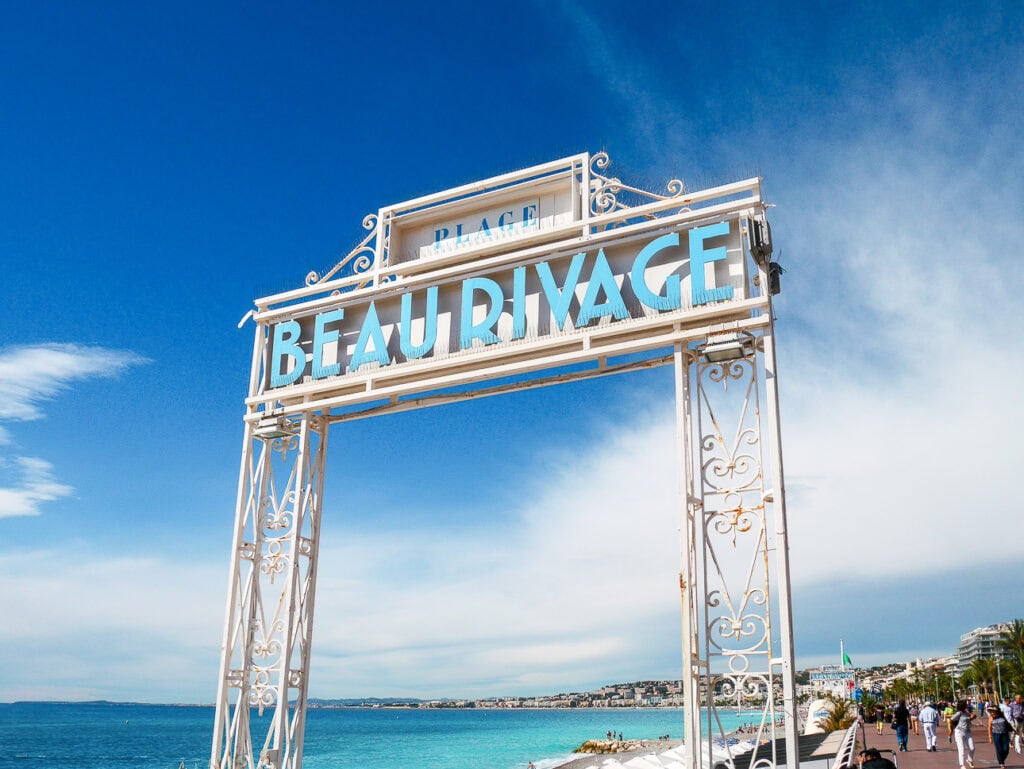
Things to do in Nice
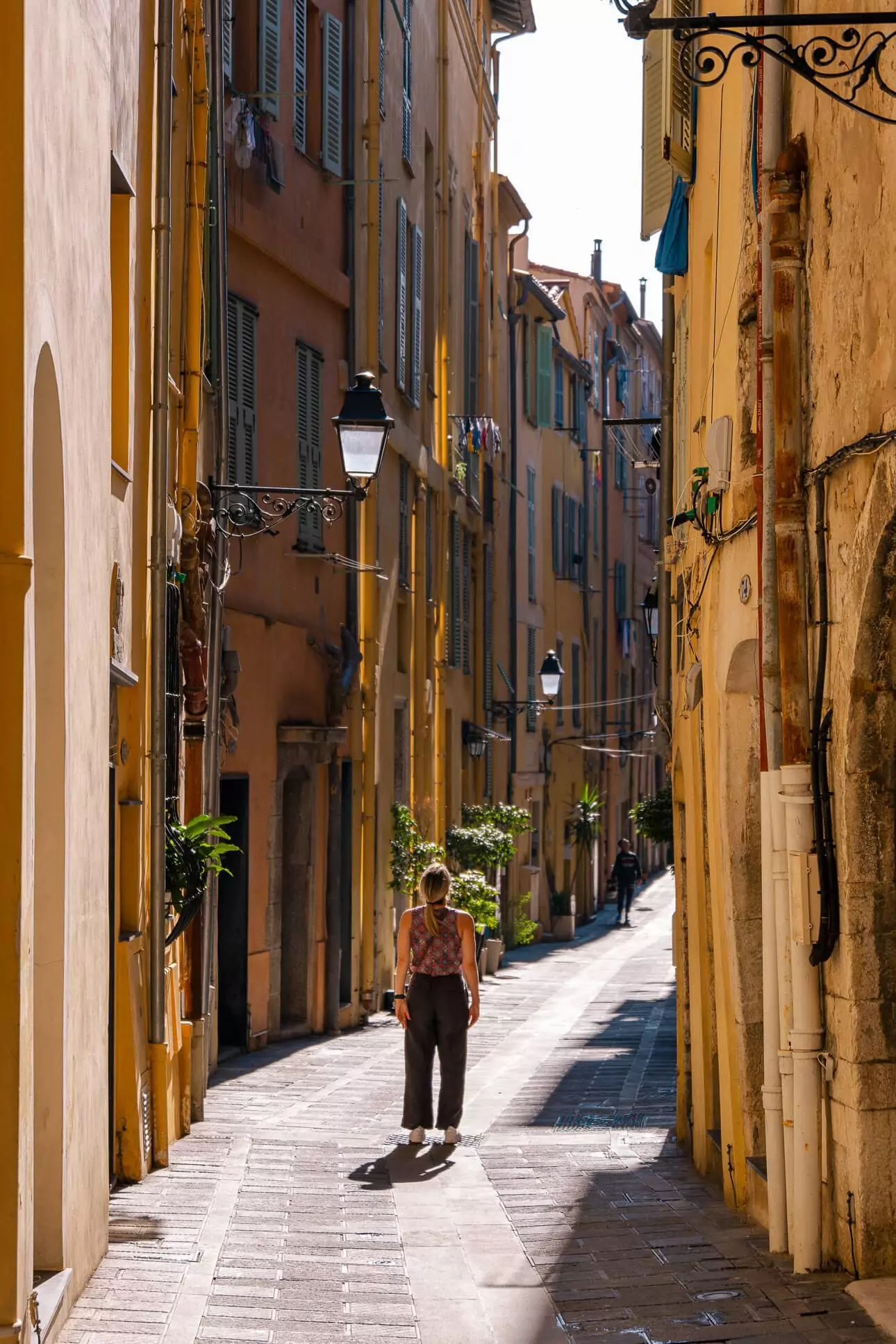
- Wander Vieux Nice, the colourful old town with a labyrinth of narrow alleyways, Baroque churches and bistro-lined squares
- Tuck into some Niçoise specialties with this top-rated food tour
- Walk the Promenade des Anglais, ideally at golden hour when the Belle Époque facades catch the light
- Climb (or take the free lift up to) Colline du Château for the best free view in the city
- Visit Musée National Marc Chagall and Musée Masséna (Musée Matisse doesn’t have great reviews, and the Musée d’Art Moderne et d’Art Contemporain is closed for renovations until 2028)
- Pop into Cathédrale Saint-Nicolas, an onion-domed Russian Orthodox cathedral that feels a little out of place on the Mediterranean coast!
- Spruce up your hotel room with some fresh blooms from Cours Saleya flower market (Tuesday to Sunday) or stop in on Monday to rifle through antiques for a vintage souvenir
- Find a very padded towel and get comfy on the beach, which is easier said than done since it’s entirely pebbles!
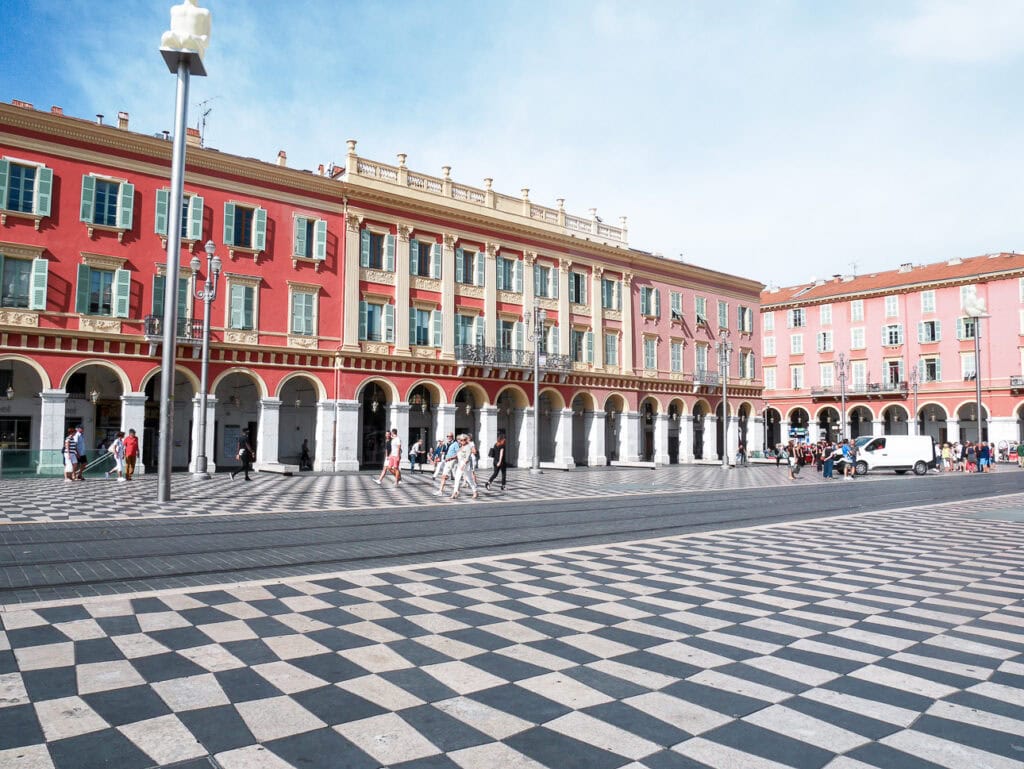
Where to stay in Nice
Budget
- SLO Hostel Nice (best-rated hostel in the city, 8.7/10 on booking.com from 1100+ reviews)
- Hostel Ozz Nice (classic backpacker hostel 200m from the train station, 8.1/10 on booking.com from 5500+ reviews)
- La Maïoun Guesthouse (down-to-earth guesthouse just down the road from Masséna, 9.4/10 on booking.com from 900+ reviews)
In-between
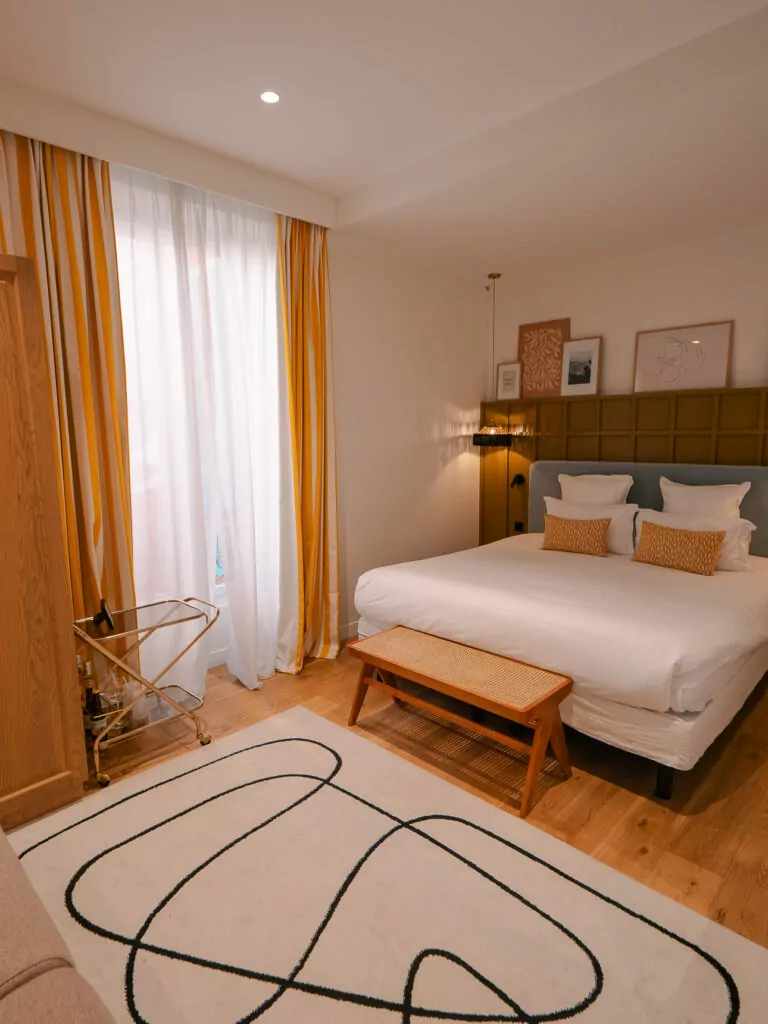
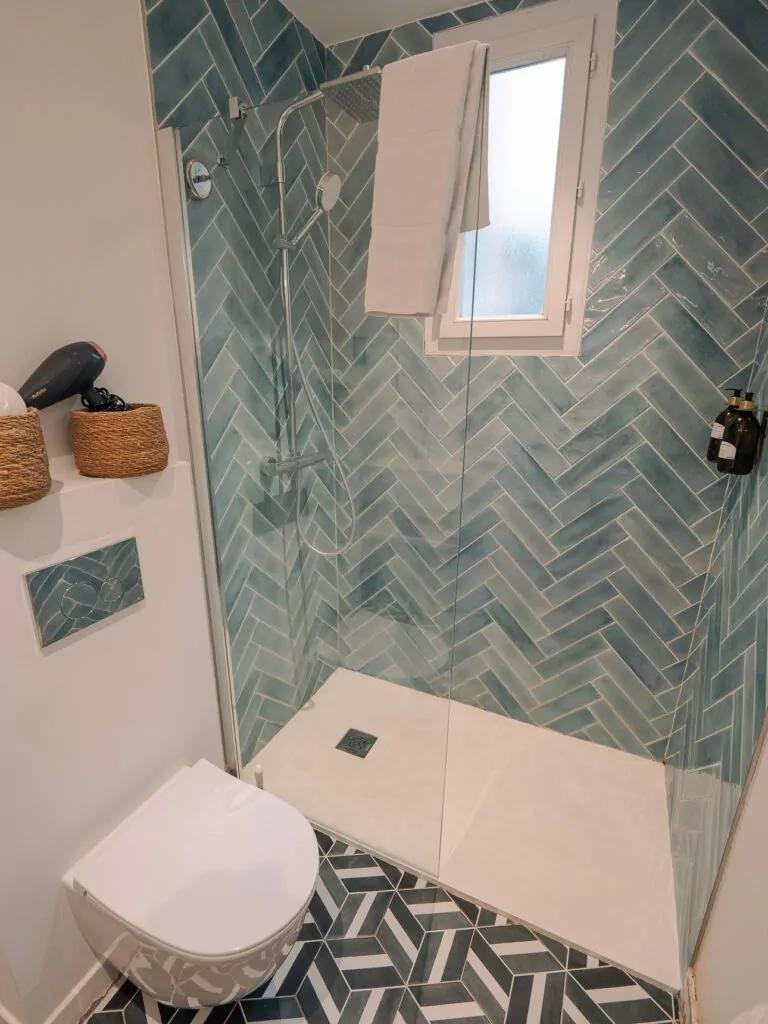
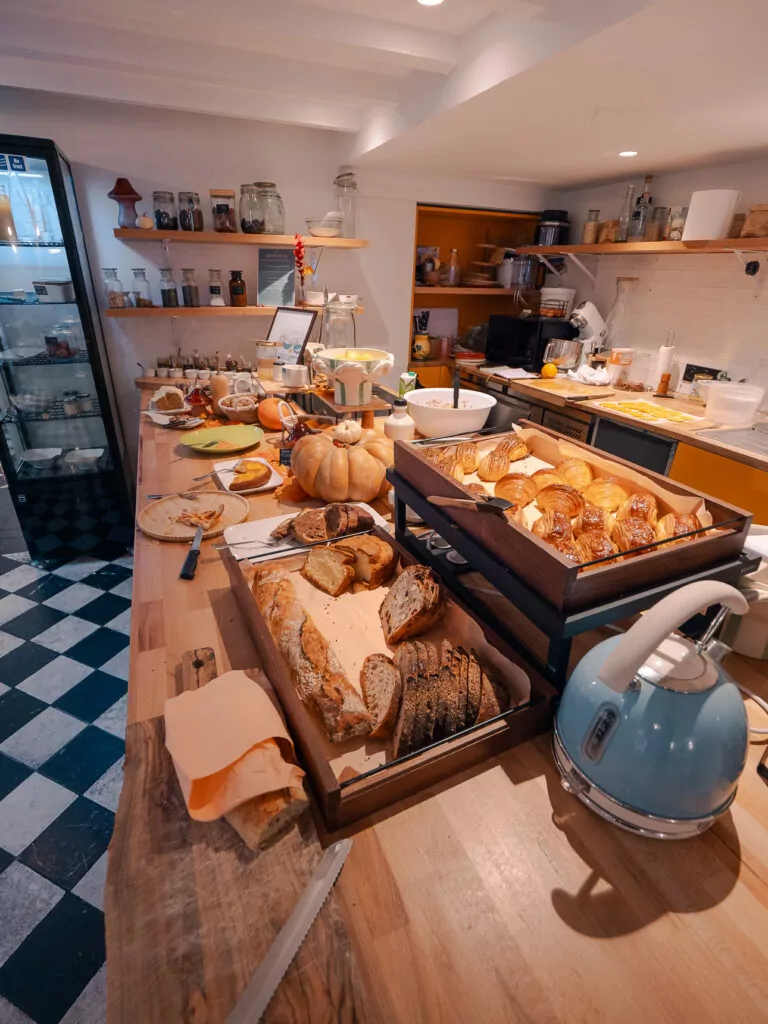
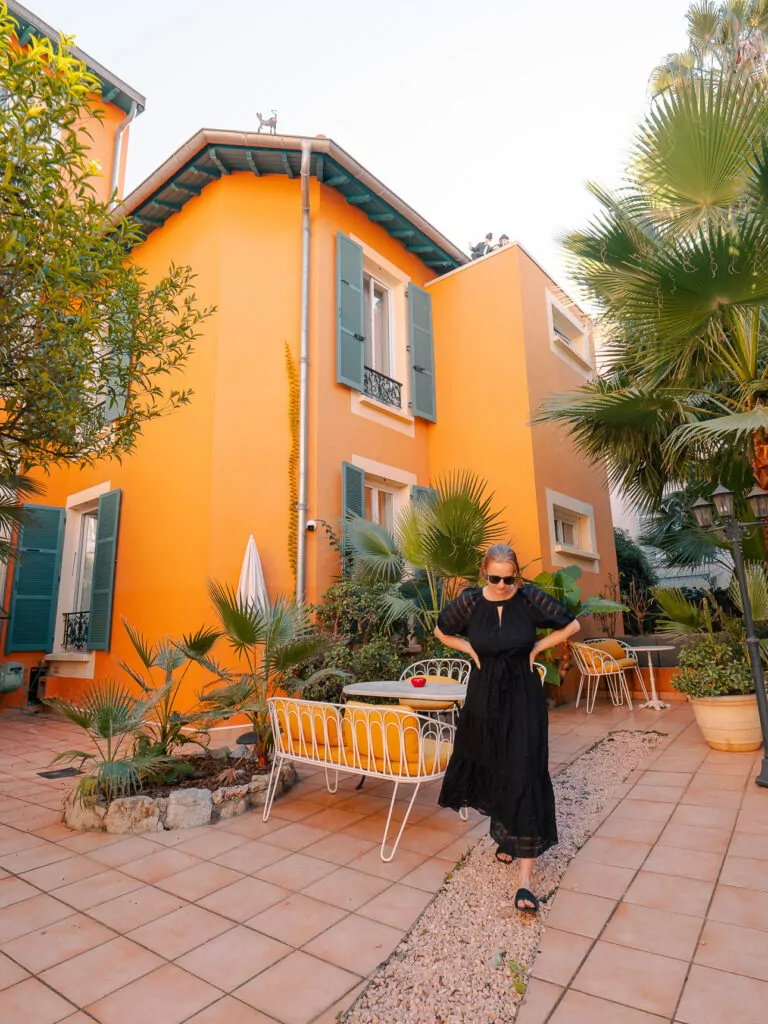
- Maison Durante is my top pick for a car-free trip, it’s a beautiful design-led boutique hotel just a block away from Nice Ville train station. Breakfast was genuinely the best I’ve ever had at a small hotel, freshly squeezed orange juice, cinnamon buns straight out of the oven, and jams, cheeses and breads from local suppliers. SO GOOD. (8.8/10 on booking.com from 1500+ reviews)
- Maison Lamartine (relaxed mid-budget option five minutes from the station, 9.1/10 on booking.com from 900+ reviews)
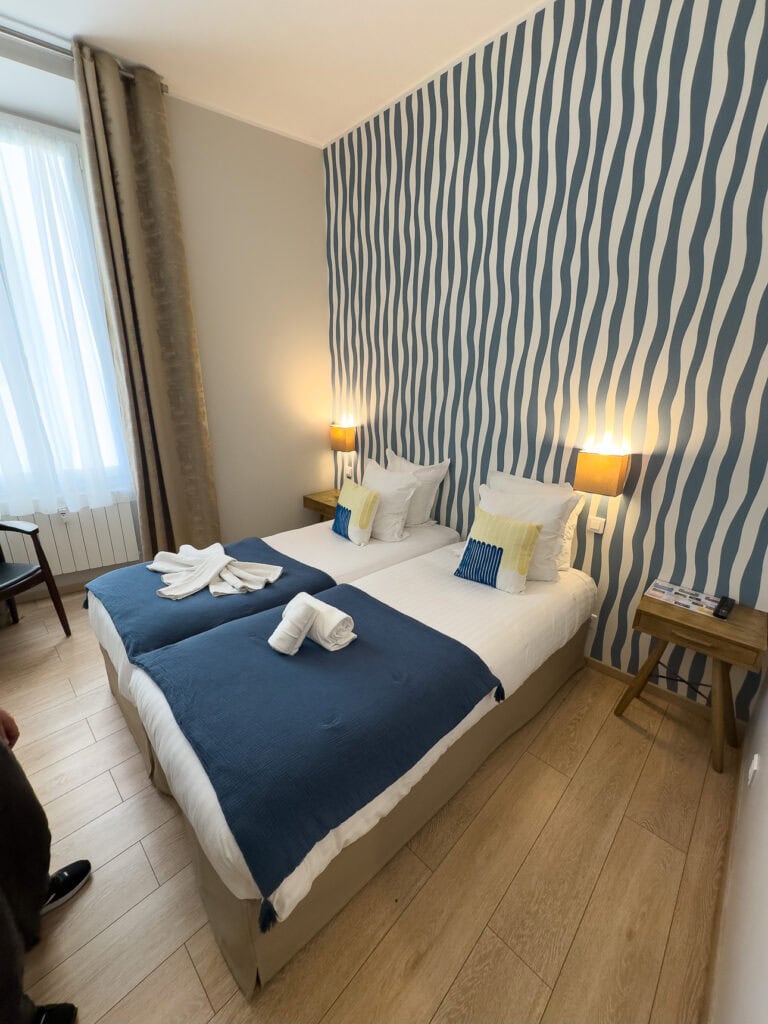
- If you want to save money by self-catering then Aparthotel AMMI Nice Massena is my recommendation, simple apartments but very functional and in the heart of the city. (8.9/10 on booking.com from 2500+ reviews)
Luxury
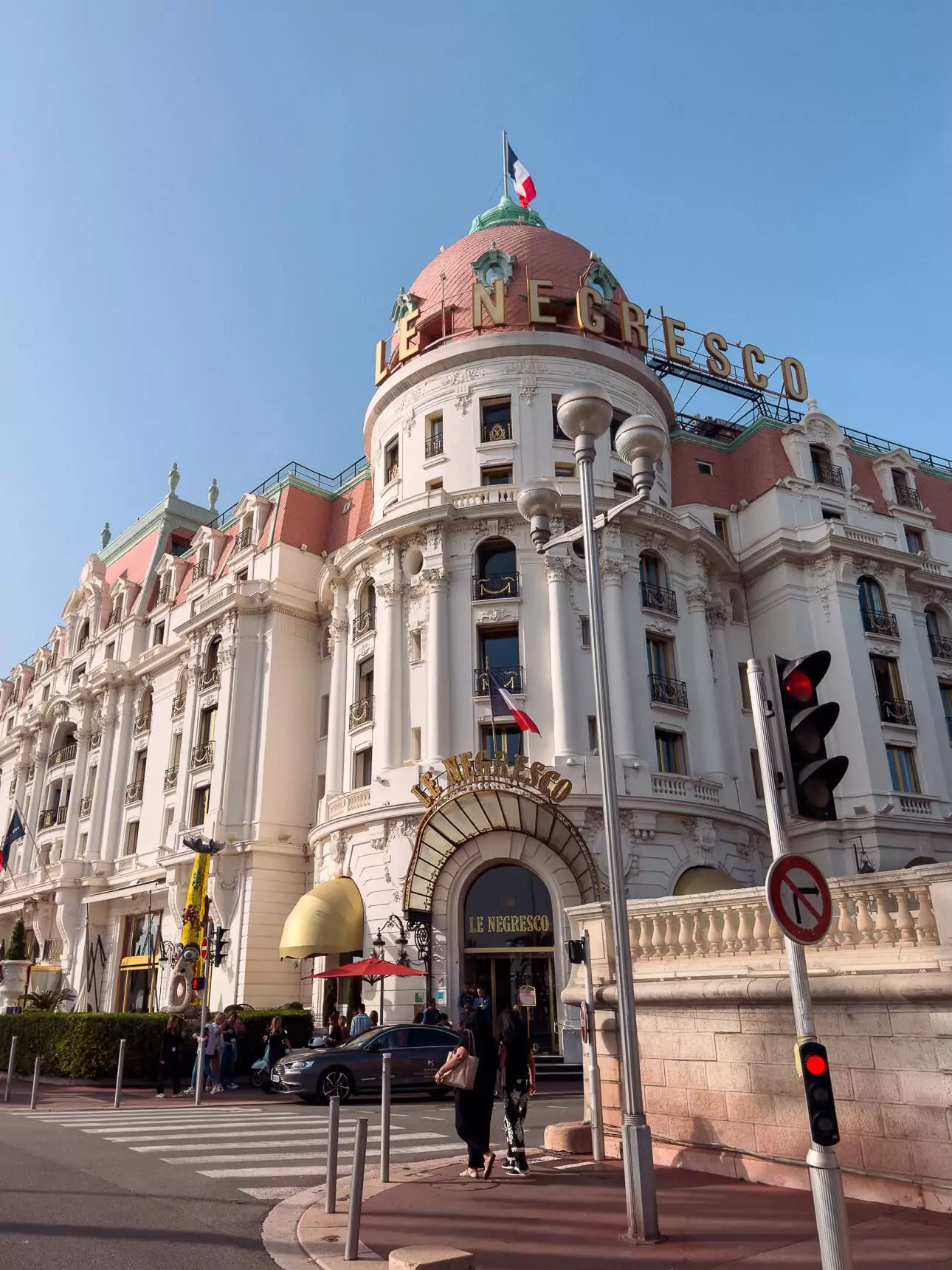
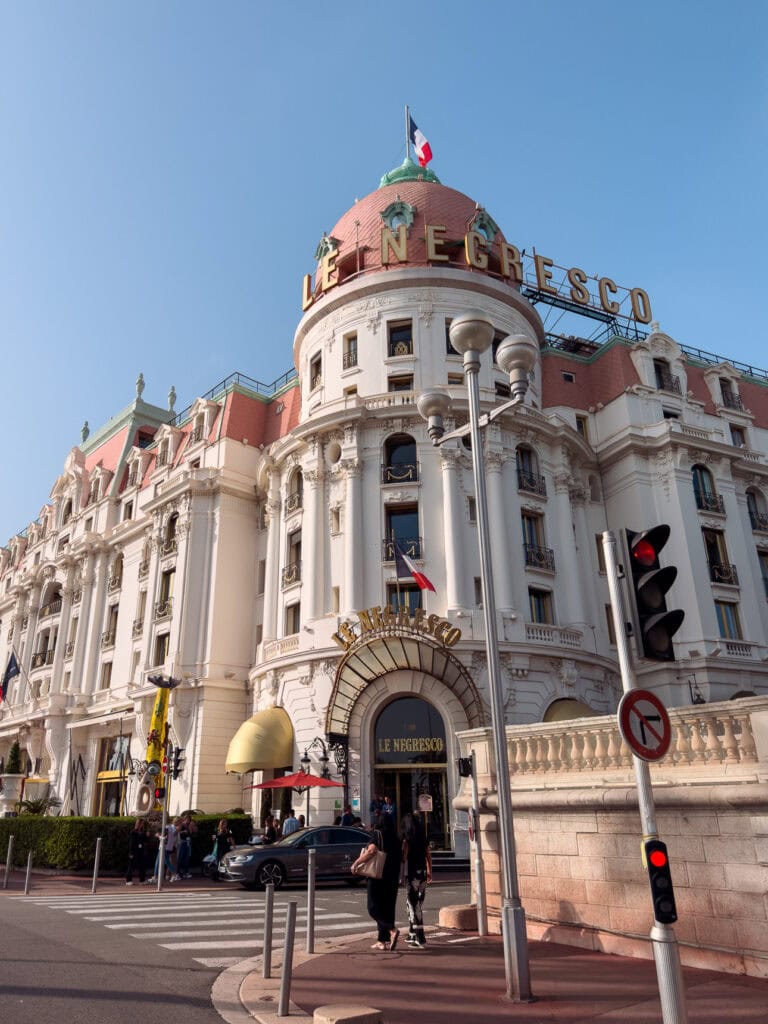
- Hotel Le Negresco (the most iconic 5* hotel on the entire Riviera, one for the bucket list! 9.3/10 on booking.com from 1400+ reviews)
- Anantara Plaza Nice Hotel (5* Belle Époque palace just steps from Place Masséna, 8.7/10 on booking.com from 1000+ reviews)
- Maison Albar – Le Victoria (brand new 5* hotel with a rooftop infinity pool, 9.2/10 on booking.com from 500+ reviews)
Villefranche-sur-Mer
How to get here: Direct TER train, 8 minutes from Nice-Ville
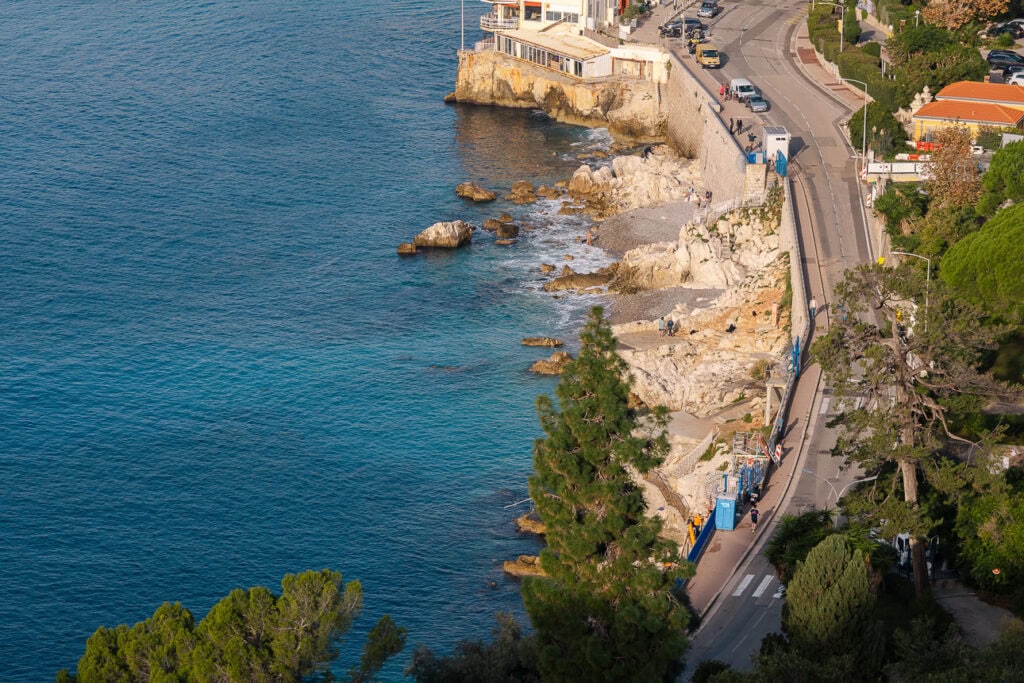
This is the bay you’ll spot the most on French Riviera postcards, with peach and ochre houses flanking a sheltered harbour and sandy beaches. The coastal line winds right along the waterfront, but disembarking for a quick dip is a must on a hot day.
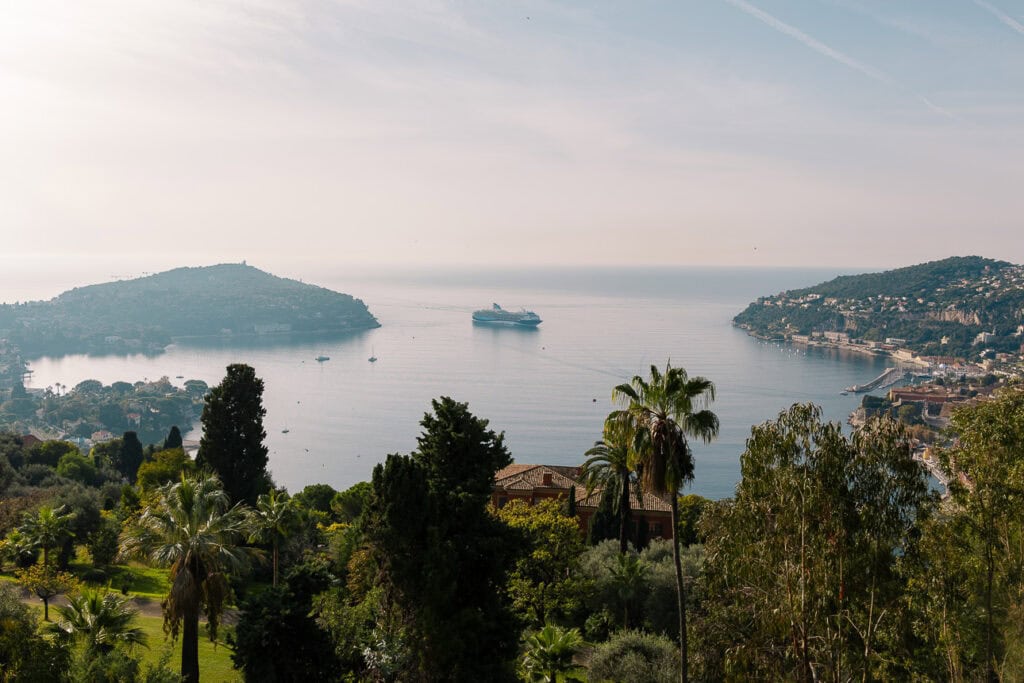
Things to do in Villefranche-sur-Mer
- Get lost in the old town’s multi-hued stairways
- Ditch the train altogether and join an e-bike tour to Villefranche-sur-Mer
- Or if you’d prefer to see if from the water, catch a sightseeing cruise from Nice or make a day of it with a perfectly-rated Mala Caves and Villefranche boat tour
- Duck into Rue Obscure, a creepy 13th-century covered passageway tucked beneath the village houses
- Grab a clementine sorbet from Glacier Feracci and stroll the waterfront promenade
- Step into the tiny harbourside Chapelle Saint-Pierre to see Jean Cocteau’s eclectic murals of saints and fishermen
- Climb up to the 16th-century Citadelle Saint-Elme for the gardens, ramparts and bay views
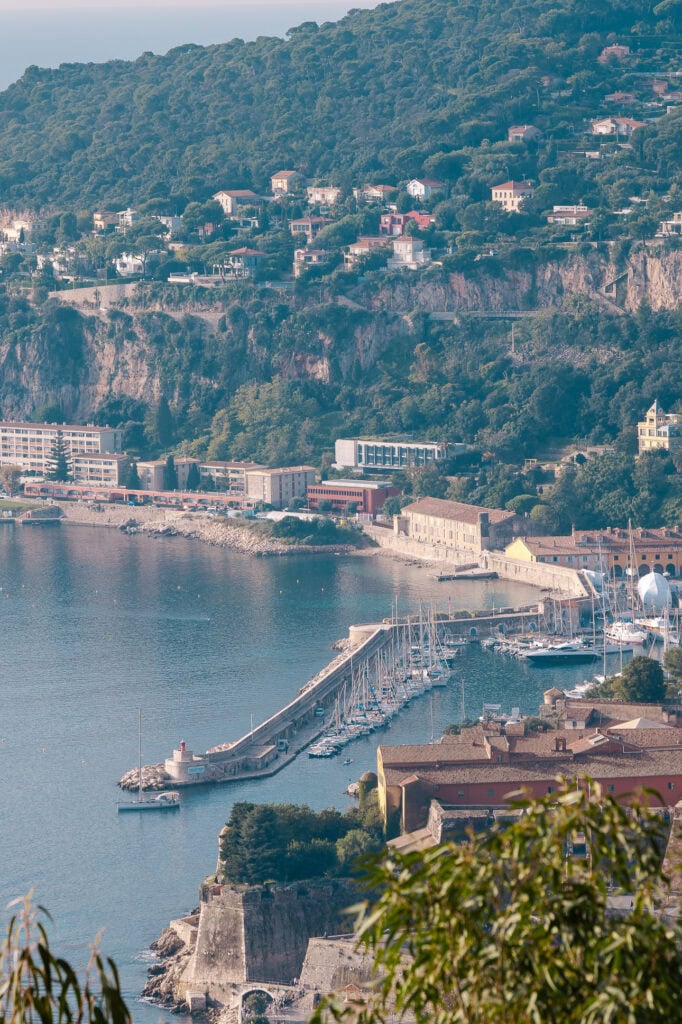
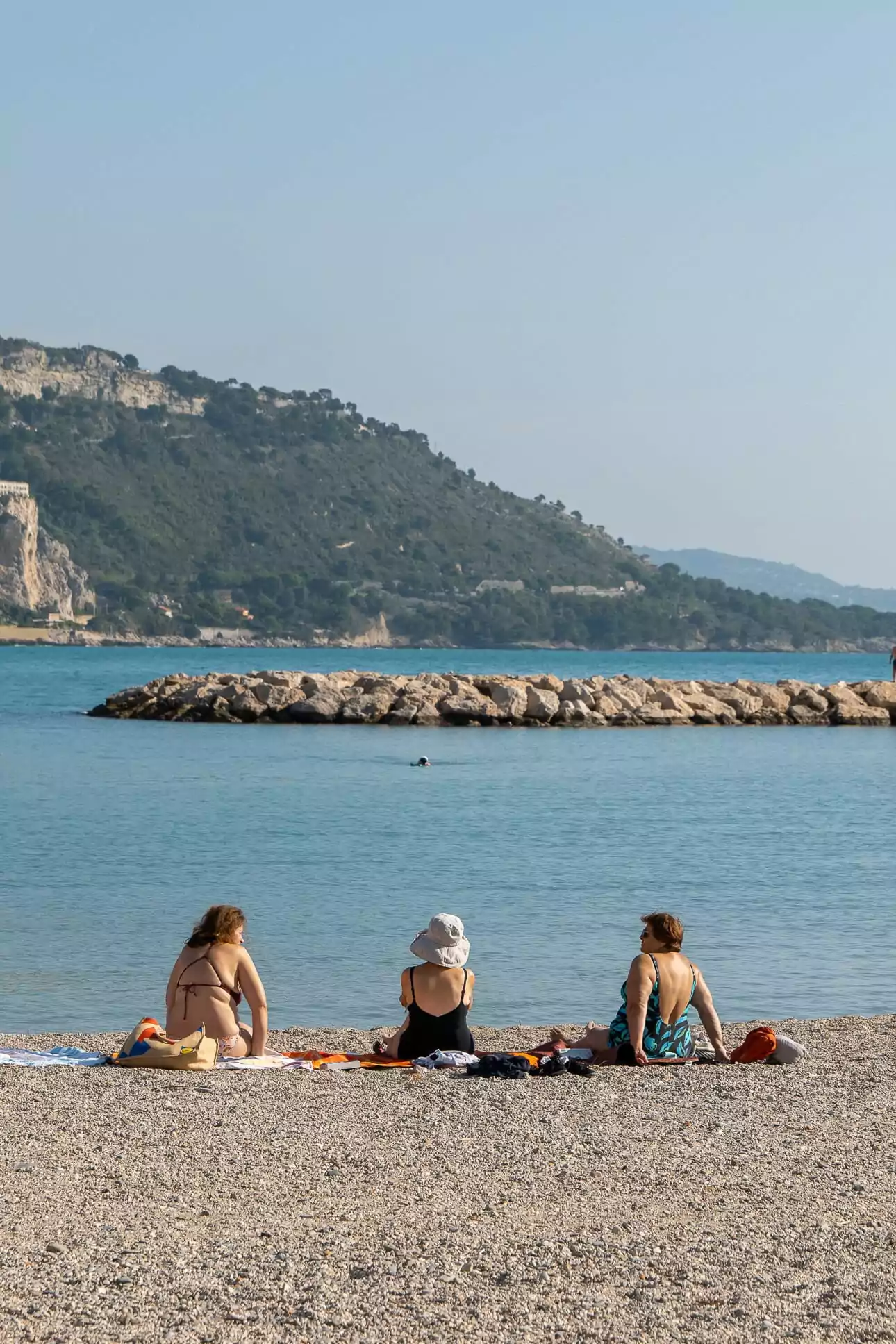
- Spread out on Plage des Marinières, the long beach right by the train station with a sandy seabed that’s a welcome change from Nice’s pebbles
- Find a panoramic viewpoint to snap the classic shot of the bay. The most spectacular ones are along Belvédère de Villefranche-sur-Mer which is up on the Corniche (best reached by an Uber or as part of a guided tour) or you can walk from the train station up to Boulevard Napoléon III for this one which is an easy no-car-needed option.
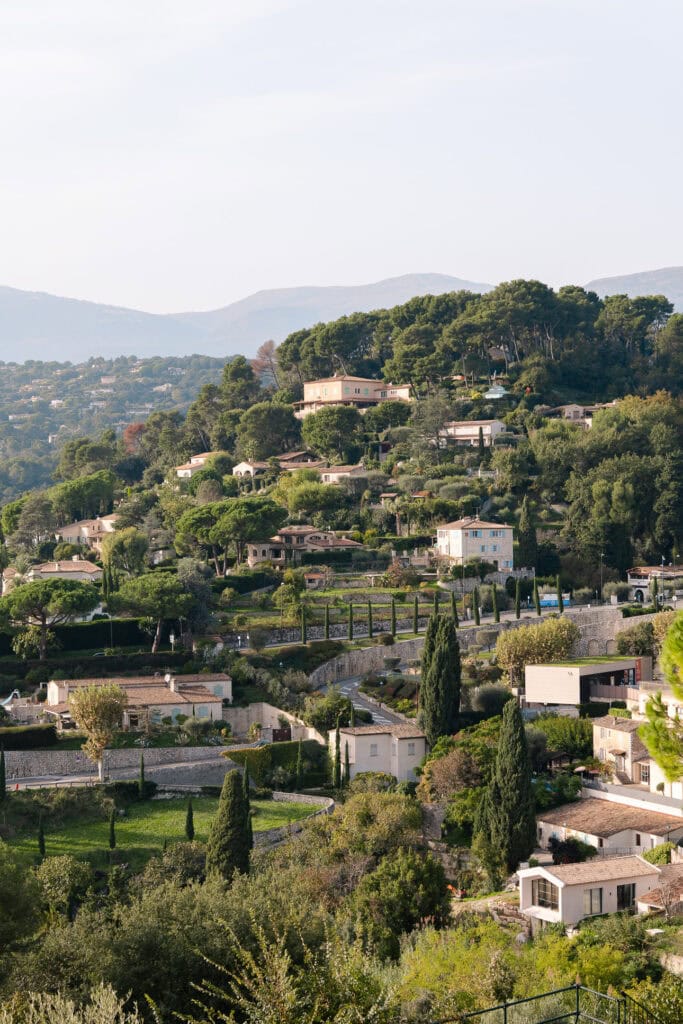
- Visit the stunning Villa Ephrussi de Rothschild on Cap Ferrat for its manicured gardens and rose-pink Belle Époque mansion, the best way to get here is to catch the TER one more stop to Beaulieu-sur-Mer, then it’s six minutes on bus 15 to the stop for the villa
- Cool off in the bay with a swim, snorkel or paddleboard in some of the clearest water on the Riviera
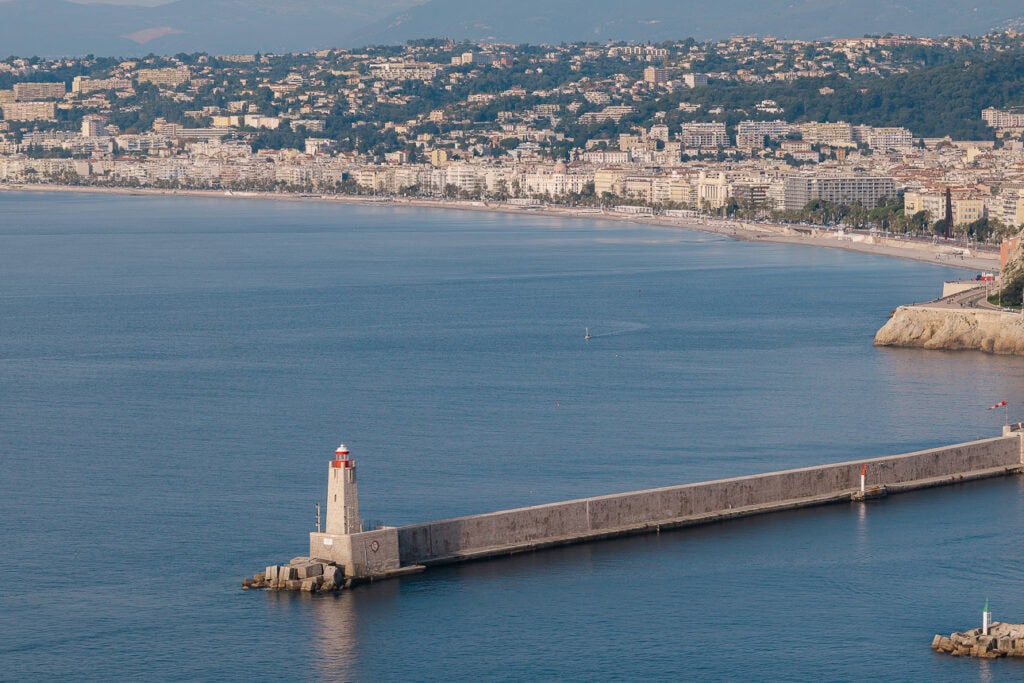
Where to stay in Villefranche-sur-Mer
A quick note: Villefranche-sur-Mer itself is quite small and accomm gets booked up fast, so I’ve included a few top-rated options in neighbouring Beaulieu-sur-Mer which is super easy to reach by train or bus.
Budget
- Hotel La Regence (traditional family-run hotel with a bus stop right outside, 8.5/10 on booking.com from 900+ reviews)
In-between
- Studio Climatisé Bohème Chic (well-equipped apartment with excellent sea views and a kitchenette, 9.3/10 on booking.com from 10+ reviews)
- Welcome Hotel (classic harbourfront hotel with balconies directly overlooking the Villefranche bay, 8.9/10 on booking.com from 400+ reviews)
- Hotel Select, Beaulieu (family hotel just five minutes from the train station, 9.2/10 on booking.com from 1100+ reviews)
- Hotel Carlton, Beaulieu (comfortable hotel with a heated pool near the train station, 9/10 on booking.com from 1100+ reviews)
Luxury
- Hotel Royal-Riviera, Saint-Jean-Cap-Ferrat (5* luxury hotel with a private beach and epic views, 9.2/10 on booking.com from 300+ reviews)
- Grand-Hôtel du Cap-Ferrat (iconic Four Seasons palace hotel with a massive heated pool, 9.5/10 on booking.com from 100+ reviews)
- La Réserve de Beaulieu (spectacular 5* hotel with a dreamy pool on the Beaulieu waterfront, 9.5/10 on booking.com from 100+ reviews)
Èze
How to get here:
- Bus 82 or bus 602 from Riquier in Nice both take you right to the bus stop up at Èze Village in 30 minutes. The 602 continues to Monaco so if you’re starting from that side it’s 23 minutes to Èze Village.
- Or catch a 15 minute TER train from Nice-Ville to Èze sur Mer (the station by the water) and switch to bus 83 which winds up to the top village in 17 minutes
- Or you could walk from Èze train station if you’re up for a bit of physical exertion!
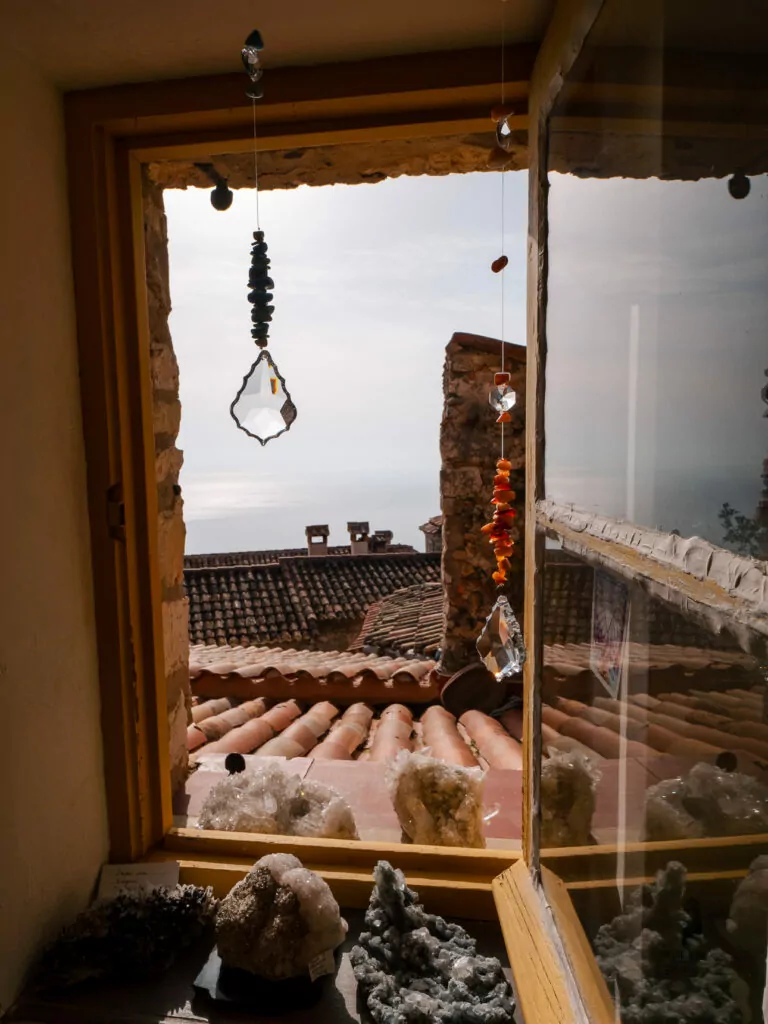
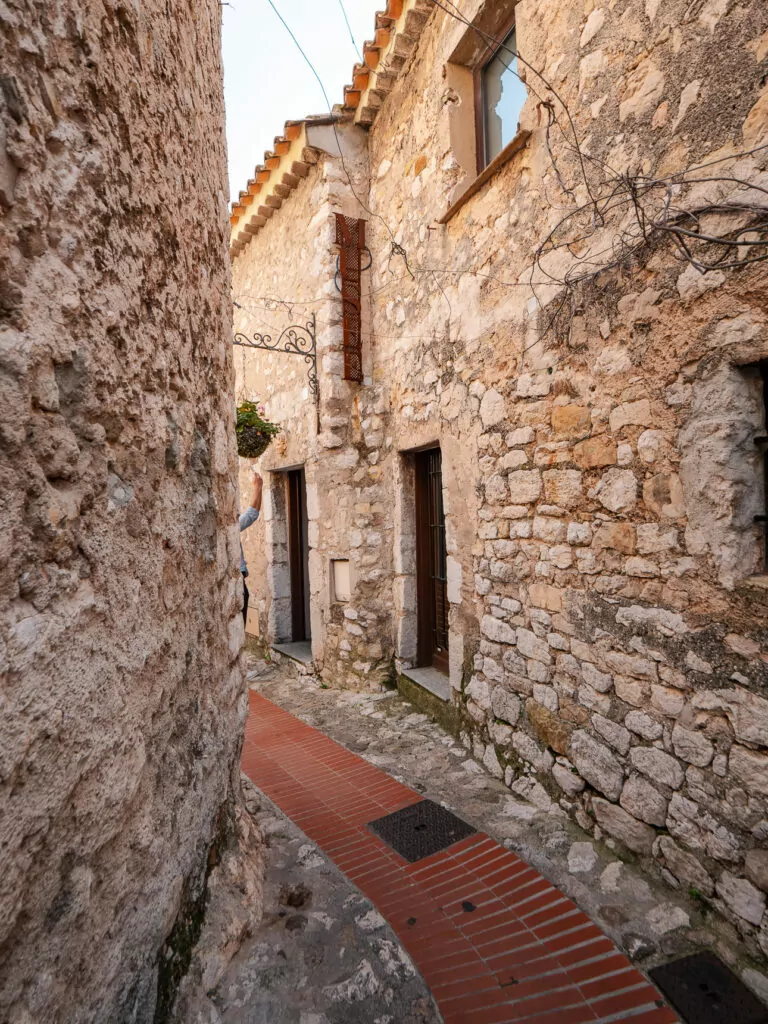
Precariously perched on a rocky outcrop high above the Mediterranean, this 12th-century stone maze is crowned by an exotic cactus garden growing out of the ruins of a fortress.
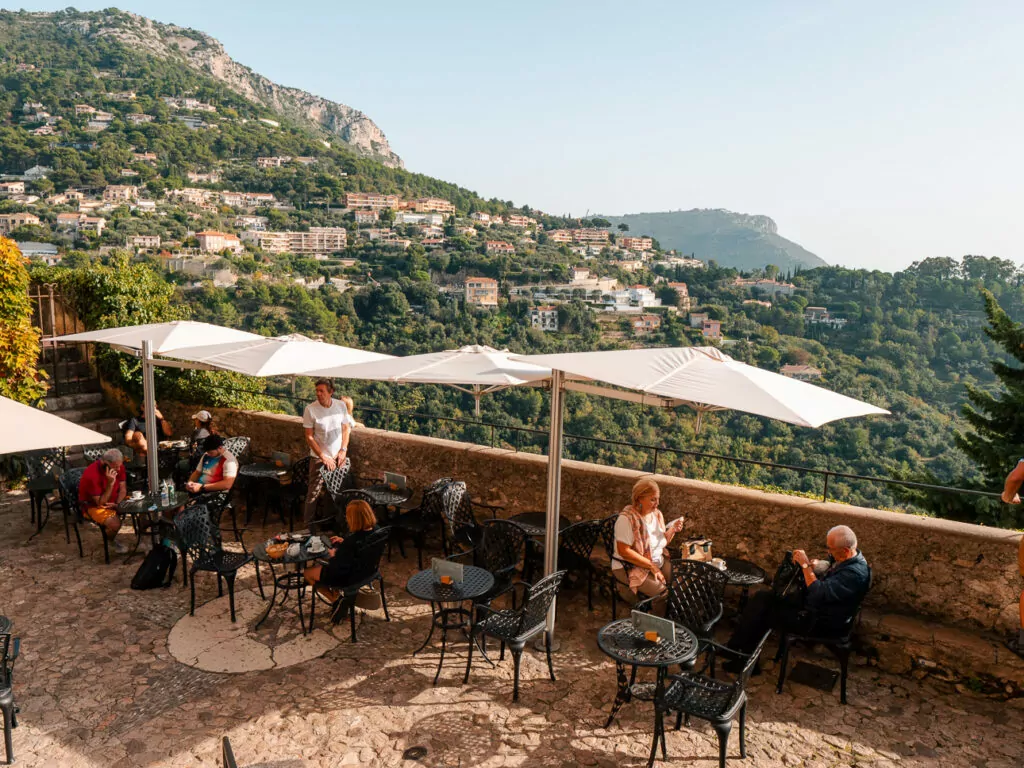
Things to do in Èze
- Wind through the labyrinth of impossibly steep, ivy-draped cobblestone alleys that make up the medieval village
- Reach the Jardin Exotique at the very top for an extensive cactus collection and views all the way to Saint-Tropez and Corsica on a clear day
- Hike the Nietzsche Path down to Èze-sur-Mer, an hour of switchbacks through pine forest with sea views the whole way
- Treat yourself to a Michelin-starred meal at Chateau Eza’s panoramic restaurant
- Park up at Deli’ for a coffee amongst the cacti or opt for the olive oil tasting
Where to stay in Èze
Budget
- Literally none that I could find!
In-between
- La Perle d’Eze Aparthotel (comfortable apartments with a brilliant outdoor pool, 8.3/10 on booking.com from 1200+ reviews)
- Ezevacances Studio Capuccino, Èze-sur-Mer (well-equipped beachfront apartment just an easy walk from the train station, 9.5/10 on booking.com from 60+ reviews)
Luxury
- La Chèvre d’Or (spectacular 5* clifftop hotel with insane views, 9.2/10 on booking.com from 340+ reviews)
- Chateau Eza (historic 5* luxury castle perched right on the cliff, 9.4/10 on booking.com from 180+ reviews)
Monaco
How to get here: Direct TER train, 24 minutes from Nice-Ville
Monaco tops the podium for the highest concentration of wealth per capita, with one in three residents in the 2km2 country holding millionaire status.
*Casually increases dating app radius to 16km from Nice, don’t judge 👀*
Spending too much time here might bankrupt you (or set you up for life depending on your luck at Monte-Carlo) but it’s a fun way to see how the 1% of the 1% live, and it’s teeny tiny with all the major landmarks within easy walking distance.
One very important travel tip though, avoid travelling at peak commute times between 6-10am and 4-7pm on weekdays. Loads of Riviera locals work in Monaco but live in cheaper French towns along the coast, so the trains are packed to the brim during those periods.
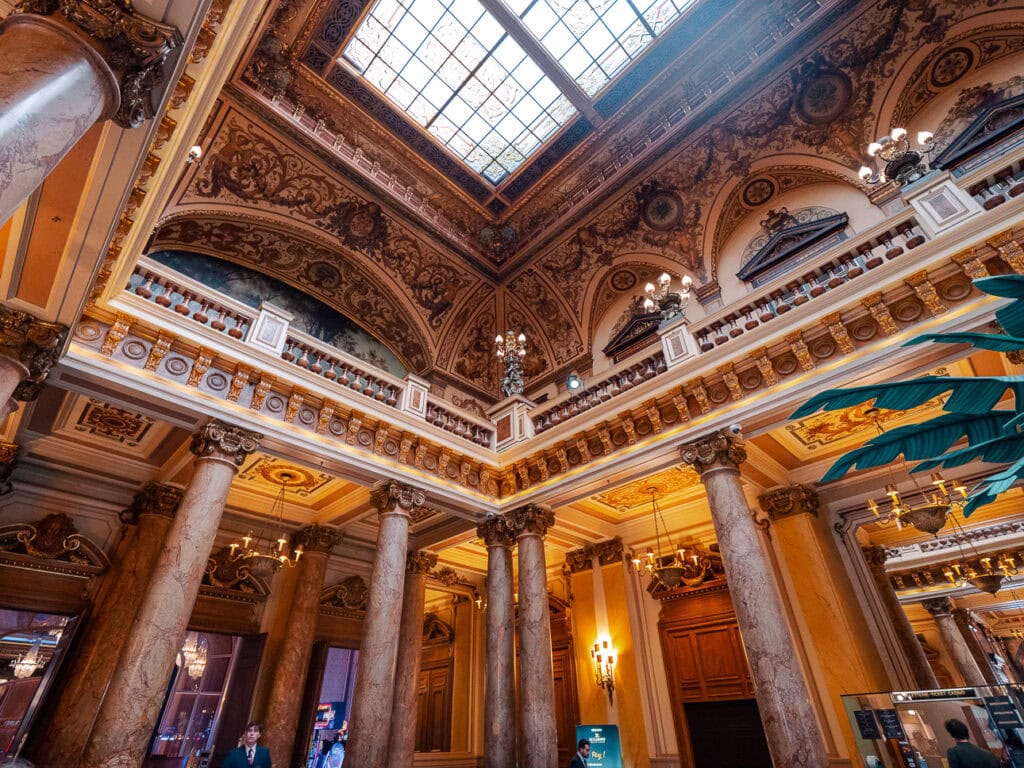
Things to do in Monaco
- Trace parts of the F1 circuit, including the famous Hairpin turn. You could do this top-rated walking tour or a cheap and cheerful hop-on hop-off bus.
- Catch the daily changing of the guards at the Prince’s Palace at 11.55am on the dot (it’s free)
- Tour the Prince’s Palace state apartments to see 16th-century frescoes
- See the principality from the sea with a scenic cruise
- See Grace Kelly’s grave inside the Cathédrale de Monaco
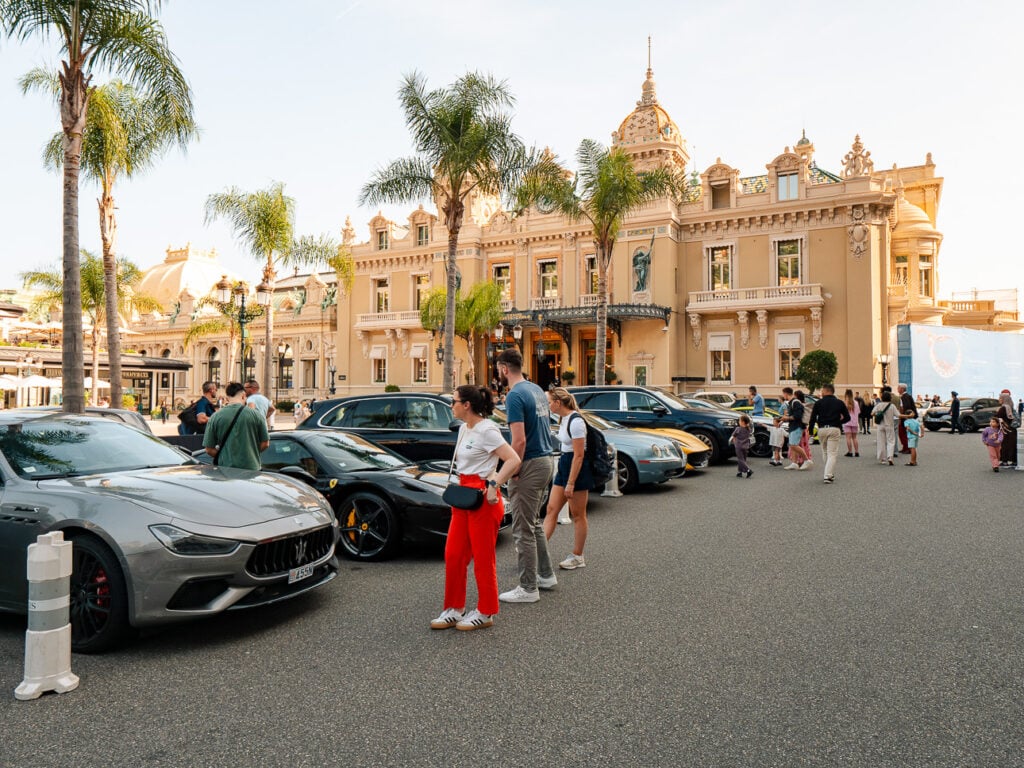
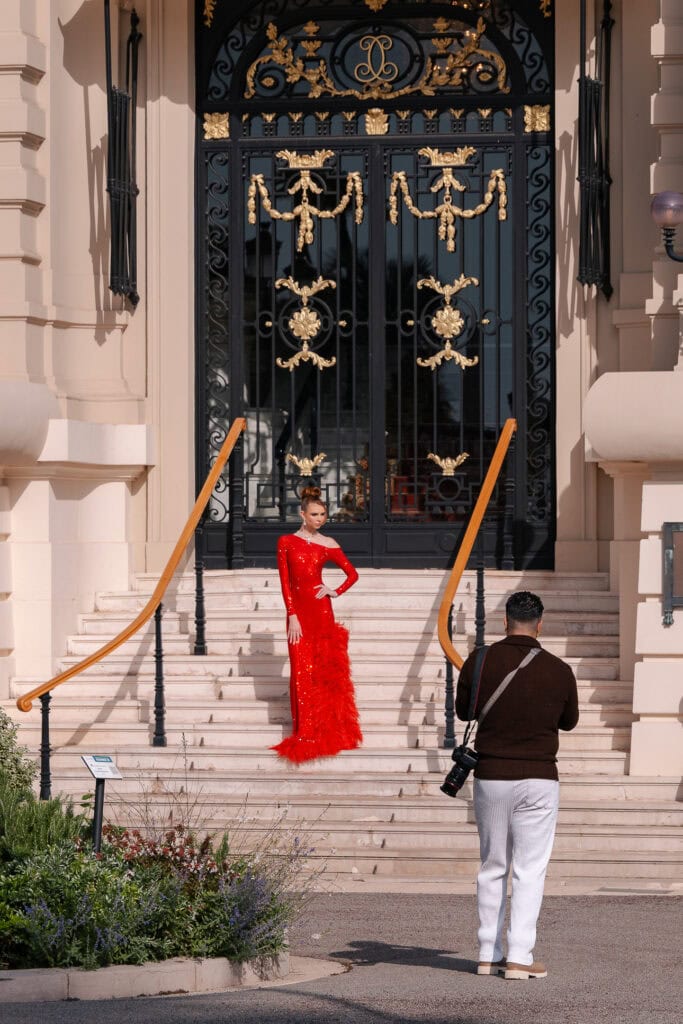
- Channel your inner high roller and try your luck on the tables at Monte-Carlo (strict dress code and you need your passport if you want to play)
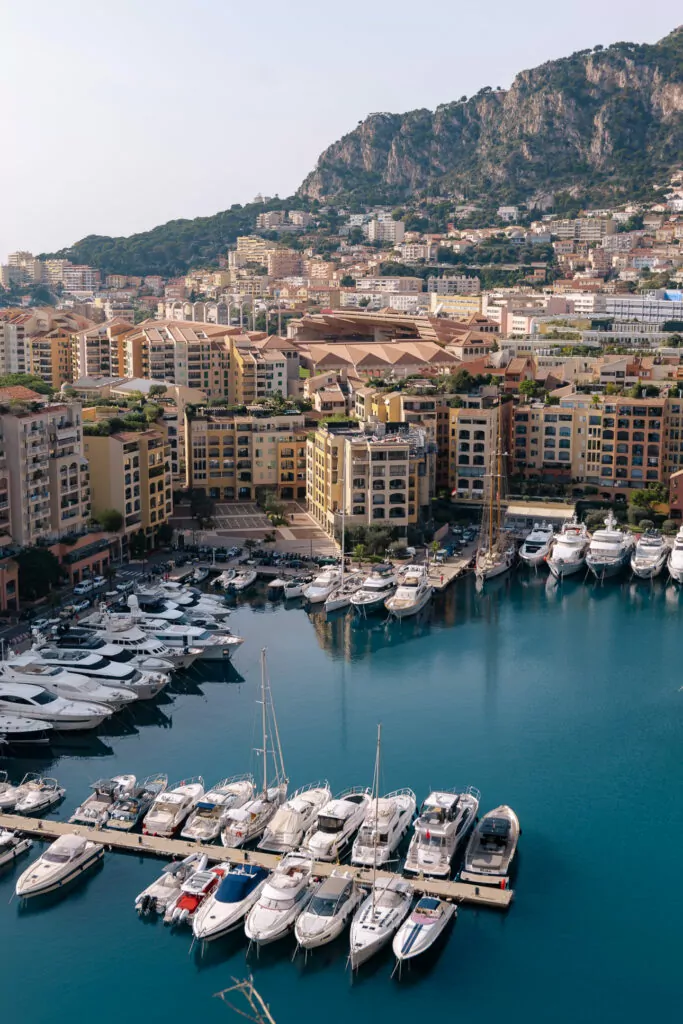
- Marvel at the megayachts at Port Hercule, the harbour that fills with the world’s biggest boats during the Grand Prix
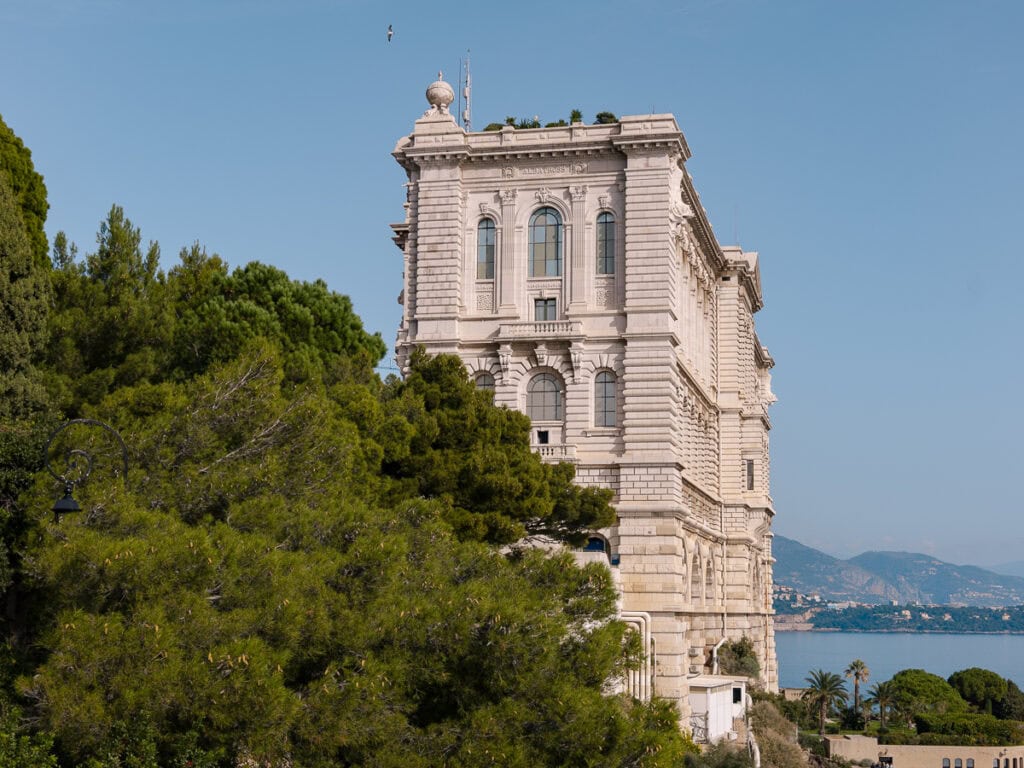
- Check out the Oceanographic Museum on the cliff face for its aquarium, marine collections and rooftop terrace views
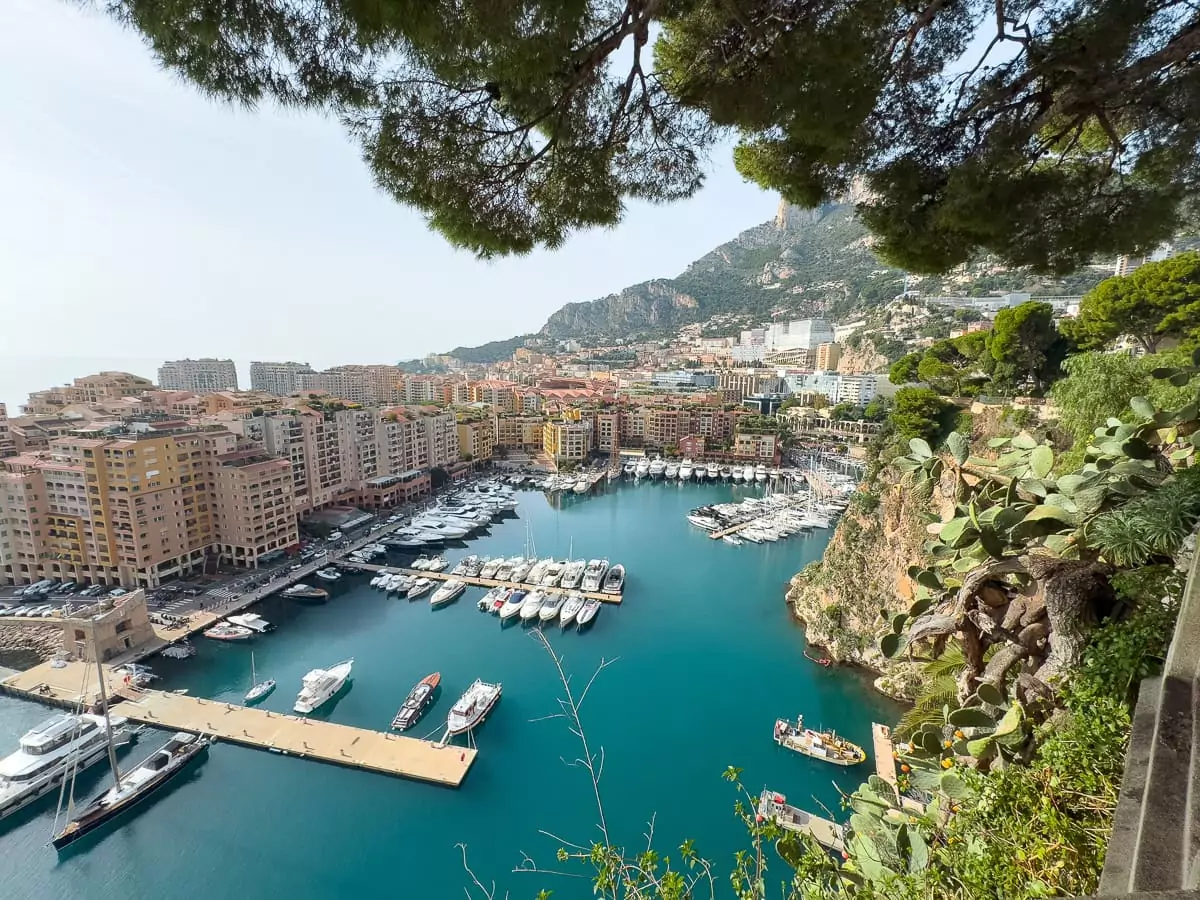
- Walk through Jardins Saint-Martin to reach this Port of Fontvieille Viewpoint for the best view over the harbour
- Explore the Jardin Exotique de Monaco, a cliffside cactus garden that just reopened after six years and a big renovation
- Fly like Iron Man underwater with this weird and wonderful Underflying experience, which looks so cool! I am DESPERATE to know what this is like, so if you try it can you come back and let me know in the comments please 🙏🏼
Where to stay in Monaco
Budget
- Ideal Studio to Visit Monaco, Beausoleil (simple equipped studio apartment, technically in France but just an 8 min walk from Monaco’s train station, 9.4/10 on booking.com from 8 reviews)
- Hotel Olympia, Beausoleil (comfortable 3* hotel in a brilliant location right by the border, 8.6/10 on booking.com from 1100+ reviews)
In-between
- ALFRED HOTELS Monaco, Beausoleil (stylish hotel with an excellent rooftop a short walk from Casino Square, 9.4/10 on booking.com from 500+ reviews)
- Boutique Hotel Miramar, Monaco (fantastic boutique hotel right on Port Hercules with a sea-view terrace, 8.9/10 on booking.com from 1000+ reviews)
Luxury
- Le Méridien Beach Plaza, Monaco (gorgeous 4* resort offering its own private beach and multiple swimming pools, 8.4/10 on booking.com from 2600+ reviews)
- Hôtel de Paris Monte-Carlo, Monaco (the most iconic 5* luxury palace right on the legendary Casino Square, 9.6/10 on booking.com from 500+ reviews)
- Hôtel Métropole Monte-Carlo, Monaco (glamorous 5* luxury hotel with a brilliant pool right by Casino Square, 9.1/10 on booking.com from 350+ reviews)
Menton
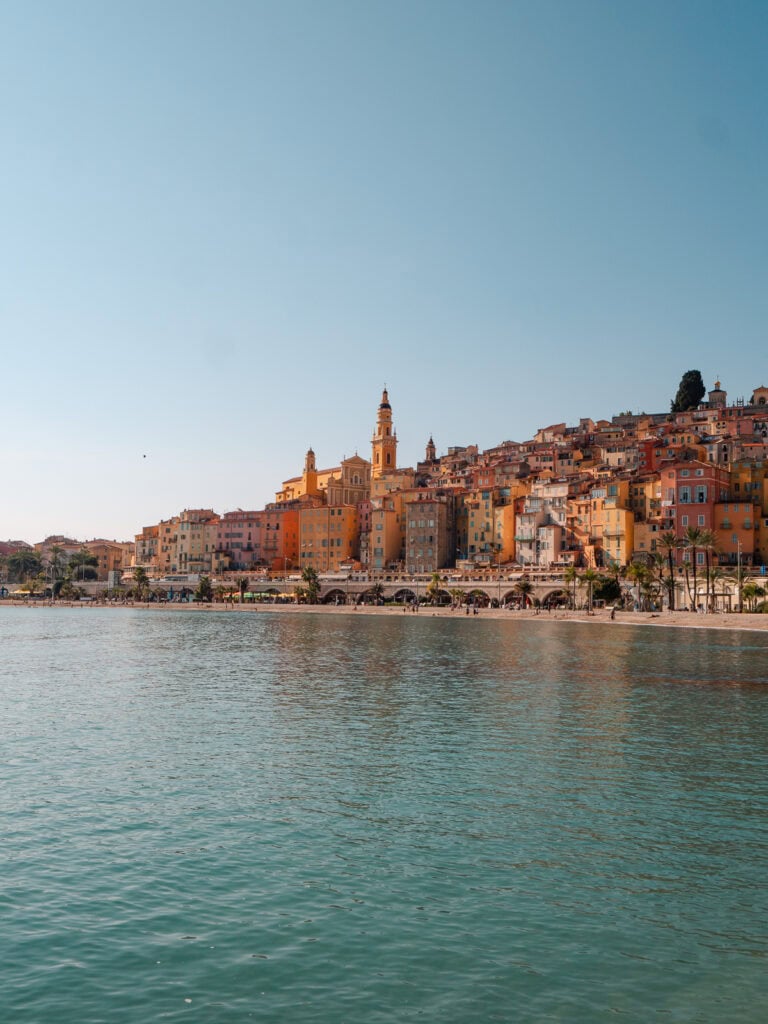
How to get here: Direct TER train, 36 minutes from Nice-Ville
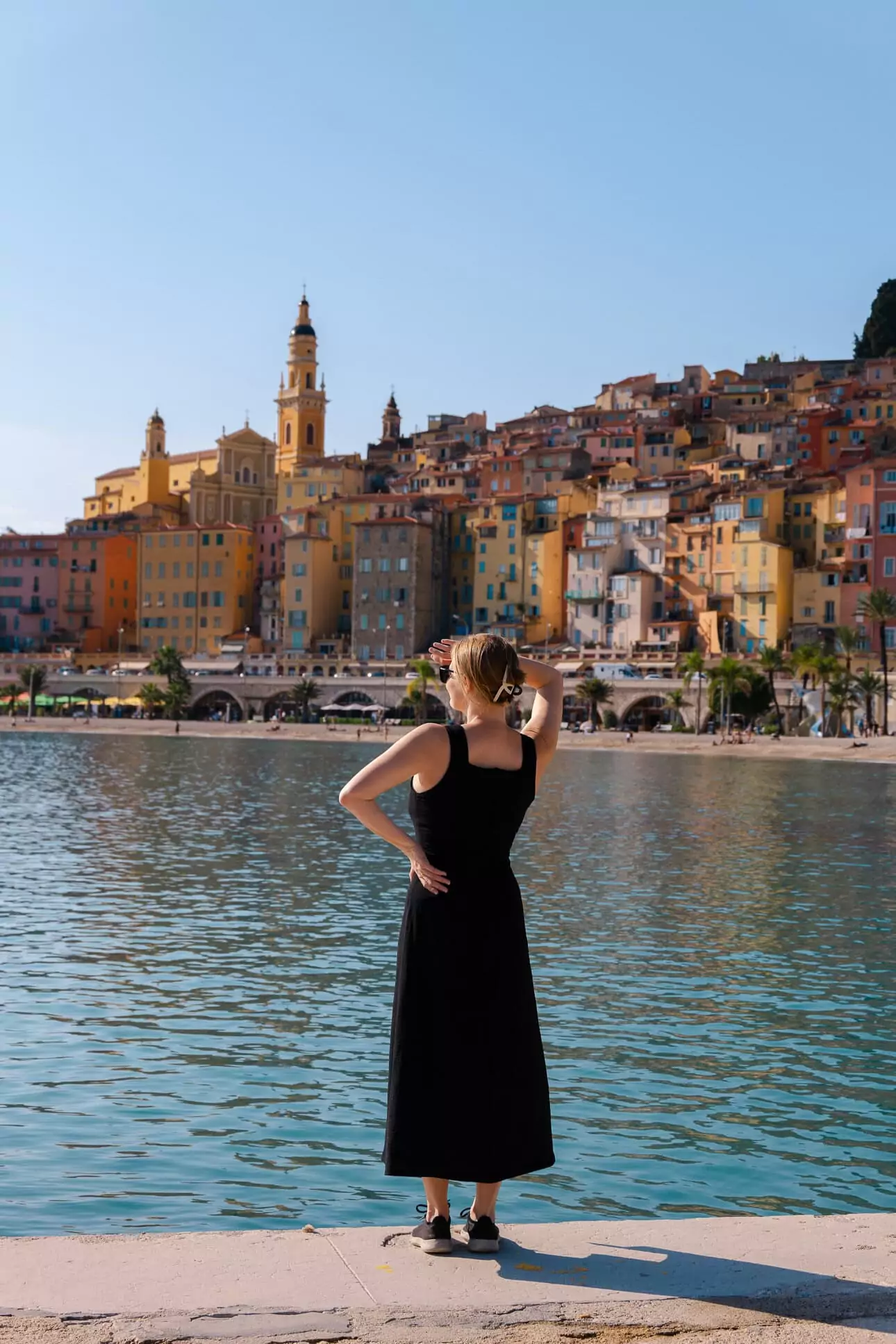
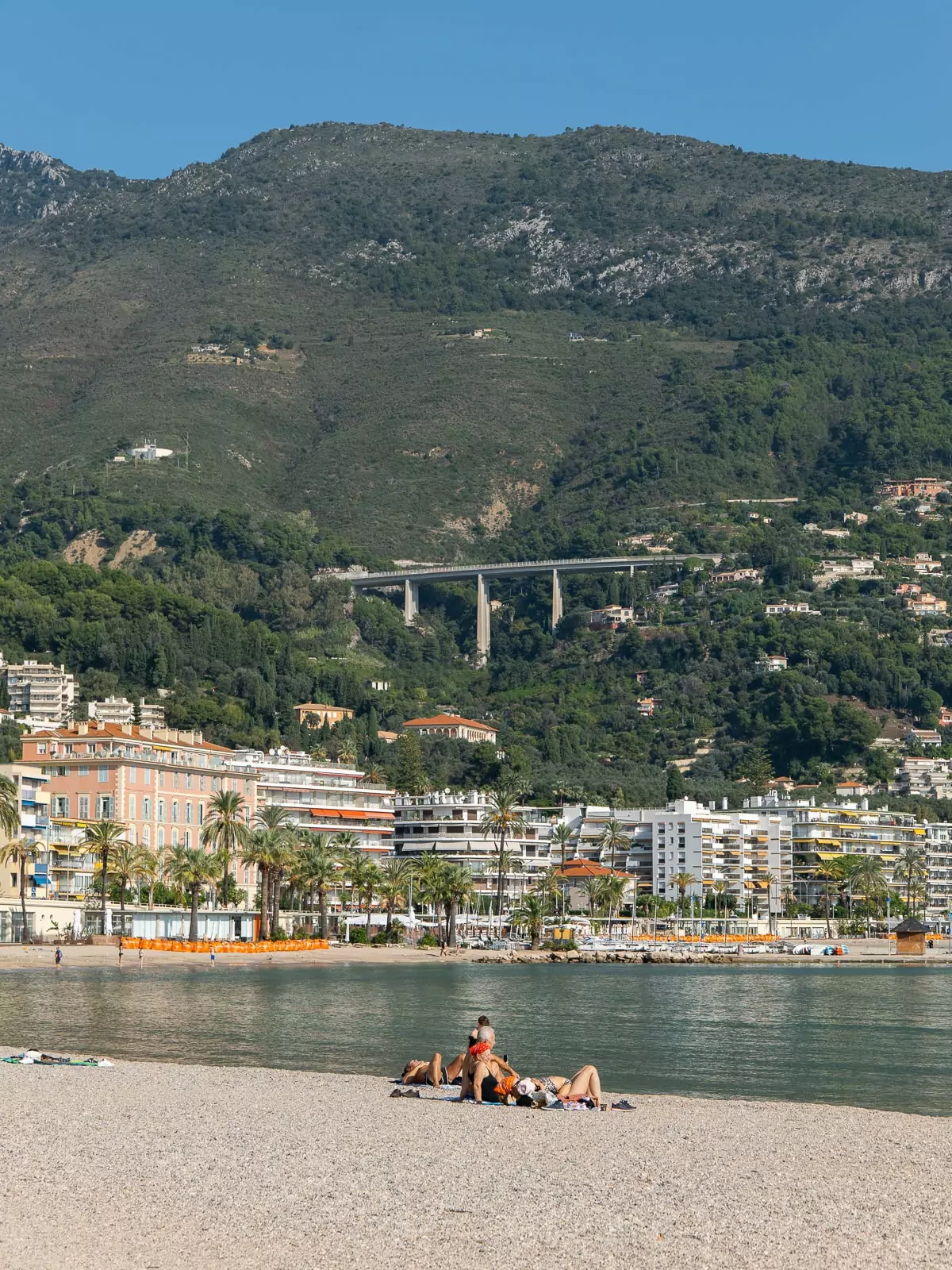
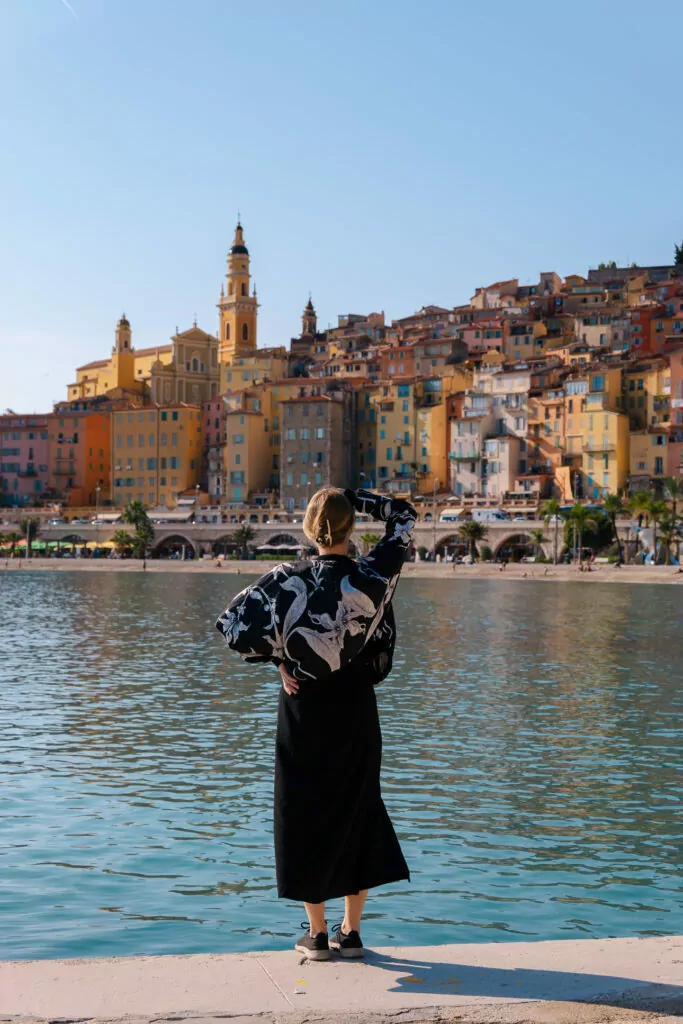
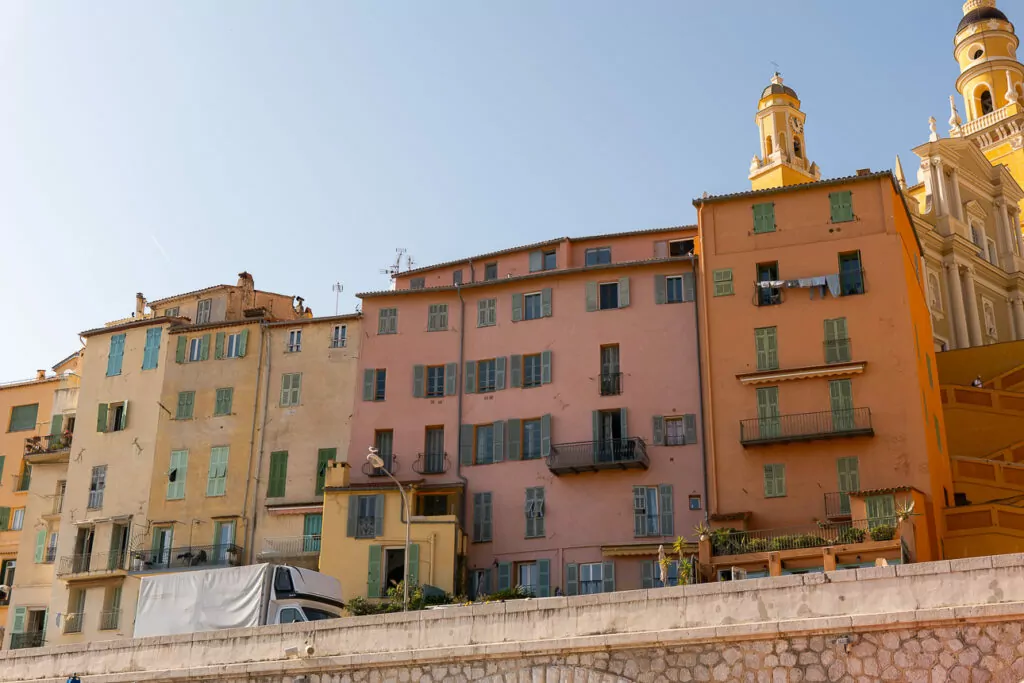
Famous for its pastel-painted old town and an adorable obsession with all things lemon, Menton is one of my soul cities (well, soul town!) 💛🧡
Sitting right at the Italian border, it’s often missed by first-timers who mistakenly assume Monaco is the end of the Riviera, which means better bang for your buck, a noticeably slower pace and all the coastal charm without the chaotic crowds of its glitzier neighbours (at least outside of the peak summer months).
It’s also a brilliant pitstop if you’re continuing further east, you can seamlessly connect it with my Northern Italy & Switzerland itinerary via Genoa, Turin or Milan.
Things to do in Menton
- Browse the Marché des Halles, Menton’s locally-loved Belle Époque food market, best in the morning and closed on Mondays (which I found out devastatingly as I stood outside on a Monday)
- Join a small group food tour with a passionate local foodie
- Follow the path along Plage des Sablettes and walk out to the end of the jetty, this is the best view of the coloured buildings behind the lush blue water
- Sample a Menton lemon tart at any patisserie in the Vieille Ville, the IGP-protected fruit is sweeter and more aromatic than regular lemons
- Cross the border on the train to Ventimiglia for cheap pasta and the famous Friday market
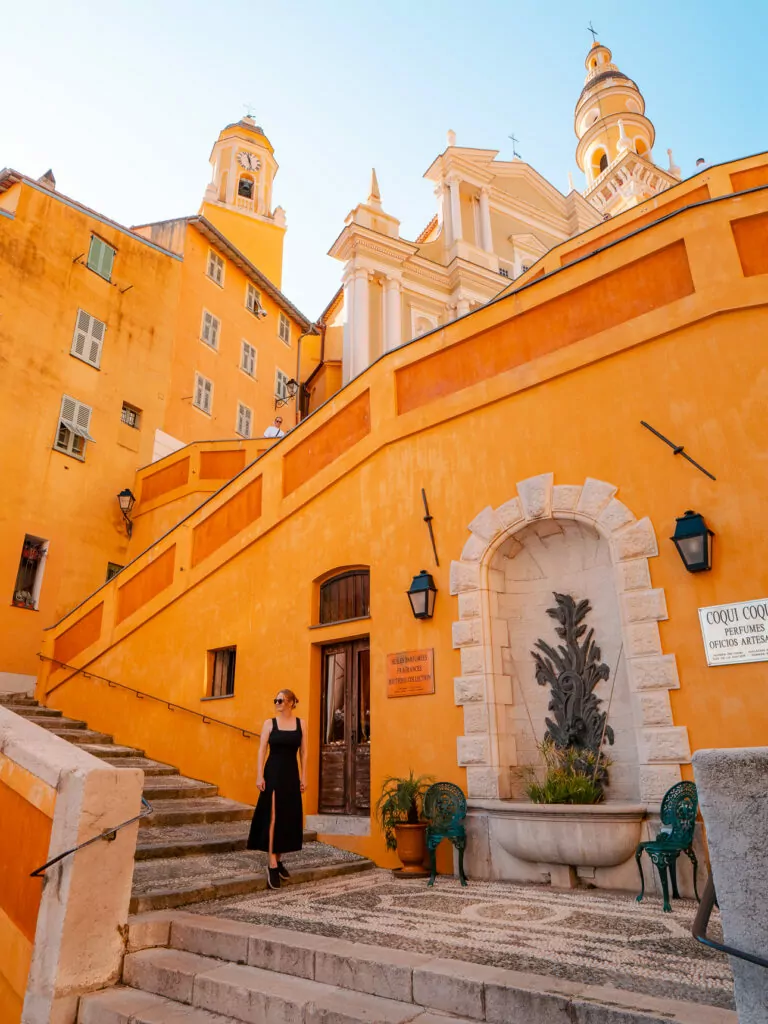
- Zigzag up the bright yellow Rampes Saint-Michel to Basilique Saint-Michel Archange de Menton, the church wasn’t open when I was there but apparently it’s exquisite inside
- Stop off at Tutti Frutti for an ice cream (every time you walk past 🙃)
Where to stay in Menton
Budget
- Le Magellan (apartment very close to the train station and the beach, 8.6/10 on booking.com from 30+ reviews)
- Studio Vieille Ville tout Equipé sans Ascenseur (simple Old Town studio apartment just steps from the beach, 9/10 on booking.com from 160+ reviews)
- La Dolce Vita Hotel (3* beachfront hotel with lovely sea views and friendly staff, 8.4/10 on booking.com from 1200+ reviews)
In-between
- Résidence Hôtelière Chambord (recently renovated, comfortable apartments right in the centre of town, 9/10 on booking.com from 900+ reviews)
- Hôtel Gabriel (gorgeous boutique hotel tucked away in the historic centre, 9.5/10 on booking.com from 2200+ reviews)
- Best Western Hotel Mediterranee Menton (I hardly ever stay at chain hotels but I nabbed a last-minute deal here and it was really decent, lovely staff! 8.4/10 on booking.com from 5100+ reviews)
Luxury
- Villa Genesis (opulent 5* boutique hotel with a sun-soaked pool and elegant décor, 9/10 on booking.com from 450+ reviews)
Antibes
How to get here: Direct train, 15-20 minutes from Nice-Ville
Halfway between Nice and Cannes, Antibes is where you can gawk at billionaire superyachts, stand in front of some Picassos in the studio he actually painted them in, and snack on wood-fired socca (a Niçoise specialty) from an authentic Provençal market, all within 500m of each other. Wild!
Things to do in Antibes
- See the Picasso masterpieces inside the 14th-century Château Grimaldi, where he worked for two months in 1946 and donated a bunch of his work on the way out
- Better yet, put yourself in Picasso’s shoes with this perfectly-rated drawing tour with a local artist, where you’ll get a guided museum tour before making your own masterpiece. SUCH a cool and unique French Riviera experience 👩🏼🎨
- Order pissaladière and tapenade at the Marché Provençal on Cours Masséna (closed on Mondays from September to May)
- Learn about the historical old town on a walking tour
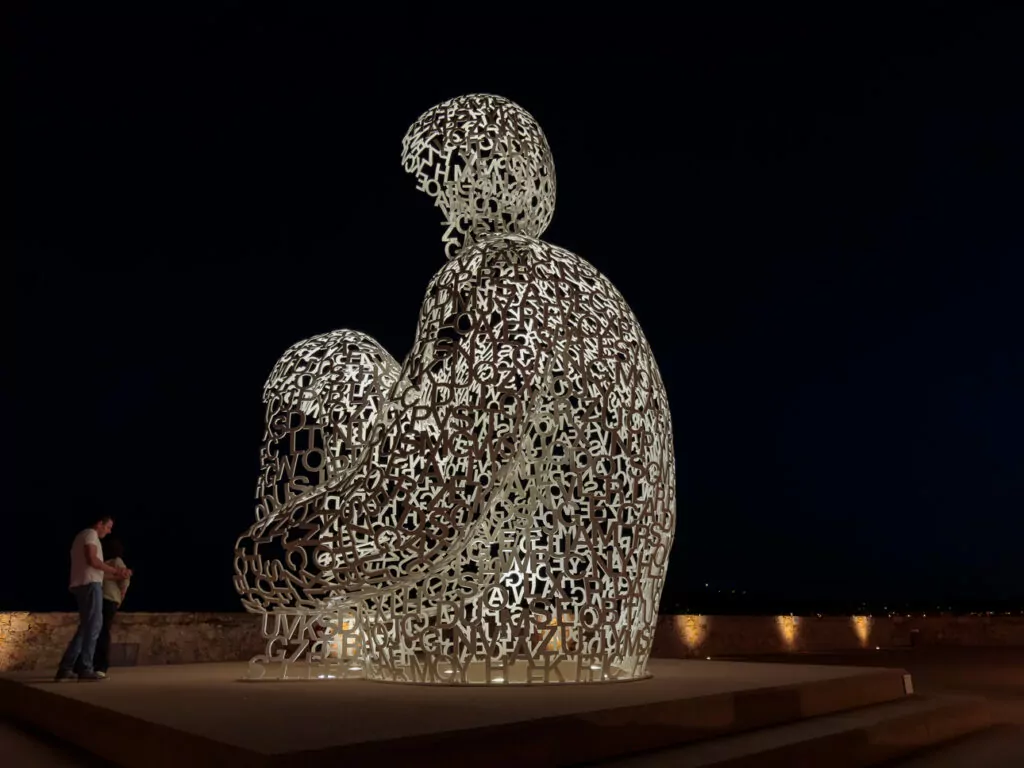
- Head out to the Bastion Saint-Jaume on the edge of the old stone ramparts to find Le Nomade, a massive hollow sculpture of a person made entirely of white steel letters staring out at the water. It’s actually quite creepy-looking at night!
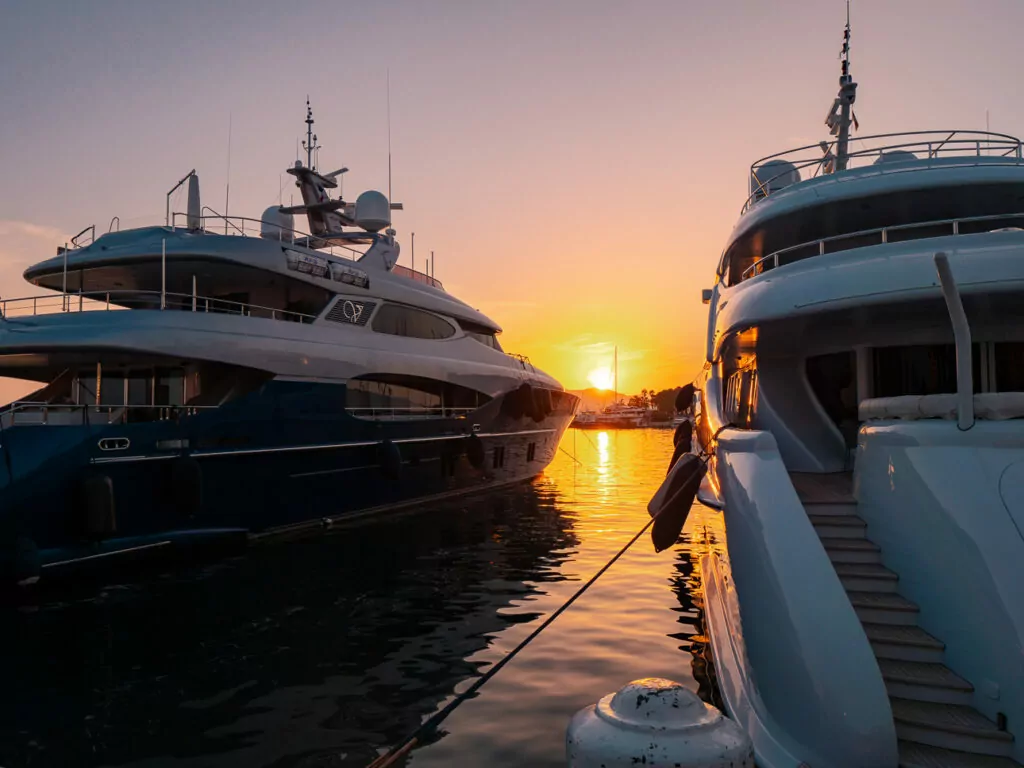
- Spot the floating mansions docked at Port Vauban’s Quai des Milliardaires and look them up online to see how much they actually cost, it’ll make you feel less guilty about the €20 crepe you had for breakfast
- Walk the Sentier du Littoral around Cap d’Antibes, a 5km coastal path past hidden coves and rocky cliffs (about 1.5-2 hours, sturdy footwear essential)
- Or kayak around the headland instead, this top-rated tour includes snorkelling, a picnic on a hidden beach and epic views
Where to stay in Antibes
Budget
- Bohobos Hostel (social hostel two blocks from the train station, 8.6/10 on booking.com from 510+ reviews)
- Hôtel de l’Étoile (great value 3* hotel just 400m from the train station, 8.2/10 on booking.com from 2300+ reviews)
In-between
- Irin Hotel (beautifully decorated family-owned 3* hotel in the heart of the Old Town, 8.9/10 on booking.com from 500+ reviews)
- Hôtel Le Collier (solid mid-range option located right across the road from the train station, 8.2/10 on booking.com from 2000+ reviews)
- Hôtel La Villa Port d’Antibes & Spa (chic 4* hotel with a dreamy heated pool right by Port Vauban, 8.9/10 on booking.com from 1700+ reviews)
Luxury
- Villa Miraé, Cap d’Antibes (stunning 5* luxury retreat with a beautiful outdoor pool on the peninsula, 9/10 on booking.com from 100+ reviews)
Cannes
How to get here: Direct train, 25-35 minutes from Nice-Ville
For about two weeks every May, Cannes hosts the most famous film festival on the planet, with Hollywood’s biggest and brightest movie stars flying in on private jets or carpooling yacht-pooling with their mates.
But the glitz and glamour don’t go away when the red carpet gets rolled up, year-round you’ll see sports cars cruising down La Croisette, giddy shoppers showing off their first ever Chanel, and beach clubs selling sun lounger spots for more than you’d pay for a night at some 4* hotels in Nice. And that’s not an exaggeration 🤯
Things to do in Cannes
- Hunt for your favourite celebrity’s handprint along the Allée des Étoiles outside the Palais des Festivals
- Discover the best of the city from a vintage van tour or a motorbike sidecar
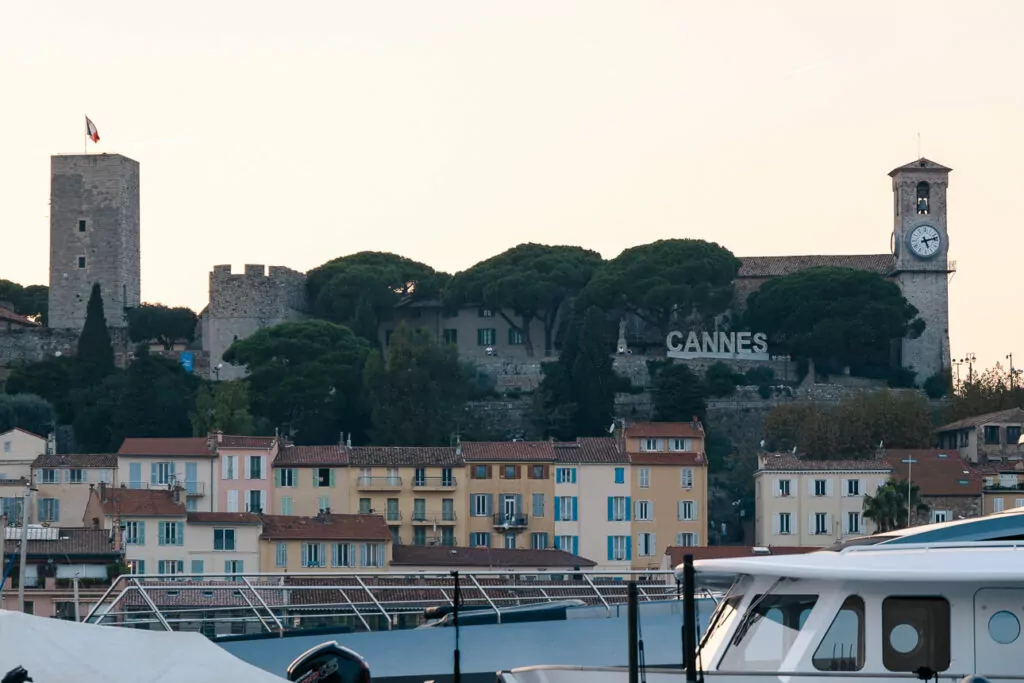
- Tackle the steep, winding cobblestones up to Le Suquet (the city’s historic old quarter) to escape the modern splendour and catch a sweeping view over the bay
- Hop on a 15-minute ferry to the Lérins Islands. Visit Sainte-Marguerite to see the cell where the legendary Man in the Iron Mask was imprisoned, Saint-Honorat to taste wine made by the Cistercian monks who still live on the island, or do a scenic cruise or kayak tour for endless photo ops.
- Or venture further along the coast with a day trip to Saint-Tropez by ferry
- Skip the pricey beach clubs for the free public sand at Plage du Midi or Plage de la Bocca, both west of La Croisette
- Soak up the sun from the comfort of a catamaran cruise, swimming and snorkelling included
- Hit the Marché Forville for Provençal cheese, fresh seafood and local produce, where the chefs from the upmarket restaurants do their early morning stockups
Where to stay in Cannes
Budget
- Hotel l’Hotera (simple budget option right by the train station, 8.6/10 on booking.com from 620+ reviews)
- Hotel Villa Botanica (excellent value 3* hotel just a short walk from the beach, 9/10 on booking.com from 100+ reviews)
In-between
- OKKO Hotels Cannes Centre (modern 4* business hotel next to the station, 8.4/10 on booking.com from 1400+ reviews)
- Hôtel Barrière Le Gray d’Albion (solid 4* option right between the seafront and the main shopping street, 8.9/10 on booking.com from 1300+ reviews)
- Hotel Splendid (classic 4* directly across from the old port, 8.6/10 on booking.com from 1600+ reviews)
Luxury
- Hôtel Barrière Le Majestic Cannes (legendary 5* palace right on the Croisette with its own private beach, 9.1/10 on booking.com from 1200+ reviews)
- Carlton Cannes (iconic Belle Époque 5* luxury hotel overlooking the bay, 9.4/10 on booking.com from 830+ reviews)
- Mondrian Cannes (chic 5* hotel right on the Croisette with surprisingly good value room rates, 9/10 on booking.com from 720+ reviews)
Saint-Paul-de-Vence
How to get here: The only absolute must-see that’s a bit trickier than a direct train, but still easy. From Nice you can take a 7 minute train to Cagnes-sur-Mer, then bus 655 leaves from right outside the station and gets you to the village bus stop in 21 minutes.
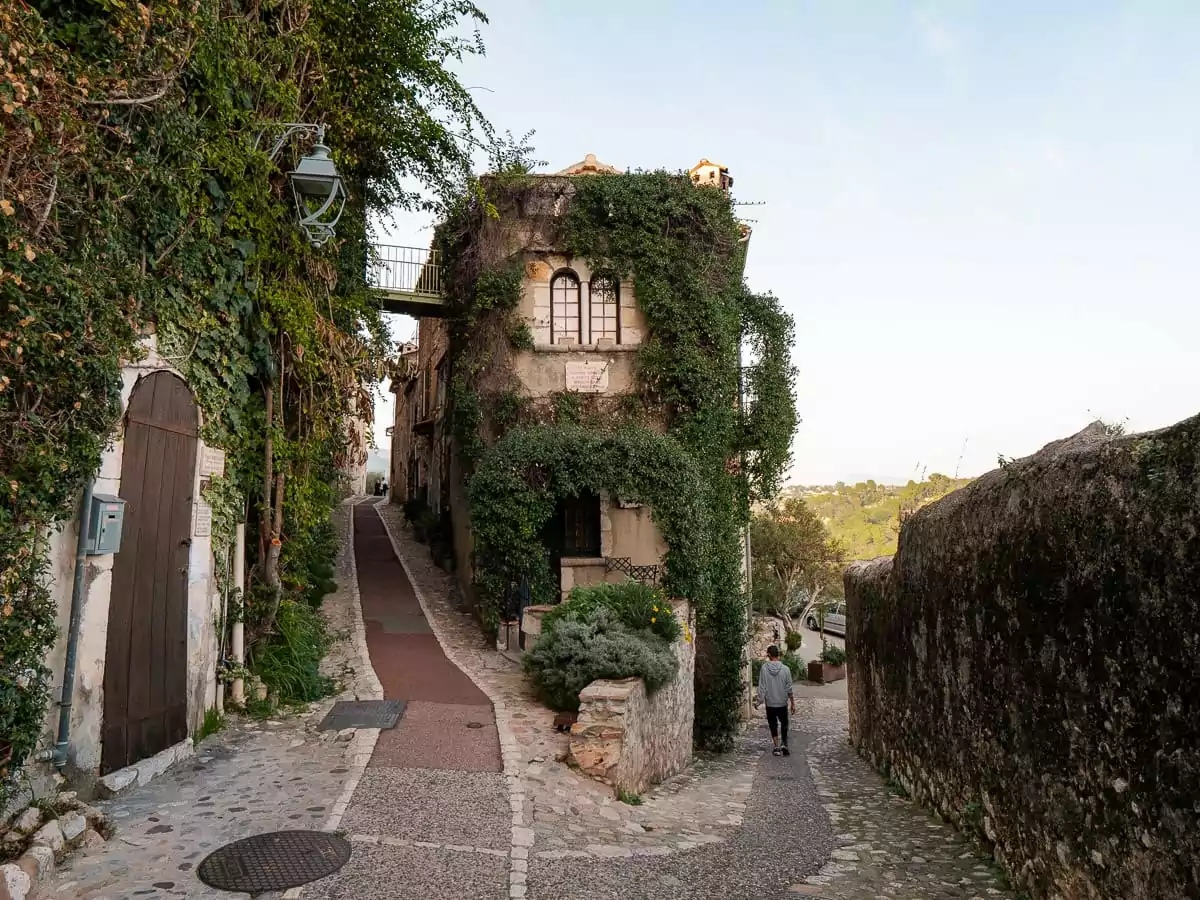
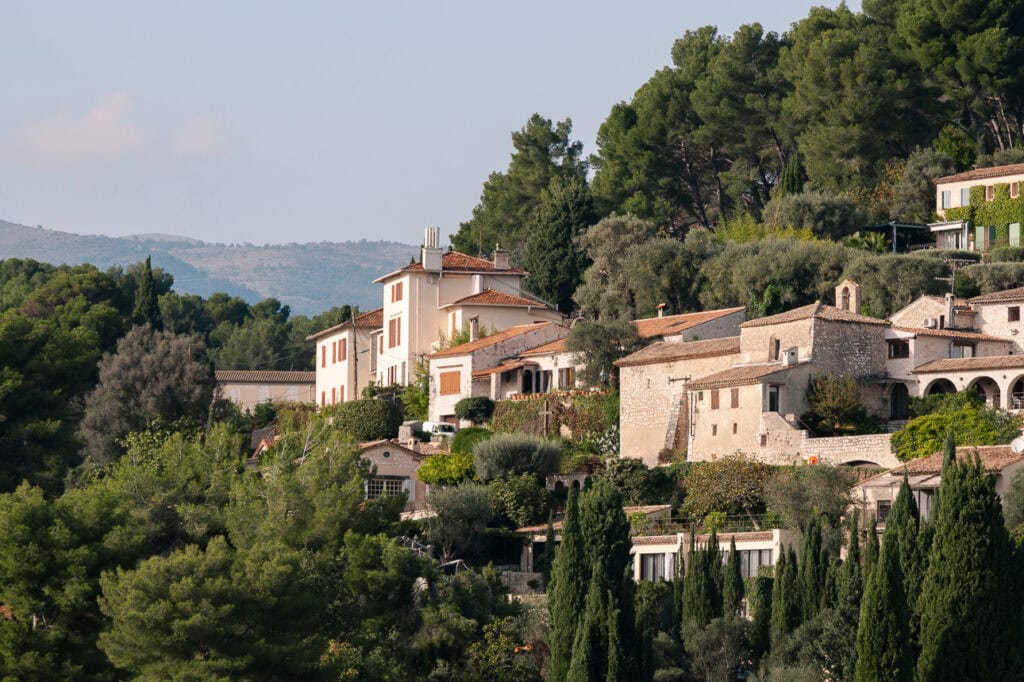
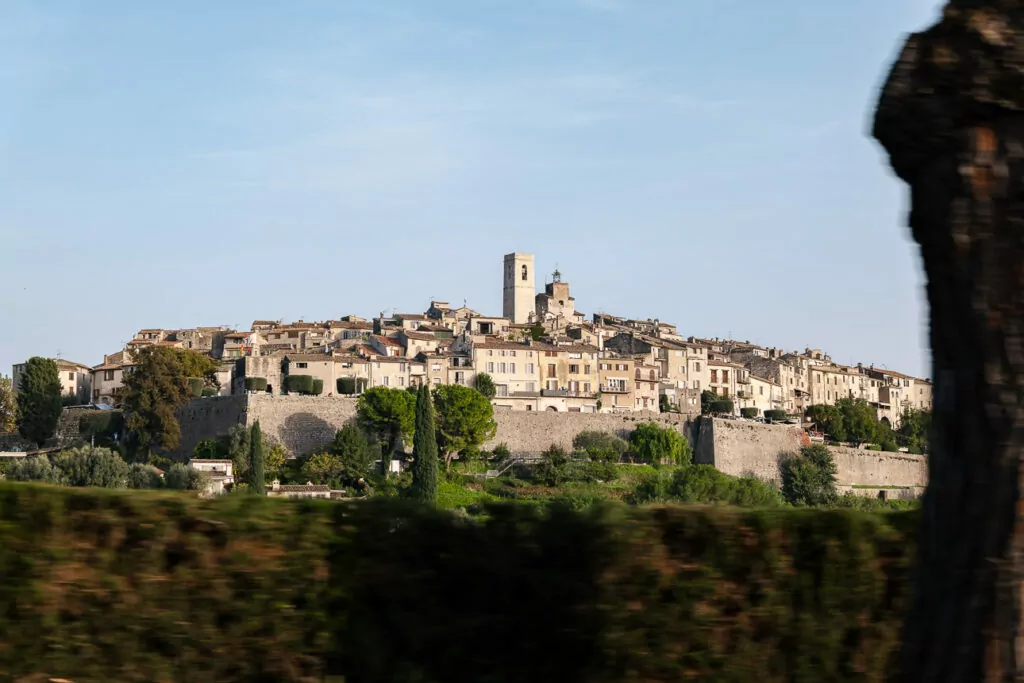
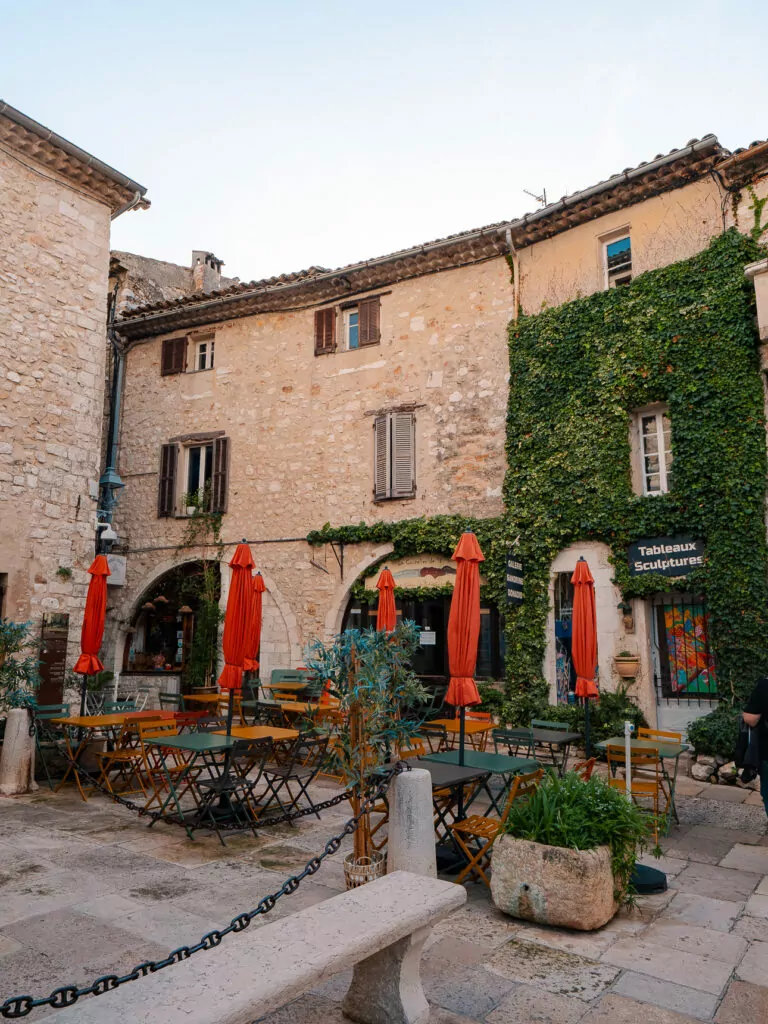
In a region with some of the fanciest seaside establishments and bluest water in Europe, it might be controversial to say that the most photogenic part of the Riviera is the medieval maze of Saint-Paul-de-Vence far from the water, but I stand by it.
The level of aesthetic perfection is actually so absurd that I started getting suspicious that it was all staged, like a dictatorial village mayor had auditioned cute old men to play pétanque in the square and trained a regal-looking cat to hang around what might be the most beautiful house I’ve seen in my life.
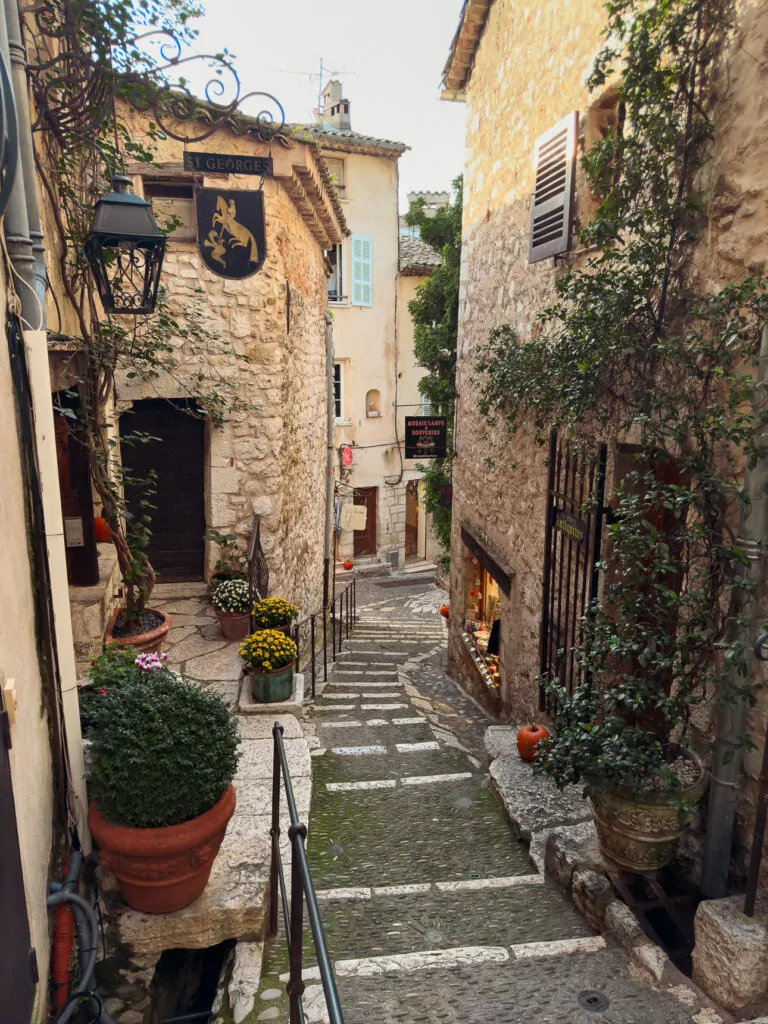
Things to do in Saint-Paul-de-Vence
- Walk the 16th-century ramparts that loop the entire village for views over the surrounding countryside
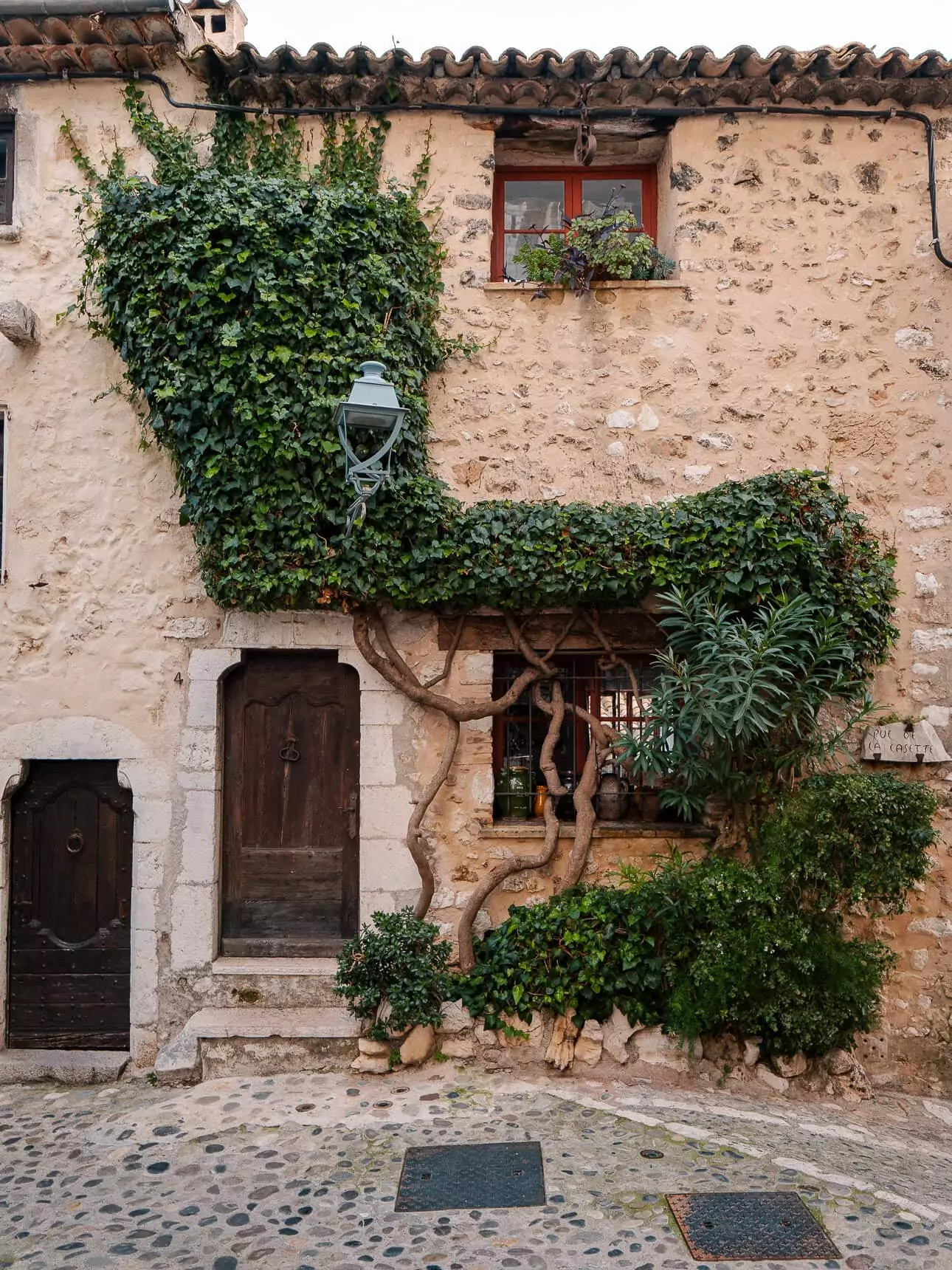
- Snap a photo of Maison de Jacques Prevert, an ivy-covered corner house that’s alllll over social media (you can stay there too!)
- Step inside Chapelle des Pénitents Blancs to see Jean-Michel Folon’s dreamlike murals
- Get cosy at Restaurant Café Timothé for an organic Provencal lunch (but it’s popular with day-trippers so book a table in advance)
- Duck into La Petite Cave de Saint-Paul, a 14th-century underground wine cellar, for a tasting flight of Provençal wines (reservations required) or to find a bottle to take back to your hotel
- Browse the dozens of art galleries and working artist studios lining Rue Grande
- If you’re into art history, pop down to the southern gate at Porte de Nice and you’ll find Marc Chagall’s grave at the start of the cemetery right outside
- Make the 20-minute walk down to Fondation Maeght, a modern art museum and sculpture garden full of Miró, Giacometti and Chagall works
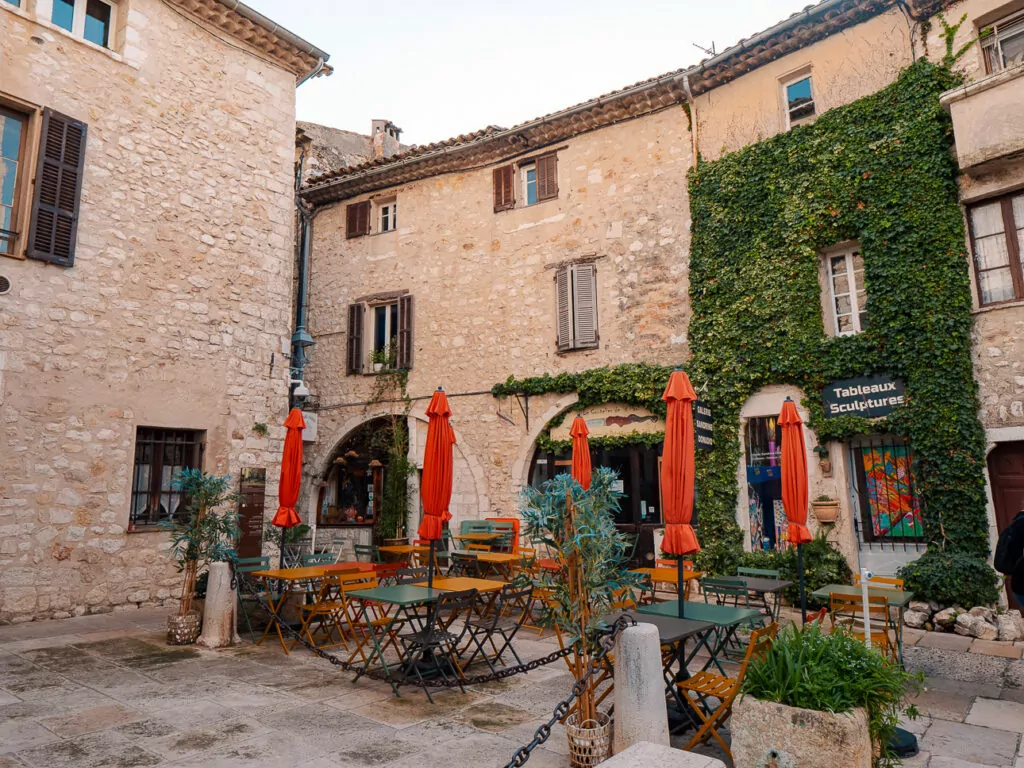
Where to stay in Saint-Paul-de-Vence
- La Maison de Jacques Prevert (the famous ivy-covered house and photo spot, but expect tourists taking photos of the facade all day! 9.6/10 on booking.com from 10+ reviews)
- Chambre Atypique dans Café Healthy (a quirky little room for a cosy and affordable stay, 8.7/10 on booking.com from 60+ reviews)
- Maison Louisa (exceptional boutique guesthouse with a lovely pool and beautiful rooms, 9.5/10 on booking.com from 240+ reviews)
- Hotel Le Saint Paul (elegant 5* hotel inside the village walls, 8.9/10 on booking.com from 290+ reviews)
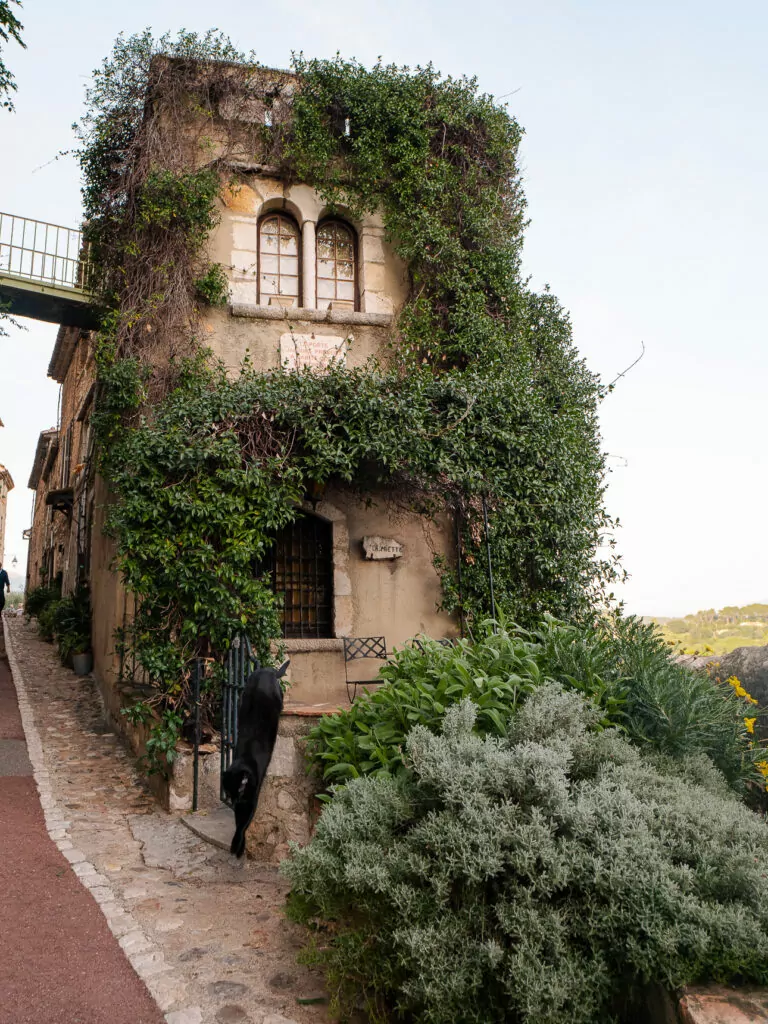
Grasse
How to get here: The direct train to Grasse takes just over an hour from Nice-Ville or 30 minutes from Cannes, then it’s an 8 minute local bus to the old town (or a steep and sweaty 15 minute walk)
If Saint-Paul-de-Vence is a treat for your eyes, then Grasse is one for your nose 👃🏼
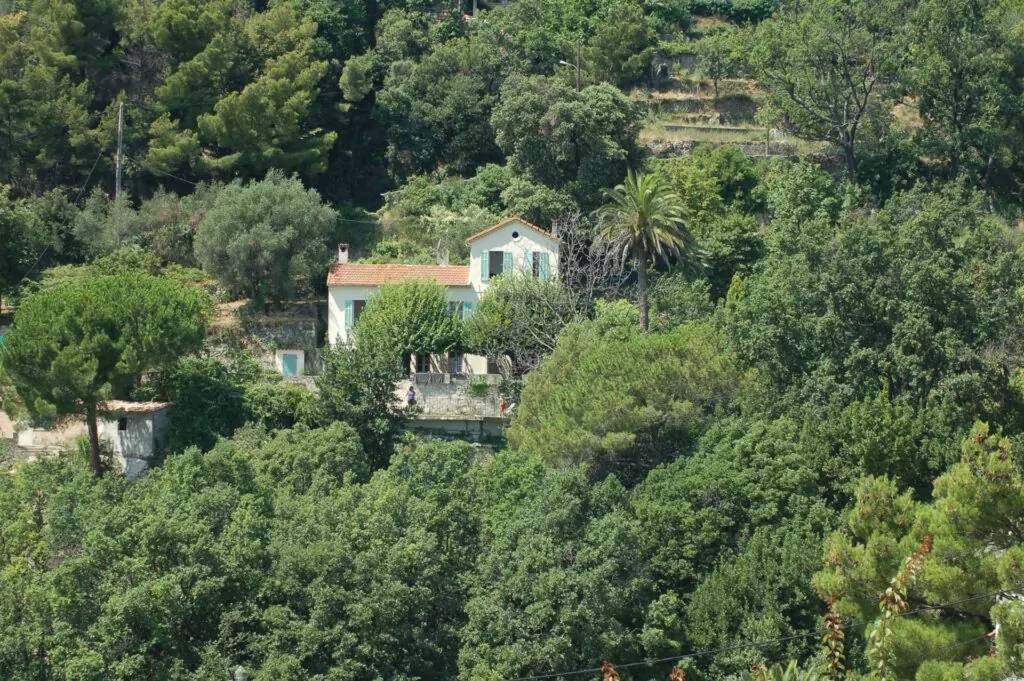
These hills have been growing jasmine, rose and lavender for the world’s leading fragrance houses for 500 years, and some of the most iconic perfumes come from flowers hand-picked just outside the medieval town.
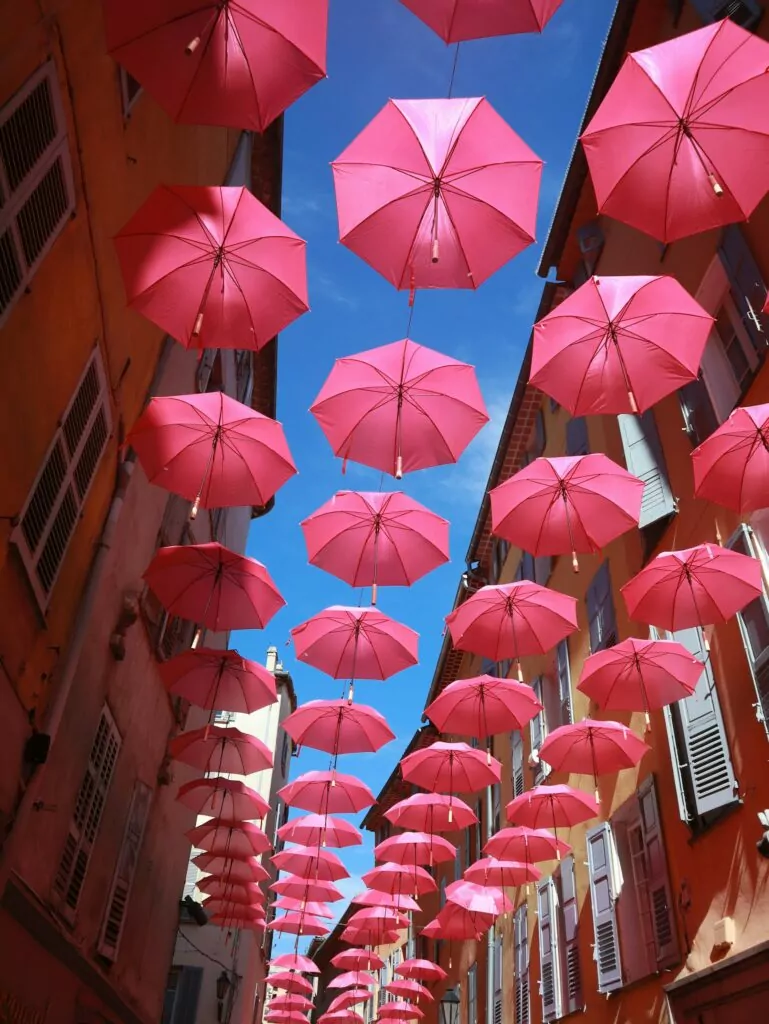
Things to do in Grasse
- Catch Le Petit Train, the little yellow tourist train that does a 35-min loop of the old town past all the main spots with multi-lingual audio guides to give you fun facts along the way. It runs from April to October and costs €8, all the details here.
- Join a perfume workshop to learn from an olfactory expert and create your own fragrance to take home (the coolest souvenir!)
- Spend a couple of hours at the Musée International de la Parfumerie for a deep dive into 3000 years of perfume history
- Stop by the Musée d’Art et d’Histoire de Provence, set in an 18th-century mansion, to see what life in Grasse looked like before perfume took over
- Tour the Villa-Musée Jean-Honoré Fragonard, he was an 18th-century painter from Grasse and this is the biggest collection of his paintings outside of the Louvre. He was such a local legend that 120 years after his death a perfume company was named in his honour, and Fragonard is still one of the premier parfumeries in the Côte d’Azur.
- Visit Fragonard’s (the perfumery, not the artist) own historic factory and museum to see perfume bottles and other fragrant-related antiquities from the ages
- Peek inside the 13th-century Cathédrale Notre-Dame-du-Puy which holds three Rubens (paintings from the Flemish artist Rubens, not Reuben sandwiches)
- Sip a rose latte from the cutest little teacups at Café Fleur
💡 Fun fact: It’s no wonder the perfume company Fragonard was named after the painter, the Parisian guy who started it in 1926 was named Eugène Fuchs, and Parfumerie Fuchs doesn’t quite have the same ring to it 🙃
Where to stay in Grasse
Budget
- Grasse aux Parfums (great value apartment right in the middle of the old town, 9.4/10 on booking.com from 70+ reviews)
In-between
- Chez Tom (brilliant apartment just a two-minute walk from the perfume museums, 9.3/10 on booking.com from 140+ reviews)
- Destination Grasse (really comfortable modern apartments very close to the main sights, 9.2/10 on booking.com from 60+ reviews)
One week on the French Riviera without a car
On my most recent trip I split my week between using Nice as a base and then overnighting in Menton to be able to escape the crowds and experience it without the day-trippers. This is how I’d recommend you spend your week too, but you could choose any other typical day trip location like Saint-Paul-de-Vence or Èze instead, or even squeeze in three different hotels if you don’t mind repacking a couple of times.
Obviously the ideal itinerary for you will depend on your interests but here’s what I’d do if I was visiting for the first time and relying on public transport, using a Pass SudAzur Explore:
- Day 1: Arrive in Nice, explore Vieux Nice, do a food tour if there’s time
- Day 2: 30m bus to Èze Village early for the Jardin Exotique and sightseeing before the tour groups arrive, then 25m bus to Monaco for a fancy lunch and to spend the afternoon exploring the tiny country, before the 25m train back to Nice
- Day 3: Full day trip to Cannes (40m train if you’re on a budget, 1h 10m-ish ferry if you want the coastal experience), see the highlights quickly with a one-hour motorbike sidecar tour, then do a catamaran cruise or a kayak trip around the Lerins Islands, then back to Nice
- Day 4: Train to Grasse (about 1h + a short local bus up the hill) for a perfume workshop or the museums, then in the afternoon train to Antibes (short bus + 45m TER) to see the old town and superyachts, find somewhere authentic for dinner, then 25m train back to Nice. This one’s quite a transit-heavy day so you could pick one or the other if you’d prefer, or swap them if you want to visit Antibes’ Marché Provençal before it closes at 1pm.
- Day 5: Check out of the Nice hotel and store bags at the station (there’s a left luggage service there) before popping to Villefranche-sur-Mer for the morning and lunch. Back to Nice, grab bags, then catch the 15m train + 23m bus combo to Saint-Paul-de-Vence for a night. I’m desperate to experience this place after 5pm without the crowds!
- Day 6: Wake up early to wander before (other) tourists arrive, then bus back to the coastal TER line, and continue on the train to Menton for the afternoon and overnight (approx. 1h 45m all up)
- Day 7: Check out of the Menton hotel and catch the 40m train back to Nice before your departure
French Riviera FAQs
Do you need a car to visit the French Riviera?
No, you don’t need a car to visit the French Riviera. The TER coastal train and the bus networks connect every major destination from Cannes to Menton, including Monaco, Èze, Antibes, Saint-Paul-de-Vence and Grasse. Going car-free is usually cheaper, faster and far less stressful than dealing with the region’s traffic and parking.
Where is the best base on the French Riviera without a car?
Nice is without a doubt the best base for car-free travel on the French Riviera. It’s got the largest train station, the most direct connections to other destinations and the widest accommodation range. From Nice you can reach Monaco, Èze, Villefranche, Antibes, Cannes and Menton in under an hour.
How do you get around the French Riviera by public transport?
TER regional trains run 3-4 times an hour along the coast between Cannes and Menton, buses reach the perched villages and inland spots the train doesn’t, Nice has trams, and seasonal ferries connect some key coastal towns from May to October.
What is the Pass SudAzur Explore?
The Pass SudAzur Explore is a regional travel pass for the French Riviera that gives unlimited access to TER trains, regional Zou! buses and local urban transport across Alpes-Maritimes. It’s available in 1-day, 3-day or 7-day options and is the easiest way to use public transport without buying individual tickets every journey.
Can you visit Monaco from Nice without a car?
Yes, easily! The direct train from Nice-Ville to Monaco-Monte-Carlo takes around 24 minutes and runs roughly every 15-30 minutes throughout the day.
Can you visit Èze without a car?
Yup! From Nice take bus 82 or 602 directly to Èze Village in about 30 minutes, or alternatively you could catch the TER train to Èze-sur-Mer station on the coast and either catch bus 83 up the hill or hike the Nietzsche Path (about an hour, it’s steep).
Can you visit Saint-Paul-de-Vence without a car?
You sure can. Take the TER train from Nice to Cagnes-sur-Mer (around 15 minutes), then catch bus 655 from outside the station to Saint-Paul-de-Vence (around 23 minutes).
What is the best time to visit the French Riviera without a car?
The shoulder months are the best time to visit the French Riviera, specifically April-May and October to early November. Weather is pleasant, prices are much less painful, and crowds are manageable. Skip July-August (chaos and triple prices) and check for any major events (Cannes, Monaco GP etc.) before you book to avoid being surprised by insane hotel rates.
Is the French Riviera safe without a car?
The French Riviera is generally safe for car-free travel, though pickpocketing on busy buses, trains and at tourist hotspots is the main thing to watch for. The Grand Arénas tram stop near Nice Airport has a particular reputation for it. Keep your phone, wallet and passport zipped away in busy spots and you’ll be fine.
Is Uber available on the French Riviera?
Yes, Uber and Bolt operate across most of the French Riviera, including Nice, Cannes and Antibes, but getting a ride accepted in small towns can take be tricky so don’t rely on it for anything urgent. Bolt is usually cheaper. Ride-hailing pickups aren’t allowed inside Monaco, so you’ll need to head across the border to Beausoleil (a 10-minute walk) for Uber to work.
How do you get from Nice Airport to the city without a car?
Tram Line 2 connects Nice Côte d’Azur Airport to the city centre in under 30 minutes. The airport ticket machines only sell overpriced airport-specific tickets though, so a smart workaround is to ride one or two stop to Grand Arénas (free from the airport), buy a normal-priced ticket (€1.70) from the machines there, then jump back on the next Line 2 service.
If you’ve made it all the way here, merci for sticking with me! Hopefully I’ve talked you out of paying hundreds of Euros for a rental car that’ll end up being more hassle than it’s worth.
The Riviera suits slow travel anyway. You can grab a seat on the top floor of one of the double-decker regional trains to soak up the scenes as you zip along the coast, there’s no anxiety about missing your long-awaited restaurant reservation due to traffic jams or parking nightmares, and you can indulge in local wine during your day trips without needing a sober driver.
If you have any questions or want to share your own French Riviera tips, please feel free to drop a comment below. Bon voyage mes amis!
MORE CAR-FREE EUROPE ITINERARIES:
- The *ultimate* three month Europe itinerary without flying or driving
- How to see the Europe Christmas markets by train
- How to spend 10 days in Switzerland by train
- How to see the Dolomites, Italy without a car
- How to see Puglia, Italy without a car
- Northern Italy & Switzerland itinerary by train
- 3 week Scandinavia itinerary by train
- How to spend 4 days in Norway
- How to spend two weeks in Poland without a car
- How to spend two weeks in Albania without a car
MY GO-TO TRAVEL PLANNING RESOURCES
Flights ✈️ I use Skyscanner to find the best flights for my trip and then I’ll always book direct with the airline to protect myself from having to deal with dodgy third parties if anything goes wrong.
Trains 🚂 If I’m travelling through Europe, I try to travel by train wherever possible! For an extended trip (2+ weeks) I’ll calculate if a Eurail Pass is worth it, or I’ll book point-to-point tickets through RailEurope or the local train operator.
Accommodation 🛎️ I book almost all of my accommodation through booking.com, they have a user-friendly website + app and many of their options are free cancellation, easily cancelled with a simple click of a button.
Activities 🗽I use GetYourGuide, Klook and Viator to look for activities in the places I visit, or I just Google ‘things to do in [city]’! P.S. If you book anything on Klook you can use the promocode FINDINGALEXXKLOOK to get 10% off
Travel cards 💳 I’m a Wise gal through and through, they’ve been my chosen travel card for more than five years now. You can easily top up your card from your bank account or through Apple Pay, convert your money to local currency, and spend money with minimal fees and the best exchange rates around.
Travel insurance 🩺 I use Cover-More NZ travel insurance for my own trips, I have a comprehensive policy and I’ve only had good experiences with them. Cover-More also has an Australian company, but if you’re from elsewhere then two popular insurance options for global travellers are SafetyWing (cheaper policy, lower coverage) and World Nomads (more expensive but significantly better coverage).
Luggage 💼 I travel with Samsonite Cosmolite suitcases, one 75cm check in bag and a 55cm carry on bag, and I absolutely adore them and will never travel with anything else! They are SUPER lightweight (2.8kg and 1.9kg respectively) so I have much more space for my actual stuff.
Camera gear 📸 I use a iPhone 15 Pro Max for phone photos/videos, and my camera kit includes a Lumix S9 (incredible lightweight full-frame camera, a game changer for travel creators!) with a 20-60mm lens, a Lumix G9 with an 8-18mm and 12-60mm lens, a DJI Mini 3 Pro drone and a GoPro Hero 10. I do all my writing and editing on my ASUS Zenbook 14, it’s lightweight but powerful enough for photo editing and intense blogging sessions.
